Friday, September 30, 2005

A New Era - or more of the same?


Time for new ideas! Posted by Picasa

Who know we might have a new government in New Zealand by tomorrow.

If we go ‘right’ we will go back to the past – individualism and greed; a one size fits all people plus economic Darwinism. The rich will get richer and the poor will be left to survive on their own.

If we go ‘left’ ‘we’ will have real choice.

We will either continue with ‘top down’ management for ‘our’ benefit, whether we like it or not, or develop new ideas. We have lived through an era of 'the government know best for you'. It seems that, from the recent elections, the people have had enough of this patronizing technocratic manipulation and are asking for some room for individuality and creativity.

I would be great if the Labour Party were to return to power and saw this term (perhaps their last) as a chance to show some courage and leadership and to make some dramatic changes.

There are immense pressures to preserve the status quo and politicians, and so called leaders in all organizations, seem to have a 'right to manage' others as a basic mantra. We need ‘heroic’ leadership, brave enough to give up power and free the energy of those they control, to create positive conditions and infrastructure to trust people. And, as well, leaders need to value diversity rather than standardization. It is from diversity (and often ‘mistakes’) that new creative ideas emerge.

There are good reasons for a new government to be refreshed by such basic democratic ideals. Young people are not as keen to conform to imposed restrictions, or to comply, as their elders were. They have seen their parent’s life chances deformed by such pressures. They value individuality and creativity.

And as well organizations that create positive relationships between managers, workers and customers are more successful – they appreciate the power of shared purpose and positive relationships. And successful organizations also appreciate the need to attract agile, innovative, flexible and creative employees best able to thrive in this age of dramatic change.

People want to feel part of where they work and, in turn, be able to contribute their talents to the greater benefit of the country. It is not all about personal greed as we are led to believe.

So a new government needs to break down this sense of fragmented hierarchal control and develop new integrated structures based on trusting people. This means pushing down responsibity to the community level and to value the diversity that develops.

The real task of the government is to focus on setting the direction for the county and then to enable such a vision to be realized. We need to develop a vision of New Zealnd as a creative country with creative citizens, utilizing their talents for the benefit of themselves and the common good. The two can go together.

The new government ought to spend its energy defining a new sort of democracy for the 21stC by involving citizens in a national conversation about the kind of county 'we' want to become. New ways for people to participate need to be thought of; new ideas for expanding the role of local government; and new idea how to involve schools in such a revival, need to be considered.

Recent governments, and their associated organizations ( along with many traditional business organizations), have spent far too much time containing rather than liberating people; it has been too much about control and compliance based on a basic mistrust of people.

A new government could inspire new assumptions about human nature and in the process develop a positive image of New Zealand as a creative country, a leader in both intellectual freedom and the common good of caring for all its citizens and the environment

A revolution in democracy - or more of the same?

Wednesday, September 28, 2005

What does your school stand for?


Schools to develop a NZ identity. Posted by Picasa

I have little holiday job to help a school draft out what it stands for.

This shouldn’t be a difficult task because having visited the school to see it in action it will just be a matter of selecting ideas from their current documentation, reflecting on what I observed, and then crafting these ideas into a simple new vision and beliefs document.

Ironically the best description of the particular ‘schools way’ is written up in their excellent Education Review Report. It just goes to show that if a school is demonstrating excellent teaching across all classes it will not be 'punished' by ERO – thankfully they are no longer focusing on compliance and are looking for evidence of quality teaching and learning.

The key to success of course is demonstrating quality teaching and learning. It may be easier for some schools that haven’t developed a sense of shared philosophy to stick to compliance, clear folders and endless graphs!

The secret of the school I am working with is its principal – he won’t mind me saying he is of an age that complying to imposed requirements is not an issue to him; he only wants to create an environment based on positive relationships that expects the best from both the staff and students. Simple stuff but too often lost in the guilt felt by many principals if they do not do what they think others expect them to do!

So what does your school stand for?
Can your teachers, their students and the wider community express such ideas?
Why don't you ask them - it ought to part of your School Review!
It is worth having a go at trying to document your ideas on one page.

Michael Fullan writes that schools have ‘six years (or eight) to have a conversation with their parents’. If parents haven’t got the message of what your school stands for by then you have been focusing on the wrong things. He also says that it all depends on the ‘power of three’ – teachers, parents and students working together.

The school I am working with has ‘customized’ elements of the Te Ara vision available on the Leading and Learning website.

Defining what your school stands for is a good way to start.

Monday, September 26, 2005

From Chaos to Creativity?


As new stars develop so might new coalitions Posted by Picasa

All quiet, it seems, on the political front! Until the special votes are counted who know what might happen?

Let’s hope all involved have time to focus on what kind of society we need to become. With all the problems we face as a country you would think it would be a priority? A growing number of alienated people just can’t be left to spread discontent in an anarchic way like dropping rocks off motorways! All New Zealand towns have within them seeds of similar senseless acts but, all too often, they are swept under our collective carpets, or lost in the mad rush of ‘what’s in it for me’ represented by the present elections!

Labour suffers from an excess of preachy humorless political correctness while National promised individual self determination and ‘a winner takes all philosophy’; the ‘Welfare' or 'Market' State. Both are really about outside forces managing our lives.

It has been a divisive and destructive election – pushing an ‘either or’ or a 'black/white' mentality of a past age and not, ‘a better than both’ solutions for more ambiguous and unpredictable future. The main parties need to look beyond themselves – their ideas are tied to a past that is no longer with us.

The minor parties may offer solutions?

The Maori Party understands marginalization and alienation better than any other party and expresses a desire to regain sense of autonomy and self reliance for their people. They want to be able to tap into their aspirations and to help them develop the confidence to help themselves; they want to act as advocates for their people. They are sick of technocrats defining their problems and then contracting people to deliver answers; they want their ‘voices’ to be heard.

Those who work in schools will appreciate the concerns expressed above!

The Green Party, with its emphasis on environmental sustainability and community self sufficiency and regeneration, points the way to an appreciation of a post modern society. They, unlike the much vaunted capitalists with their immoral emphasis on short term gain no matter the consequences, have a long term vision. They are too easily written off as anti progress, modern day Luddites, or ‘dangerous'?

Labour, with its traditional concern for the wellbeing of all citizens, could learn from both.

Out of the confusion of this political limbo could evolve some new ideas for a creative New Zealand. Labour might even be able to take the best from National as well. But first the special votes have to be counted!

If a Labour coalition is established they would need to show some intellectual courage and inspirational leadership - as there is little chance of a fourth term what have they to lose?

We haven’t seen much courage or inspiration the last two terms but perhaps, as Bob Dylan sang, ‘things are a changing.’

Friday, September 23, 2005

The Creative Country? Could Be!


Brash or Clark? Posted by Picasa

The results of the elections are on hold. It is great to have a break from the rhetoric and the promises from the politicians.

I think we had a stark choice last Saturday. Between a return to the hard line individualism of the nineties with all its talk, 'of you know better than the Government how to spend your money', and the 'Government know best how to transform society for you'.

Both parties, in a desire to win or retain power, threw money at the voters – less tax for all or more support for the family.

I must admit to being pleased that the present Government might get a third term but I am equally pleased that the close result will make them look hard at their current approach they have taken about how to transform New Zealand on our behalf.

Unfortunately we didn’t hear much from the major parties about their vision or image of New Zealand for the future, nor the challenges facing our country in such unpredictable times? What kind of country do we want to become? This is important as we move into a new millennium marked by the waning of the mass produced industrial era and the beginning of a diverse global information age that will depend more on the intellectual capital of it's people? And, as far as education goes, what is the role of schools in this new era; what future attributes do we want our schools to develop? Any talk we heard of education was more about 'moving back to basics' by one party (with their reading and maths vouchers) and more bureaucratic micro managing by the other.

If New Zealand is to thrive it is no use trying to produce what can be produced more cheaply elsewhere (China), nor turn our students into knowledge workers (India seems to do that best) , nor to just rely on our primary produce, but rather to rely the innovative and creative qualities and talents of all our citizens.

To developing schools to realize the passions, dreams and talents of all students would need us to transform our school system with their current structures and traditions still firmly locked into a Victorian Era. And this hasn't helped by seeing education as a consumer good! Ironically most of our current entrepreneurs and creative people owe little of their success to their schooling! According to Peter Drucker ( the business 'guru') no country has as yet developed an education system for the 21stC and the first to do so will be the future winner.

We have a great opportunity in New Zealand to do this if we can throw off the deforming effects of our current top down technocratic system with its Industrial Aged mentality of, efficiency, conformity, standardization, fragmentation of learning, and measurement. We have to move past the incoherence and confusion of the cuurent NCEA!

And education, if it were to be transformed, can do much to develop our unique identity as New Zealanders - which can never be the ‘one people’ mantra the basic message of one political party. We have to embrace diversity and difference, no matter how messy it might look to those who prefer intellectual straight lines!

What was missing in the election was a debate about vision, direction and the defining New Zealand’s place in a future world. It was the worst of centrist politics, middle class, middle of the road, and focused on self interest rather than defining an exciting new sense of direction. There was no passion! All you could say was that one party seemed to represent a wider range of citizens and promised incremental improvement (continual tinkering), and the other party who appealed to our innate sense of individual responsibity ( and greed).

So if Labour survives it will need to retreat to consider the lessons it needs to learn so as to evolve some new more democratic ideas. Our country now seems divided by the results and the big challenge will be to unite all New Zealander to work together for both the common good and individual success. Everyone needs to be able to contribute to the creation of New Zealand as a strong, unique country; a multicultural society populated by an innovative and creative people.

National had some good ideas about the need to free us from the excesses of the central technocrats, who will have to stop trying to legislate 'us' into a mind numbing compliance, and consider how to create the conditions to release the energy and tap the talents of all people in all areas of endeavour. There is just too much duplication and confusion of services and too much reliance on measurable outcomes - the important things can never be measured! The fewer civil servants the better - but what we have must be of the highest caliber.

If we want to create a diverse and creative society, able to thrive in the future, then we need diverse and creative organizations.

And the best place to start this re-imagining and reinvention would be our schools. We need school focused on retaining, in all students, a love of learning and not to distorted by measurable narrow achievement. If we want to create a democratic inclusive, caring and entrepreneurial society we need inclusive, caring, democratic, and entrepreneurial schools.

What we want is a more focused Government, a Government that places confidence in the people to do the right things for both the common and individual good, but this can only happen if the right conditions are created. Developing purpose and creating 'high trust' conditions are the true tasks of any future Government.

The next few years ought to focus on the creation of a series of conversation about how this can be realized but, whatever, there can never be a ‘one size fits all mentality’ from either party.

The creation of a shared sense of direction will be everything.

Thursday, September 22, 2005

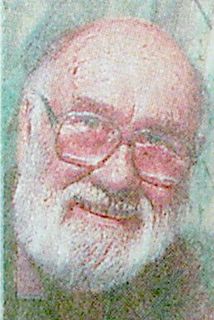
John Bevan Ford - Pioneer Educator.


John Bevan Ford Posted by Picasa

I have just returned from a tangi for a good friend of mine John Bevan Ford

Anybody who has attended a tangi, a gathering to celebrate the passing from this world of a person, will understand the importance of such an occasion.

Mihi eh hoa John – greetings to my friend John.

John’s tangi lasted three days. It began for me with a long drive in pouring rain to visit John lying at his home where he was surrounded by his immediate family and friends; even the rain was symbolic as it represents, in Maori legend, the Sky Father crying at having lost intimacy with the Earth Mother after Tane, God of the forests, separated them as part of the ancient creation legend.

A tangi, unlike a European funeral, provides time for a range of emotions from sadness to humour to be felt and expressed, and for contacts to be renewed. Early next morning John, his wife, his family and close friends, were welcomed, with all due ceremony, onto the Marae (at the meeting house at the College of Education Massey University).

During the day several groups of mourners were welcomed into the meeting house, also with due ceremony, to pay their respects to John and condolences to the family. And during the day endless cups of tea and food was provided.

During the evening after a formal karakia (prayer), time was given to share stories about John with the family. These ranged from the light hearted to the serious, each followed by a waiata or song. A ‘talking stick’ was passed around to those who wanted to contribute. It was a long and, if one can say it, an enjoyable experience. Certainly in the process we all learnt more about John. Having known John since for over thirty years I shared some incidents from the early days.

The next day John was placed on the porch of the meeting house ready to greet, and be greeted by, it seemed, endless groups of people. All were welcomed, as is the custom, with a greeting, speeches and waiata.

A formal ceremony was taken by a friend of Johns. This provided an opportunity to share with all, his philosophy, the beliefs that he expressed through his art, his love of music, and his considerable achievements. Others were invited to contribute and I took the opportunity to say a few words.

Ten koe eh hoa John – greeting to you my good friend
Mihi from Maunga Taranaki – greeting from the mountain where you once lived.
And greeting from your friends who still live there.
There is a saying in Taranaki that: ‘If you are going to bow your head – bow it to a mighty mountain'.
Today John you are that mountain.
In a persons life there are only a few people who really contribute important ideas
And to me, and many others here, you were that person.
We thank you for your wisdom over the years.
We will all miss you but your ideas and art will live forever.
Haere mai eh hoa - farewell my friend.


On John’s site www.fordart.co.nz ,if you wish, you can see his contributions to the art world. To me however his other important contribution was in the field of education. John was chosen to be a part of a group a Maori Art Advisers to introduce Maori Art into New Zealand schools in the early 1960s. Many of these advisers have since gone on to be come well known for their artistic achievements but not before they had made their contribution to the development of creative education in New Zealand.

Today the ideas they contributed are all but forgotten.

I met and worked with those advisers in those early years, which included European advisers as well. They all believed strongly in the natural creativity of all children and introduced teachers to a range of, visual arts, crafts, creative writing, music and dance. And they also encouraged pioneer creative teachers to move into developing integrated related arts programmes to break down the sterile formalism of those days.

Today we need a new group of creative and somewhat idiosyncratic advisers to challenge the deadening effects of the current imposed standardized curriculums and to lead the way into transforming our schools into environments that personalize learning. This is important if we are to develop the full range of the creative talents of all students.

This is the legacy, and the challenge, that John and his friends left us, and one that we at Leading and Learning, and the creative teachers that we know, are dedicated to continuing.

Thank you eh hoa John.

Saturday, September 17, 2005

The power of biography!


All about my life. Posted by Picasa

The voices that are not as often heard in our classrooms as we would imagine are the voices of our students. Yet, if we want to 'engage' students (as is the present concern), we need to appreciate that the 'stuff' of their lives is what makes them learn.

Often we know too little about their lives.

When I walk around classrooms I look for 'evidence' (another current ‘buzz word’) of studies based on their questions followed by answers they have researched about such issues. And I also look to see a range of creative media used to express the concerns of their own lives and not just class themes.

Too often such personalized learning is missing; lost in all the teacher imposed curriculum and assessment requirents; too much teacher 'delivery' of curriculums and not enough 'designing' personalised studies.

One idea to remedy this situation is to study the significant and personal greatness of our student’s lives through biography. This could lead into , or emerge out of, a study of the biography of famous people, or the recording of the oral history of their parents, or of local people of interest.

If we want students to know it is important to have some sense of their own future it might be a good idea to focus, through biography, how various people have achieved their goals.

Students could begin by discussing, or brainstorming, elements to include in their biographies ( to be written by a partner) , including what they might want to achieve when they ‘grow up’. This could include: birth , early life, holidays ,family events, pets, favourite uncles and aunties, favourite music, sports and hobbies etc. The teacher could model the process using her own biography, or by reading extracts of biographies? Perhaps some form of criteria could be drawn up as a guideline?

It would be useful for each student, after a brainstorming session, to list all the important events in their lives as a basis for sharing with a partner who is to write the biography. Get them to select the things that they feel have been important events. Students could share their ideas orally, using their notes, with a partner. Similarities and differences will begin to be noticed (by the teacher?) and ideas discussed will 'spark' lost memories.

After a day or two to reflect partners could start interviewing and writing out the biographies, continually checking with the person concerned for details. It will be important for writers to appreciate that anecdotes/ stories are more impressive than just lists of facts and events. Interviewing subject’s parents might be a useful idea, or they might be asked to supply written comments for the authors to include.

The students could bring images, brought from home, for the writer to include using digital cameras.

Each person could then share the completed biography with class members and questions could be answered either by the author or the subject. Parents could also be invited to this celebration? Finished biographies could be displayed on the wall,the school website, or written up as a class book to be sent home for comment.

The next step is to design curriculums around students: environment, interests, talents, passions and concerns.

With such ideas in place 'engaging' students will no longer be an issue and ‘personalized’ learning will become a reality.

Monday, September 12, 2005

Time for creative teachers and schools!


Value your own ideas! Posted by Picasa

There was a time, before Tomorrows Schools, when teachers actually thought their own philosophies counted for something! And it was not as if these philosophies came out of thin air – they were crafted by all teachers from their experiences, the experiences of others and their reading.

Most teachers to this day are still inspired by particular teachers who, in their time, had the courage to develop ideas that were often not appreciated by the powers that be – or even their fellow teachers! As Sylvia Ashton Warner, an eccentric pioneer New Zealand creative teacher, once wrote, ‘You can tell a creative teacher, he or she is lying in the corridor with arrow in the back fired by fellow teachers!’

We have to learn once again to celebrate, value and share the ideas of our creative teachers!

Teacher’s philosophies in the past were not always gathered from teacher’s courses but, more often than not, were exchanged over a beer or two on a Friday night! And, as well, they often came from unusual sources – from quiet deep thinkers to eccentric art advisers; people who seem to be able to 'see' into the future! Art advisers in particular were great sources of creative ideas in the early days providing teachers with alternative points of view. They were all the more valuable because, along with other advisers, they traveled from school to school demonstrating lessons and spreading ideas.

This form of organic development was a feature of the sixties and seventies.

Unfortunately such haphazard, but creative word of mouth, means of spreading ideas were replaced by the efficiencies of the imposed standardized curriculums of the nineties, and ‘delivered’ by contractual advisers who lacked the passion of the earlier advisers.

In this new process the 'voice' and professional judgement of the teachers has all but disappeared; everything is now 'delivered'.

The time is now right, as the imposed curriculums falter under their own weight, and as teachers begin to resent the resulting joyless compliance, for a new wave of teacher led creativity.Better still would be groups of school sharing the ideas of their creative teachers.

To begin the process we all need to ask what kind of society or community we want to create? We need to consider how we can tap into the creativity and energy of all our students? Then we need to ask what kinds of schools do we need to create this future vision and, more importantly, what teaching beliefs should underpin such schools? We need to draft out our ideas, put them into practice, and to continually reflect on their value and to make necessary improvements. The future will require continual reinvention.

To find the answers to these idea we need to search both within ourselves, listen to our colleagues, our parents, the students and available worldwide.

Collectively we now know enough that no student need fail but only if we are prepared to change our own minds first

To be successful we must stop relying on outside experts to lead us – we need to learn to take responsibility and work with others so as to control our own destinies. If we don’t someone else will – up to now they have!

As Professor Ivan Snook said, to graduating students of Massey University College of Education:

‘The ability of people to participate in society is dependent on the quality of the education they receive. And this depends, not on large bureaucracies, glossy brochures, curriculum documents, or flowery mission statements, but on the personal qualities of teachers… (in their)... task of helping create the future.’

Schools working together


Works for Singapore Posted by Picasa

I have just returned from a very enjoyable week working with a group of schools around Ashburton in Mid Canterbury.

The visit followed up a presentation I gave at their very successful Ashburton 'Magic of Teaching Course' held in Term One.

It was great to be able to travel around a range of mainly rural schools tailoring my advice to suit the needs of individual schools and, as well, to present ideas to groups of teachers, including staff meetings.

I was impressed with the professionalism of all the teachers concerned and their desire to introduce, and share ideas, to improve the educational opportunities of their students. Earlier in the year, at their conference, I had taked about the need to focus on quality teaching and learning and, in particular, to do fewer things well. I also encouraged them to work together to share their own ideas and to become their own experts.

Ever since the imposition of the ‘standardized’ Learning Areas of the early 90s, ( with all their strands, levels and endless learning objectives and the equally confusing assessment and accountability demands) teacher’s voices and professional judgments have not been listened to.

Now that the curriculums are being seen as part of the problem, and not the solution dreamed up by the Ministry technocrats, is the time for teachers to add their 'voices' to the debate.

Now is the time for the ‘magic of teachers’ to be recognized and shared.

Now is the time to appreciate that all real educational advances have been started by creative teachers and that it is these ideas will spread to other teachers, if the conditions are right.

And now the time for a new period of teacher creativity.

The teachers I have been working with in Ashburton are at the ‘leading edge’ of such exciting ideas. On the last day of the week they gathered together to plan how they might be able to work together and to tap into Ministry assistance. The Ministry is now encouraging school collaboration and there is finance available for schools to work together.

This is what the Ashburton teachers intend to do. The Ministry proposal 'Extending High Standards Across Schools, is based on school recognized as ‘highly achieving’ able to ‘demonstrate good practices’ working in ‘collaboration with partner schools’. This would have problems!

The Ashburton schools are developing an important variant; believing that schools that collaborate will have ‘best practices’ to share among themselves. They believe that by identifying such areas of individual excellence, these can be shared with other schools. In this process the individual teachers will gain recognition and all schools will develop quality teaching and learning practices.

Whether they gain Ministry assistance is not vital – but the Minisrty would be lacking if it didn’t recognize a better model than the one they are promoting. Groups of schools who might want to work together would be well advised to check the Ministry proposal. Any group that was to be established could share the costs of focused professional development based on their identified needs as well as sharing their own expertise.

I know of at least one other area where a quality school group has been in operation for a number of years. This group , centred on Blenheim, established their group because: they were frustrated with the breadth of the curriculum and workload issues, they wanted to do less better and sharpen the quality of learning experiences in their schools; and were keen to work together to promote and share such ideas.

It would be great if group could combine primary, intermediate and secondary schools in an area because the issue of transition and mismatch of teaching approaches are real concerns.


Schools collaborating to share their own expertise - an idea for the times!

Monday, September 05, 2005


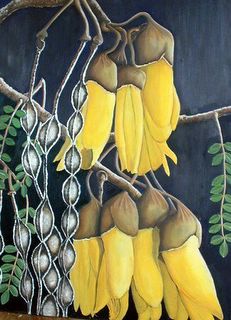
Artists interpretation of kowhai Posted by Picasa

Thursday, September 01, 2005

A great Spring 'Mini Unit'.


Kowhai -great mini unit. Posted by Picasa

Kowhai trees signal the beginning of spring but too often they are taken for granted.

Over the years I have seen teachers make use of the Kowhai, and the good spring weather, as a great integrated mini unit, so I thought I would share some of the ideas I have seen.

What do your students know already about the kowhai? What do kowhais mean to them? What question might they have about them?

Visit a kowhai – almost all New Zealand school has one in their grounds or nearby. At first just admire it using the senses and encouraging imaginative responses. One idea is to write a three line poem ( a simple haiku) .Ask the children for one phrase looking into the tree or flower, another about the branches, and one about the petals lying on the ground , or better still falling from the tree.

If the teacher were to collect some flowers, back in class students could be asked to draw them carefully with pencil and then use coloured pencils. Black biros are great to use also, as are fine line ink pens. Encourage the students to look carefully and to take their time – the secret to a good piece of observation is to: ‘look- draw- look’. An important ‘message’ the students should get is that quality work takes time!

The poems and drawing can be displayed with suitable captions.

The next day students can become amateur botanists and research the plant. The teacher would need to negotiate the study questions with the students about:
the shape of the tree, the bark, the leaves, how the flowers are arranged, and if there are any pods from last year.

Often tui birds will also be found feeding on the trees; research about these birds and what they are feeding on. Tuis make great subjects to draw (best from a suitable photo) and kowhais can be used for the background.

Using the flowers collected previously children can carefully pull them apart to see how many petals there are and what other parts can be seen. Using reference book these parts can be named and counted. Pods from last year can be collected and graphs can be made of how many seeds in a pod, introducing percentages.

Return to the tree and tie a piece of wool on several flowers to watch how quickly the female stigma grow into pods. They grow quickly, thin and long at first, and this growth can be measured and also graphed.

Reference books can be used to gather more information if required. Look for other plants with pods and similar flowers ( peas, beans, broom, gorse) - some students may begin to understand the 'big idea' that quite different plants are classified by their flower structure.

All this material can be placed in student’s topic book, or maths books, or on the wall.

This could be all over in week and the skills developed can be used in future situations.

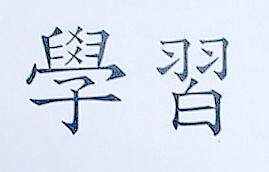
Chinese metaphor for learning


Chinese character for learning. Posted by Picasa

In the Chinese language two characters represent the word learning. The first means ‘to study’ and the second ‘to practice constantly’.

The first character is composed of two parts, a symbol that means ‘to accumulate knowledge’ is placed above symbol of a child in a doorway.

The second character shows ‘a bird developing the ability to leave the nest’. The upper symbol represents flying, the lower youth.

For the Chinese learning is ongoing – to study and practice constantly; and ‘mastery is the way to self improvement’

What does learning mean at your school?

How do students see themselves?

What metaphors about learning does your school share with students?

Wednesday, August 31, 2005

All students can be critical thinkers


Turning on the brain - or turning it off? Posted by Picasa

The key to learning at any age is the presentation of a problem to solve. If the learners accept the challenge then learning is 'on'.

Seems simple enough so why don’t schools give up on their preplanned curriculums and base all learning on rich problems, or projects? Are they frightened their students won’t learn enough (they don’t now) ; or that they won’t be able to measure what it is they are supposed to learn ( today they measure only the obvious – important thing like the joy of learning are just too hard it seems); or they frightened of losing control ( imagine students following their own interests individually or in groups); or are they just too busy trying to cope with all the demands placed on them by those distant from the reality of their classrooms? The worst case scenario would be that they have given up thinking about such things and just want to get on with doing a bad job well!

And why is that, when this rich learning is seen, it is in the primary classrooms where student’s individuality and learning styles is valued? In the secondary schools learning has been fragmented into incomprehension by teachers whose own specialty has been created by this very fragmentation - making them blind to what is really required. Instead they blame their student’s behavior, culture, or anything but their own teaching, and the very schools they work in.

Until they give up on this 'deficit thinking' they will never solve their students growing disengagements, failure or alienation.

When they wake up from their industrial age nightmare the will see there are plenty of good ideas out there to introduce to 'turn' all their students 'on' again.

All of these ideas can loosely be lumped under what can be called ‘inquiry approaches’ – ‘action learning’,’ projects based learning’, whatever. And such teachers will see that schools are almost the last organization to make full use of them in an integrated way. Even two year olds use this approach!!

One approach I have discovered on the web is the ‘Critical Skills Programme’. This is a practical model to develop vitally important skills and dispositions that all learners require. The model originated in the USA in 1981 and is widely used in UK schools. Nothing in the model will surprise creative teachers.

The CPS experiential learning cycle is at the heart of a critical skills classroom which:

• Engages students in a collaborative complex problem solving situation that relates to the real world
• Promotes assessment for learning by encouraging students to reflect on their learning
• Caters for different Learning Styles and Multiple Intelligences.
• And promotes better understanding of content by enabling students to construct individual meaning from their experiences.

A key aspect is the design and use of challenges which are open ended problem solving activities which enable pupils to:

• Develop understanding through performance
• Demonstrate their skills and attitudes
• Attend to the processes of learning and social interaction
• See the ‘big picture’ that makes the work worth doing.

The programme was originally started by asking what skills and dispositions would be vitally important for students have by the time they leave school? Followed by what would a classroom look like that gave conscious and purposeful attention to these skills and dispositions?

I guess the questions could be based on the so called ‘new’ Key Competencies’ that our Ministry policy analysts have adapted from a recent OECD paper to replace their earlier failing standardized curriculums, but that is another story!

The CPS covers the role of the teacher as: a mediator, coach and supporter, and outlines how students would be expected to: work to actively solve problems, reflect on what they have learnt, use negotiated criteria, and display or demonstrate what they have learnt.

The programme also gives guidance about how to ‘cover’ specific learning targets that schools have to comply with.

The primary teaching approach is through thoughtfully designed and related ‘Challenges’. Developing such collaborative challenges is the key to the programme.

If applied across the school a collaborative learning community would be developed where students self esteem, motivation and engagement are maximized.

Now none of this would be surprising to most teachers of young students – but it would be an exciting challenge for those who teach the older students.

I guess people ‘out there’ might have similar models to share?

Monday, August 29, 2005

Schools for learning!


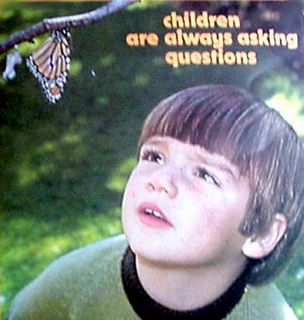
Vital dispositions - curiosity and skeptism! Posted by Picasa

As Robert Fried says, in his excellent book 'The Passionate Learner', ‘Every child is a passionate learner. Children come into the world with a desire to learn that is as natural as the desire to eat move and be loved, their hunger for knowledge, for skills, for feelings of mastery are as strong as any other appetite…..They learn an amazing variety of things in the years before they enter school.

And he continues, ‘we are less likely to see this same passion when we look at kids at school…the passionate learning of their early years begins to decline, often with permanent results.’

Nothing, he says, conspires to deny these children but something gets in the way and as a result learning is slowly turned into a low energy, task orientated compliance activity, lacking the earlier intensity, enthusiasm and joyfulness.

Creative teachers are the key to recapturing this enthusiasm for learning. They are disposed to value the creativity and individuality of their students and they are ever on the alert for student’s interests, or ideas, that they can build on. And, from experience, they know the kind of experiences to introduce that appeal to their students. As Jerome Bruner wrote, such teachers are, ‘aware of the canny art of intellectual temptation.’ It is the things that don’t make sense, amuse, or confuse, that creates the desire to learn.

We need to consider the kind of attributes our students will need to thrive in what will be an unpredictable but potentially exciting future? Once we have thought about this then we need to consider what would classrooms be like if were to give conscious attention to such dispositions?

If we were to re-imagine our schools we would need to come up with something dramatically different from our current ‘egg box’ secondary schools with their genesis in the factory mentality of the 19th C?

Students learn best when they are engaged with real problems that attract their imagination, or conflict with what they currently believe – situations that challenge them to ‘construct’ new meanings and to produce new ideas. Implementing these simple ideas would transform schools we know them.

The challenge for teachers is to create such positive learning environments so that all students become involved in meaningful learning.

Imagine schools dedicated to involving students in real life projects from day one that are ‘rich’ in scientific, mathematical, language and expressive possibilities.

The first thing you would have to give up, according to Seymour Papert renowned expert on children’s learning and computers, is the current idea of curriculum. As another educationalist, Peter Ellyard from Australia has said, ‘we need a just in time curriculum rather than a just in case one’.

And, as part of this idea of a prescribed curriculum, the idea of separate subjects also needs to be ‘re-imagined’ as this fragmentation is a product of past industrial age thinking. Real learning is not fragmented. The future demands learners who can see connections between learning areas - the very attributes that two year old demonstrate everyday. Such an ‘emergent’ curriculum, based on student's question and concerns would need to be linked, by innovative teacher, to the ‘big ideas’ that underpin the requirements of being an informed future orientated citizen.

Literacy, one of the foundation skills of all learning, would be easily integrated into such real life learning. Mathematics however, says Papert, himself a mathematician, needs to be reinvented. Mathematics, he writes, started off as a way of solving real problems but that over time has developed into abstract ‘pure’ maths. He believes we need to reverse the order of things and develop projects that that requires maths to solved.

By exploring such rich integrated experiences students Papert Seymour believes students will develop a sense of themselves as learners able to call upon appropriate content as required. They will see learning as valuable and that setting your own goals and working towards them is vital. A new word ‘learnacy’ may be the most important literary of all. It is the obvious antidote to the current problem of 'disengaged' students.

The biggest challenge of all, for teachers who have long been exposed to a traditional model of transmitting knowledge, even under the guise of discovery methods, or teaching the old stuff in a more constructivist way, would be for them to work alongside their students 'co-constructing' meaning.

There is no need for the passion for learning to be lost. We now know enough now that no child need fail – but only if we changed out ‘our’ minds ( and schools) first.

Time again, it seems, to observe our two year olds in action and figure out how to keep their wonderful curiosity and skepticism alive; far better than looking for inspiration from distant curriculum ‘experts’ with their mind firmly fixed in the last century.

Back to the real basics!


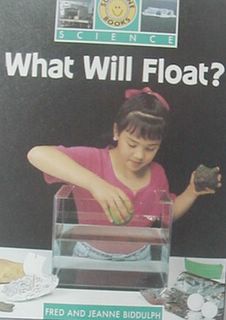
Learners can only construct their own meaning  Posted by Picasa

The whole point of teaching primary science is to help children make better sense of their world and to develop effective ways to go on doing it.’ This is a quote from Fred Biddulph introducing the Sunshine Primary Science Programme ‘Investigating Our World’ (an excellent series of students and teachers books).

If you were to leave out the reference to ‘primary science’ it applies to all learning at any stage and creative teachers of any era would find little to argue with it.

The approach taken in these books was based on extensive research in a number of countries but, in particular, research funded by the now defunct Department of Education, by the University of Waikato. It seems the powerful ideas developed by this research have almost been all but forgotten as a result of structural reforms of Tomorrow’s Schools followed closely by the imposition of almost incoherent curriculum and accountability expectations.

Lets hope, now the Ministry has recognized their imposed curriculums design are part of the problem, that the focus on students as their own ‘meaning makers’ returns to centre stage.

The Waikato research was known as the Learning in Science Project (or LISP for short) and it affirmed what many creative teachers had known intuitively – that students can’t be told what to learn; they have to construct their own personal meaning for themselves.

Of course his makes planning learning objectives that all students will achieve more than a little problematic! And it requires far more than the current emphasis on focusing on thinking strategies.

Both the process of learning and the acquisition of in depth knowledge, or understanding, go hand in hand. As Elwyn Richardson, a New Zealand pioneer teacher of the late 50s wrote, 'any learning without content is learning at risk’. The ‘LISP approach’ (or constructivist learning, or interactive teaching) extends the developmental ideas of Piaget (where children learn through their own activity) and builds in a more positive mediating role for the teacher. This more positive role makes use of the ideas of ‘co-constructivism’ of Lev Vygotsky who wrote that students learn through social interaction as well as experience. Vygotsky wrote that, ‘what a child learns with help today she can do by herself tomorrow’. Constructivism is also in line with the philosophy behind the Reading Recovery programme.

In practical terms classroom teachers can use the approach across the curriculum. Rather than telling, or leading students to the correct preplanned answer, the approach asks teachers to first value student’s questions and their prior views or current knowledge. It also gives an opportunity for teachers to learn along with their students relieving them of the need to know everything in advance (as the ‘curriculum experts’ ask of them).

This is in line with how all new knowledge is developed as any beginning learner moves from 'novice' to 'expert'. In some situations students will actually know more than their teachers and wise teachers will take advantage of such expertise. Often what is discovered will surprise both learners and teachers.

The approach develops in students an awareness of the disciplined approach of the scientist. Teachers, of course, need to expose students to ‘scientific knowledge’ but this will only be accepted by learners if it makes sense to them. At the very least they will have appreciated that there are alternative views. Most importantly this approach allows students (and their teachers) to retain their integrity as learners.

Essentially the approach asks teachers to:

1. Negotiate a learning challenge with the students.

2. Record the initial questions the students want to find out about ( deeper questions may emerge as students become involved).

3. Explore the current answers that students have to their own questions; what are their currents theories or prior ideas. This is vital to later assess growth in understanding against. These can be recorded individually, by groups, or as a class.

4. Negotiate a range of research activities to answer selected questions – and also how the students are going to record or present their findings. This will naturally integrate use of ICT. Ensure students are recording their own interpretations no matter how tentative. The teacher’s role as a challenger of student’s ideas, a co investigator, and as a supporter, is vital at this stage.

5. At the conclusion students need to assess how much their prior ideas (theories) have changed or what important new ideas they have learnt. It is also useful to discuss question students still need to consider if they had more time.

Throughout this process the teacher will be evaluating what new skills students will need and what misconceptions need to be clarified – remembering students ought not to be asked to accept what they cannot understand.

The whole process can be displayed, with an appropriate challenging heading (as a provocation or question) key questions, processes and criteria, on the classroom display areas.

Classrooms ought to celebrate both the students thinking and research and also inform the visitors about the learning process.

It would be great if teachers were to 'rediscover' this powerful teaching and learning approach and it would also be great if students could articulate in their own words how it is they learn.

If this were to be done then all the ‘higher order thinking skills’ would be most useful - but thinking without in depth content places real learning at risk.

Thursday, August 25, 2005

Focus on student creativity


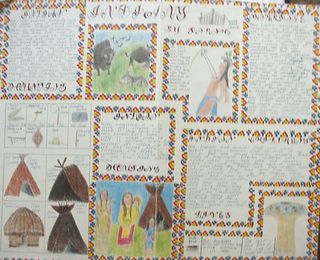
Research by a 10 year old in the 1970s! Posted by Picasa

Above is a piece of work completed by a ten year old. The student was lucky enough to be taught by a gifted teacher whose philosophy was challenge his students to do the best work they could, and in the process, to develop in all students their own identity as self motivated learners.

The piece of work was done in the late 60s and 70s at a time when most classrooms reflected the traditional teacher dominated classrooms that were the norm in the 1950s/60s.

This dramatic change in teaching philosophy that this piece of work represents was led by individual creative teachers supported mainly by departmental art advisers who appreciated the value of creativity in education.

They were exciting times and heralded the biggest changes that had ever happened in primary education to this day. I was lucky enough to be a part of such a revolution and the amazing thing was that all the teachers involved believed in their own professionalism for inspiration and courage. They learnt collegially from each other.

Recently I had the occasion to visit every classroom in a half dozen school and I left the experience somewhat depressed. Rather than in-depth and individualistic quality art, language and research, being a feature, the rooms seem to celebrate imposed ideas from distant 'experts' and their local 'evangelists'.

Walls that should've celebrated student thinking and creativity were covered with ‘de Bonos hats’, diagrams of Gardner’s Multiple Intelligences, Art Costa's Intelligent Behaviours lists, Graphic Oranisers , endless teacher written out ‘learning intentions’ and Blooms’ taxonomy. And of course we now have learning competencies not to mention values.

'Higher Order Thinking', and the importance of process, have sure caught on. The trouble is, when you mentally remove all this impressive material, there is not the quality work to be seen – and even if there were there wouldn’t be the space! Higher order thinking for 'thin learning'!

The best place for all this valuable information might be best recorded is an student learning strategies book?

The teacher, who helped the student achieve the quality study on Sioux Indians in the 70 illustrated above, knew nothing of Multiple Intelligences, but his students explored all studies in an integrated approach using a range of viewpoints. He knew nothing of ‘learning styles’ but he worked with students as individuals noting their strengths and weaknesses and helped them accordingly. He knew nothing about Intelligent Behaviors, or Bloom’s question levels, but he worked alongside learners to ensure their question required deep thinking and their answers reflected thoughtful and personal responses. And, of course, he would have simply called 'learning competencies' learning 'how to learn'. Had he known about all these exciting discoveries he would have been thrilled to have had his personal philosophy affirmed, and he would have used their ideas, but he would not have celebrated the process they articulated so blatantly.

All these 'experts', reflected in the classrooms I visited, have equally confirmed my own philosophy, but they should be seen as a means to an end. Students, as Gardner himself would say, need to be able to demonstrate, display, or perform, what it is they now can do with real depth, expertise and understanding.

Process and product are both important but for the learner the challenge is to develop new ideas or learning beyond what they had previously been able to do. The true test of their learning is, as all the ‘experts’ above would say, is if they can articulate the process and use this learning independently in another setting.

Creativity, or learning, is both a process and a product; and whatever is produced is the launching pad for the next page, piece of work, poem, art or research project. The true test of learning is always the ‘next time’.

But all is not lost.

Today I visited every classroom at Highlands Intermediate School in my home town. All the classrooms are worthy modern versions of the classrooms I visited in the 1970s and 80s. The principal, Eric Shaw, as he walked me around the school expressed the view that all the Higher Order Thinking ideas were important to him but only as they are used in the service of teachers to ensuring students can achieve quality work.

I left reassured.

Education is about ensuring the passion to learn, which is each learner’s birthright, is kept alive and it is a worry when we currently have a problem of ‘disengaged’ learners.

I was more inspired by the work of the teachers at Highlands than the eye catching but diverting wall displays of de Bono’s hats! Education is about celebrating student creativity and not the process, no matter how valuable, as elaborated by distant experts.

I don’t know if anyone out there shares my concerns but if we are not careful we might begin to celebrate the process and forget about the substance.

Wednesday, August 24, 2005

Some 'cool' thinking!


A leading country! Posted by Picasa

Finland is a leading example of successful competitive society that also provides social services to all its citizens at an affordable price. Other rich countries like the USA obviously are not as clever where the gap between the rich and the poor is widening and all indicators of an equitable country are spiraling down. Possibly more people in jail per head of population than any other county.

And things are not much better in New Zealand; a country that was once a world leader in equity and fairness.

In Finland all citizens have an equal shot at life, liberty and happiness and it seems the Finns are proud of their egalitarian tradition – one we have replaced by a winner takes all philosophy. Finland has no private schools, no closed communities where the rich can cut themselves off from reality.

Key to their success is a word, ‘talkoot’ that means roughly ‘doing work together’ in contrast to our self centred individualistic approach. They recognize that they are ‘all in the same boat’ while we seem dedicated to divisive politics.

The Finnish education system is the best in the world but our tame policy advisers can see no further than the failed polices of the UK and the US.

The Finns have no demeaning league tables and their national curriculum is more a guide. The only national exams are at 18 - their students are not tested at 11, 14, 16, 17 and 18 as in the UK. All the Finns do is have annual sample tests to gauge standards as we do in NZ. At least one of our political parties wants to introduce national testing and teacher performance pay! In the US testing and political interference has all but killed school initiative.

Schools in Finland are autonomous and teachers are trusted and, as a result, teaching quality is high across all schools - and they have no ‘achievement tail’ as we do. This is course is helped by less cultural variation than in New Zealand but their results are, non the less, impressive.

One reason for their schools success is that there is strong support for education and politicians do not feel the need to ‘slag off’ teachers for poor standards. That our primary teachers are still recognized worldwide for their creativity is more inspite of the system than because of it – indeed imposed compliance requirements have all but killed off the joy of teaching for many teachers!

Less ‘top down’ compliance and more school and community involvement would be a lesson for us. This at least is beginning after years of enforced competition. And we need to really value our teachers by training them well and trusting their professionalism and judgment. Our teachers are paying the price for being in a high accountable and low trust environment. Too many strategy plans, prescribed outcomes, performance indicators and targets to be sent to the Ministry, let alone the deadening effect of the Education Review Office.

Lets decide what we want as a country, define some basic perimeters, and trust schools, working alongside their communities, to get on with the job. We need school willing to try out things and continually improve by keeping and sharing what works.

This is too simple for our desk bound technocrats planning away in their Ivory Towers.

We could learn a lot from Finland – and in the process possibly rediscover what we already new.

Missing: A Vision for our country!


Rod Orams - words of wisdom. Posted by Picasa

What is the vision for our country?

Although it is election time very few politicians seem to be concerned about the importance of having a shared vision for our country – they are of course focused on tax promises and winning elections. While one party blatantly appeals to individual selfishness and the other does at least focus more on the common good, what is missing is any consideration of the ‘bigger picture’ of where we are going. Nor are we being informed about the particular problems all countries have to face up to as we enter a post industrial era. Missing is a dialogue with all citizens about such issues, and possible future scenarios, that are the basis of a democracy.

What are the issues and opportunities New Zealand faces? There are, says business commentator Rod Orams, ‘big dynamics out there reshaping the world economy’, he asks, do the politicians ‘have any idea what we need to do to survive the threats and capitalize on the opportunities?’

The past has belonged to a certain kind of mind – the 'number crunchers' and linear thinkers – computer, or accountant like, qualities. The future, according to Daniel Pink in his book ‘A Whole New Mind’, belongs to a very different kind of people – creators, those with empathy, those who can recognize patterns and see connections between things, and, most of all, people who are their own meaning makers.

Orams, and others, point out that the ‘white collar’ knowledge workers are increasingly living in India and other low wage countries while technology is eliminating or automating certain kinds of work. China, in particular, is now able to produce in abundance manufacturing goods that make high wage Western countries like New Zealand vulnerable. As India and China ‘grow’ they will develop their own middle class who will become, in the very near future, their own inbuilt markets.

So, if some countries can do it cheaper, and computers can do it faster, what is it we need to do in New Zealand to stay ‘ahead of the wave’ and thrive in the future? More than lowering taxes I would think! And how will this relate to our education system? These are the questions we ought to be facing!

Orams warns of us, ‘that on our current trajectory we will trash our environment over the next couple of decades, making New Zealand a less desirable place to visit or grow things.’

He continues, ‘all we need to do is value what we have – our creativity, innovation, culture and environment – figure out how to turn these into unique services and products and learn how to sell them to the world.’

Only a few vanguard companies are doing this – the remainder, he says, if they don’t change, will drag the country down with them. What is required is imagination and ingenuity not simplistic tax cuts.

Innovative companies are doing just this, tapping into ‘kiwi’ creativity and risk taking and developing cultures that encourage workers to show initiative and to be continually inventive.

This certainly is not being reflected in our inflexible technocratic education system with its focus on preplanned measurable outcomes and set achievement targets.
We will need to create, or offer qualities, that are beyond just ‘high tech’. Information age skills will not be enough – we need to value empathy (nursing is a growing field), inventiveness, environmental sustainability, and to ensure our education system ‘produces’ students who have the future mindsets to take advantage of whatever opportunities come their way. It will be a ‘high tech high touch world’.

If the future depends on individual creativity and a sense of common destiny then schools will have to change dramatically. They will need to move away from the mass education vision of the last century and transform themselves into personalizing of learning by creating environments that develop the full potential and talents of all students.

To achieve a positive future scenario Orams believes we will need vision and leadership from our politicians. We need more than slogans and bribes and the bland ‘one dimensional’, managerialism and materialism that have infected us these past decades. To move beyond such a narrow self interest we need to create a national sense of purpose, or vision, that we all can see a role in; not just the wealthy few. And it is important that this sense of vision and empowerment should reach down to every one of us and not controlled by distant technocrats on our behalf. Elections ought not a time for selfish self interest but rather time for a national conversation about what kind of country we want to become, and what we all can do to contribute to realizing our shared destiny.

Education is an important means to achieve this.

If we were to 'revision' our country schools and teachers would have to change their mindsets as well. As in the business world, there are innovative schools and creative teachers we can learn from.

New minds are need to develop an innovative and inclusive country

It is, as Orams concludes, ‘a big ask’.

Thursday, August 18, 2005

From compliance to creativity!


'Top down' planning! Posted by Picasa


‘Things, they are a changing’, and fast!

The techno logical curriculums of the early 90s are now being seen for what they are, hallucinations of experts working away in their ivory towers. They are finally crumbling and coming to an end.

Anyway, all they ever were was a rehash of the earlier failed behavioral objectives of the last century, repackaged as part of an accountability movement, brought in on the back of the now equally struggling market forces ideology. Efficiency, testing and measurement were, it seemed, all that was to be needed to ensure all students achieved like good little educational consumers. And of course competition.

It was as if some updated Victorian white Anglo God had said, ‘I know, I have a good idea. In the beginning, before Tomorrows Schools, there was only woolly thinking, so let’s divide the world into seven Learning Areas, each with four Strands, nine Levels, and countless trivial Learning Objectives, and give them to the teachers. And then we’ll send down auditors (ERO) to see it will be done! And all will be well.’

And anyway, said the economists, the ‘experts’ and their 'castrati', there is no alternative (TINA). Those who warned schools of the dangers ahead were, as heretics, were sent into the wilderness. Some started e-zines to keep the lost ideas alive! And anyway, schools were too busy conforming, complying and competing, to even notice the dangers, and ‘delivered’ the curriculum and checked off all the objectives. But all was not well.

Of course, as it was an impossible task, all felt inadequate, but teachers kept this to them selves, preferring to pretend that the Emperor has a full set of curriculum clothes. Some schools, to save themselves, took on board tracking sheets ( a totally pointless task) for teachers to tick of objectives covered, and again, for a while, all was well.

As those in the Ivory Towers heard the cries of pain they quickly modified the curriculum ( following, as usual, a similar idea from overseas) and ‘revised’ the curriculum requirements, placing greater emphasis on Literacy and Numeracy and said, ‘have fun with the rest’. This too, seemed a good idea at the time, but lots of creative areas were ‘gobbled up by the evil twins of literacy and numeracy’. And anyway, there were now ‘targets’ to aim for; as usual another idea copied from overseas.

This, however, was only a temporary cure so the curriculums were taken away to be ‘stock- taked’. And then, all of a sudden, it was discovered by the ‘wise ones’ in their Research Towers that it was actually the teacher’s skill that was the real factor in student achievement, and not the curriculums. In the distance the heretics celebrated.

Such heretics voices had become more acceptable. They had amused teachers with tales, saying such things as: ‘the curriculums were stuffed, in both senses of the word’; that they were ‘obese and full of unhealthy fat’; some said, ‘it was death by strands’; while other called it ‘the KFC curriculum – can I have one strand, two level and some objectives to take away please!’

These tales began to spread and those in the Ivory Towers said, ‘forget the objectives just cover the big ideas’. And an idea, from the olden days, ‘learning how to learn’, was repackaged and delivered as ‘key competencies’ to show how wise they still were. There was even talk of ‘collapsing the curriculum’, which was a bit late, as it had virtually disappeared in creative schools anyway.

And, sadly, some teachers were heard to be thanking the 'wise ones' for saving them from the same 'wise ones' earlier advice; such is the power of a compliance mindset.

But a few realized that they had been fooled and began to appreciate the words of the heretics such as: ‘do fewer things well’; 'value students voices’; ‘forget achievement, go for love of learning’; ‘quality rather than quantity’; 'personalize learning'; ‘integrate learning’; ‘work along side the child to co-create knowledge’; ‘uncover and amplify student talents’; and ‘judge success of students by what they can do or demonstrate’. And, they remembered, they already knew of this wisdom, for it was once their own, and they began to caste out the endless clear folders they thought would save them, and began to focus on teaching and learning again. And they felt happy at last.

A new agenda began to develop, starting from individual creative teachers, and spreading contagiously as if a benign virus. Out went the, ‘top down’ linear thinking; the endless ticking that had bedeviled them; the obsession with evidence based and data driven teaching, so loved by the technocrats with time on their hands; slowly out went the low trust audit culture of dependency; and the ideas spread. For they were good.

New ideas are now in the air and, where they fall on fertile ground, they grow, change and spread. All they need are the right conditions – courage and leadership.

As now, as we now leave the cold ‘information age’ (all the knowledge workers live in India!), we enter a new exciting era. A new vision of creativity and imagination is ahead of us. There are new worlds to be explored by those happy to leave the tracks formed by old habits. There are new words to inspire future educators like: 'passion and love of learning'; about 'the need to help learners see patterns and connections, to integrate learning'; about 'the power of trust and relationships'; about 'deep learning and mindfulness'; about 'valuing aesthetics, design and artistry in all things'; about 'caring for the heart and spirit of people'; about 'compassion and empathy'; about 'learning through story and metaphor'; and most of all 'about joyfulness, play, and laughter'.

It is no longer to be all about measurable achievement; it is to be about what it is to be fully human. And it is good.

And when it happens all will be well in the world again.

Wednesday, August 17, 2005

Education for the student's future or for our past?


No nothing experts killing learning! Posted by Picasa

It never fails to depress me what ‘experts’ consider to be education.

The most encouraging national system of education I have read about lately was Finland ( see previous blog) but now it is back to reality!

Few countries, according to business guru Peter Drucker, have as yet designed an education system for the 21stC. Finland must be considered as one county that has. And few schools, according to educationalist Michael Fullan, ironically, can be called ‘Learning Organizations’. I do know, however, that there are many schools worldwide that are well on the way to becoming learning organizations based on shared values and beliefs, but that these are exceptions rather than the rule. Even in the most unlikely schools, creative teachers exist, struggling to develop the passions, talents and dreams of their students.

It is to these schools, and creative teachers, that we need to look to for future possibilities and not to the politicians with there vested interests, tame experts, and fear of losing power!

A small country like New Zealand has a a great chance to develop a creative education system if it had the wit, the imagination and the intelligence to do so at the top. But to do this it would need to get rid of the constraints that currently diminish such a possibility. By tapping into ideas from such countries as Finland, by listening to creative teachers and schools , by inviting real educationists to visit , and most of all by having a real conversation with all communities about what they want for all their children, it could be done. There is plenty of wisdom to be tapped and it sure is not limited to those who skulk around the corridors of power.

New Zealand has a well earned reputation for its primary education, even though at election time, conservative politicians can’t wait to blame every society fault on schools. Yet again we hear the failing ideas of, ‘back to basics’, national testing and teacher performance pay as solutions. The countries that we currently follow mindlessly have already tried such things and they can’t even get into the OECD tables themselves!

Pressure to succeed to achieve narrow achievement targets are destroying teacher initiative in the UK and have long destroyed whatever there was in the USA ( except for important non government exceptions). And such soul destroying innovations are slowly doing the same in New Zealand.

We have the best primary teachers in the world. We should celebrate this and tap into and share their wisdom. Once, when I was working in an International school (really an American school), I was struck by a comment by one of the US teachers (with a PhD in Curriculum Design) about a NZ teacher teaching in the class next door. He couldn’t get over how she could do such marvelous work with her students when she didn’t seem to follow the learning objectives of the curriculum guides. New Zealand primary teachers were regarded with genuine awe; they still retained their spontaneity and initiative, valued students 'voices' not the 'dead hand' of the curriculum experts.


Today I received the latest book from the ASCD. A quick glance (an example of ‘thin slicing’) saved me from bothering to read it all. It was an attempt by the writers to help classroom teachers (more 'technicians') to make best use of the standardized curriculums that they all follow in the 'land of the free'!

The American system is firmly locked into an industrial – efficiency model of teaching that relates to ideas introduced in the early years of the 20th C. The ASCD book was another attempt to make this standards system successful – a way to ensure that the ideas devised from afar are applied with efficiency. Talk about making a bad system better; kind of up-dating an inefficient factory model to a technocratic age. George Orwell would have been proud, as would've Ronald McDonald! No room for spontaneity, individuality (of students and teachers) creativity, imagination and alternative points of view. It all seemed a bit like Russia in the 50s. And all this, as we enter an age of speed, choice, unpredictability and creativity – where an individual’s talent and initiative will be a countries number one capital.

While in Finland the ghost of John Dewey would be thrilled.

Meanwhile in New Zealand at the edge of the world (some would say 'the edge of great possibility') we tinker along 'rearranging the deck chairs on the Titanic'. The conservative opposition party, in particular, is getting us ready to return to a Victorian Age!

Across the Tasman the agenda of the past is rolling out as an example to avoid (or for some vote hungry politicians to follow). Their Federal Minister, like some educational dinosaur pining for the past, wants all schools to be tested against national benchmarks in Literacy and Numeracy and for results to be published and even posted outside the schools on billboards. Whatever happened to the ‘clever country’ vision?

This follows the failed ideas introduced in the UK and is exactly what the those in Finland have deliberately avoided because they felt such moves, distort teaching, eats up teaching time, narrows the curriculum, destroys collegiality between schools and sharing of ideas, and fails to focus on the attributes and disposition students will need to thrive in the 21stC. Most of all such 'top down technocratic dogma' destroys the professional judgment and creativity of teachers and their communities to design education to suit their own students. All this ‘back to basics’ conformity pushed on schools in the name of the buzzword of ‘accountability’ – but for what - the uncreative country? Education has been turned into a form of competetive consumerism with students being tested on very narrow criteria – very little to do with entrepreneurship! Mind you most entrepreneurs didn’t do well at school.

We all know what happens to people under pressure to perform!

Finland sound better every day!

Tuesday, August 16, 2005

Top of the learning class!


Learning from the best Posted by Picasa

Politicians love reports that place their county at the top of the class and this is no more so than education. No matter how you look at it (depending on the political party concerned) New Zealand has always done well in international tests. If there is a problem in New Zealand it with what is called our long achievement tail – and the answer to this in New Zealand is to focus on basics, formal teaching and testing.

With this in mind it was interesting read that the country that comes top in the world (in reading and science) in the latest OECD testing is Finland. New Zealand came fifth and eighth respectively. The countries 'our' Ministry policy analysts seem to follow, the UK and the US (with their literacy and numeracy obsessions), were not in the top sixteen (which is as far the tables went).

So it would seem we would be well advised to study what it is the Finnish do

Teachers who believe in a creative way of teaching will be reassured.

Students from an early age set their own goals and determine the speed of their learning depending on their needs. Students learning styles are valued and, during the school day, they work in mixed ablity groups at a variety of tasks that they themselves have negotiated. Formal teaching is uncommon. Students at all ages, helped by their parents and teachers, establish individual learning plans and set their own goals. Those who need special help receive it and, if they want to progress faster, they can do so.

This is personalized learning in practice.

The OECD test results indicate the Finns do better at educating, not only their less gifted, but they also significantly reduce the differences between boys and girls. They do, it has to be admitted, have the advantage of having a reasonably homogenous society.

So what is it the the Finn’s do right? Interestingly their students do not start formal schooling until they are seven and, as well,they spend no more than thirty hours a week (including homework) on schoolwork. More importantly they do not rely on aggressive testing, nor an emphasis on 'back to basics', or tougher discipline; and problems that beleaguer other countries such as, bullying, drug use, disrespect and school failure, are rare.

Al this has occurred since the mid seventies when the Finns overhauled their, then more traditional, system so their students would thrive in a new knowledge–based society. At this point schools shifted to a more ‘student centred’ approach giving more power to teachers and more attention to students individual needs. National exams were abolished and finally, in 1994, school administration was radically decentralized and freedom given to schools to set their own educational priorities.

Something lke this almost happened in New Zealand but.....

Finnish teachers are well trained and respected and enjoy a high degree of autonomy. They are free to use whatever classroom methods they like, with curriculums they have devised. Once hired teachers are not subject to regular inspection, nor are they expected to waste time on excessive paper work!

Standardized testing is shunned, with the belief that they take up valuable learning time, and penalize students who want to figure things out their own way. Standardized teaching, they believe, results in teachers teaching to the tests, and narrowing the curriculum in the process.

Students are taught to evaluate themselves, right from preschool, to help them take greater responsibity for their own work. Students are encouraged to think about what didn’t go well and then to consider what they need to do to accomplish their tasks - comparing their progress to their previous personal best.

Students work both independently and cooperatively. They are encouraged to learn by seeking out their own information and to value their own thinking. Students of all abilities benefit from working together with the stronger students helping the weaker students, while teacher circulate around, listening for problems, helping and giving encouragement as appropriate. Students are also encouraged to learn from their mistakes in an environment that is careful not to embarrass learners. Slower learners are given intense support but, rather than remedial help being seen as failure, the Finns treat it as an opportunity for students to improve. Students, with special learning needs, receive individualized programmes that focus on self set achievable goals. Disruptive students are extremely rare. Teachers work on the premise that if students are not succeeding teachers need to look hard at their teaching.

The Finnish system offers its students the promise of patience, tolerance, trust in teachers and learners, and a self critical commitment to excellence. Finnish schools are flexible, easygoing and inclusive. Students reflect responsibity because they are not exposed to imposed arbitrary authority and value the freedom to learn.

This would be revolutionary to the traditionalists but would be confirmation for a lot of teachers in New Zealand.

If only we had the courage to transform our schools along similar lines rather than the current timid obsession with tinkering with our dysfunctional system.