Showing posts with label School Vision. Show all posts

Friday, March 29, 2019

Teachers - your future is at stake. Please read and add your voices to the debate


Educational Readings Friday 29th March 2019

Teachers:  Your future is at stake!


The 7th April is the last day  to make your views known about the proposals included in the Tomorrow’s Schools Review report  ‘Our Schooling Future: Stronger Together’.

The report outlines the possibility of the biggest change in our education system since the introduction of the original Tomorrow’s Schools over three decades ago.

Before Tomorrow’ Schools primary schools were administered by regional Education Boards. These Boards appointed teachers, provided advisory help and looked after school finance and grounds. Alongside the Boards were Education Department Inspectors who assessed teacher and school performance. There was no doubt that these Boards needed revision but, in the change to self-managing schools, a ‘few babies were thrown out with the bathwater’.

For those involved in Tomorrow’s Schools they were exciting times. BOTs members had to be appointed and were soon involved in preparing Charters and writing endless policies and facing up to
building and grounds issues. Sadly not all schools were equal and some found it difficulty gaining expertise from BOT members.

It’s important to note that the changes were not a response of community dissatisfaction, far from it, but were part of a political shift towards a market forces led society based on a belief in business efficiency being applied to all areas of government would have positive results. After three decades we
are now paying the price and the inequality resulting from the changes sees schools now enrol students disadvantaged by this inequality. It is also true to say many citizens gained in wealth and some schools (mainly it seems large secondary schools) in high socio economic areas thrived – and today, understandably through self-interest, are resisting any changes.

The ‘self-managing’ aspect of schooling was also lost to a degree when the National government introduced the New Zealand Curriculum along with a set of Learning Area documents, each of which outlined strands, level of achievement
and an impossible number of learning objectives to be assessed and reported on. In 2007 a Labour government saw the light of day and introduced (in 2007) a totally revised New Zealand Curriculum which had (has) broad acceptance. Sadly before this could be ‘bedded in’ a new National government introduced their reactionary National Standards along with assessment and documentation demands enforced by ERO.

So that brings us to today. A new government and no National Standards and the Review.

Things need to change. 

Promised levels of student achievement have not eventuated and
the system is not working well enough for our most disadvantaged.

We need a different way to think about our schooling system.

Please read the Review document and the voices below speaking out for and against. Make an email submission of your concerns and view to tomorrows.schools@education.govt.nz

Further information about the Review is available


Allan Alach   Bruce Hammonds


Take a quick look at the articles below both for and against.


Tomorrow's Schools quick submission guide from the NZEI and their response to the Review.

‘The government is currently reviewing Tomorrow’s Schools – the name given to the reforms that dramatically changed our schools nearly 30 years ago - and the NZEI wants to make it easy for you to have your say about the future of education.’

Tomorrow when the war began

Auckland Grammar - against!!
‘Analysis: A growing group of schools across the country have launched a coordinated opposition to the Tomorrow’s Schools proposed changes, but the campaign is full of misinformation.On Tuesday, a group of 49 (and growing) primary and high schools officially launched the Community Schools Alliance.The alliance took out full-page ads in the NZ Herald and Dominion Post, as well as sending out a press release, setting up a website, a Twitter account and a Facebook page.’

Claire Amos - for
Claire Amos interview by Jack Tame on Breakfast TV

‘A very balanced review of the Tomorrow’s Schools Review in which she faces up to the criticism of the Auckland Alliance of large secondary schools against the proposals. Claire is concerned with every school, not just those that have done well under the current system.’

Choice vs Equity: A Personal Response to Tomorrows' Schools Review

‘I have been quite surprised to see the response from some to “Say no to the Haque Plan”. First of all, it is not the Haque Plan, rather it is the Tomorrow’s Schools Review Report and should be
Maurie Abraham - for
referred to as such.Secondly, it contains many recommendations falling under 8 key issues, making it very difficult to give the whole report a blanket ‘Yes’ or ‘No’. Anyone with an open-minded approach would find favour with some of the recommendations, would be unsure about some and would want to explore further, and would be quite opposed to others. A consultation process allows such a range of responses to be submitted and considered.’

Education Hubs sensible and overdue

‘Opinion: I notice some of my principal colleagues have taken against the recommendation of the Tomorrow's Schools
A principal's opinion
Taskforce to introduce Education Hubs
, a regional structure that will take over some of the jobs done by principals and boards of trustees.  Here's why I think Hubs are a sensible and overdue change to the way we run our school system.’

Schools launch $20,000-plus campaign against Tomorrow's Schools reforms

‘The "Community Schools Alliance", backed by 43 of the country's 2431 state and integrated schools, opposes a scheme by a task force led by former principal Bali Haque for about 20 regional "hubs" to take over most powers from elected school boards.’

Dr Liz Gordon – the result of 30 years of Tomorrow’s Schools

‘Two main societal effects occurred in the 30 years of school choice.  First, ‘exclusive’ schools became larger and larger, milking their social cachet as the top schools in the country for financial and reputational gain.  That such status was so patently unearned, forged from the social and educational characteristics of their privileged, ready-to-learn, white students and large parental donations, was a source of particular angst for me Second, schools at the ‘top’ and ‘bottom’ of the social spectrum faced increasing social separation.’

Cathy Wylie outlines new wave of change for New Zealand Schools 2012!

Cathy Wylie - for
“In 1986 an ‘earthquake ‘hit education in the form of ‘Tomorrows Schools’; following the publication of the Picot Report self-managing schools were born. Now, almost three decades later, A  NZCER  chief researcher Cathy Wylie has written a definitive and compelling story of school self-management called ’Vital Connections: Why We Need More Than Self-managing Schools’.”

Trust Teachers—They’re the Experts

‘His subsequent book, What School Could Be Ted Dintersmith,
describes the best of what he saw—and highlights his fervent belief in the value of teacher expertise, student agency, and locally derived solutions. Taken as a whole, the book is a rallying cry for an overhaul of the American educational system.’


Saturday, March 09, 2019

Innovative Learning Environments - and the need for imagination and creativity


Education Readings

Introduction to readings
It would seem many schools are still locked into the assessment and associated documentation required by National Standards and as a result are dedicating too much of their time to literacy and numeracy – as important as they are. Bruce and I have long believed that the most important thing is to expose students to a rich thinking curriculum – a curriculum that integrates areas
of the curriculum as required. Nothing new in this. Elwyn Richardson in his wonderful book In theEarly World (available NZCER) written in the 60s saw his students as a community of artists and scientists exploring their environment and   their personal concerns. More recently Professor Peter O’Conner has expressed the need to develop programmes to develop student creativity (November 2018 NZPF Magazine) and quoted John Dewey, ‘the arts are tools by which we train the imagination…its only when we imagine that we can be better, that we can really change’.
Time now for some creativity and imagination in our schools.
Allan Alach
Bruce Hammond
Innovative Learning Environments – where’s the evidence?
‘In an open letter to Education Minister Chris Hipkins, parent Kia King outlines her concerns that there is no evidence to show that innovative learning environments can support enhanced teaching and learning.’
Innovative Learning Environments – here’s the evidence
‘Educational Consultant and Director of Leading Learning Mark Osborne responds to two big questions: Why is the design of classrooms changing? And how can we be sure that ‘innovative learning environments’ are actually leading to better teaching and learning?’
Inside an ‘Innovative Learning Environment – for and against
‘One of the great advantages touted is that ILEs create
collaborative teaching. Staff, from the same or different departments, must work together. They share the space. There are no walls, every move is under examination not only by their students but also by their peers. It’s the complete deprivatisation of practice. Proponents say that it allows weaker practitioners to learn from their stronger counterparts - to observe teaching techniques and behaviour management in action.’ Others have their doubts.
Tomorrow's Schools Review: Winner vs Loser Schools!
Maurie Abrahams
‘One innovative principal’s view. ‘I have been emotionally shaken by what I heard about the willingness of some school leaders to adopt the position that everything is OK for us so leave it as it is! So much so that I carefully chose the discussion tables I went to so that I could avoid hearing this position being promoted. I failed!Yet, despite that experience I still feel optimistic. The generational shift occurring across many professions and institutions will not bypass education and school leadership.’ By Maurie Abrahams - Hobsonville Point School
What Makes a Good School Culture?
‘Most principals have an instinctive awareness that organizational culture is a key element of school success. They might say their school has a “good culture” when teachers are expressing a shared vision and students are succeeding — or that they need to “work on school culture” when several teachers resign or student discipline rates rise. But like many organizational leaders, principals may get stymied when they actually try to describe the elements that create a positive culture.’
Russell Bishop: Who’s to blame for Māori failures at school?
Russell Bishop
‘In 1998, I wrote a book Culture Counts, where I suggested that the most important thing teachers could do, before they could do the job of teaching, was to establish figurative whakapapa-type relationships with Māori students and their families. This would let the students and their families know that you were serious and in your classroom, Māori could succeed. That’s what was missing from the schools and the classrooms where Māori kids weren’t achieving at the level they should — a base of whanaungatanga.’
The Artistry of Teaching
‘There is one goal [of education] that, if not achieved, makes the
Seymour Saraon
achievement of all other goals very unlikely. That goal is to create those conditions that make students want to learn; not have to learn but want to learn more about self, others, and the world
. The overarching purpose of schooling and its governance is to support that goal, i.e., to create and sustain contexts of productive learning supportive of the natural curiosity and wonder with which children start schooling.’ Seymour Sarason
Imagination, Inquiry, and Agency
‘Finish this sentence…“Imagine a place where students could…”Is that place your school? What would it take for that place to be a reality for your students? What do you think school could, and should be? That question is the focus of thousands of conversations in school communities today. It’s a sign of the concern, the angst, and for some even the desperation to better understand how we can more relevantly prepare our students for the rapidly changing modern world we all now live in.’
Article: ‘If all of that testing had been improving us, we would have been the highest-achieving nation in the world.' Here’s what does work in school reform
‘So what should this country be doing to improve public schools? For one thing, pay attention to the social and emotional needs of students so that they are prepared to tackle academic work at school, Darling-Hammond said. Darling-Hammond cited these policies in high-performing countries: Equitable resources to schools. Major investments in educator preparation and ongoing support Schools designed to support teacher and student learning. Equitable access to a rich, thinking curriculum. Performance assessments focused on higher order skills that are used to guide learning.’
5 reasons why data is a waste of everyone's time
‘Why do we put so much focus on data? It's unreliable, confuses pupils and teachers, and takes up far too much time, writes one teacher.’
Simple Tips for Boosting Teacher Resilience
‘Try these quick and easy ways to build resilience and relieve stress.’
Deconstructing “Scaffolding”
By Alfie Kohn
‘But as I’ve thought more carefully about scaffolding — and watched as it, like so many other promising terms, has been appropriated by non- and even anti-progressive educators – I’ve become increasingly skeptical. Here are some questions I think we might want to ask when the word is casually tossed around.’
http://bit.ly/2XGKXyd

A couple of Bruce’s Oldies
Transforming Secondary Education – the most difficult challenge of all. Thoughts from a past age – ‘Young Lives at Stake’ by Charity James
‘Charity James believed it was important to get secondary education right if all students were to leave able to take advantage of the exciting opportunities the future might offer.  The challenge remains. Secondary schools need a radical reappraisal to ameliorate the effects of obvious social and cultural disadvantages and also to develop the needs, talents and gifts of all students.’
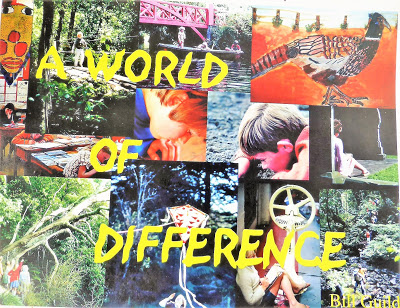
'A World of Difference’: the philosophy of a Taranaki pioneer creative teacher - Bill Guild

‘The ideas that Bill developed 1970- 1986 may be useful for today's teachers and they return their focus to developing students creativity and imagination.’


Friday, September 28, 2018

The power of imagination / getting creative / teaching as an art / Reggio Emilia / school vision..

Time to refresh your energy

Education Readings
 By Allan Alach

Every week Bruce Hammonds and I collect articles to share with teachers to encourage a creative approach to teaching and learning. I welcome suggested articles, so if you come across a gem, email it to me at allanalach@inspire.net.nz

Time for art and history to rhyme
Peter O’Connor:
‘The international evidence is crystal clear on the value of the arts in education.  Children in arts rich schools do better academically across all areas of the curriculum. They are more engaged and motivated to come to school.  Children who play musical instruments do better at maths, children who do drama are better at writing. Children who have access to the arts begin to understand and value the power of the imagination.'

School walls are oozing with unhelpful growth
mindset cheese….
‘Get these slogans blown up and laminated and plaster your corridors and walls in them… Bingo! Go Growth Mindset.
What’s it all for?  Here’s my hunch: You could replace all of these posters and slogans with pictures of cute cats or Harry Styles and it would have the same effect: No effect.’

Is The Big Standardized Test A Big Standardized Flop?
‘After almost two decades of its use, we've raised an entire generation of students around the notion of test-based accountability, and yet the fruits ofthat seem.... well, elusive. Where are the waves of students now arriving on college campuses super-prepared? Where are the businesses proclaiming that today's grads are the most awesome in history? Where is the increase in citizens with great-paying jobs? Where are any visible signs that the test-based accountability system has worked?’

How Genius Hour Helps Kids Connect What They’re Learning
in School to Their Future Goals
“'It bothers me that I am not learning things in school that will help me become what I want to be.” This is the most sobering and common response to one of three questions I ask my students before we start Genius Hour: What bothers you? What do you love? What do you wonder about?'

Designing a Public School from Scratch
‘The offer sounded too good to pass up—a paid year off from teaching to create a new public school with a mission to “change the way we do school The opportunity to build the school they had always dreamed of, working alongside educators who shared a commitment to innovation.’

Education research is great but never forget teaching is a complex art form
'Research, research, research. Everyone is talking about education research. The movement for
“evidence-based practice” has become somewhat of a phenomenon in recent times, embraced by teachers, bloggers, education media, politicians and even the school’s inspectorate. If you want to get a teaching job in the next year or two, bandying around the terms “retrieval practice, metacognition and spaced learning” will be a bad start.’

Get Creative – Find the artist inside
“Every child is an artist. The problem is how to remain an artist once we grow up.” – Pablo Picasso“When we are involved in creativity, we feel that we are living more fully than during the rest of life.” – Mihaly Csikszentmihalyi We are all creative beings, but like anything the less we use it the harder it is to access it.’

Teach Kids When They’re Ready
‘A new book for parents on developing their kids’ sense of autonomy has some useful insights for teachers as well. We now teach reading to 5-year-olds even though evidence shows it’s more efficient to teach them to read at age 7, and that any advantage gained by kids who learn to read early washes out later in childhood.’

Opinion | Charter schools have done more harm than good
‘Why is it that every time I chat with a charter school cheerleader  (such as privatization, school choice, competition, school closings, vouchers, teacher tenure, funding, regulations, testing) , they are unable to muster a defense of those policies.’ 

What do I need to know about Reggio?
‘So why is ‘everyone’ talking about Reggio Emilia? Probably because ‘it’ was identified by Newsweek magazine in 1991 as ‘the best’ early childhood education in the world – or at least a noteworthy form of excellence catching the attention of some senior American educators.’


From Bruce’s ‘goldie oldies’ file:

The Interactive inquiry - Learning in Science  Project (LISP)
‘In the 80s a university physics professor became worried that the knowledge he thought his students ought to have been taught seemed to be missing in his classes. He found that it had been 'taught' , but that the students had been taught in way that their 'prior ideas' had not been changed in the process, or that they did not have the confidence to use what they 'knew' in practical situations. Some call this 'fragile' learning and it exists throughout the curriculum.’
 
Developing a powerful school vision
‘All schools these days have Visions, Missions and Strategy Plans but all too often few people can articulate them let alone say what they really mean in action. No matter how well they are drawn up if no one knows what they mean they are not worth the paper they are written on. For all this I still believe that a vision, properly developed with all involved, is a powerful idea. There is no more important work than the development of an inspiring vision that provides a clear sense of mission for the staff.’

Friday, August 03, 2018

Developing a pedagogy for Modern Learning Schools / the power of drama / and the artistry of teaching


Education Readings

By Allan Alach

Every week Bruce Hammonds and I collect articles to share with teachers to encourage a creative approach to teaching and learning. We welcome suggested articles, so if you come across a gem, email it to me at allanalach@inspire.net.nz

Drama the pedagogy of hope  
‘The importance of drama as pedagogy and as a way of resisting threats to participatory democracy was affirmed by an international conference of drama educators and researchers in Auckland last week.’

Opinion: Peter Lyons – the modern tyranny of metrics
Peter Lyons is dubious when it comes to setting SMART goals to hold teachers accountable.
‘I loathe the modern mantra of management which entails the need for metrics to measure performance and ensure accountability. To prove your worth with a
quantifiable measure.’


Place-Based Education Empowers Students to Make Change
‘Place-based learning engages students in solving problems in their communities. In the
Brightmoor neighborhood of northwest Detroit, one of the biggest problems is lack of water–ironic in a state surrounded by it. The issue resulted from a 2015 decision by the city to shut off water service to 23,300 Detroit homes in a crackdown on delinquent accounts. Brightmoor residents were left to collect water from their roofs using rain barrels, but the water was not safe for drinking. How’s that for a challenge for students to take on?'


Can the ‘Not-School’ Movement Help Kids Re-Engage with
Learning?
‘An Australian researcher asserts that the alternative educational approach known as the “not-school” movement can lead to greater learning outcomes for children who are struggling in traditional school.’

Carol Dweck Explains The 'False' Growth Mindset That Worries Her
Carol Dweck
'Dweck explains all the ways she sees growth mindset being misappropriated. Her complicated psychological research has gotten boiled down to, "praise the effort, not the outcome." Dweck also explained what she means by a "false" growth mindset.’

Finding the joy in learning. Harnessing the power of ‘What if…’
‘I know many schools are moving towards, or already include this style of learning with extended periods of time via project/problem-based learning, genius hour, inquiry learning, etc., but what if all students at all levels could feel as engaged and as excited about their learning as I did about mine today? Today, I experienced being lost in the joy of learning that is too frequently denied many of our students.’

Here’s a selection of articles looking at how secondary schools can be run to meet the needs of today’s students. Sadly many/most New Zealand secondary schools don’t appear to have moved beyond the late 19th century factory model.


How does a new secondary school ‘become’? Claire Amos
‘So how do a new school’s leaders turn a vision into reality? Evidence on what it’s like to make a new school from scratch is hard to find. What is scarce is information that helps us understand what it takes to develop a school culture, systems, pedagogical and pastoral practices and the like from a vision and empty new buildings. Hobsonville Point Secondary School (HPSS) gave me access to learn a little of how this particular school found its feet.’

My HPSS Journey - reflecting on an awesome five and a half years - Claire Amos
Claire Amos
‘I believe HPSS is genuinely beginning to reimagine what secondary schooling needs to look like and I can tell you, having lived it for the last five and half year, it is the most exciting and most challenging job an educator can have. Experienced teachers feel like they have their training wheels permanently fitted, genuinely living out what it means to be an adaptive expert.'

Impact Projects - Prototyping an innovation project
‘So when I had the opportunity to offer an Impact Project I knew I wanted to see how I approach it as if developing an Innovation Curriculum. I began by thinking about what Innovation might look if it were to become a stand alone subject. I decided that I would be best offering a project that was less about subject expertise  and more about focusing on supporting students who came with their own ideas and were more in need of a project/innovation coach.’

 
Patea Area School receives UNESCO Award

Nicola Ngarewa presents the exciting developments of Patea Area School at New Plymouth TED Talk.
‘Ngarewa closed the show with her captivating plight to "disrupt the education norms".Born from along-line of educators, Ngarewa's talk detailed her time as a principal at Pātea AreaSchool, which
was a low-achieving school under statutory management when she first stepped into the role.She spoke about how through shifting mindsets and tackling education with an innovative approach, she was able to radically improve the school's academic results and increase both its roll and its attendance rate.'
http://bit.ly/2v5aXXh
Aotea Canoe Patea

From Bruce’s ‘goldie oldies’ file:

Transforming Secondary Education – the most difficult challenge of all.Thoughts from a past age – ‘Young Lives at Stake’ by Charity James
‘Charity James believed it was important to get secondary education right if all students were to leave able to take advantage of the exciting opportunities the future might offer.  The challenge remains. Secondary schools need a radical reappraisal to ameliorate the effects of obvious social and cultural disadvantages and also to develop the needs, talents and gifts of all students.’

Artistry versus conformity in teaching.
‘Today 'best practice' rules supreme as teachers follow suggestions to try to direct their students'
learning by the use of defining intentions, negotiating 'success criteria', or something called WALTS. Teachers are too busy providing 'feedback' and 'feed forward' all too often unconsciously removing student intuition and imagination in the process.'