Showing posts with label Educationalists. Show all posts

Friday, March 15, 2019

Time to think of the 'big picture' about the purpose of education

Time for new thinking

 Educational Readings 15 March 2019
Collated by Allan Alach and Bruce Hammonds
 Introductory thoughts
Just listened to an economist Kate Rayworth on National Radio about the purpose of the economy. Currently it's about unlimited growth with minimal concern with the effect it has on the sustainability of our environment nor with the problems of inequality that the current emphasis on unlimited growth has created.

The purpose of the economy, she believes, should now focus on meeting the needs of all people and the sustainability of the planet rather than growth and self-interest.

We now need an economy that focuses on helping all people thrive and one that sustains the environment for future generations; an economy based on ‘wellbeing’ and an economy that faces up to the massive ecological and inequality crisis created by the ‘growth at all costs’ economy. We now need an economy, she says, that is premised on ensuring all people thriving in a regenerating environment.

In this ‘new’ economy what then is the purpose of education?

 Currently, as a result of Tomorrows Schools, education is based on schools competing with success being measured by growth in achievement in a narrow range of metrics.  As a result we have developing ‘winner and loser’ schools with little thought to the wellbeing of all schools.

The Tomorrows Schools Review gives us an opportunity to think beyond current narrow school
self-interest and to consider ensuring the success of all students in all schools. An education that ensures all students leave able to make a better job of sustaining the environment than the current generation.

This week young people are marching in an effort to raise our consciousness of the dire straits current economic policies, based on unlimited and narrowly conceived growth have created.

Bruce Hammonds

Learn about Kate Rayworth

Eight ways of teaching  creativity.

Mia O'Brien, a lecturer at Queensland University, knows about the importance of teaching creatively. This excerpt is from her 2012 study Fostering a Creativity Mindset for Teaching (and Learning):
"In order for creativity to be a priority within schooling, we need teachers who understand the nature of creativity and appreciate its pedagogical value. However, creativity is not usually high on the list of reasons for choosing teaching."

What this tells us is that teachers have an interesting challenge with creativity. Not only must they inspire it in their learners, but they must also give themselves full permission tobe creative as well. After all, teaching creatively means considering how creativity can apply to every responsibility a teacher has.’

Educating students for their future not our past

It’s so much easier to educate students for our past, than for their future. Schools are inherently
conservative social systems, as parents we get nervous when our children learn things we don’t understand, and even more when they no longer study things that were important for us.
Teachers are more comfortable teaching how they were taught than how they were taught to teach. And politicians can lose an election over education issues but rarely win one over education, because it takes way more than an election cycle to translate good intentions into better results.
The biggest risk to schooling today isn’t its inefficiency, but that our way of schooling is losing its purpose and relevance.’

 The value of the Education Hub proposal

‘Perhaps having access to an Education Hub at the time would have helped resolve current issues? A perfect mix of paid education professionals and locals that had the time and energy and emotional detachment to go through parent and teacher  could  make a huge difference.’

Why Playfulness Is the Key to Success in the 21st-Century

‘“I do not know what I may appear to the world, but to myself I seem to have been only like a boy playing on the seashore, and diverting myself in now and then finding a smoother pebble or a prettier shell than ordinary, whilst the great ocean of truth lay all undiscovered before me.Isaac Newton I like this because it shows you the child in him, the one we can recognize in our own reflection if we pay attention. But more so, I like it because, from this human image, we can take out something for ourselves, something that I think is becoming more relevant today.’

Why Teachers Must Become Change Agents
Michael G. Fullan
'
Teacher education programs must help teaching candidates to link the moral purpose that influences them with the tools that will prepare them to engage in productive change.
Teaching at its core is a moral profession. Scratch a good teacher and you will find a moral purpose.’

#3quotes from Bruner
Steve Wheeler:
‘In my #3quotes series I have been citing directly from the texts of education thinkers, because it is
Jerome Bruner
important to apply ideas and theories in context. Too often, writers cite from theorists using secondary sources instead of delving into the original texts. In this post I will featuring direct quotations from legendary American psychologist Jerome S Bruner, whose work focused on the psychology of learning, pedagogical methods such as instructional scaffolding and the spiral curriculum, as well as social constructivist learning methods.’

Lies You Have Been Told About Educational Technology

‘When it comes to educational technology, we are all being lied to. Educational policy-makers, teachers, students, and parents have been made to believe that modern technology is “transforming the way students learn,” and “revolutionizing education.” Schools issue tablets and laptops instead of textbooks. Students spend much of their school day and night tied to screens for schoolwork and homework. The ed-tech companies have successfully crafted, packaged and sold to schools many myths masquerading as facts. These are spun in such a way that we are made to feel bad for questioning them. However, once parents and decision makers see the truth, they will demand change.’ 

The Key to Effective Classroom Management
‘A three-phase process helps build strong teacher-student bonds, which can reduce disruptive behavior.’

Peter Gray
Children’s Freedom: A Human Rights Perspective

‘For most people human rights have increased, but for children they have shrunk. In fact, children today are far more deprived of liberty than they were when I was a child more than 60 years ago, or when my parents were children 90 years ago.  And children are suffering because of that deprivation.  As I’ve documented elsewhere, children today are suffering at record levels from anxiety, depression, and even suicide.’

Dawn of a new creative era / Tomorrows Schools Review
Bali Haque
‘The Tomorrow's Schools Independent Taskforce spent almost six months looking at the evidence and held over 200 meetings all over the country. So is our current education system still relevant? Does it work for you as a parent or school board member? Does it meet the needs of our children today?’

Sir Ken Robinson's book is a must read if we want to bring education into the 21stC.

‘Our plea is for creative teachers, particularly those in New Zealand, to share Sir Ken Robinson’s book with as many teachers and schools as they can because the message is so important. If we really believe in giving every student the opportunity to leave formal education with their love of learning intact  and with all their unique interests, gifts and talents identified and amplified then we really have no choice.’

Guy Claxton : What is the Point of School

‘Anyone who has attended one of Guy Claxton' presentations ought to buy his book 'What's the Point of School'. This book is powerful and timely examination of why our schools are built to fail, and how to redesign them to meet the needs of the modern world.' The challenge of redesigning schools is a big ask but the book gives lots of very practical advice about how to create enthusiastic learners and more effective teaching. In particular the 'learning power' ideas gives guidance to how New Zealand teachers can implement the 'key competencies' of the new curriculum.'

Teaching and Learning Quotes

‘For too long schools have had to comply with endless bureaucratic top down edicts, confusing curriculums and associated accountability demands which have taken the focus away from
learning and teaching. As these imposed technocratic systems falter it is now time for creative teachers to also add their voices to the debate.
Students are born with a powerful desire to learn. Everything we do as parents and teachers must ensure that this powerful desire is kept alive. If there were to be one thing to be continually assessed it would be this desire... too many students leave with little to show for their time at school. Too many leave alienated and powerless.’

Tuesday, May 22, 2018

Time again to focus on teacher creativity - the legacy of Elwyn S Richardson


Returning to the early world of creative education
Elwyn Richardson 1925-2012
He toi whakairo he mana tangata – where there is artistic excellence there is human dignity.

Back to the future

There was a time when New Zealand  primary education was internationally recognised for placing the learner at the centre of learning. When education was driven by a belief in the creative power of the learners themselves; when learning was based on the internal and external lives of the
children.

But sinceTomorrows Schools things have changed.  Today schools have been distracted by assessment, achievement data and measurement by standards.  The evidence is becoming clear in our rush to towards achieving measurable results children’s curiosity has been eroded.

As part of this change educational decision making has shifted from innovative teachers to political imperatives and their non-teaching policy makers. Today ‘flexible learning environments’ and access to modern information technology are seen as the answer, associated with all the appropriate words: student agency, collaborative learning and teacher teamwork.

For all this what has been forgotten that it is the quality of the teacher that ensure such modern environments are conducive to learning; it’s the pedagogy, or teaching beliefs, that teachers hold is all important.

Dr Beeby
New Zealand’s earlier recognition was based on the writings of outlier Sylvia Ashton Warner, the developmental programmes led by junior school teachers , the leadership of the then Director of Education Dr  Clarence Beeby who created the environment for educational transformation and Dame Marie Clay.

And, of course, the ideas were not entirely new having their genesis in the writings of American Educator John Dewey..

Dr Beeby appointed Gordon Tovey to develop an art advisory service who were integralto the identifying and supporting creative teachers throughout the country and in the spreading of creative teaching ideas; an education where feeling and intellect, living and learning were inseparately intertwined.

Time to place student creativity central once again

Today we have come full circle and it time to put the lives of our children and our trust in their creative power back into classroom practice.

The creativity of pioneer teacher Elwyn S Richardson

One teacher stands out as the best known exemplar of such teaching- Elwyn S Richardson. I wonder how many teachers today are even aware of the pioneer creative work achieved by Elwyn.
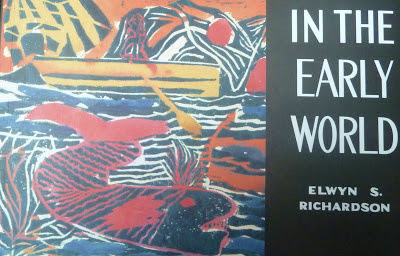
Thankfully he wrote, what many people still think was the best book ever on teaching and learning, ‘Inthe Early World’ first published in1964 and perceptively recently reprintedby the NZCER in 2012.

The book is timely indeed as essential elements of child centred practices have been diluted, even distorted, by those who have little understanding of how students learn and the reality of being a classroom teacher  and with their desire to assess and measure learning –  in the process narrowing the curriculum and the  side-lining  of the creative arts.

A community of scientists and Artists

Elwyn saw his classroom as a busy community of scientists and artists whose role with him as their guide to explore their natural world and the world of their feelings; students active in the process of seeing themselves as worthwhile individuals.

 Tomorrows Schools side-lined creative teachers

Before Tomorrows Schools it was creative teachers who were seen as the key to educational transformation. Today the power lies with the curriculum developers, accountability experts, and
leadership of principals. Today it is time to return the focus to identifying and sharing the ideas of creative teachers and for principals to see their role as creating the conditions for such teachers to have the confidence to return to centre stage.

The 2007 New Zealand Curriculum, having been side-lined by the previous government, now needs to be fully implemented.

Developing a meaningful curriculum based on curiosity.

Elwyn forged connections with the children’s lives and created a meaningful curriculum. He placed student curiosity at the heart of all that was done focussing on intriguing questions that motivated them to pursue avenues of inquiry naturally integrating the curriculum. He encouraged the freedom to explore, the opportunity to observe closely, and the discipline to record findings in various ways, He upheld the value of the arts and realised that one subject informs another; that scientific understanding is enhanced by the aesthetic, and vice versa.

Development of high standards of excellence

Like JohnDewey he did not allow just any activity to count as learning. He challenged children to explore, ask questions, try things out, consider alternatives, and craft and recraft to produce high quality work; art work worthy of exhibitions, science projects like those of real scientists, vivid poetry and other writing published in regular school magazines. This is teaching at its finest. Children like adults, enjoy the feelings of being stretched and achieving something they are proud of. At his school, Oruaiti in the far north, his pupils were afforded the dignity of being taken seriously as critics, writers, artists, scientists and thinkers.

Breaking away from teacher dominated approaches.

Printing on cloth
Elwyn’s book outlines his own story in breaking away from the then teacher dominated approach in the process learning to trust the creative power of the children.  In this respect he is both a teacher and a learner constantly, through child and error searching for the balance between being a teacher and being a learner. The book shows that he struggles with this dual role; ‘Am in over directing or am I under directing’ and he often abandons his own planning in favour of the teachable moment. In the end the children are triumphant and the learning is based on their own lives. Real satisfaction comes from losing oneself in a subject which evokes a depth of focus and appreciation giving children licence to bring who they are and what they cherish to their learning.

This is teaching as an art form; the artistry of the creative teacher.

Observing nature
The student’s work, which is a feature of Elwyn’s book underlies how values and excellence are formed in the process of creative achievement. Elwyn’s process is based in recognising small excellences in student’s work and through discussions developing community standards of excellence. Such minor excellences were seen as stepping stones for further thinking and in-depth expression.

Developing such standards of excellence is the professional artistry of a caring teacher who esteemed the voice and thinking of the children. This is in strong contrast to today where students are judged against adult standards and criteria that impinge on student’s individuality. Such current teacher dominated approaches are the antithesis of chid centred learning, all about conformity rather than creativity.

Student creativity taken seriously

The work included in Elwyn’s book shows that his student’s took their work seriously; the
Observation to printing
sensitive poetry, the careful observation of their immediate environment, the graphic print and ceramic work and dramatic experiences.  The book makes clear the process that the teachers introduced to develop quality personal achievements.

The process was a delicate one, with the teacher leading and directing but at the same time humbly ready to learn from the children. The idea that that the end product doesn’t matter –it’s only the process, is simple minded. Children will only grow in a classroom where high standards prevail and where their work will be tested by the critical insight of others. Each new achievement is a springboards for later leaps in imagination and understanding. In such a learning community students are perpetually challenged to achieve their creative powers and the work they create becomes a record of their achievements.

Developing security for student creativity

The patterns of work in Elwyn’s classroom was akin to being a science and art workshop with enough structure to provide students with the security necessary to be creative. Sometimes

Drawing of roosters
patterns were free at other times more formal.

Elwyn’s book provides a way through the current compliance environment (for both teachers and students) that the past decades have imposed. Many teachers will not be aware of alternatives and, for them, the first step would be to acquire his book In the Early World and be inspired by the creativity of Elwyn’s teaching and his student’s creativity.

A slow transformation into a creative community

Every classroom can be transformed into a learning community and slowly more and more choices given back to the student’s as teachers gain confidence and student’s independent working skills. Going too fast might be counterproductive and every teachers needs to design their
Rooster painting 
own progress. A good time to experiment might be at the end of the term when you will have the time in the holidays to reflect on how it went and what you might do next time. And it is good advice to work slowly towards developing a truly creative classroom by the end of the school year. In this way you will be imitating the trial and error process that underpinned Elwyn’s development as a teacher. With time teachers will move towards the satisfaction of this kind of teaching.

Planning the school day link
.
Acknowledgment of sources.

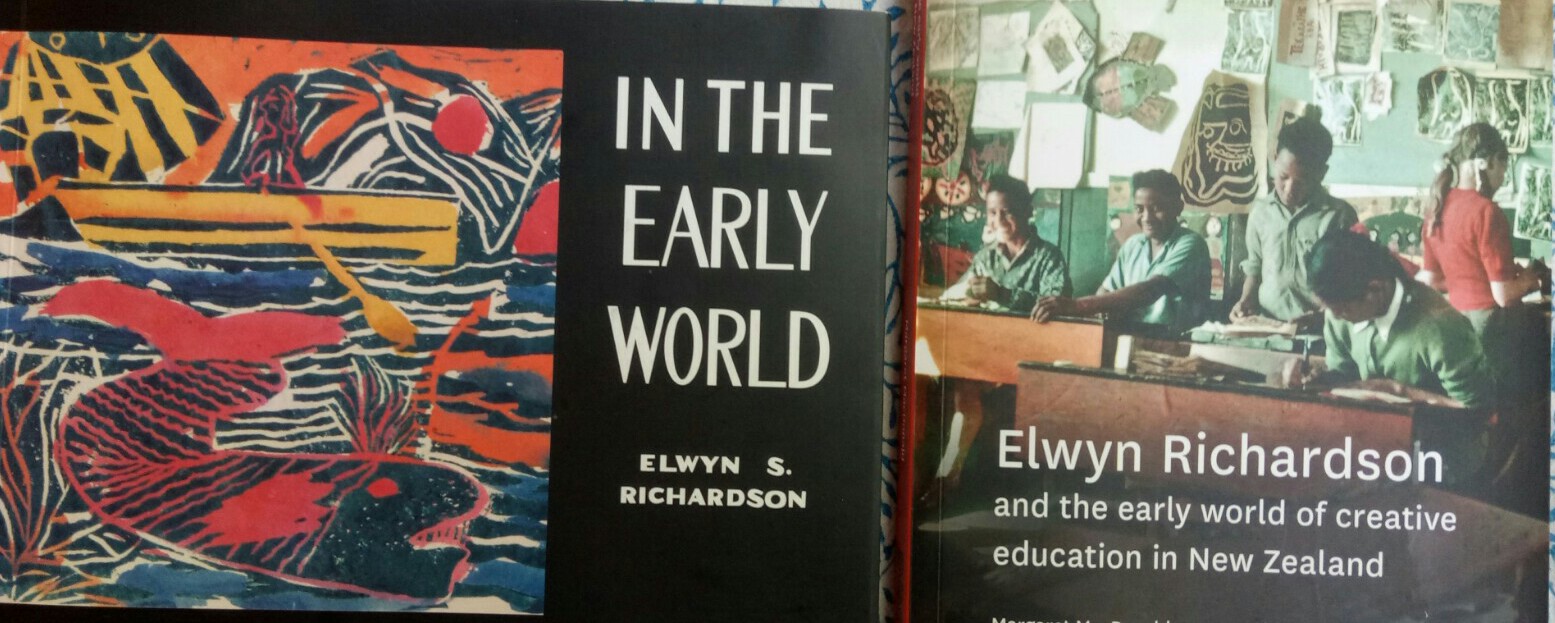
To write the above I have unashamedly made use of phrases from the introduction Elwyn’s book Inthe Early World – particularly the forewords to the original and the recent edition and the preface to Elwyn Richardson and the early world of creative education in New Zealand by Margaret McDonald (NZCER 2016). For those interested in the historical development of creative education in NZ I recommend the later.

Taranaki developments 1970 until Tomorrows Schools 1985

http://leading-learning.blogspot.co.nz/2011/03/good-old-days.htmlA group of teachers in Taranaki in the 70s developed ideas inspired by Elwyn’s writings and friendship. One teacher, Bill Guild, wrote a photo book of his student’s achievements A World of Difference a summary of is well worth a look.

Further writings about Elwyn Richardson:


Wednesday, October 25, 2017

Educational changes in New Zealand and a challenge for Australia


Reflections by Phil Cullen who retired from his role as Director of Primary Education Queensland and who, since his retirement,
has fought the good fight to resist the neo-liberal GERM ( Global Education Reform Movement that has infected Australian Education.
 Charles Philip [Phil] Cullen AM;  A.Ed., B.Ed.[UQ], Dip.Ed.Edmin, M.Ed.Admin (Hons) [UNE];  FACE, FACEL, FQIEL, Gold Medal ACEL;  Life Member:  CCEA, QASSP, QSPSSA, QSSSA, Bris. SSRLA;  Co-author: 4 books;  Author 1 book; Former Q’ld Director of Primary Education; Chairman:  Q’ld Day Comm, Primary Curric.Comm, Review Primary Educ’n in A.C.T. Gov’t Schools; Regional Director NQ & N.West Q’ld;  Former member:  Lismore Catholic Diocese Ed. Council,  McAuley College  [now ACU] Council,  James Cook U of NQ Council ,  Townsville CAE Council. Primary School Teacher/Principal 23 years; Regional Director & Inspector 6 years; Director 13 years.  (refer:’Who’s Who in Australia'.

May 17th 2017 In this final posting Phil, after a long battle , gives up the fight disappointed with the lack of resistance of Australian educators and  with opposition politicians to present an alternative to the current managerial test oriented  standards based approach.


New Zealand Leads the way

Phil has gained heart from the appointment of the new Labour Government led by Jacinda Adern with its return to a progressive approach to education.


New Zealand leads the way down under and maybe across the world in caring about kidsIts determination to return to 
sanity, humanity, progress, initiative and competence for its schooling system, which itself determines national progress in the long run,  is now being unpacked and, I am told that the new coalition government contains a few former teachers and active school parents as heavyweights who can talk school and lead the conversation for a better world down under. 

.

There's dynamic Tracey Martin, former School Board chair; Kelvin Davis, highly respected former principal and Deputy Leader of the Labour Party; and Winston Peters of NZ First and, Deputy PM who trained as a teacher.  In Australia we only have legal eagles.
Tracey Martin and Winston Peters


Parent groups in NZ are claiming that now, teaching will be returned to the teaching profession and democracy will be returned to schooling in New Zealand soon. The isles are shaking with joy for kids.


It's a country that has always been to the forefront of school improvement but then, the take-over by the irrational managerialists and corporate heavy-weights circa 1990, and the addition of GERM in 2008, has had a detrimental impact that has lasted for a decade. They've had enough, now. We still tolerate it to our shame and academic deterioration.


How come New Zealand leads the world now  in the  decontamination of the establishment's unworthy,  useless, immoral, unethical,  unprofessional testucation procedures in schools? Well, there's been a number of factors.


Fortunately, during this period, it has had  its crusaders for kids who just don't give in too easily.  It's been a long and arduous battle, of the kind that must continue next door, in Australia.


There's Kelvin Smythe, former Chief Inspector and Allan Allach, energetic, thoughtful former primary school principal, reader and writer and Bruce Hammonds, former principal, consultant and writer - a valiant trio that has been unafraid to have their say.  They set the pace. ( Phil maybe giving us more credit than we deserve but we have all done our best to share progressive ideas but we are happy to acknowledge there are many  others  who have made valuable contributions-  Lester Flockton is one who comes to mind -Bruce Hammonds ).


Chris Hipkins
There's Chris Hipkins, in particular, who has been the shadow Minister for Education whose inspirational speeches and talks have been based on a sound knowledge of schooling and who has been unequivocal in his aim to rid the country of testucation and de facto schooling.


There's the Primary Principals' Association which kept its administrative distance from the government testucrats and compliant GERMans, never properly complying .  While "The Government will never listen and nothing will change and we are just one little country." some timorous principals said, there were others of the association, especially the leader of the organisation, Whetu Cormick,  described as "The greatest teacher organisation leader of our time,:" by Kelvin Smythe.  Whetu  didn't hold back , "At the other
Whetu Cormack
extreme are those like me,"
he said "who will continue to fight to the end. We know that National Standards and all the 'reforms' that go with them are bad for our young people. Our young people have faith in us to protect their futures by continuing to fight for the best education that our young people deserve."  Looking directly into the face of Nikki Kay, the then Minister, he said, "Let's wait no longer to get our young people on the road to success. Let's put up a big stop to National Standards."  The organsation has always been fearless...    http://www.nzpf.ac.nz/uploads/7/2/4/6/72461455/opinion_piece_nzpf_presidents_column_on_ns_may_31_2011_.pdf


There's Diane Kahn and the Save Our Schools organisation whose prime target has always been https://saveourschoolsnz.com/ ]
the elimination of 'national standards' and was heavy and  constant with dynamic opposition . [


There's  an influential Kiwi sciolist  [aka schooliolist - one who pretends to be well informed about schooling] and academic testucator who played a significant role in the introduction of testucation into NZ.....who left the country at the right time. ( Just in case you can't guess who Phil is referring to it is John Hattie -Bruce Hammonds)


There are some messages for Australia.

In world schooling terms,  it is the boondocks of failed political schooling, the backward West Island of learning progress, the most over-tested country in the world.


A political party needs to think. Does it believe in providing the best schooling possible, or doesn't it give a damn as Aussie political  parties do?


Time to leave standardised learning Australia
Listening to schooliolist academic know-alls,  qualified testucators, loud-mouth politicians, corporate unions inhabited by conservative capitalists, neo-libs and delcons, which still rule the roost on the west side of the ditch, continues to lead Australian schooling in the wrong direction. New Zealand has now told these cocky roosters what to do with their distasteful attitude to children.


"Australian schools are in dire need of some Finnish-ing tactics." said Wendy Knight in The Age....and we can now add: 'and some Kiwi tactics'. What really happens in a good school system?

Why don't Australian politicians look around and learn?


An example of off-the-hip, loud-mouth political interference is contained in suggestions made in Treasurer Morrison's Shifting the Dial, another imported kind of measurement.  It presumes that will improve  standards in schools. It overlooks the reality that real teachers teach real pupils....real people!  The secret is in the interaction. They teach them about mathematics, to like mathematics. They don't get up in front of a class and pontificate about what they themselves know. Effective teachers of anything  operate from the learner's level. Socrates was a better teacher of Maths than Einstein and a better teacher of literature than Shakespeare. His pupils learned how to learn.
the hiring of skilled subject specialists like mathematicians

Importance of Principal's organisations


A strong and outspoken principals' association can be truly influential as they are in NZ. Protection of children and their future as well as the provision of a rich holistic curriculum, undaunted by fearful interruptions to positive learning, should  dominate the spirit of every principal's personal  professional code. Laxity, timidity, compliance and silence have no place in their organisations when the chips are down for kids....as they are now  in Australia.

Labour  Party in Australia


What happened to Ned Kelly spitit?
 . The lib-lab neo-con conventions will probably continue as they did in the passing of klein deforms Neither political group, Labor nor Liberal, ever expresses any thoughts  about the continuance of the Klein system of schooling, now almost a decade old ; and which should go because it is proving useless. Neither party knows much about schooling and hides its ignorance by talking only Gonksi and funding and teacher quality. For them, the plight of children lies in the dollar sign, not in compassion and humanity and learning and in experience and excellence. Each  remains ultra-complacent by making do, making silly schooling decisions, maintaining the mediocre, and supporting private schools before helping public schools.
It's looking more evident every day that the lower half of the existing Lib-Lab delcon group viz. Labor under Shorten, will be the government after the next federal election in Australia
Joel Klein
from Labor to Liberal.

A country that treats its children the way that Australia does, is in for big trouble....really big trouble.  .


 It relies on the cockeyed Gillard Theory of Testucation, using Kleinism to control operatives and operations, to no end except to gather data; then ignores the basic laws of administrative order and effectiveness  and treats the electorate as if everyone is a dill or doesn't care what happens to kids.

The present government will go while it maintains these attitudes to schooling and doesn't have the capacity to think.  The Labor Party will replace it and not do any better. Both need to think seriously about schooling...very, very seriously.


I'm deliberately apolitical and have voted informal at the last few federal elections because I've  been offered only lower-order policies  in general and crazy views about schooling. ...nothing that really suggests that there is  a  healthy future for this wonderful country.

Schooling is the most important issue of this century for Aussie citizens. If it is not rejuvenated, Australia has some big problems coming up.

I'll vote for any party -Pauline's, Bob's, Nick's, Jacqui's, anybody who says that it will get rid of NAPLAN.  I'll know by its standard of advocacy that such a party likes kids, that it is thinking and will do something about our future. Our present klein system relies on child abuse.  I'll study the detail of course, but no party can be so blithely ignorant of schooling as our major parties are at present. Their mentors can only bark Gonski, data, scores, testing, funding, teacher quality with schooliolist pedantry and no regard for the real spirit of learning at school.


Seriously - rejuvenation of schooling from the mess of mass testucation will be very difficult.  Unscrambling an egg always is. Since New Zealand will have to do the job before Australia wakes up, it might be wise to locate some observers there to learn how to go about it.

We need to do what New Zealand has done : Declare Ourselves


It's rejuvenation time down under!


THANKS NEW ZEALAND