Showing posts with label national tests. Show all posts

Friday, October 05, 2018

Personalized learning / importance of the arts / engaging students / beyond the 3Rs / and time for principals to fight back

Time to refresh your energy.

Education Readings

 By Allan Alach

Every week Bruce Hammonds and I collect articles to share with teachers to encourage a creative approach to teaching and learning. I welcome suggested articles, so if you come across a gem, email it to me at allanalach@inspire.net.nz


Arriving at a Definition of Learning
'Personalized and blended learning and differentiated instruction should be viewed as interrelated supports for deep learning.’

Play based learning
‘However, the play environment is only one part of the puzzle in supporting and observing how children learn through play.  Much
of the critical work is unseen to the 'naked eye' by visitors intent on seeing how schools 'do' play in their environment.’

Why an education in visual arts is the key to arming students for the future
'Visual skills are essential for a sophisticated workforce, yet we offer so little education in the vital skills of learning to see and developing the ability to interpret and critique our image-saturated world.’

Does Teacher Diversity Matter in Student Learning? Relevant
for NZ teachers?
‘Research shows that students, especially boys, benefit when teachers share their race or gender. Yet most teachers are white women.’

How to Ensure Students Are Actively Engaged and Not Just Compliant
'Engagement is a crucial part of learning, but ensuring students are actively engaged is more complex than whether a student is paying attention or not. As technology has made its way into the classroom many educators describe how attentive students are when on devices, but a quiet, outwardly behaved student is not the same thing as one that is truly engaged.’

Where have all the Powerful Ideas Gone?
‘I’m talking about the educators and educational leaders who are still timid and tentative about the use of computers in their schools.  I’m talking about the low bar ideas that are all about sustaining existing practice. And I’m talking about the dumbing down of every idea so that it’s ‘simple’ and easy’, as if teachers are not capable of rigor or higher-order thinking.’
http://bit.ly/2zOX9TD

WASO Crescendo program lifts NAPLAN results as schools see the benefits of music in class
‘  A music program that pairs children from disadvantaged areas with classical musicians from the West Australian Symphony Orchestra (WASO) has been shown to have a profound effect on their learning.’
https://ab.co/2y8zbkh


Alan Watts: 'Why modern education is a hoax’
"Let's take education. What a hoax. You get a little child, you see, and you suck it into a trap and
you send it to nursery school. And in nursery school you tell the child 'You are getting ready to go on to kindergarten. And then wow-wee, first grade is coming up, and second grade, and third grade.' You are gradually climbing the ladder towards, towards, going on towards progress. And then when it gets to end of grade school, you say 'high school, now you're really getting going.' Wrong."http://bit.ly/2QoW7mU

Dr. Wayne Ross: The Fear Created by Precarious Existence in The Neoliberal World Discourages Critical Thinking
‘Can we have a school of knowledge under a neoliberal policy? Simply, can we have an education
under the neoliberal yoke? Are neoliberalism and education compatible?’

Accountability and the Tyranny of Metrics
For educators, that draws a focus to assessment, where maybe it's time we asked if high-stakes standardized testing has finally reached its use by date? I mean what do you think it will take before we see public acknowledgment that the damage such ill-conceived tests have done to our kids and their learning, far outweighs any real or perceived benefits?


From Bruce’s ‘goldie oldies’ file:

Seymour Papert : The obsolete 'Three Rs' - blocking real change in education
'Schools are still identified by the old turn of phrase ‘the three Rs’- reading ‘riting and ‘rithmetic', Seymour Papert. The 'three Rs' still reign supreme – more than ever in New Zealand  particularly since the introduction of governments National Standards in literacy and numeracy. As one English educational commentator has written ‘the evil twins of literacy and numeracy have all but eaten up the entire curriculum.’

Time for principals to fight back!
‘Principals have been too passive the past decades busying themselves with complying with demands placed on them from those on high. In this process they have become stressed out, not sure what is expected, and this is exacerbated by the Ministry continually adding new requirements

.It is time they added their collective voices to the debate and this is easiest done by groups of courageous principals, defining what is important, and sharing it with others.’

Tuesday, May 22, 2018

Time again to focus on teacher creativity - the legacy of Elwyn S Richardson


Returning to the early world of creative education
Elwyn Richardson 1925-2012
He toi whakairo he mana tangata – where there is artistic excellence there is human dignity.

Back to the future

There was a time when New Zealand  primary education was internationally recognised for placing the learner at the centre of learning. When education was driven by a belief in the creative power of the learners themselves; when learning was based on the internal and external lives of the
children.

But sinceTomorrows Schools things have changed.  Today schools have been distracted by assessment, achievement data and measurement by standards.  The evidence is becoming clear in our rush to towards achieving measurable results children’s curiosity has been eroded.

As part of this change educational decision making has shifted from innovative teachers to political imperatives and their non-teaching policy makers. Today ‘flexible learning environments’ and access to modern information technology are seen as the answer, associated with all the appropriate words: student agency, collaborative learning and teacher teamwork.

For all this what has been forgotten that it is the quality of the teacher that ensure such modern environments are conducive to learning; it’s the pedagogy, or teaching beliefs, that teachers hold is all important.

Dr Beeby
New Zealand’s earlier recognition was based on the writings of outlier Sylvia Ashton Warner, the developmental programmes led by junior school teachers , the leadership of the then Director of Education Dr  Clarence Beeby who created the environment for educational transformation and Dame Marie Clay.

And, of course, the ideas were not entirely new having their genesis in the writings of American Educator John Dewey..

Dr Beeby appointed Gordon Tovey to develop an art advisory service who were integralto the identifying and supporting creative teachers throughout the country and in the spreading of creative teaching ideas; an education where feeling and intellect, living and learning were inseparately intertwined.

Time to place student creativity central once again

Today we have come full circle and it time to put the lives of our children and our trust in their creative power back into classroom practice.

The creativity of pioneer teacher Elwyn S Richardson

One teacher stands out as the best known exemplar of such teaching- Elwyn S Richardson. I wonder how many teachers today are even aware of the pioneer creative work achieved by Elwyn.
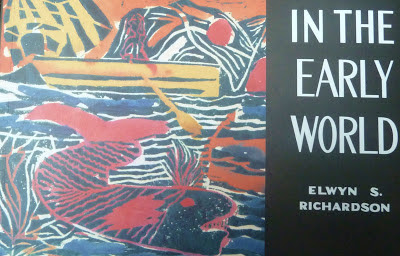
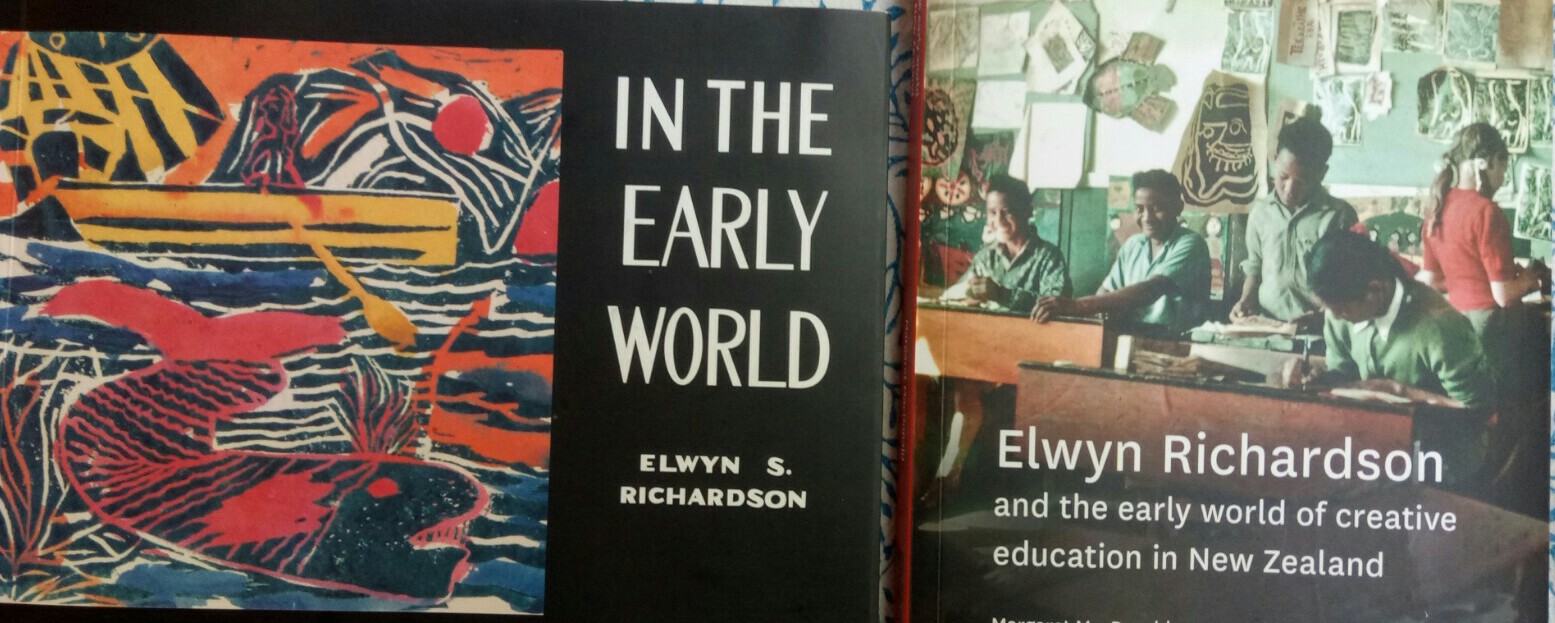
Thankfully he wrote, what many people still think was the best book ever on teaching and learning, ‘Inthe Early World’ first published in1964 and perceptively recently reprintedby the NZCER in 2012.

The book is timely indeed as essential elements of child centred practices have been diluted, even distorted, by those who have little understanding of how students learn and the reality of being a classroom teacher  and with their desire to assess and measure learning –  in the process narrowing the curriculum and the  side-lining  of the creative arts.

A community of scientists and Artists

Elwyn saw his classroom as a busy community of scientists and artists whose role with him as their guide to explore their natural world and the world of their feelings; students active in the process of seeing themselves as worthwhile individuals.

 Tomorrows Schools side-lined creative teachers

Before Tomorrows Schools it was creative teachers who were seen as the key to educational transformation. Today the power lies with the curriculum developers, accountability experts, and
leadership of principals. Today it is time to return the focus to identifying and sharing the ideas of creative teachers and for principals to see their role as creating the conditions for such teachers to have the confidence to return to centre stage.

The 2007 New Zealand Curriculum, having been side-lined by the previous government, now needs to be fully implemented.

Developing a meaningful curriculum based on curiosity.

Elwyn forged connections with the children’s lives and created a meaningful curriculum. He placed student curiosity at the heart of all that was done focussing on intriguing questions that motivated them to pursue avenues of inquiry naturally integrating the curriculum. He encouraged the freedom to explore, the opportunity to observe closely, and the discipline to record findings in various ways, He upheld the value of the arts and realised that one subject informs another; that scientific understanding is enhanced by the aesthetic, and vice versa.

Development of high standards of excellence

Like JohnDewey he did not allow just any activity to count as learning. He challenged children to explore, ask questions, try things out, consider alternatives, and craft and recraft to produce high quality work; art work worthy of exhibitions, science projects like those of real scientists, vivid poetry and other writing published in regular school magazines. This is teaching at its finest. Children like adults, enjoy the feelings of being stretched and achieving something they are proud of. At his school, Oruaiti in the far north, his pupils were afforded the dignity of being taken seriously as critics, writers, artists, scientists and thinkers.

Breaking away from teacher dominated approaches.

Printing on cloth
Elwyn’s book outlines his own story in breaking away from the then teacher dominated approach in the process learning to trust the creative power of the children.  In this respect he is both a teacher and a learner constantly, through child and error searching for the balance between being a teacher and being a learner. The book shows that he struggles with this dual role; ‘Am in over directing or am I under directing’ and he often abandons his own planning in favour of the teachable moment. In the end the children are triumphant and the learning is based on their own lives. Real satisfaction comes from losing oneself in a subject which evokes a depth of focus and appreciation giving children licence to bring who they are and what they cherish to their learning.

This is teaching as an art form; the artistry of the creative teacher.

Observing nature
The student’s work, which is a feature of Elwyn’s book underlies how values and excellence are formed in the process of creative achievement. Elwyn’s process is based in recognising small excellences in student’s work and through discussions developing community standards of excellence. Such minor excellences were seen as stepping stones for further thinking and in-depth expression.

Developing such standards of excellence is the professional artistry of a caring teacher who esteemed the voice and thinking of the children. This is in strong contrast to today where students are judged against adult standards and criteria that impinge on student’s individuality. Such current teacher dominated approaches are the antithesis of chid centred learning, all about conformity rather than creativity.

Student creativity taken seriously

The work included in Elwyn’s book shows that his student’s took their work seriously; the
Observation to printing
sensitive poetry, the careful observation of their immediate environment, the graphic print and ceramic work and dramatic experiences.  The book makes clear the process that the teachers introduced to develop quality personal achievements.

The process was a delicate one, with the teacher leading and directing but at the same time humbly ready to learn from the children. The idea that that the end product doesn’t matter –it’s only the process, is simple minded. Children will only grow in a classroom where high standards prevail and where their work will be tested by the critical insight of others. Each new achievement is a springboards for later leaps in imagination and understanding. In such a learning community students are perpetually challenged to achieve their creative powers and the work they create becomes a record of their achievements.

Developing security for student creativity

The patterns of work in Elwyn’s classroom was akin to being a science and art workshop with enough structure to provide students with the security necessary to be creative. Sometimes

Drawing of roosters
patterns were free at other times more formal.

Elwyn’s book provides a way through the current compliance environment (for both teachers and students) that the past decades have imposed. Many teachers will not be aware of alternatives and, for them, the first step would be to acquire his book In the Early World and be inspired by the creativity of Elwyn’s teaching and his student’s creativity.

A slow transformation into a creative community

Every classroom can be transformed into a learning community and slowly more and more choices given back to the student’s as teachers gain confidence and student’s independent working skills. Going too fast might be counterproductive and every teachers needs to design their
Rooster painting 
own progress. A good time to experiment might be at the end of the term when you will have the time in the holidays to reflect on how it went and what you might do next time. And it is good advice to work slowly towards developing a truly creative classroom by the end of the school year. In this way you will be imitating the trial and error process that underpinned Elwyn’s development as a teacher. With time teachers will move towards the satisfaction of this kind of teaching.

Planning the school day link
.
Acknowledgment of sources.

To write the above I have unashamedly made use of phrases from the introduction Elwyn’s book Inthe Early World – particularly the forewords to the original and the recent edition and the preface to Elwyn Richardson and the early world of creative education in New Zealand by Margaret McDonald (NZCER 2016). For those interested in the historical development of creative education in NZ I recommend the later.

Taranaki developments 1970 until Tomorrows Schools 1985

http://leading-learning.blogspot.co.nz/2011/03/good-old-days.htmlA group of teachers in Taranaki in the 70s developed ideas inspired by Elwyn’s writings and friendship. One teacher, Bill Guild, wrote a photo book of his student’s achievements A World of Difference a summary of is well worth a look.

Further writings about Elwyn Richardson:


Wednesday, August 24, 2016

The destruction of public education in NZ Time to make a stand!


Teachers and principals need to find their collective voice and fight back against the current destruction of the public education system - a system  once based on the centrality of education as a common good.


At the New Zealand Primary Principals Federation's Annual meeting the warnings about the negative future scenarios  couldn't have been made more clear.. 

One after the other  highly respected international educators made it very clear - do not follow the failed reforms that have been been imposed in their countries as part of a neo-liberal 'market forces' agenda/ideology.

Unfortunately, since the introduction of Tomorrows Schools, we are well on the way to making the same mistakes.

 Tomorrows Schools, introduced by the then Labour Government, held out a promise of  democratic neighborhood schools. Schools  were to be freed from the dead hand of central bureaucracy  and in the case of primary schools, local Education Boards. Schools were to become 'self managing'.

They were exciting times  In the excitement voices  warning of the consequences of such devolution were sadly ignored .

Behind the changes were the neo- liberal beliefs  of the need for less state regulation, the need to privatize public services and belief in  private enterprise  to solve all problems.    Neo-liberalism is based on a belief that unrestricted competition, driven by self interest, leads to innovation and  that the wealth created in the process will 'trickle down' enhancing the welfare of all. Changes were premised on the need for
competition and choice.

 A quote from the NZPPF Conference from the president


First they manufacture the ‘crisis’ ‘in New Zealand the ‘one in five failing’ and  ...’students are leaving school and can’t read, write or do maths’. Once the crisis gets public support then in comes the political solution.
The government chooses to ignore this?

 The ‘crisis’  is framed as teachers not doing their job properly, teachers unions protecting them, not being accountable and not having proper standards. Then in come the standards in literacy and numeracy and suddenly we have a standardized measure of a schools ‘performance’.

Next in line are privatised charter schools to solve the problem – and to make a profit. '

It is now now the way things are, neo-liberalisn has been normalised, but increasingly it is being found wanting. 


While a few have got richer the gap between rich and poor has widened along with  the social problems that result from such inequality. New Zealand is becoming a divided society - private need (or greed) has replaced a concern for the common good. The one in five failing can be identified by their post codes!

Sooner or later people must see that things need to change if all citizen are to  feel part of ,and
The inequality gap
are able to contribute to, the the development of a more caring and creative society
. Private enterprise values are destructive, not only for those who have difficulty  finding having enough to live on ( and a house to live in), but also the sustainability of our natural environment.


Schools have been caught up in these changes and need to be seen as fighting for a fairer and more equitable society.


As part of a neo-liberal competitive society based on choice schools needed to be able to be compared.  In other counties  the data available to parents  to assist them in making this choice is provided through national or state standardized testing and published league tables. In New Zealand the data for choice is provided by published school results on National Standards and NCEA level 2 achievement targets.  National Standard  and NCEA are both  open to 'gaming'.

National Standards have now become the default curriculum in our schools

 As schools focus on achieving results in National Standards other equally important  areas of
Education is more than data
the curriculum are neglected..
National testing , as destructive as it has been shown, at least does not require the time, energy and documentation required by National Standards.

Schools  are now infected with a audit and surveillance culture that ironically limits the very initiative, enterprise and creativity that the neo-liberal ideology promised.

Freed from earlier bureaucratic oversight by Tomorrows Schools  schools now find them in a restricting compliance environment. Out of the frying pan into the fire!! Visits by the Education Review Office ensure schools follow Ministry directives and targets.

The original devolution of schools to provide initiative and flexibility has evolved into situations whee schools do their best to implement the ever changing directives/targets of the Ministry and
Might as well paint a yellow star on them
the Minist
er.  This has created what one writer has called 'a corrosion of character' as schools try to interpret what it is the Minister wants. Such an environment is destructive to creativity and enterprise. 'The trouble with targets ( in any area ) is not the ones you achieve but the ones you don't see because you weren't looking'.

Talking to those in teaching and principal postilions there is a growing level of unhealthy stress in our schools.

As the competitive ideology is being found to be counter productive to  sharing of ideas between school ( once a feature before Tomorrows Schools) the Minister  has introduced her Communities of Schools (CoS)

As currently  structured they are more 'communities of compliance or control' 

It seems if schools don't  join such a community they with miss out on professional development and those that do join can only get professional development from Ministry 'approved' providers; 'Free
Trust me I know what I am doing
market Stalinism' at best.

Now we have the Minister pushing the idea of on line learning . In America, the home of such ideas,the provision of private enterprise on line learning, along with charter schools, have not realized their potential. a

When Tomorrows Schools was introduced the phrase heard was 'good people poor system' - it seems little  has changed? Worse System!

Patronizing but supportive bureaucrats have been replaced by out of touch technocrats that few trust.

The Minister on a rent Q &A  TV programme is proud of the 'real achievement gains made' based on her limited achievement targets limited to literacy and numeracy standards.  This misplaced emphasis on her narrow standards mean that many students do not have the opportunity to develop their unique talents and gifts. Evidently there are now new standards for years 9 and 10 -
ERO on target hunt
the madness goes on.

 The Minister now has the data ( based on here limited National Standards)  to 'measure how much learning a students gets in a year' and  believes for those that are not achieving  to 'catch up' so as to 'stop their learning debt compounding'. The technocrats have developed a set of criteria to identify failing children - bur one wonders what about the students who are having learning problems that the criteria might exclude. This obvious targeting of  parents and their children could have negative consequences. The data she talks of  sounds impressive but in reality is limited  shallow and easily manipulated.

We have an 'opportunity gap' not an 'achievement gap'.

This targeting misses the point. Students from the lower socio- economic groups do not suffer from an'achievement gap' but more an 'opportunity gap' and to  for those students to archive  their unique talents they need a rich stimulating and personalized  curriculum the very curriculum the emphasis on standards and targeting makes difficult.

Schools kill imagination
A quote from Einstein comes to mind: 

'If you judge a fish ability its ability to climb trees it will live its whole life believing it is stupid'

The Minister  seems to thing that here targeting with recognize that children are unique  but the results of her policies all lead to the very standardization that Tomorrows Schools was supposed to get rid of.There was more potential for creativity,diversity and collaboration in the decades before Tomorrows Schools.

Children's lack of achievement has a lot to do before the students enter the school gate.

The problems that beset our school have a lot to do with the difficult home circumstances of students and parents. The government , however, likes to ignore this situation , a situation created by their own neo-liberal polices and would rather place the blame of teachers and schools.
The NZ Curriclum

The only chance for creativity and diversity to be integral to education depend on a change of government and the  full implementation of the  creativity underpinning the New Zealand Curriculum.

MLEs, ILEs, and now FLEs.

The development of Modern Learning Environment ( MLEs) or  Innovative Learning Environment (ILEs) or now Flexible Learning Environment provide a challenging opportunity to develop rich learning environments. They, however, must be more than the provisions of buildings and  modern information technology.

 To be successful such environments need a creative rich curriculum - one that 're-frames literacy and numeracy in the service of authentic inquiry. If  this done they have the potential to become true learning communities of artists and scientists. 

Thankfully there are still innovative schools and teaches  providing such rich learning environments.


Escape the standards box
A real change of direction is needed.

The current government is undermining our schools ability to ensure all students leave school with positive learning identities and their unique talents and gifts identified.

 Schools cannot transform themselves to create the conditions for all students to thrive in the future when they are distracted by  culture of surveillance and compliance.


Are principals and teachers up to the challenge?


Friday, May 20, 2016

UK Education/ Literacy and computers/Philosophy teaching/ Michael Fullan and Pearson/ Seymour Papert and are the the three Rs' obsolete?


Education Readings by Allan Alach


I welcome suggested articles, so if you come across a gem, email it to me at allanalach@inspire.net.nz


Sorry, Nicky, I’m out.
An English teacher writes an open letter of resignation to UK Secretary of Education Nicky Morgan. If you think your version of GERM is bad, I’d suggest that England possibly tops the scale.
“Please accept this as written notice of my resignation from my role as Assistant Head and class teacher. It is with a heavy heart that I write you this letter. I know you’ve struggled to listen to and understand teachers in the past so I’m going to try and make this as clear as possible. In the six short years I have been teaching your party has destroyed the Education system. Obliterated it. Ruined it. It is broken.”

Reading on a Screen Rather Than Paper May Affect What You Learn, Study Shows
Here’s another article suggesting that we may need to be more careful about believing the hype about technology.
‘A new study suggests that it’s not only what you read, but how you read it that matters.
Reading on paper versus on a digital screen may impact what you end up absorbing from the text, according to a study by Dartmouth researchers. This research is being presented at the Association for Computing Machinery conference in San Jose, California, this week, and has not yet been published in a peer-reviewed journal. In the study, people who used computer screens for learning did better when it came to understanding concrete details, but they had more difficulty understanding abstract concepts.’

It’s the Environment, Stupid
Annie Murphy Paul
Read about Paul Toughs findings
“Rather than consider noncognitive capacities as skills to be taught, I [have come] to conclude, it’s more accurate and useful to look at them as products of a child’s environment. There is certainly strong evidence that this is true in early childhood; we have in recent years learned a great deal about the effects that adverse environments have on children’s early development. And there is growing evidence that even in middle and high school, children’s noncognitive capacities are primarily a reflection of the environment in which they are embedded, including, centrally, their school environment.”

Inverse Relationship Between GPA and Innovative Orientation
The more students focus on test scores, the less creative they become.
Another article by Peter Gray.
Testing out creativity!
‘Our educational system was designed for a different age, a time when jobs required rote performance and unquestioning obedience, where innovative thinking was considered to be unnecessary or even a liability for the majority of people.  Ironically and tragically, rather than adapt our educational system to the needs of our modern times we have doubled down on the old system, so it is harder today than ever before for young people to retain and build upon their natural curiosity and creativity.’

Study: Teaching Students Philosophy Will Improve Their Academic Performance
An interesting study from England.

Socrates and philosophy 

‘The kids who were taking philosophy classes improved their math and reading skills by about two months of additional progress compared to the students who didn't take the classes. The actual aim of the classes was to improve student confidence in asking questions and constructing arguments, but the additional academic gains were undeniable.’

The Disturbing Transformation of Kindergarten
‘One of the most distressing characteristics of education reformers is that they are hyper-focused on how students perform, but they ignore how students learn. Nowhere is this misplaced emphasis more apparent, and more damaging, than in kindergarten.’

Contributed by Bruce Hammonds:

A chance to look around three classrooms 

Bruce’s comment: I found these three short u-tube videos and thought they were useful to give insights into English primary school classrooms. All to often we read or hear from experts well distanced from the reality of the classroom.  All classrooms reflect the ‘message system’ of the
teacher or school.  The small videos below do just this.  I believe strongly in the importance of classroom environments and found the viewing most interesting. The fact they are not professional presentations adds authenticity to the small videos. Note Literacy and Numeracy ‘learning walls’, the emphasis on current interdisciplinary  topic displays . What would a tour of your room show?

Michael Fullan believes in an educational transformation? Pearson's role in education: A Rich Seam: How Pedagogies Find Deep Learning.
Bruce’s latest article.
‘Pearson's version of 'personalized learning' relies on 'data driven analytics' and technology to ensure  learning. Some of the schools following a 'Pearson's approach' look more like
 Larry Rosenstock:Wise words from New Tech High
high powered 
traditional schools with students learning through digital technology. My preference is the New High Tech approach, which is also referenced in the 'Rich Seams' document - a real world activity based school making use of a wide range of technology from carpentry tools to computers.’

Read about this great book.
With Educational Technology, We Don’t Know What We’re Doing
Another Annie Murphy Paul article.
‘A head-slappingly obvious (yet often overlooked) point: Why are we spending millions upon millions of dollars on unproven technologies, when there are so many empirically-proven techniques from cognitive science and psychology that are going virtually unused?’


From Bruce’s ‘goldie oldies’ file:

Learning from bamboo
Resilience - the ability to bounce back!
Before there was ‘grit’ we had ‘resilience’.
‘Bamboos are a great symbol of resilience, bending in the wind and quickly growing if it comes to the worst. Going with the flow and knowing when to sidestep are important skills of learning. It is all about resilience.  Students at school need help develop to learn to stick at tasks and to persevere so as to gain the satisfaction of achieving something they didn’t know they could do. Naturally the task has to be meaningful and worthwhile to the individual.’

Seymour Papert : The obsolete 'Three Rs' - blocking real change in education
Bruce’s comment: The place of the ‘three Rs’ in an age of computers. Worth reading if you teach in a MLE.
‘All this  Victorian emphasis on the ‘three Rs’  according to people like Professor Seymour Papert, a highly respected MIT expert in learning and computers, ‘expresses the most obstinate block to change in education’.’ The role of the basics’, he writes, ‘is never discussed; it is considered obvious’. As a result other important educational developments are being ignored. Papert is not questioning the importance of ‘the Rs’- children cannot learn effectively in all curriculum areas without them but they need too be 'reframed' to be seen as foundation skills to allow students to learn rather than ends in themselves.’

The urge to collect- and display
How can you incorporate this in your classroom?
‘When you visit people’s homes what they collect and display indicates what is important to them. Nothing is displayed with out some thought behind the object – each object has its own story to tell to the collector and to a visitor. Collections reflect the personality and interests of the owners. The urge to collect starts young and for some people early interests become lifetime occupations often turning into careers.’