Tuesday, July 27, 2010

Teachers learning through dialogue -the power of learning conversations.


A jazz group is an ideal metaphor for an innovative school - all playing the same tune but each contributing as required to make a distinctive sound. Each player is expert in the chosen instrument and is trusted to contribute as the situation takes them . Improvisation is an important skill. A good school, or individual classroom, shares many things in common with a jazz group. Fluid, creative but all working within agreed beliefs: consistent creativity.

Learning through dialogue or learning conversations.

‘We know more than we know we know’ Michael Polyani

‘An ability to take a fresh look at the taken for granted seems equally important: without this ability most of us remain submerged in the habitual.’ Maxine Greene

‘The problem is never to get new innovative ideas into your mind, but to get the old ones out.’ Dee Hock (founder of Visa)

The 'new' New Zealand Curriculum provides the motivation to 're-frame' our programmes to ensure all students become 'confident, connected, life long learners' able to, 'seek, use and create their own knowledge'. Ironically the imposition ( and associated confusion) of National Standards will distract and distort schools from such an exiting challenges.


1. What are the problems with teaching and learning as you see them?
In small groups ‘brainstorm’ issues. Then list them with no judgemental comments from others. Combine similar ones but only if people who suggested similar ones agree. Then use a 10:4 voting system to gather the ‘Wisdom of Crowds’. With this system members in turn placing their 10 points over three rounds – placing up to four points any round. From this we might establish an agenda for the day or for future inter school research teams.

2. Consider your own interests and abilities – the things that make you special (your ‘identity’). List things you like doing that you feel are above average – don’t be modest.
Think about Howard Gardner’s multiple intelligences. Select one and consider how you developed your ability. Share with others in your group. You might think how come you were ‘turned off’ some areas of learning.

Possible group dialogue / learning conversation topics.

3. Considering the changing and unpredictable world our students will enter what future skills, competencies, or disposition will our students need to thrive? What metaphors for a learner can you think of? ‘Brainstorm’ individually and then make up a composite list. From this develop an image of a successful student – what you want your students to leave your school with. You might refer to the vision pages of the NZC.

4. Think about what would make up a ‘dream school’ for teachers, students and parents. Combine individual ideas and write a descriptive paragraph to present to the whole group. Ignore your present school situation – see if you can ‘sell’ your dream school to other groups...

5. Challenge: we have decided to personalize learning so as to ensure all students develop a positive learning identity. Such a personalized learning approach values each student’s feelings, ‘voice’, talents. interests, culture, ideas, questions and theories with the idea of leaving students feeling it is their learning the school is interested in pursuing. Make a list of teaching strategies to achieve this.

6. In our transformed ‘dream school’ all learning is based on an inquiry model.
There are ideas to consider in each of the Learning Areas in the NZC. Outline for your group an agreed process of inquiry – the stages most learners will have to go through.

7. In our transformed school we need to ‘re frame’ literacy and numeracy to contribute to the inquiry programme – the inquiry programme is to be the most important aspect of the day. The NZC requires school to ensure all students are able to ‘seek, use and create their own knowledge’. How can we integrate literacy and numeracy programmes so they contribute to in depth afternoon inquiry? List ideas. Think about how we can develop a positive ‘feeling for’ or attitudes towards maths and reading.

8. In our transformed school, where we value students’ creativity and empowerment, what is the role of the teacher? What metaphors, or images, come to mind? How do we help students ‘turned off ‘, or disengaged from areas of learning?

9. In transformed schools/room environments, where student inquiry and in-depth understanding and personal expression are central, what would you expect to see? In such schools the message is to ‘do fewer things well’ in depth is understood by all. List criteria to assess rooms.

10. In groups develop five beliefs to base your transformed schools teaching on and list a few ‘we will do’ ideas for each.
These beliefs will form the basis of ongoing School Self Review, Teacher Appraisal and Professional Development.

The agreed beliefs provide consistency between teachers but also encourage creativity of each teacher; an environment of ‘no excuses’.

(1) A phrase to sum up the role of literacy and numeracy – a metaphor?
(2) A phrase for the kind of learners – another metaphor?
(3) A phrase to sum up the role of the teacher – another metaphor?
(4) A phrase to sum the school approach to the curriculum
(5) A phrase to sum up management and room environments.


11 In the last 30 minutes we will list ideas from today’s dialogue to follow up the remainder of the year (maybe another 10:4 voting?) and develop some inter school Action Inquiry Teams to research and later to share with all schools at a later date? See teaching as inquiry in the NZC.

12 Assessing children’s attitudes. Back at school list all the activities and Learning Areas and the ask each students to assess how they feel about each – using a 1 to 5 scale maybe using sad to smiley faces? Run through the list with the class to show that when you were their age you had different feelings about various areas. Repeat later in the year to see growth in attitudes.

Monday, July 26, 2010

Two Agendas for School Review


This blog has been written as an introduction to a group of schools who are getting together this week to consider the implication of school self review.

Learning through ‘dialogue’ or ‘learning conversations’

‘The task of the teacher is not to impart knowledge where it does not exist, but rather to lead the minds eye that it might see for itself’ Plato

1. There are two agendas for school change

(1) To improve current programmes with predetermined ‘best practices’

(2) To transform current programmes for the 21stC - best practices continually 'emerge'.

The first is a conservative approach – the second a creative one.

2. For a school to ‘self view’ itself it needs to clarify its teaching beliefs; what it is stands for. Only then can it become a ‘learning community’ able to evaluate progress and continually grow. To do this schools need to uncover hidden assumptions or taken for granted ways of doing things. They need to look hard at how they timetable their day.

'Creativity ...consists largely of rearranging what we know in order to find out what we do not know.....we must think to look a fresh at what we normally take for granted.' George Koeller.

3. To develop ‘confident life long learner’ schools to be transformed so all children leave with their innate spirit of learning alive. The desire to learn, to explore, to create, is the ‘default mode’ of all learners but for too many this has been ‘flipped’ by school experiences.

4. In current programmes the teachers determine and assess the learning often within a narrow range of achievement. Some children learn to fail by having their talents neglected. The major emphasis is a narrow focus on literacy and numeracy (which takes up all the ‘prime time’) with other areas of the curriculum receiving lesser attention.

5. In a transformed or creative programme, student inquiry is placed at the centre with an emphasis on students ‘voice’, questions, culture. Learning how to learn (process or key competencies)) as important as what is learnt or content. Literacy and numeracy can be still in ‘prime time’ but need to be ‘reframed’ and integrated in the service of inquiry and seen as ‘foundation skills’. Literacy is vital to ensure children develop the skills to ‘seek, use and create their own knowledge’ NZC.

6. A transformed agenda leads away from a past orientated standardized mindset towards a personalized or creative future.

Wednesday, July 21, 2010

Aesthetics: Where Thinking Originates

My well worn and underlined copy of Art Costa's collection of articles 'The School As A Home For The Mind'. Art has been a leading proponent of the explicit teaching of thinking to be infused throughout the curriculum. Art has been an enthusiastic educator since the mid 50s and is a living example of a life long learner. His book features his 'habits of mind' which many schools have introduced. His 'habits of mind', or dispositions, are aligned with the 'key competencies' of our 'new' 2007 New Zealand Curriculum. Guy Claxton, an United Kingdom educator, also aligns his 'learning power' approach with Art in his latest book. Such approaches see the 'mind as a muscle'- able to be amplified through experience and practice; able to grow intelligent behaviour rather than seeing intelligence as 'fixed'.

Visit Art Costa's site for further information.
Article at Leading and Learning

Art Costa places premium on developing our greatest human resource, the human mind.

The second essay in his small book introduces the notion of aesthetics, an area not mentioned much by those academic 'best evidence' researchers so loved by the Ministry of Education who have a narrow view of cognition - worrying only about what teachers can gain data and evidence on and measure. Such a narrow approach demeans the work of creative teachers who know that many learners are transformed by powerful experience that literally change their minds.

All information, Costa reminds us, comes through the various sensory channels.Those, he writes, whose sensory pathways are open are able to absorb more information from the environment than those whose pathways have withered through neglect. Too many children today suffer from sensory deprivation it often being substituted by more limited virtual experience via computers and TV. Our more cosseted world does not encourage children to freely explore their immediate environment nor are many parents, or their teachers, knowledgeable or confident enough to take children to explore such places.

Developing aesthetics through sensory experiences is vital to all learning and the basis of developing all sorts of language and creative expression. Children who do not experience such rich sensory experience will come to learning with restricted language acquisition facilities. Before the word must come the experience.

The aesthetic dimension permeates the spirit of inquiry and is inherent to creativity and a prerequisite to discovery. For all this such important ideas have not received much emphasis from cognitive academic educators and researchers

Students to learn need the curiosity sharpened by being 'enraptured' with natural phenomena. As Costa writes 'in order for the brain to comprehend the heart must first listen'.

Aesthetics as Costa sees it 'means sensitivity to the artistic features of the environment and the qualities that evoke feelings in individuals. Such feelings as enjoyment, exhilaration, awe, and satisfaction'. It is from this aesthetic beginnings that lead to language and rational thought and questions about the environment.

From aesthetic and sensory experiences come the inquiry 'skills of observation, investigating, further questioning, germinate.' And, he continues ' aesthetics may be the key to sustaining motivation, interest, and enthusiasm to young children, since they must become aware of their environment before they can explain it' - learning becomes, he says, a 'tenacious quest'.

Parents and teachers need to take every opportunity to ensure children 'commune with the world around them'. Children to need time to experience and reflect on such things as the ' opening of a bud and to sense the logical simplicity of mathematical order.They must find beauty in a sunset, and intrigue in the geometric of a spider web'.

'We need' Costa continues, 'to observe and nurture these aesthetic qualities in children. Students who respond to the aesthetic aspects of their world will demonstrate behaviour manifesting in intangible values....Their curiosity will become stronger as the problems they encounter become more complex. Their environment will attract their inquiry as their senses capture the rhythm, patterns, shapes, colours, and harmonies of the universe. They will display cognizant and compassionate behavior towards other life forms as they see the need for protecting their environment: respecting the roles and values of other human beings'.

From such encounters with their environment children can express what they have seen and felt using a variety of media - including the use of digital cameras. They can research their questions and deepen their understanding by digging deeply in what has attracted their attention and curiosity.

And also from such encounters children will develop their What? Why? How" Why? and What if ? questions and from such questions begin writing 'scientific' explanations and personal poetic expressive writing.

Children will need help to explore and express ideas they develop from their awareness. Each sensory mode can be sharpened with parent or teacher encouragement. Children thoughts can be written or scribed for them. Observational drawings are a powerful medium to encourage depth of thought and imagination .

Creative teachers have always valued children's curiosity about their natural environment even if academics take it all for granted.
Both teachers and students need to become 'ardent observers and insatiable questioners. Teachers may be the only ones who develop in young people a compassionate attitude towards the environment, to develop a curiosity with which students will continue wondering through life - a prerequisite for higher level thought.'

Perhaps it an absence of these very qualities that lie at the basis of the so called 'achievement tail' in our schools - children who have been rushed into academic work before the ground floor of sensory experience has saturated their minds to be called on during such things as talking reading and writing.

Developing such an aesthetic awareness is far more important than the current obsession with measuring academic skills many children do not as yet have!

Thursday, July 08, 2010

Learning from oudoor play


It is holiday time in New Zealand and I hope time for young people to take time away from their computers ( the 'virtual' world)to get outside and explore the real world of their immediate environment.

Early this week I had the opportunity to listen to early childhood educator and creative playground designer Robin Christie at the Napier Kindergarten Teachers Conference.

It was an inspiring presentation. Robin is a live wire presenter and he illustrated his talk with a wide range of slides of creative playground environments he has helped develop or he has seen in his travels in Europe or the United States. Particularly impressive was the playground environment he has recently helped complete on Matakana Island.

Possibly the most important reason to involve students in outside the classroom experiences is to contribute to their development of a healthy sense of place and identity as young New Zealanders. The late historian Michael King wrote, ‘If we wish to present ourselves to the wider world as New Zealanders then we must be able to listen to our own voices, and trace our own footsteps; we must have our own heroes and heroines: we must persist with building our own culture with the ingredients close to hand and not import these ingredients ready made from abroad.’ The same plea can also be heard from artists and all those who love nature. This spiritual connection, the essence of Maori tikanga, is the basis of developing a proper sensitivity towards protecting and sustaining the natural world.

Creative teachers who value listening to the voice and interests of their students have long appreciated the power of making use of the immediate environment to involve their students in learning across the curriculum.

Young children are programmed by evolution to learn from their experiences. By the time they arrive at school they have already developed the ability to walk, talk, draw, ask questions and develop theories about everything.

Teachers need to build on such achievements and do nothing to blunt the amazing curiosity young children bring with them. Classroom environments, at all levels, should celebrate students’ interests, questions, and their theories. All too often this is not the case. Our teaching can diminish the minds of our students as well as expand them. It is a sad comment that too many students leave our school system disengaged from learning because of the stance of teachers towards them. Teachers are often too busy delivering ‘their’ curriculums to value the thoughts and concerns of their students.

Seasonal changes provide ongoing inspiration to wonder about, ask questions, draw, capture with digital cameras, measure, read about, and compose descriptive and poetic responses. Thunder, lightening, heavy rain, vicious winds, autumn leaves, clouds, wildflowers, frosts, flooding gutters, all are there to taken advantage of. Language development depends on such awareness – ‘before the word comes the experience’. Many such experiences might only last a few moments while others might lead to extensive studies. In such classrooms the curriculum emerges organically.

Environmental education is a way to recover children’s sense of wonder, their curiosity about their world, and their intrinsic need to find out as much as they can. Many teachers complain of the language deficits that their children bring with them to their classes. One way to compensate for this is to provide rich experiences for children to develop their language around. A child’s first visit to a rock pool is a vivid, sensuous one and once this has been satisfied scientific questions come to mind. All too often teachers ignore this sensory and emotional learning and in the process miss out on the ‘voices’ of their students.

There are other reasons why teachers should make greater use of the natural world. Richard Louv, author of Last Child in the Woods writes that children know more about the Amazon rain forest than their immediate environment. He believes we need to strengthen the bond between young and nature to counter just being plugged into virtual worlds. He writes that, when he was young, exploring nature was his Ritalin. Today, he says, young people suffer from ‘nature deficit disorder’, an alienation from nature, a diminished use of the senses leading to attention difficulties. Unlike television and computers, he goes on, nature does not steal time it amplifies it and is linked positively to mental, physical and spiritual health. Today many parents are frightened of letting their children explore their local environment. In the UK research shows that the freedom of a ten year old to explore today is equivalent to the freedom given a seven year old in the 1960s!

Louv believes there is a great need to reawaken children’s’ awareness of their natural world. He observes that a back to nature movement is growing worldwide and innovative schools should tap into the trend. This might mean a return to earlier environmental and language experience learning that was once a strong feature of our schools. It is also a positive move that many schools are becoming ‘eco schools’, growing natives, developing native gardens and encouraging vegetable plots.

Re awaking a sense of wonder needs to be taken as seriously as the current focus on literacy because to be able to read one must be able to see. To be able to write one must be able to access content, one must be able to see the world and experience ones encounter with it. To see the world one must learn how to attend to it, how to penetrate it’s deep structure, how to capture what is significant. It is through the literacy of sight, smell, and touch that literature and poetry, drama, science and dance are given the stuff with which to work.’

The late Rachel Carson, author of The Silent Spring and A Sense of Wonder wrote that exploring nature with your child is largely a matter of being reflective to what lies around you. It is learning to see with your eyes, ears, nostrils, and finger tips, opening up the disused channels and sensory impressions. She believed that every child needs at least one adult to share experiences with young learners so as to keep the sense of wonder alive. In The Silent Spring she wrote, ‘those who contemplate the beauty of the earth will find reserves of strength that will endure as long as life lasts.’ She believed we should connect our young with the natural world to develop what she called their learning spirit.

Echoing Carson’s thoughts David Elkind, author of The Hurried Child, writes, ‘over the years I have made a practice to take a little time each day to enjoy a sunset, watch a sparrow, admire a snowflake. Such moments should be shared with children.’

Teachers must view their students as embryo scientists, artists, explorers, and investigators with a great desire to see, experience and understand. Learners with naturally inquiring minds backed by vast quantities of energy, a love of words, both spoken and written, and a vivid imagination that for all forms of expression form a natural outlet.


Back to Robin Christie.

Robin's two main themes were to develop outdoor learning environments that help children reconnect with nature and in the process empower children. All too often young children are divorced from nature and, if anything, are a little scared of things they encounter outdoors ( 'biophobia'). Developing a love of nature in small children is vital. Robin he believes children will only protect what they know and experience. This means we need,at all ages, to keep children's sense of curiosity alive and help them feel confidant explorers of the natural world.

Through his slides he shared a number of 'cheap as chips' ideas to enliven any early education centre or primary schools. Many, he feels, are, due to obsessive safety regulation, too boring and pre-planned restricting the use of the child's imagination.

A few ideas I noted were:

Get the caretaker to leave the grass unmown and then to cut trails through the grass -perhaps some 'crop circles'. Later the grass can be mown but, until them, children will love exporing the sensuous nature of playing in long grass.

At one centre road painters were painting in lines for car parking.Robin took advantage of this situation to get them to paint in stars down the path to the entrance of the centre. This made a change for the painter from straight lines!

Lots of centres/schools have bare concrete walls and these Robin transform into 'living walls' by attaching manuka or pungas and then pushing into the gaps bromliads or other suitable plants. Pongas bring their own native living plants.

Children, Robin observed, love corners to meet and talk with friends and such places ought to built into playgrounds. One idea that impressed me ws planting two lines of willow branches ( not the weeping kind) and then , when grown, bent over and woven together making a 'living hut' to sit in or crawl through. Native diveracating plants could be established and, when mature tunnels, could be cut through them. I like the idea of establishing 'magic' circles' of lance woods to gather under.

Water is all too often missing in playgrounds. Robin illustrated ways in which small concrete streams could be developed ( water supplied by hand worked bilge pumps) where children an make dams, have boat races, block up, and generally mess about in. See the illustration above,a major stream construction from Europe. Some streams could be temporary projects - perhaps on hot days.

The use of driftwood , for schools handy to the coast or rivers, provides lots of weird shapes for children to exercise their imaginations.

Play huts were illustrated with coloured perspex windows ( Robin can supply such things) and roofs can have brush wired down and covered with potting mix and planted with barley to make 'living roofs'.

Entrances ways can be transformed into sharks mouths by painting or adding such thing As giraffes. Great playgrounds evolve as required.

Simple styles can be built to climb over. Large bamboo is invaluable. It can be placed in pre-cut holes in barriers for children to be used any way they wish.

I did like the idea of having fireplaces disguised as kilns to be used for lighting fires. A permit could be gained from the Fire Brigade for the afternoon to experiment with lighting and cooking.

Another great idea was to bring along tents for the day to make temporary tent learning centres. Another 'cheap as chips' idea.

And there are all sorts of things to grow. Robin suggested buying a simple carport , roofing and walling it with see through roofing to make a greenhouse or a place to play in.

Robin's ideas were endless and the ideas he planted in members heads are sure to make a real difference.

Throughout his presentation he emphasised that teachers need to involve their students and their communities in the design and construction of playgrounds to develop ownership and empowerment. His work on Matakana Island was an excellent example of his philosophy.

All in all great fun - and he also works with teachers playing the ukulele! See the website he shares with his wife Toni for all sorts of ideas that they can help you with.

And they produce a very worthwhile magazine to subscribe to as well.

It seems they have energy and enthusiasm to burn!

Play grounds do not have to be as sterile as they all too often are. Not if Robin has his way.

Sunday, July 04, 2010

Schools as Communties of Practice: Learning Communities


This rural innovative school spent considerable time in dialogue to work out a set of agreed teaching beliefs to implement it's vision of being a creative school. Such beliefs are of little use unless all teachers hold themselves accountable to what they have agreed to and are prepared reflect on their individual and collective achievements and then to acquire new skills as required.This is the essence of a learning community. Mind you the 'office' signpost could be replaced with the schools vision!

In this fast changing age schooling can no longer be seen as preparation for a future job - the ability to learn is the job! Something John Dewey wrote about early last century- the best preparation for the future is to live well today.

With this in mind the obsession with the current government to insist on all students being assessed and graded against doubtful standards is completely wrong as it diverts teachers from focusing on negotiating authentic learning challenges for their students.

If students are to to be able to develop their gifts and talents and become active 'seekers, users and creators of their own knowledge' then this ought to be the focus for schools not the standards. Student need to be equipped with positive attitudes and key competencies ( 'habits of mind' or 'learning power') so as to become their own navigators able to seek information, evaluate it, make sense of it, and to be able to collaborate with their peers.

The question is what would this mean for teachers? As with their teachers students need to be learning from skilled colleagues and experts in the field, modeling for their students the very qualities they would want their students to acquire. Teachers and students together make up a 'learning community' - or a 'community of shared practice'.

To achieve such a 'community of practice' teachers need to share explicit habits of learning and teaching. All too often though basic teaching belief are taken for granted and all too often teachers, once they enter their classrooms work as individuals - often disconnected from their fellow teachers. Innovative schools have worked hard developing shared beliefs as one way to ensure this isolationism is broken down.

Fragmentation seems an innate feature of our schooling system making it hard to develop a coherent body of shared knowledge of teaching within the school. All too often practices ( e.g time allowances for subjects) are implemented as the way they have aways been done - an often unquestioned 'default mode'

It is time to change this situation and to focus on the kind of teaching that will equip students for future challenges; the kind of teaching implicit in the new New Zealand Curriculum but not in the backward looking standards.

What is required by an innovative government is to develop the collaborative capacity of schools and teachers - one that links the demands of future work with the fabric of the schools. A collaborative system that is premised own continual evolution as required.

Six ideas to assist such a development are:

1 For schools to spent time developing a common vision of how students learn and how their collective capabilities can be aligned to meet their needs. These needs should not be determined by politicians imposing simplistic solutions.

2 Team members should hold themselves collectively responsible for each others mutual success.

3 Success for students should be based on authentic assessment of what students can do, demonstrate or exhibit .
Teachers need to be skilled at providing real time feedback to their students.

4 Teachers need to be open for feedback on their own teaching effectiveness.
If teaching beliefs have been defined then self reference and appraisals against such beliefs ought to be part and parcel of being a teacher at the school.

5 Successful learning teams need to function in stable settings.Successful teams need space and time to work.

6 Successful teamwork must be supported by a school leadership style that supports, trusts and empowers members to make decisions with the agreed school beliefs. Support given to teams must be balanced with appropriate positive pressure and expectations all focused on assisting the specific learning needs of the students.

Developing the learning capacity of schools by developing networks of communities of practice is a better concept than pushing conservative educational standards on schools.

In community of shared practice members pursue common interests and help each other do so. And as they work they solve problem together so their learning habits and attitudes rub off on each other. New members watch carefully to how the more established members talk, respond and deal with challenges just as children do when they want to join someones 'gang'.

The context one teaches in really matters. It is how we all learn. Creating such a positive community is the number one role of the leader.

To ensure students feel part of this community means schools have to develop programmes that build on students interests in a collaborative way. Teachers need to develop this sense of community in their classrooms by placing an emphasis on learning rather than teaching. All involved must feel they are able to 'seek, use and create their own knowledge'. Learners must be encouraged, through a collaborative inquiry approach, to be responsible for their own learning.

Learning communities, or communities of practice, are constantly evolving to solve whatever problem emerge.

This is the kind of world our students are entering.

Monday, June 21, 2010

Write Now Read Later


A paper presented at an IRA seminar April 1977 by Dr Marie Clay the developer of the Reading Recovery Programme.

These days reading, or better still the language arts ( now called by a more technocratic title 'literacy') seems to have been taken over by academics who are pushing a phonemic approach onto schools - 'P' Pushers! This is an approach that distorts the organic relationship between experience, oral language, writing and reading - all premised on a need to make meaning and to communicate. The traditional language arts programme has also been distorted by those who are peddling an meta-cognitive approach that sees acquiring reading skills as an end in themselves.Current approaches do indicate a need for using such skills in content areas but the emphasis is on the reading/literacy block; the cart before the horse! Often comprehension skills taught are not transferred and used in realistic inquiry situations by the students. Read through the 'cut and paste', so called, 'research' on display in rooms you visit for confirmation.


In active learning centred (personalised) classrooms the current inquiry study provided the motivation to acquire necessary reading and other such meaning making skills.
If learning is not transferred it cannot be said it has been 'taught' no matter the results on reading tests.

My recent blogs about the work of Julie Diamond have reminded me of what we have lost.

As well even the esteemed John Hattie has written that New Zealand students have not improved their ratings on international tests since Tomorrows Schools .Before Tomorrows Schools New Zealand teachers made greater use of a language experience integrated style of teaching - one integrated with the current study. Time to go back and pick up what we have lost it seems?

While cleaning out my shed I came across a small paper by Marie Clay 'Write Now Read later'. As well a couple of books by Sylvia Ashton Warner and some publications by Elwyn Richardson on junior writing.

All line up with the approach written about by Julie Diamond - indeed one of her inspirations is Sylvia.

To many junior teachers , maybe all primary teachers, do not appreciate the obvious organic link between experience, early writing and reading - in that order. Once , a long time ago, one of my favourite topics I use to present was, 'Before the Word the Experience'. I also found a copy in my shed.In this paper I pushed the need for lots on sensory environmental and personal experiences as the basis to inspire thoughts for children to write about or have scribed for them as first readers ( an idea from Sylvia and Elwyn).The emphasis was on poetic language not acquiring reading skills.

Marie Clay in Read Now Write Later comments that so little is written about children's writing in comparison to early reading. Ever seen a writing adviser? The focus of her booklet builds on the relationship between children's spontaneous writing by untutored children who learnt to analyse their own speech to discover some way to write it down - a form of invented spelling using basic sound letter relationships. Few teachers, she says, know why and how early writing is related to early reading.

Most junior rooms, she says, do encourage some form of creative writing ( creative it the sense they create it )and provide opportunities to say, scan and copy teacher words and sentences. From the understandings gained children learn to write simple sentences of their own.

All too often, in my observations, such teachers writing programme does not encourage poetic or felt responses - the focus is still on reading.

Marie is surprised about how few word children can write who have not made progress with reading. They can copy words but find it difficult to write word they can say .They have not learnt to say the sounds slowly and sequence the visual and the sounds correctly. Children need to develop a kinaesthetic memory to do so. One method to remedy this is for the children to dictate a story which is written for them then they read this. New new words are written on card and traced with a finger while saying it slowly in parts. This is done until the word can be written without looking. It would be important to keep this as a fun practice activity with the real emphasis on be able to write something worthwhile.

My own emphasis would be for teachers to make use of 'scribed' writing to develop the power of writing something interesting -so children see the point and power of writing. Some words could be selected for memory training and kept in a small individual word container for practice?

Clay quotes Carol Chomsky, ' Children who write in this way in their invented spelling receive valuable practice in translating sound to print.This practice and experience with letters and sounds forms an excellent basis for reading later on.' Chomsky believes that by the age 5 many children's ability will already be developed. They can recognise words that begin with the same sound and words that rhyme. It is the teachers role to 'rouse ( this knowledge) to the level of awareness through word play, questioning and talk about sounds'. But, I would emphasize to ensure the the purpose or need to write remains paramount. The children should have fun figuring out words. Through writing teacher introduces personalized approach to reading skills and the more the child can do for themselves the better off they are. Teacher will be are that children progress through a almost uniform stages of invented spelling.

Nothing new in this for most junior teachers. It is the creative emphasis of Sylvia Ashton Warner and Elwyn Richardson in the valuing of children's poetic voice and identity that is often missing. Children creative thoughts and idea should stand out in any learner centred room.

The important thing is to leave the initiative in the hands of the learners. They must learn to trust their judgement - their ability to figure how the word sounds to them and to write it down. Children need to feel that teachers trust them and believe in their sensible beginnings in writing. Most of all teachers must value the voice and creativity of their students.

Authentic reasons to write are the key interspersed with appropriate conversations about writing conventions and sound letter relationships. It is all about purpose - their purpose not ticking off genres covered because of some teacher plan. Lots of opportunities abound for an alert teacher - environmental studies, sensory awareness activities, personal events in their own lives, science experiments, pets, cooking, maths activities and exciting class studies.

Children in such a 'rich' environment naturally begin to read their own writing. Teachers can put together big books to later read with the class. In a way, Marie writes, 'they are less fearful of reading their own writing. They learn to respect their own stories and their own kind of thinking'. They are writers and readers in their own right. Standard spelling finds its way gradually into children's writing as part of an active process of self discovery far beyond any rules teachers can provide. Children Marie writes 'have a real understanding only of that they invent themselves, and each time we teach them something too quickly we keep them from inventing it themselves'.

Any help provided must not destroy the self confidence of the learner to work things our for themselves and with such confidence reader can go from print to meaning because they have been able to work our sounds previously in their writing.

Failing readers are usually unable to analyse words into sounds and will need special help but not at the expense of their own sense of agency.It is all too easy to turn children off writing unless that 'see the power' involved in writing.

The recommendation is recognising the insight that it is easier if you know sound segments or letter sounds to read if you start with a powerful personalised writing programme. The challenge is to get young children to want to hear sound segments in words and to search for these on their own initiative.

And , remembering Ashton Warner and Elwyn Richardson, to ensure the whole point of writing is to express personal meaning - poetic or scientific.

Reading and writing are both means to an end to express, communicate and to understand -something a number of current 'best practice' literacy advisers would do well to remember.

Sunday, June 20, 2010

Time for new thinking

Charlie Chaplin recognised early last century in his film 'Modern Times' that there were faults in the mass production dream of the industrialists. Now is the time to reject the Henry Ford standardisation of Mrs Tolley ( 'Tolley's folly') and begin to imagine what a personalised education system might look like; time to replace Henry with John Dewey.


'The Answer to No is Yes' is the title of an interesting new book by Peter Block a business philosopher.

Block believes we have become obsessed with a 'how to' mentality with its basis in efficiency and rationality and, in the process, avoiding the more important issue of purpose. Managers who keep their heads down, stick to the rules and get sidetracked in amassing doubtful data and evidence lose their souls and never have the courage to voyage into uncharted waters.

I would place a number of managerial type principals in this category

Peter Block challenges us to say 'yes' and then have the faith in our ability 'to work it out as we go along - there are no right answers'. He believes we have the leadership and the ideas within us; all we need to do is to affirm our idealism and let our values guide our actions. Block asks us to 'live like artists', to 'find our voice', 'to choose freedom over safely' and use our combined talents 'to question and confront those who would impose their ideas on us'.

And the doubtful National Standards fit into this category and so do those 'mad Hatties' who see teaching based on testing rather than insight and imagination.

In his book, Block says we have been led for too long by the 'economists' and the 'engineers' and that this has limited our potential. The strategy of the 'economists' and 'engineers' is to control, to set goals and targets, to measure and predict. They love efficiency, competition, standards, performance indicators and feedback.Sounds familiar!! This is the technocratic mindset of those in the Ministry - including those recently converted like apologist for the standards Mary Chamberlain. Integrity is for sale these days.

One voice, Block believes, that has been ignored in the past, is that of the 'artist'. Artists are ideas people and are unhappy in a too ordered world, often feeling like outsiders. They are into personal meaning and depth and seeing things with 'fresh eyes'. Many 'artist' teachers feel like outsiders. Many have left.

A fourth group, Block writes, offers real hope of synthesizing the energy of the 'economists' and 'engineers' and the creativity of the 'artists' - the 'social architects'. An architect combines beauty and practicality; aesthetics and utility, serving the soul as well as the market. 'Social architects', Block believes, work with others to develop common visions and values, integrating in the process individual and collective possibilities. 'Social architects' are concerned with purpose and the realization of the talents of all citizens.

As educators we are 'social architects'

Wednesday, June 16, 2010

Schools should embrace fun and active learning - not National Standards .


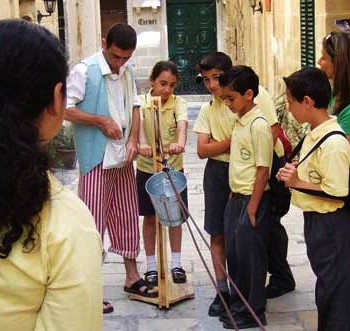
Maltese students actively involved in science meets history study.

Educators should teach students how to think, not what to think writes a former principal of a primary school Salvina Muscat in Malta. Advice our technocrats in the Ministry should be taking if we want to ensure our new curriculum is to work. National Standards are a destructive diversion.

I liked what Salvina Muscat wrote so much I have copied her article from the Malta times. Ms Muscat now works in the Malta Education Department. We need people like her in New Zealand.


'In making laws which bind parents to an education system, we collectively assume a huge responsibility. And yet, for a high percentage of students, the school experience is not a good one.

In the early years of education children seem eager to learn; they are lively and happy. Generally, the classroom provides an atmosphere of spontaneity in which children are encouraged to explore, discover and create.

However, large numbers of students leave school feeling bitter and defeated, not having mastered basic skills society demands from them.

For teachers of unhappy children, the school experience is generally also an unhappy one.

The temptation is to go on the defensive and claim the students are stupid or that their social background is to blame.

It is not always so easy to draw this line. We must reflect on the teaching approach used.

Does this trigger in children a love for learning? How has teaching changed in comparison to the massive flow of information available as a result of the progress in technology? Are we teaching for dynamic learning or superficial knowledge?

In their book, Cognitive Process Instruction: Research On Teaching Thinking (1980), Jack Lochhead and John Clement assert, "We should be teaching students how to think. Instead, we are teaching them what to think."

Very often, education consists of transmitting subject content to students. In most cases, this is done in an excellent way; however, we fail to transmit to students the skill to think effectively about the subject matter - namely how to properly understand and evaluate it.

We need to find a solution to the fact that a majority of school-leavers feel like 'failures'. All children need to feel safe to learn in a manner which best suits them. While they are learning they are liable to make mistakes. This means they need to take risks and at the same time feel safe to take such risks.

Hence, schools need to create a positive environment which makes children feel respected and valued for who they are. Children learn best in an atmosphere of warmth and acceptance. Learning can be fun, or rather should be fun. Thus, it needs to focus on presenting children with enjoyable experiences.

These experiences need to include a variety of activities. In this way, children get more involved in learning about themselves, other people and other environments.

Activity while learning does not necessarily mean taking children out of the classroom every so often, or using teaching time to carry out unrelated activities.

Learning needs to focus on more interesting and better-prepared learning programmes which help children participate actively. This allows them to develop skills and competencies at a rate that is appropriate to their level.

Every person is unique, has different abilities and ways of memorising; each brain is uniquely organised. The same learning method will not be equally successful with all children. Learning needs to take the form of play so that, while it is enjoyable, problem solving skills are improved.

Scholars like Kim Tegel agree that play caters for many areas of development as it involves making decisions, group management, cognition and hypothesising, creativity, physical skills, aesthetic development and language development.

Play is open-ended and helps all children. How can a teacher make this a reality in the classroom with all the constraints?

In their publication, Promoting Active Learning: Strategies for the College Classroom, Chet Myers and Thomas Jones define active learning as "talking, listening, reading, writing, and reflection through problem-solving exercises, and other activities, all with the objective of requiring students to apply what they are learning".

A great deal of research supports active learning exercises. There are findings that students who are actively involved in the learning process are more likely to retain information, understand subject content and maintain overall interest in their study.

The benefits of a student-centred active learning approach has been well-documented; it serves students well when they enter their ever-changing fields of employment and need to adapt to change, think critically and work both collaboratively and independently.

As educators, our role is to facilitate learning for all children. If we need to tap different minds to be active participant learners we need to use a creative learning approach to teaching, supported by the use of resources.

The more senses (seeing, touching, tasting, hearing and smelling) are involved, the better the learning. The mind learns by association; in short this means we relate the unknown to the known. We need to explain the 'why' of a thing or an action.

In teaching, one needs to be flexible and able to adapt plans to the needs that may crop up as the learning is in progress. While talking about caring for plants, students need to experience planting a seed, and caring for the seed while it grows. When we discuss airplanes or any other means of transport, we can use a video and discuss parts of the machine like the steering wheel, or brakes, relating this to the car their family may own.

Children require immediate recognition of efforts made. They need to have the opportunity to discuss the results of their work and plan improvements.

Finally, it is essential to provide children with an experience of sharing their efforts. It is highly motivating if children can present their efforts to the class or in an assembly when a project or piece of work is accomplished. Evaluation is a necessary tool both for teachers and students as it is a measure of clearly defined goals set prior to initiating the task.

In this busy, fast-changing world, educating children for the future is the real challenge. Children need self-confidence, to be adaptable, to utilise their natural creativity, to understand their strengths and weaknesses, to be increasingly self-aware emotionally and intellectually, and to be capable of building relationships quickly, effectively and often virtually.

Entrepreneurship will be a vital tool for their success and for our economy's future stability. Perhaps we should encourage teachers to provide a variety of learning experiences which address different sorts of desirable outcomes.

There is a great need to teach beyond the curriculum. If we do not want change in education to remain cosmetic, all teachers need to be well-supported through training in active teaching approaches. They also need free use of resources to support their teaching. Success depends on the coordinated efforts of all.

As the African proverb goes, "Tomorrow belongs to the people who prepare for it."'

Ms Muscat is assistant director in the Human Resources Department of Education. She was the principal of St Margaret's College, Vittoriosa, when it was in the pilot stage, and holds a Masters Degree In Parmary Education.

Tuesday, June 15, 2010

Real literacy -the medium for 'seeking, using and creating'.


Julie Diamond -author of 'Welcome to the Aquarium'.

As well known American educator Deborah Meier writes on the back cover, 'A rare and special pleasure to read -capturing as it does why it is that some of us can never get enough of teaching.' Seems to me the our current Minister, her reactionary National Standards, her tame 'experts' like Mary Chamberlain, John Hattie, the Canadian woman 'expert', the phonics 'experts' ( Dr Tom etc) waiting in the wings, and all the new literacy advisers ( mercenaries) will make the joy of teaching extinct with their formulaic, anti creativity, 'best practice', 'cherry picked' research, imposed standardized and moderated approach.


Julie Diamond is breathe of fresh air - it is back to the future for me. The technocratic present is so depressing. The creativity of our schools, teachers and students is at risk.

At a creative school oral language, thinking, questioning, drawing and writing are at the heart of the 'emergent' inquiry programme.

And as Julie writes, 'the juice of real experience colours children's writing about real things. Their writing is informed by deep feelings, because the connections they have forged are unique and passionate. As they write and read about real things - not just about themselves - their writing takes off....When children study real things, their own interests and passions dominate their approach to the subject.'

And this writing ,assisted by the teacher, is the beginning of reading. This was once called the language experience approach, or 'whole language'. Julie sites Sylvia Ashton Warner and her vocabulary ideas as an important influence . Writing( and in turn reading) must have 'intense meaning' wrote Sylvia. This is also the approach of the Italian Reggio Emilia Schools Julie also follows.

Real experiences creates the need for focused writing and the search for the best words to use as they stretch their thoughts about the topic in hand. It is the 'lived experience that gives writing energy and muscle, style and personality.'

Forget working your way through genres - a programme based on real experience takes care of such things. Julie spends lots of time asking her students questions as and 'scribing' their thoughts. Such a lot of current classroom writing is lacking in depth. School language not real language.

Literacy develops in a culture that values the 'voice' of the students. As writing is developed Julie introduces knowledge of letters and sounds. Students remember word pattern through association. Julie sees her job to , 'introduce children to reading not to teach it.I encourage the acquisition of reading and writing but I don't push.I've seen too many children who weren't ready to read, pushed by parents or academically orientated pre-schools'. And now, in New Zealand, we have academics waiting to peddle their phonics approach on teachers demeaning meaningful experience in the process.

Julie believes in making children's first readers from their own thoughts ( a Sylvia idea) and once again encourages word attack strategies as part of the process of developing meaning. Her central goal is to ensure her students gain confidence.

During the year writing and drawing folders are developed - writing about authentic studies and experiences. Students needs dictate the appropriate feedback and help given to each student. This is a personalised classroom. Students are not herded in a 'four groups fits all approach' -an approach characterized by lots of children filling in time waiting for their group to get to the teacher.

Dictation of stories is a powerful tool and such dictation is at the level of each student - the deliberate teaching of word attack skills and conventions are introduced as individually appropriate. The 'artistry' of the teacher determines the level of help. Without instruction some children will be unable to progress but the point and purpose of reading must aways be kept paramount. Children need to become aware of Sound letter relationships and alphabet tasks in context and should build on and utilize what the students already know to maximize active rather than passive reading.

As writing skills become more sophisticated teachers should highlight writing conventions and teach techniques, and genres, to children who are ready to utilize them but this, Julie writes, should always be tied to actual purpose. High frequency words need to be available and increasingly learnt through use.. Instruction should aways support reading and writing - children genuine wish to communicate something that matters to them.

Julie resists the use of the term Literacy Block, preferring the term Language Arts, because classrooms dominated by literacy have little real time for the experiences that give children something to write about and supplant the richer multi disciplinary curriculum for mechanical seat work. All too often in such classrooms lessons are based on programmed sequences narrowing the professionalism of teachers. Jolly phonics come to mind!

Purpose for writing, and reading, comes when the children have a genuine purpose - it is as simple as that. Any explicit help should relate to the children's experience and need. Once again this points to the need for teacher artistry. In New Zealand much of the literacy block is spent by children rotating around literacy tasks at the expense of real learning

All this was once bread and butter for progressive junior teachers in New Zealand.Such teachers always considered what children needed to complete worthwhile tasks not to tick off checklists of standards or arbitrary levels.

Creative teachers respected their children's' 'voices' and stayed true to their beliefs - integrity rather than compliance is important. Such teaching put teachers professionalism central. Read, as a comparison, the technocratic jargon used to describe the current National Standards or levels

We need to honour the creativity and lived experiences of our students not supplant them.

It is all about respect and integrity and the valuing of children's' ideas. As Julie Diamond writes, 'The classrooms can then tap the raucous intelligence and the comparing, arguing and questioning that are normally heard outside school walls.

Monday, June 14, 2010

.. Literacy and inquiry -all part of the same learning process.

.


Putting critical  information literacy skills into action - use them or lose them

Inspired by a display following a visit to a museum to study the land Wars. To make good use of such an exciting experience students need a full range of literacy, numeracy observation , inquiry, and expressive skills in place. Real literacy requires a context, or need, that students can see the point of acquiring such vital skills. Literacy and numeracy are all about gaining meaning and power.

Exciting studies provides the context for such learning. The trouble is, these days, classrooms seem to place emphasis on literacy and numeracy as stand alone subjects and, by doing so, lesson students engagement and ability learn deeply about whatever the class is studying.

The first term ought to have been the opportunity to ensure the appropriate learning 'how to learn' skills are in place through reasonably guided studies. And the success of such studies will depend on how well a wide range of literacy skills have been implemented. By now teachers will have a better idea of what they need to focus on to ensure in depth understanding and presentation of whatever the current inquiry topic is. Students need to comprehend, pick out key points, learn to write persuasively about questions that they have chosen ( with their teacher's help), and to present their ideas through a range of media.

Such learning is based on a vision of what inquiry ought to look like appreciating that a powerful inquiry topic provides the context for acquiring required literacy skills.

The following components of an inquiry study are:

1 The need to immerse students in the topic to be studies to invite curiosity and wonder. A good way to start is to make a display around the study to capture the students interest. Literacy time is vital at this immersion stage. Students need to be helped to define study questions, consider their prior knowledge, and to explore background content material. During literacy time students can undertake guided reading of well chosen experts, and illustrative material, related to the study. Through such focused literacy activities students gather ideas to answer their chosen study questions. As well a range of presentation techniques ( including information media) can be introduced for students to make use of as their study progresses. Some of this material can be added to the original teacher display.

2 From the initial immersion students need to be helped to develop open questions, to search for information and to discover answers expressing their own 'voice'. All this can be done during literacy time. Students can work individually or in small groups exploring aspects of the chosen study. And during this time teachers can help their students learn how to source, and refer, to information using book resources the web, or through first hand experiences. Perhaps the most important role of the teacher is through dialogue with their students to ensure they are gaining in depth understandings and to ascertain what skills their students might need - diagnostic teaching.

3 From the above students need to be helped to pull together the information they have been exploring to ensure focused learning. Whatever is expressed should be referenced to sources or state that it their own view or opinion. It is important that students appreciate that quality of thought is more important than quantity - the idea of digging deeply into chosen aspects rather than 'cutting and pasting' ideas glibly.

4 Finally students need to demonstrate their understandings and share their learning. This can be done in a number of ways each way requiring its own subset of skills to be learnt. They can create well presented booklets withe well chosen illustrations and diagrams, charts, websites, blogs, articles, videos, PowerPoint's, parent evenings ... Much of this work can be added to the display, or presented for viewing on the classroom walls with suitable headings. A class evaluation of the study can be added as well. Students need to reflect on what they have learnt, what new skills they have gained and areas to work on for their next study.

Literacy and inquiry -all part of the same learning process.

After an in-depth study you would expect to see:

Some imaginative language based on the study.
Research writing ( not 'cut and paste') based around 3 or 4 chosen study questions
Illustrative art featuring aspects of the study ( or included as part of student research)
Creative art based on the study.
A wall display with: a heading (as provocation), key questions and or agreed tasks, prior ideas about chosen questions, examples of creative language, research findings, models, appropriate mathematical data/graphs and diagrams associated with the topic,imaginative art and possibly a final class evaluation about main ideas learnt. Even ideas for further research.

Each study should result in three or four specific outcomes ( selected from above) and each outcome will need to have skills in place - or to be introduced during the study time. It is such skill development that ought to be the focus of the literacy time. Preparing simple research report needs several skills to be in place to achieve quality learning - persuasive writing, how to focus on answering questions using their own 'voice', how to reference material, how to layout/design the work, how to introduce illustrations, how to design a cover ,if one is requited, and none the least handwriting skills if not using the computer.

Students should feel , at the conclusion of the study, that they have only scratched the surface of the topic.

Bruce Hammonds .Reflecting on what it has been all about.


Sometimes when you feel at the edge of things, as I do these days as my teaching career is coming to an end, you wonder if anything you have done makes any difference at all.

This is quite a devastating thought considering most of my teaching career has been as an adviser. Thankfully most of it was as an Education Board Adviser working alongside teachers over a long period of time not ‘delivering’ short term contracts as is the case today. As well, in those earlier days, advisers were specialist teachers whose role was to assist teachers who might not have had such expertise. We actually took lessons. Things have certainly changed over the years and not always for the best.

When I started, way back in the 60s, specialist teachers (as we were called then) were selected during their last year of teacher training and given a further year to hone their skills. Every Education Board had its own team and each service met regularly to share ideas. In our small Board we had three art specialists, three nature study specialists (changed to science advisers), three Physical Education specialists and, later, a music adviser, junior school and a rural adviser. Things slowly changed and reading and mathematics advisers were added to the mix and the earlier advisers’ numbers slimmed down. The future, it seems, will be populated with literacy and numeracy advisers peddling official ‘best practice’ and ‘cherry picked’ research.

In those early days advisers worked with teachers to develop curricula and resources. In our Board we worked together to develop integrated in-service courses that ran over several days. A lasting influence on my philosophy was working with the art advisers, under the leadership of National Art Adviser Gordon Tovey. Any success we had was dependent on the creative teachers in the schools. I remember the excitement of a teacher developing the first ever integrated unit based on an ecological study of a local stream – an approach we all take for granted today; even if I have doubts about the depth of many current studies. Pioneer creative teacher Elwyn Richardson and his philosophy provided inspiration for us all. His book ‘In the Early World’ became our ‘bible. Elwyn’s book, recently reprinted by the NZCER, is more relevant than ever with the increasing press to standardize learning. All schools ought to have copy as an antidote to current political populist policies. I guess behind the scene was the progressive influence of Dr Beeby, a previous Director of Education, who would be appalled by current developments.

Then came Tomorrows Schools; self managing schools; endless compliance requirements; advisers attached to Colleges of Education; with ‘advice’ ‘delivered’ by contracts with short term timelines; and with advisers employed by contract as well. And of course ERO!

There is no doubt that most of what I hold precious I learnt in those early days. It was a privilege to observe and work with the gifted teachers in our area. They in turn valued ‘our’ assistance. Working alongside such teachers allowed me to see in action teachers at work and, in turn, to share their ideas with others by running local courses. In my role as a science adviser I helped teachers with their field trips and ecological studies and in planning their science programmes. To this day I believe the most powerful professional developmental is gained by visiting other teachers. And, equally importantly, it places classroom teachers as key players not outside ‘experts’.

My most powerful role in the 70/80s was working with a small group of Taranaki teachers developing what became known as the Taranaki Environmental Approach. It is my belief that any real lasting change takes time and those involved need to be totally committed to the task. We all met regularly, often informally to talk over ideas. We also published material to share with others. I think it is fair to say that my itinerant role was a key factor to the group’s unity and such a ‘critical friend’ role is a viable possibility in the future as schools, once again, begin to work together. The work we began in Taranaki has changed over the years and today the area is known for quality learning but now features whole school development rather than the previous emphasis on individual teachers. This is a healthy development.

The future demands a greater emphasis on school creativity to balance the formulaic ‘best practice’ teaching that is being ‘delivered’ to schools resulting, all too often, in a sense of conformity and standardisation in schools.

Schools need to claim back their leadership role and resist the ‘state approach’ to education that is becoming the norm.

One thing I have learnt over the years is that making lasting change is not easy. Students, teachers and schools have to want to change, not just because of political edict or compliance requirement.

I hope there are people who feel I might have helped them over the years.

In recent years the only real effect I feel I have had is when schools have committed to make use of my services a week a term over a year or more. And in such situations, I have learnt, it always gets worse before it gets better! Some call this the ‘implementation dip’! In other schools, with one off assistance, any I ideas I might’ve shared often get lost in all the other competing influences. The status quo and innate teacher conservatism are powerful reactionary forces.

One of the difficult questions is, when asked, to give my impression of a school when it is obvious the school only wants confirmation. As Oscar Wilde said, ‘telling the truth makes you unpopular at the club’. I have found it is only those who value the insights of others who are able to change – that is if they agree! This is particularly hard if you are seen as a friend; schools don’t need reassurance from friends but honesty from ‘critical friends’.

I guess it is over to others to assess ones worth but as I reach the edge of my career I have been thinking about it. My most impressive feedback ever was from a girl I taught when out of the blue when she sent me an e-mail last year;

‘I hope you remember the ten year old because you are indelible in my ten year brain as the person who showed me how to feel, see and say... I am sure the reason I am an artist today is because of you…you taught me about the trees and their Maori names…and whenever I create something I go back to the ten year me to find that centre - the opening and questioning ten year old me.’

I believe strongly in a creative education that is premised on developing the talents and gifts of every student.

I believe equally strongly that any real lasting innovative change only happens when creative schools take the initiative for change and, better still, when groups of schools work together.

And I believe strongly that now is the time, with the imposition of National Standards, for courageous school leadership. Or is it too late?


'In a time of dramatic change learners inherit the world; while the learned
find themselves beautifully equipped to deal with a world that no longer
exists.'

Eric Hoffer

Friday, June 11, 2010

Finding a real curriculum

A creative interpretation of a six year olds pet cat arising from a class study of cats - cats are amazing creatures with impressive adaptations to survive in the wild and as a pet.Students also researched their cats wilder, larger, more famous relatives. How much do you know about your cat?


This is another blog based on my reading of Julie Diamond's book 'Welcome to the Classroom - a year in the lives of children'


Julie writes that 'by the age five, when children arrive in elementary schools, they have evolved definite selves.....the have their passionate interests, concerns, topics,humor; a style that is theirs'.

In other words their own personal curriculum for teachers to tap into , amplify and challenge. Unfortunately, even from a very early age this curriculum is subsumed by topics teachers want to study with their class. Nothing wrong with this but it ought not be at the expense of children's interests and concerns. Eventually teacher imposed curriculums lead to the disengagement of many older students.

Julie lists a wide range of topics arising from the children's own environment and the questions and concerns they have .Children are curious about whatever attracts their attention.They are, Julie writes, 'incessant investigators, particularly about real things in the world.Teachers do not have to wait for questions to arise, but can initiate studies'. I like the quote from Jerome Bruner who says teachers need to 'practice the canny art of intellectual temptation.' Julie writes, 'we can find and display resources - real objects, books, photos - that will pique interest. When a study begins with something that is already part of the children's world, their involvement can be immediate.....Children invest certain topics with meanings that resonate for them at a certain age' She mentions: blood, injuries, dinosaurs, animals and pets.

Teachers just need to ask the students what they wonder about? what worries them? and what they would like to learn more about? A curriculum will 'emerge' and 'evolve'. Julie refers to the exciting Reggio Emilia approach - an approach similar to language experience idea of earlier decades.

Children learn best through first hand experiences. She writes ( referring to John Dewey) ' children learn through their senses; they look closely at things, poke at them, smell them, and shake them to see what sounds they produce'.

Observational drawing are vital for Julie ( she calls them science drawings) to help them investigate and observe closely. During the drawing process Julie encourages her students to tell her what they notice, their questions and thoughts thought.

This is the beginning of literacy - thinking, writing and reading. As studies evolve ideas are documented, photographed and displayed to show the children's learning journeys. In this way students insights and thinking is valued.

The key to such teaching is the teachers conception of the teaching role. Trust in kids is not easy, she says, and it is hard for some teachers to avoid being didactic. Julie values her children's theories and carefully elicits her children's ideas. New Zealand teachers may recognise this as co-constructivist teaching.

If we really value children's understanding we must value their 'prior thoughts and help them clarify and expand on them. It is this approach Julie outlines as her theory of instruction. Questions and answers both provide insight into children's thinking. In the term of the New Zealand Curriculum this is about children 'seeking, using and creating their own knowledge.

Children's questions and studies lead students naturally into the Learning Ares and disciplines. The teacher, Julie writes, 'acts as a bridge between the reality of the children and the logic of adult disciplines'. In this she one again quotes John Dewey who wrote that' eduction is rooted in the child's psychological reality but headed towards the logical reality of adult knowledge, the seeds of disciplines are implicit in children's curiosity about interactions with things in the world.'

Teachers need to know when to step in and assist children in their learning - this is the 'artistry' of being a teacher. They have to notice what is being learnt and what is not being learnt. Julie quotes Eleanor Duckworth. 'the essence of pedagogy is giving children the occasion to have wonderful ideas'. This means teachers 'need to take their students thoughts seriously so as to help them pursue them in greater depth and breadth'.

All this doesn't mean that teacher cannot provide information to students when required.

One idea I liked in Julie's book was that every Friday she gets her students to dictate a letter to her to send home to their parents about the weeks learning events.

Julie's book is about authentic learning - around tasks children have initiated for themselves or assigned by the teacher - learning that is congruent with children's intrinsic motivation, their intense desire to learn, explore , and make things. One indication of authenticity is the degree of energy invested by the children.

This is an approach that begins with their responses, respects their thinking; it is an open ended approach. The belief is that high quality work results when children's intentions and ways of thinking are respected.

Our job as teachers, Julie writes, 'is to see that children's feelings of intense and personal connection are maintained and extended....teachers ensure that a curriculum provides a multiplicity of approaches, children can make their own sense of a topic, and such a topic is likely to appeal to more of them. Their discoveries and conclusions, their idiosyncratic juxtapositions, their eccentric observations and conclusions, and even the public challenges to what we know to be so, add unplanned dimensions layer, and extensions to a study'.

And all this constructing of knowledge leads into authentic reading and writing. In too many New Zealand classrooms literacy and numeracy have all but squeezed out the kind of authentic personalised and creative learning Julie writes about. There was a time when this wasn't the case.

Thursday, June 03, 2010

Looking at Art -Julie Diamond


I thought I would share a few ideas from Julie Diamond's book 'Welcome to the Aquarium' -the story of one year in one year one class. It was refreshing to enjoy the reality of life as teacher that Julie expresses so well. And all the more since it so much aligns with what I believe. I guess we both developed the basis of our philosophies in the heady days of the late 60s. Her classroom is a truly personalised one - not a classroom full of students developing ideas provided by the teacher.


Julie makes it clear she wants the students to 'feel- in their bones- this is their room'. The classroom is to be a 'place for children's work; that's the message'.the goal of the classroom is 'the development of children's intrinsic interests.

'Traditional education', she writes, 'pictures children as the slates, teachers doing the writing.If we are receptive- to children, to what they bring to school- the relationship is reversed.' This is in contrast to teacher dominated ( no matter how friendly)many classrooms I visit are.

Julie writes, 'I want children to take from this year an attitude of respect towards their own capacities for having purpose, for making things, for thinking.I want children to take themselves seriously while having fun.''By the end of the year I want them fully engaged'.

I was interested to read her views about the importance of art, being an ex art adviser. All too often art is used as a a means to 'decorate' the room rather than express individual children's idiosyncratic expression.

She writes, 'A critical component of art work....is an acceptance of the unknowability of the end product....I have had to learn that mistakes are not only inevitable but necessary and useful, and that dealing with them - untangling some knot- takes us somewhere unexpected.' Once again in contrast with all the 'intentional teaching' now seen as 'best practice' in our schools resulting in a conformity of product devoid of personality. And as well the importance of art as a form of expression is demeaned.

'Teaching art has to do with the difference between trusting children and believing you must teach them everything about a subject or they won't know'. This brings in the role of the teacher. Julie writes that teachers must leave space for their work - children must make the decisions, do the thinking, use their imagination, and take responsibility for their own work. Teachers must be careful not to impose their ideas on students.

Julie writes that teacher's role is subtle. Explorations can be guided, parameters set but still open enough 'to permit each child's experience and unique preferences to inform' their work. 'The aim is help children to develop their abilities, to see, design, use colour, to help them extend their visual vocabularies, to help them gain clarity and conviction, while making something that is authentically theirs'.

'I aways put the children's expressiveness first.Art activities were valued because the class environment was rich in art, part of all content areas, they illustrated poems, drew the classroom animals and plants, printed with the leaves we'd collected in the park, and made collages to illustrate children's information about the animals they were studying. They used maths material to make elaborate and beautiful patterns'.

When involved in real life investigations Julia is influenced by John Dewey who believed children learn best through concrete experiences; that they learn through their bodies and their senses; they look closely at things, play with them, smell them,and shake them.

Julia involved her children in what she calls 'science' drawings. Children had lots of experiences in drawing a range of things from the nature table. Drawings were dated and stamped and Julia would ask the children what they had noticed about the object being drawn and she would write down what they said.

Science drawing, she instructed her children, is a different kind of drawing from other more expressive drawings. Expressive art arises out of observational work.Science drawing is a means to investigate some phenomena. When they draw in this way they notice more; the swirl in a shell or the jagged edge of a nut. Such drawing gives children a sense of ownership of the object being drawn. Drawing in this way is a valuable tool of investigation is natural for young children. The teacher actively helps a child look at an object to be drawn. By displaying drawing children's thinking was made public Photos also documented the work of observation. Work collected creates a record of the development of children's observational abilities.

In Julia's classroom children communicate with ease in making and thinking about art both expressive and scientific..

My kind of classroom.

Monday, May 31, 2010

At last - a book by an inspirational teacher.


Someone recommended that I ought to acquire and read this book and, in March, through the magic of Amazon , I bought myself a copy. All I can say - it was a great buy. A book that every beginning teacher should read, even just for the honesty about the real life of a teacher. All teachers also would enjoy it as it reflects the reality of teaching - a a change from the academic 'experts' who seem to fly at 30000 feet above schools dropping down their 'researched' advice unable to see the very different experiences of the teachers who have to comply.

This book , written by Julie Diamond, is what it's subtitle says - 'a year in the lives of children'. As reviewer, American Educationalists Deborah Meier, writes . 'A rare and special pleasure to read - capturing as it does why it is that some of us can never get enough of teaching'.

For me it stands alongside another wonderful book, Elwyn's Richardson's 'In the Early world' ( still available from the NZCER). Elwyn's book cover his experience teaching over a number of years in the 1950s. Julie's book, in contrast, focuses on one year in the life of a year one class ( in the USA a kindergarten class).

'Welcome to the Aquarium' is a compelling personal account of teaching full of wise advice on how to set up and maintain an effective and caring classroom. I can't think of any recent book which talks about teaching through the eyes of a teacher. It is wonderful change from the dry academic books on education that are more commonly available;books that develop their 'wisdom' from a safe academic distance.

This is a real story -about the ups and downs, the fun and frustration, of being a teacher working with a range of very different individuals. In such a dynamic environment, as teachers well know, there can be no 'best practice' that can be simply implanted in their rooms.

Julie Diamond is a New York teacher writing her book after twenty five years in a classroom. Some of this time was spent teaching in an alternative school and she has also supervised graduate students in their training. On top of all this she is a writer and an artist. Julie is no Ivory Tower expert -she is the real thing.

It has been a sad comment on education , these past decades, that the wisdom of creative classroom teachers has not been shared with other teachers. Instead schools have been flooded with 'expert' advice 'delivered' by those with, all too often, little knowledge of the real lives of teachers. This book is a wonderful antidote for such thinking.

Real teachers know that each class develops its own personality and that this grows as the year unfolds. Teaching needs to be seen as the ultimate creative activity - a creativity that is dulled by school and Ministry compliance requirements.

Julie's school is called PS 87! 'Primary School 87' with over a 1000 students. Only in America.

Julie states that, for her children, her ultimate 'purpose is to recognise the worlds they live in and create.' She hold a progressive approach to teaching and says 'learning is something a learner does, not something done to the learner.' She want her room to be 'informed by the lives of the children' and a 'place for children's thinking and stories; celebrating their real lives.'

Julie's influences make sense to me. She was impressed with the creative British Primary Schools of the 1970s (as was I) ; the Reggio Emilia schools of Milan, the writings of John Dewey and NZs Sylvia Ashton Warner.

It has not been easy holding true to her beliefs in a system increasingly being standardised and tested. Older creative New Zealand teachers will know the feeling as we have followed the technocratic, and now failing, approaches imported from the UK and the US.

The book's chapters follow Julie and her class through the year beginning even before the children enter her room.

One chapter covers beginning the year where she wants her children to 'feel in their bones it is their room'. She discuses how to set up her room as a 'laboratory workshop' to be 'based around children's intrinsic interests'.This is to be the 'stuff' of her 'emergent' curriculum.


Another chapter covers the need for routines and rituals and developing class expectations, in the children, that they are to be trusted within agreed expectations. Her aim is to develop personal responsibly and accountability - the beginning of class democracy. Important to Julie is knowing when to intervene.

Included is organising the flow of the day.

Another chapter covers the importance of art which Julie values because it develops a child's identity and also that there is no right or wrong answers. Developing each child's personal interests and individuality is an important aspect of Julie's teaching - not covering set curriculum's.

Developing authentic studies covers a further chapter and here she emphasises first hand experiences, children's questions and valuing their own ideas. This is a chapter about inquiry learning. How to help children investigate and represent their findings- and the idea of an 'emergent' curriculum arising from her children's interests. She covers the essence of her pedagogy, her theory of curriculum development, basically the philosophy of co-constructivist teaching. And also the importance of feelings in learning. Evey Friday she sends a letter home to the children's parent outlining all the learning they have done. She also writes insightfully about how she manages to work within the standards imposed on her -a debate New Zealand teacher will becoming aware of! She worries about casualties of the quest for accountability where everything is sacrificed in the name of test scores. She believes we are 'manufacturing problems'. That we are creating school failures.

There is a valuable chapter about literacy and the construction of knowledge. Literacy is woven into her authentic studies; reading and writing emerge from such activities. Literature themes are important to her. She refuses to rename her language time as as a literacy block!! Older New Zealand teachers will see this as what was called a language experience / centre of interest approach. She outlines her approach base on the writings of Ashton Warner. Writing linked to early reading are vitally important. All very reassuring.


One interesting chapter covers 'midwinter doldrums and quarrels' and talks about moments when the class loses focus and how to recover.
Her take on the positive results of conflict is interesting. She writes in this chapter about how to manage a class and about how to develop the authentic authority necessary to being a teacher. This is all about the need to value childhood and the faith needed to believe all children can learn once the right relationships have been established.

Another chapter covers the dilemma Julie faces with a 'problem child'. Teachers with similar children will find this chapter really personal.Problems where no 'expert' seems to have a right answer - it can only be worked in cooperation with the child and parents.And parents aren't always a help, she writes,contrary to current wisdom.

The book includes a chapter about about the end of the year where Julie reflects on the development of her class into a community of confident learners. She talks about the highs and lows, the breakthroughs, and the ambivalent feeling about leaving her class - children that have by now become an important part of her life. All teachers will know this feeling.

The final chapter, a postscript, talks about being a teacher. The feeling about doing something important; the excitement and challenge of being a teacher.

The postscript too full of wise words to summarise. This really applies to the whole book. She writes about the testing ethos and standardized teaching that is taking over teaching in the USA. Such teaching and testing cannot, she writes, reflect the vital aspects of human potentialities; it is, she says, distorting teaching.

She pleas for creative teacher to network with each other, to share their creative ideas, to develop means to challenge the technocratic nonsense that schools are having to face up to.

A great book. It is all about developing a creative culture - one that has implications for the wider society.

It is time we started to value the creativity that lies within our teachers - or to value the creativity within every one of us. The 'experts, have had their day.

Check it out at Amazon.


Better still write your own book.