Showing posts sorted by date for query bill guild. Sort by relevance Show all posts

Sunday, May 19, 2019

What is the most important question for students ? And are schools helping provide an answer?

Who am I ?
The question for all learners ; ‘Who Am I? ‘
Readings Sunday 19th May 2019


Years ago New Zealand artist Colin McCahon created a controversial large abstract painting called ‘I Am’.

For us the message was answering the question that we all
struggle with - who am I? What things are important to me? What makes me who I am?

The questions above should underpin all the activities in our education system. That so many young people leave education with these questions unanswered ought to be of great concern and worse still leaves students open to becoming to become involved in
Making your mark!!
anti-social behaviour. The outbreak of graffiti in our society is a sign of young people
‘making their mark’ as a protest against the way many of them feel they have been treated by their school experience. For many students it is schools that are dysfunctional.

It is our belief that an education system premised on the arts would ensure all students leave schooling with a positive learning identity.

The current reactionary emphasis on literacy and numeracy is
a distraction – literacy still  remains a problem for far too many students and, as maths educator Jo Boaler (who has recently presented in New Zealand) has said, far too many students leave schooling suffering from ‘maths anxiety’.

Dr Beeby
It is time for a real change of direction – or for many back to the future to the exciting days of Dr Beeby best represented in Elwyn Richardson’s book ‘In the Early World’ first printed in the 1960s and thankfully recently reprinted by the NZCER. This inspirational book gives today’s teachers insight into the power of personal creativity through art, language, movement, drama and inquiry learning. Another pioneer teacher Sylvia Ashton Warner wrote in ‘Teacher’ that students were like a volcano with two vents – one vent if tapped led to creativity, the other to violence.

Today we have educationalists like Sir Ken Robinson powerfully asking for schools to place creativity central to learning – creativity in its widest interpretation. Sir Ken believes creativity is important as literacy and numeracy but few schools follow his advice.

Sadly, today the arts play a marginal role in our schools and most to be seen is not about personal expression but more facile decoration and, as a result of a formulaic intentional approach to learning, results in art work ‘well done’ but 'clone like' in appearance.

Eliot Eisner, an art educationalist, writes ‘the arts are rooted in man’s need to give form to his experience, to come to know the world in ways only the arts can make possible’. Learners experience their world through their senses and from such experience curiosity is enlivened, questions asked, and realistic inquiries undertaken. Such realistic studies are open to be solved in all the ways open to being human – the arts, media, words, maths, music and drama – integrated learning.

Our observation is that literacy and numeracy have all but

Beyond literacy and numeracy - the real
squeezed out the importance of experiential learning and related arts and this is not helped by the destructive use of ability grouping and inquiry learning overly focused on  learning through the internet.

No wonder many students, even the most ‘successful’, fail to develop a positive view of themselves.

We see the metaphor for a classroom (whether ILEs or self-contained) as ‘mini Te Papa’   - a challenging mix of an science/technology laboratory, a media centre , an arts and drama
Te Papa - a metaphor for a school
studio, and an exhibition centre with students
‘seeking, using and creating their own knowledge’ as it states in the New Zealand Curriculum. And integral to this providing opportunities to integrate, in realistic contexts, literacy and numeracy. The arts ‘help learners secure new and deeper meanings from experience… with students not only makers of their own reality but creators of their own minds’
Howard Gardner
(Eisner)
.
This view of learning aligns with the ‘multiple intelligences’ of Howard Gardner – each intelligence providing a frame of reference to interpret experience. 

The teacher’s role, as Jerome Bruner wisely says, is ‘the canny art of intellectual temptation’ providing a learning environment that captures student’s curiosity and, when students become involved, providing guidance lightly, and helping individual gain missing skills to allow them to achieve their
Eliot Eisner
‘personal best’.  Eisner writes 'teachers need to help without being hurtful and to guide without being overbearing, and to explain without being pedantic'. Most of all teachers give their students achievements the attention and respect it deserves. Teaching in this respect is an art in itself – the highest form of creativity.  Elwyn Richardson saw his students as ‘a community of artist and scientists exploring their environment and personal worlds’, and also said that ‘his students were as much his teacher as he was theirs.’

This vision is the opposite to the teacher dominated formulaic assessment environment currently is to be seen – an environment that is not helping students ( nor teachers) express who they are. Imagine an education system premise on developing the gift and talents of all learners.

Readings


For teachers interested in developing arts based programmes our last blog has some good reads. 


Another blog full of great readings

Looking back to the early days of NZ Creative Education 
‘All too often we can get so mired in the present that we are unable to see beyond whatever is taking our attention. Teachers, trying to interpret what is currently expected of them, are in such a position. All it causes is stress and confusion. Having some sort of insight into the past can put the present into perspective and better still give ideas for future directions.’

For those interested in Play Based Learning might be interested in the forgotten genesis of progressive early education
'Since 'Tomorrows Schools' (1986) teachers would be excused if they thought all ideas about teaching and learning came from those distant from the classroom - and more recently imposed by technocrats and politicians. This was not always the case. Play based learning was once a feature of junior classes.'

How Integrating Arts Into Other Subjects Makes Learning Come Alive

‘Art has long been recognized as an important part of a well-rounded education -- but when it comes down to setting budget priorities, the arts rarely rise to the top despite the many studies showing that exposure to the arts can help with academics too. A few schools are taking the research to heart, weaving the arts into everything they do and finding that the approach not only boosts academic achievement but also promotes creativity, self-confidence and school pride.’

Reclaiming the joy of learning – the philosophy of Elwyn Richardson
Art from Elwyn's school
‘It seems proper when thinking of creativity our classrooms to reflect on the writings of 1950s pioneer creative teacher Elwyn Richardson. His ideas are to be found in his inspirational book ‘In the Early World’ first published by the NZCER in 1964 (reprinted 1994).’

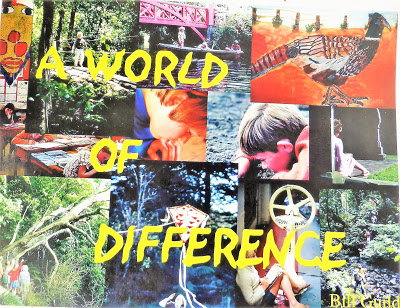
A World of Difference’: the philosophy of a Taranaki pioneer creative teacher - Bill Guild
‘I believe that schools must be learning communities where
students learn, with our assistance, the things they want to learn; when they want to learn them; how they want to learn them; and why they want to learn them; all through their own curiosity’

Why is teaching kids to draw not a more important part of the curriculum?
‘Drawing plays a big role in our cognitive development. It can help us learn to write and think creatively, develop hand-eye co-ordination, hone analytic skills, and conceptualise ideas.But drawing is rarely used as a tool for learning in schools. Generally, most  school teachers aren’t trained in visual education.’

Why drawing isn’t just an art
‘There's a growing understanding that drawing is much more than an art form: it's a powerful tool for learning.’

Are technologies making us smarter? Wiser? More compassionate?
By Jamie McKenzie
’50 years ago and the potential of computing to enhance learning was enormous but also virgin territory. Since then we have seen many foolish and wasteful efforts along with some that were magical and quite beneficial. Half a century later, it seems worthwhile to pause and reflect upon the impact computers and computing have had upon schools, learning, and the society as a whole.’

Differentiating by Offering Choices
‘Elementary students have a better chance of showing what they’ve learned when they have a choice about how to show it.’

 Innovative Learning Environments
‘If well-designed environments improve learning for students, what are the features of a ‘well-designed’ environment? Research suggests that when the following elements are in place, student learning is likely to accelerate.’

Education reform has led to the "death of the teacher" new book argues.
‘Just when you think you have a firm grip on the theories, politics, practices and trends affecting education in Australia, a book like Flip the System Australia arrives to shake you out of your comfort zone. That’s what happened to me when I read this book, which stems from what appears to be a global education movement against neoliberalism. The Flip the System organisation holds that the neoliberal shift in reform has “led, in a more postmodern sense, to the death of the teacher”. That hooked me.’

Cultivating Creative Thinking

‘By encouraging our children to approach situations as problem solvers, and giving them the tools to think for themselves, we will grow adults who aren’t afraid to ask tough questions of politicians, doctors, college professors, and anyone else. And, they will take an active role in understanding situations before forming opinions or voting.’


Friday, April 12, 2019

What is a creative education? - Elwyn Richardson, Sir Ken , Guy Claxton, John Holt


What is a truly creative education?

Creative teaching Readings
  Friday 12th April

Bruce and I spend time each week gathering articles that encourage a creative approach to education.  This of course begs the question what makes a classroom creative?

Bruce has been involved in encouraging creative approaches to education for decades. First as a
science adviser, as a teacher, an art adviser, principal and an independent education adviser.

At the beginning of this year Bruce was asked to give a session at the school he was once principal of at their TOD to share the main ideas arising from his experience over the decades.
Perhaps the main idea Bruce mentioned was to develop your classroom, or school, as a community of learners.

 Bruce drew the attention of the staff to the philosophy of Elwyn Richardson who saw his classroom as a community of artists and scientists exploring their immediate environment and personal experiences. To us both Elwyn’s book In the Early World (recently republished by the NZCER) is still the best example of creative teaching. All schools and teachers should have a copy.

As a Science Adviser (and even earlier as a Nature Study Specialist) Bruce said that exploring the natural world is as important as ever and, as part of this, it is important to help students learn through sensory awareness.  Such awareness and appreciation provides motivation for expression
through a range of media but will contribute for students to protect and value the environment.

In the mid 80s Bruce was involved in the Waikato School of Education’s Learning in Science Project (LISP). Essentially this was based on finding out what students know and then to challenge their understandings ; to value their question  and current theories and to note how their view had changed (or not) due to learning experiences. Contrary to current views knowledge is as important as the learning process. Classrooms should reflect the before and after views of students.

As an art adviser Bruce focussed on helping students express ideas through art and valued the idiosyncratic expression of every learner.  Much of what many teachers today call creativity is craft at best and decoration at worst – and, all too often, little can be seen to differentiate each learners efforts.

Bruce’s teaching experience followed a long career giving advice. The main message he learnt was that giving advice and doing it are two different things.  Having to cover the whole curriculum was a real challenge and took him time to come to terms with.   Bruce made the point
that take advice with care – many who provide advice have had little practical experience of what they talk about.

So these were the points Bruce shared which align with my own views. We both believe that in an education that focuses on accepting learners for what they can do and building on their strengths – to develop their unique passions and talents.

 We both believe that all students will learn if it makes sense to them, if they can see the point of what they are doing.

We both believe that the teacher’s role is to create classrooms as communities of learners full of challenging experiences to attract student’s curiosity. As Jerome Bruner has written ‘teaching is the canny art of intellectual temptation’. If we see our classrooms as a subtle mix of an artist’s studio ( in including all media), a scientist’s laboratory, a work room and an art gallery then students will learn to do, in meaningful contests, the very things teachers currently spend far too much time on – literacy and numeracy. Too much valuable teacher time and energy is wasted on assessment and
documentation

Two last points. Teachers should do fewer things well and, strangely in this fast paced world, to slow the pace of students work to both encourage in-depth thinking and to give time for teachers to come alongside learners to help as required. Students, all too often, think that first finished is best and by rushing develop fragile learning.

Students are born to learn. We mustn’t let schools get in their way. If in doubt read Elwyn Richardson’s book and also watch the two videos about his work at Oruaiti School.

Allan Alach


For those interested in Elwyn Richardson’s book

Reclaiming the joy of learning : In the Early World ( NZCER)

‘Oruaiti School functioned as a community of artists and scientists who turned a frank and searching gaze on all that came within their gambit. Curiosity and emotional force led them to explore the natural world and the world of their feelings…..Studies and activities grew out of what preceded them. New techniques were discovered and skills practiced as each achievement set new standards’

In the Early World

Here’s a movie, filmed by Elwyn Richardson in 1961, with his added commentary, that shows some of the amazing art work produced by his pupils.

Song of the Bird

Following on, here’s another video that looks at Elwyn Richardson’s work and which includes Richardson talking about his teaching.

A gifted Taranaki teacher Bill Guild implements Elwyn’s ideas

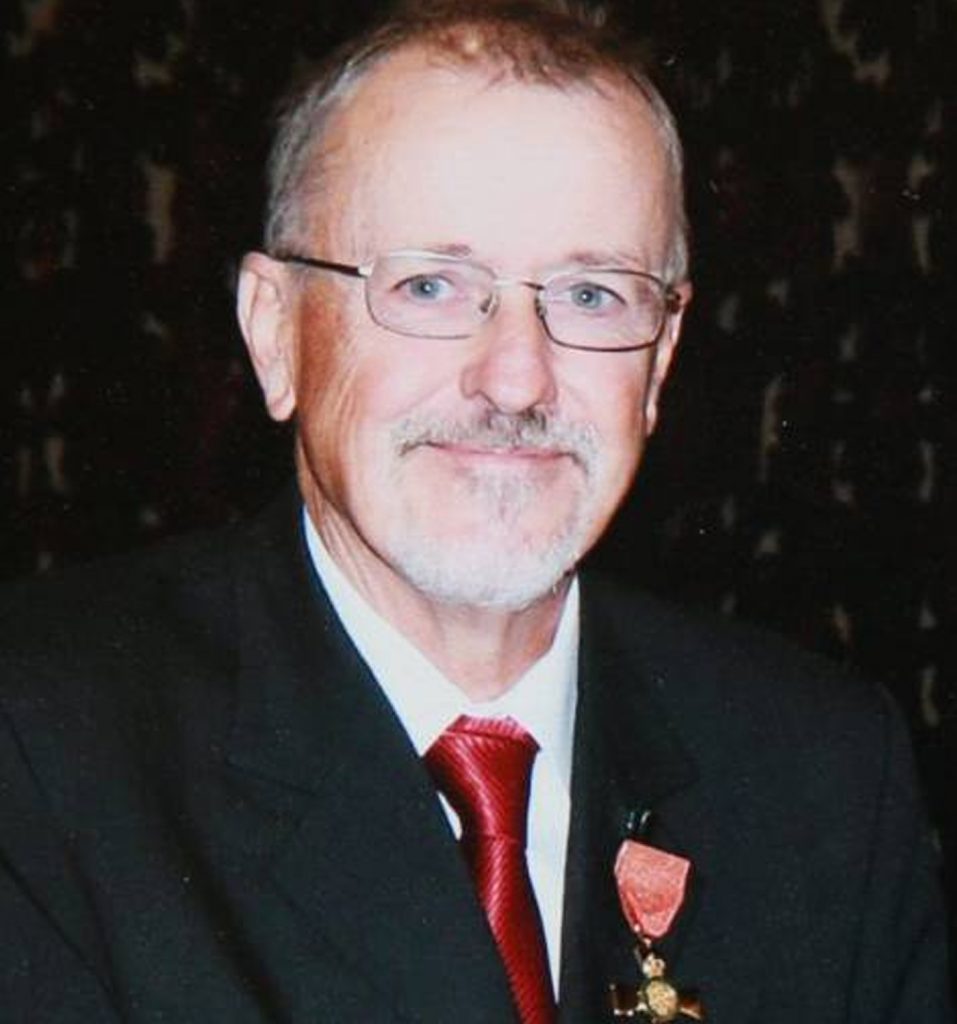
Bill Guild was a key figure of a group of Taranaki teachers that had gained reputation for the  creative programmes they were implementing.  Bill - who by the way turns 93 this year and is as enthusiastic about creativity as he ever was and a whiz on his Apple  Computer

John Dewey an educator for the 21stC

The progressive ideas Bruce and I hold relate to the writings of John Dewey. So many of the ideas talked about today have their genesis in the writings of Dewey .
‘
Dewey placed a premium on student meaningful activity in learning and participation in classroom democracy. His belief that students must be ‘invested’ in what they are learning echoing calls today for school to present ‘rich, real and relevant learning’ to combat growing student disengagement.’

Guy Claxton’s  book ‘What’s the  Point of School’

‘This book is powerful and timely examination of why our schools are built to fail, and how to redesign them to meet the needs of the
modern world.' The challenge of redesigning schools is a big ask but the book gives lots of very practical advice about how to create enthusiastic learners and more effective teaching. In particular the 'learning power' ideas gives guidance to how New Zealand teachers can implement the 'key competencies' of the new curriculum.’

Time to re-read John Holt -

‘The Joy and Sorrow of Rereading Holt’s "How Children Learn" Here, summed up, are John Holt’s great insights about children’s learning.'

We must reverse the ‘outcome oriented’ educational monster we have unleashed

“Our students need to be content creators, not memorisers As the New Zealand Curriculum says students need to ‘seek, use and create their own knowledge’.”

What Students Do Better Than Teachers

‘Moving from exchanging words to exchanging ideas is a big shift that doesn’t happen just because there is a question and answer exchange. There is a certain trust inherent in any meaningful communication.’

9 Elephants in the (Class)Room That Should “Unsettle” Us

‘I’ve been collecting a list of these “things that we don’t really want to talk about in education” in hopes that it might challenge us to bring those elephants out into the open and ignite some much needed conversation about how to deal with them. Here are nine of them.’

The Artistry of Teaching

‘There is one goal [of education] that, if not achieved, makes the achievement of all other goals very unlikely. That goal is to create those conditions that make students want to learn; not have to learn but want to learn more about self, others, and the world. The overarching purpose of schooling and its governance is to support that goal, i.e., to create and sustain contexts of productive learning supportive of the natural curiosity and wonder with which children start schooling.’

Seven Myths Keeping Teachers from Implementing Creative Projects

‘Every year, I ask my pedagogy students about their most memorable learning experience as a student. Inevitably, it involves a creative project. These were the moments when learning stuck and often it was when they fell in love with the subject. But these were also the experiences that taught them collaboration, project management, flexible thinking, and a growth mindset.’

#3quotes from Rogers - Steve Wheeler:

‘Although he originally practised as a psychotherapist, Carl Rogers was intensely interested in education. His 1969 publication Freedom to Learn is now considered a classic of education. It was certainly required reading during my own teacher training. Rogers' approach to both psychotherapy and education was humanistic and thus person-centred. His view on learning was that children needed to be fully engaged rather than passive in the classroom.’

4 Ways to Develop Creativity in Students

‘When Benjamin Bloom identified what he called the taxonomy of the cognitive domain, he ranked
synthesis (creativity) as one of the most difficult skills to master because a person has to use all of the other cognitive skills in the creative process. Since, according to Bloom, creating is the highest
order of thinking, it should be in the forefront of all learning environments and an end goal. When students create what they imagine, they’re in the driver’s seat.’

Sir Ken Robinson: How to Create a Culture For Valuable Learning

‘Robinson believes education is “to enable students to understand the world around them, and the talents within them, so that they can become fulfilled individuals and active, compassionate citizens.” He doesn’t deny that learning information about the world is important, but he says it’s equally important for students to understand their own talents, motivations and passions if they are going to lead lives that satisfy them. The current system of conformity and compliance leaves no space for this type of self-exploration.’

Saturday, March 09, 2019

Innovative Learning Environments - and the need for imagination and creativity


Education Readings

Introduction to readings
It would seem many schools are still locked into the assessment and associated documentation required by National Standards and as a result are dedicating too much of their time to literacy and numeracy – as important as they are. Bruce and I have long believed that the most important thing is to expose students to a rich thinking curriculum – a curriculum that integrates areas
of the curriculum as required. Nothing new in this. Elwyn Richardson in his wonderful book In theEarly World (available NZCER) written in the 60s saw his students as a community of artists and scientists exploring their environment and   their personal concerns. More recently Professor Peter O’Conner has expressed the need to develop programmes to develop student creativity (November 2018 NZPF Magazine) and quoted John Dewey, ‘the arts are tools by which we train the imagination…its only when we imagine that we can be better, that we can really change’.
Time now for some creativity and imagination in our schools.
Allan Alach
Bruce Hammond
Innovative Learning Environments – where’s the evidence?
‘In an open letter to Education Minister Chris Hipkins, parent Kia King outlines her concerns that there is no evidence to show that innovative learning environments can support enhanced teaching and learning.’
Innovative Learning Environments – here’s the evidence
‘Educational Consultant and Director of Leading Learning Mark Osborne responds to two big questions: Why is the design of classrooms changing? And how can we be sure that ‘innovative learning environments’ are actually leading to better teaching and learning?’
Inside an ‘Innovative Learning Environment – for and against
‘One of the great advantages touted is that ILEs create
collaborative teaching. Staff, from the same or different departments, must work together. They share the space. There are no walls, every move is under examination not only by their students but also by their peers. It’s the complete deprivatisation of practice. Proponents say that it allows weaker practitioners to learn from their stronger counterparts - to observe teaching techniques and behaviour management in action.’ Others have their doubts.
Tomorrow's Schools Review: Winner vs Loser Schools!
Maurie Abrahams
‘One innovative principal’s view. ‘I have been emotionally shaken by what I heard about the willingness of some school leaders to adopt the position that everything is OK for us so leave it as it is! So much so that I carefully chose the discussion tables I went to so that I could avoid hearing this position being promoted. I failed!Yet, despite that experience I still feel optimistic. The generational shift occurring across many professions and institutions will not bypass education and school leadership.’ By Maurie Abrahams - Hobsonville Point School
What Makes a Good School Culture?
‘Most principals have an instinctive awareness that organizational culture is a key element of school success. They might say their school has a “good culture” when teachers are expressing a shared vision and students are succeeding — or that they need to “work on school culture” when several teachers resign or student discipline rates rise. But like many organizational leaders, principals may get stymied when they actually try to describe the elements that create a positive culture.’
Russell Bishop: Who’s to blame for Māori failures at school?
Russell Bishop
‘In 1998, I wrote a book Culture Counts, where I suggested that the most important thing teachers could do, before they could do the job of teaching, was to establish figurative whakapapa-type relationships with Māori students and their families. This would let the students and their families know that you were serious and in your classroom, Māori could succeed. That’s what was missing from the schools and the classrooms where Māori kids weren’t achieving at the level they should — a base of whanaungatanga.’
The Artistry of Teaching
‘There is one goal [of education] that, if not achieved, makes the
Seymour Saraon
achievement of all other goals very unlikely. That goal is to create those conditions that make students want to learn; not have to learn but want to learn more about self, others, and the world
. The overarching purpose of schooling and its governance is to support that goal, i.e., to create and sustain contexts of productive learning supportive of the natural curiosity and wonder with which children start schooling.’ Seymour Sarason
Imagination, Inquiry, and Agency
‘Finish this sentence…“Imagine a place where students could…”Is that place your school? What would it take for that place to be a reality for your students? What do you think school could, and should be? That question is the focus of thousands of conversations in school communities today. It’s a sign of the concern, the angst, and for some even the desperation to better understand how we can more relevantly prepare our students for the rapidly changing modern world we all now live in.’
Article: ‘If all of that testing had been improving us, we would have been the highest-achieving nation in the world.' Here’s what does work in school reform
‘So what should this country be doing to improve public schools? For one thing, pay attention to the social and emotional needs of students so that they are prepared to tackle academic work at school, Darling-Hammond said. Darling-Hammond cited these policies in high-performing countries: Equitable resources to schools. Major investments in educator preparation and ongoing support Schools designed to support teacher and student learning. Equitable access to a rich, thinking curriculum. Performance assessments focused on higher order skills that are used to guide learning.’
5 reasons why data is a waste of everyone's time
‘Why do we put so much focus on data? It's unreliable, confuses pupils and teachers, and takes up far too much time, writes one teacher.’
Simple Tips for Boosting Teacher Resilience
‘Try these quick and easy ways to build resilience and relieve stress.’
Deconstructing “Scaffolding”
By Alfie Kohn
‘But as I’ve thought more carefully about scaffolding — and watched as it, like so many other promising terms, has been appropriated by non- and even anti-progressive educators – I’ve become increasingly skeptical. Here are some questions I think we might want to ask when the word is casually tossed around.’
http://bit.ly/2XGKXyd

A couple of Bruce’s Oldies
Transforming Secondary Education – the most difficult challenge of all. Thoughts from a past age – ‘Young Lives at Stake’ by Charity James
‘Charity James believed it was important to get secondary education right if all students were to leave able to take advantage of the exciting opportunities the future might offer.  The challenge remains. Secondary schools need a radical reappraisal to ameliorate the effects of obvious social and cultural disadvantages and also to develop the needs, talents and gifts of all students.’
'A World of Difference’: the philosophy of a Taranaki pioneer creative teacher - Bill Guild

‘The ideas that Bill developed 1970- 1986 may be useful for today's teachers and they return their focus to developing students creativity and imagination.’