Wednesday, August 17, 2016

Thoughts about the future of education in New Zealand


A view from the edge.

I have been asked to share my thoughts about education to a group of rural Taranaki principals. Thinking about it I am not sure if I am a relic from  a past age or a person thinking of what might be. I certainly am not impressed with the standardized, target centred direction of the current government; Free market Stalinism.

Whatever I say  will need to be considered advisably

Sir Ken Robinson's new book
I think I have a good 'backstory' to use an in word. Over the decades I have been a school adviser in science and art, a classroom teacher, a school principal, Teaching Fellow Palmerston North Teachers College ( now Massey University School of Education) completing my career as an independent school adviser. I have also presented ideas about quality teaching and learning throughout New Zealand and at several International Conferences. My swan song was a keynote  presentation at the Inspired Impact Conference in Palmerston North 2011 at which Sir Ken Robinson was also a key note speaker.

Over the decades I have shared the ideas of creative teachers through magazines ( Primary Arts)  E-zines ( leading and Learning) and currently through this blog so although I am well and truly retired I still love reading and thinking about education - or what it could be if only....

An idea we need to keep  in mind; we are born to learn
Born to explore, learn and make sense of experience

We are programmed to learn from birth. If students appear not to learn then it is over to schools to present an environment to ensure this drive to learn is kept alive. I appreciate, however, that the difficult home circumstances of many children makes this a challenging task particularly as the government seems to ignore poverty as an important factor.

The big question is what  attributes or dispositions to we want our students to leave our classrooms or school with?

The big challenge is to identify and amplify the gifts and talents our students have. To ensure all students leave school with a positive learning identity.

To do this requires the establishment of stimulation learning environments that expose students to a range of opportunities to explore. Jerome Bruner has written 'teaching is the canny art of intellectual temptation' and 'people get good at what they get good at'.
Standardized  education

Achieving this challenge  is in conflict with the imposition of National Standards and NCEA targets which narrow  curriculum choices and ignore other equally important aspects of learning.  As well it is all too easy to 'game' the system! Business 'guru' Margaret Wheatley has written 'the trouble with targets is not that the ones you achieve bit the ones you miss because you weren't looking' and to quote Albert Einstein ' If you judge a fish by its ability to climb a tree it will live its whole life believing it is stupid'.

Our schools are full of such 'stupid' people and rather than introducing behaviour programmes to control such students we need to focus on how to engage them,

Ask teachers or parents.

I am impressed with the curriculum of New Tech High  ( check out this link). The principal Larry Rosenstock asks teachers to think of two or three positive learning experiences they had at school and after sharing them figure out the common elements.  From this develop a school curriculum based on
such ideas ; an idea for education at any level.

Worth doing at a staff  or parent meeting.

Better still what about asking the students themselves .
 (This is a link to  extract below)


The kids right in front of us often have the most useful information within them -- information that can help us reach and teach them, help us engage them, and that can help us have a fantastic year together.

What to Ask?

Here are several of my favorite questions to ask kids of all ages:
Neglected resource
  1. What would be the most useful thing for me to know about you as a student?
  2. What do you wish was different about school?
  3. Describe a moment in school last year when you felt really engaged. Why do you think that moment was such a positive one for you?
  4. What do you think teachers think about you, and what do you wish they'd think about you?
  5. Tell me about a teacher who you feel knew you well. What kind of student were you in his or her class? What did he or she do to get to know you?
  6. If you could build a school, what would it look like?
  7. What do you wish I would ask you so that I can be a good teacher for you?
  8. What makes a weekend day great for you?
When we ask questions, and when we're genuinely curious about what students say, we are communicating an authentic desire to get to know who they are beyond their test scores and beyond what other teachers may share. The questioning and the quiet listening communicate our care for our student
Some  schools make use of the ideas of James Beane to develop a curriculum based on students concerns and questions.
None of the above is new . Creative teachers past and present have develop 'emergent' curriculum
based on such ideas.  Unfortunately current Ministry requirements and the power of the status quo means that such creative school programmes are not common.

Imagine starting a school from scratch!

'If all your dreams came true in schools what would happen' Joseph Drieson National Radio 26 July

The 'wisdom of the crowds'; 10/4 voting.

A few years ago I was involved with local school that combined primary and secondary students. The development was led by consultants Dr John Edwards (Aust) and Dr Bill Martin (USA).

 The staff were individually asked to list all the things the school needed to do to make it a 'great school' . The staff then went around a circle giving their ideas, one at a time, ( no interaction from other staff members). After all the  ideas were listed some were combined but only  with the agreement of those who provided them.

The consultants then introduced 10:4  voting as a democratic way of deciding which actions to further research and implement. Each member had 10 votes and could place their votes wherever they liked. They could only use  4 votes for two  rounds and 2 in the final round.

Staff volunteered to for action groups and had two term to research and come up with ideas to implement school wide. A great process if done properly.
Learning is personal

'The three Bucket' curriculum;  do fewer things in depth.

One idea Bill Martin introduced was for things required to be taught to be placed in three buckets :  things are really important/ important./ less imp[ortant.  Then throw away the last two buckets. Martin used  this model in his failing American high school resulting in excellent success.

Final thoughts.

Already mentioned - do fewer things in depth. I see schools as a continual .
Imagine a new school
process of projects similar to science , maths and technology fairs, art performances and displays.

Place the focus on implementing the New Zealand Curriculum. The phrase that I like is for students to be able to 'seek, use and create their own knowledge'. Endure full range of Learning areas are covered. (Link to New Zealand Curriculum challenges)

Appreciate that there is not an 'achievement gap' but more an 'opportunity gap'. This requires stimulating curriculum challenges.
Stop constraining learning

Integrate Learning Areas as appropriate. Check to see all the strand in each area are covered . Exposure to all  Learning Areas is vital if all students talents and gifts are to be identified and valued. This is particular challenge for secondary schools and  for school developing MLEs/ILEs or FLEs.

Get rid of ability groups in reading and maths in primary school and  fragmented subject teaching in secondary. 'Re frame literacy and numeracy to provide skills to be used in content studies as much as is possible. An interesting link for integrating learning)

Develop an inquiry across the curriculum approach. All Learning Areas have a common inquiry 'how to learn' process. I am a believer in the Learning in Science Approach ( what questions do the students have/ what are their current theories or'prior ideas'./ plan activities or experiments to  prove or challenge ideas/ reflect on new understanding.
Larry Rosenstock New Tech High

Make use of the multiple intelligence ideas of Howard Gardner when planing studies. 

Make developing the NZC  Key Competencies a feature of all learning. ( Link to onschool integrating Key Competencies well.)

Integrate modern information technology into learning as appropriate. Oversold and under utilized?

Value creativity/personalize learning. Move away from formulaic teaching.  WALTS,  learning criteria, feedback and the like, if overdone, produce clever conformity. Add one extra criteria 'is my work different from the others?'
Two great books

Develop more appropriate means of assessing students. Assess students through presentations ( where students have to explain and defend their learning), exhibitions, portfolios and demonstrators. Students can be part of developing criteria.

Help students surprise themselves. Creative teachers , through sensitive scaffolding of help and sensitive feedback are able to help students achieve their personal best. Quality learning occurs when students and teachers work together  - co- constructiveness teaching.

Develop the school and classrooms as stimulating environments that celebrates student achievement. The  school and classroom environments provide the main 'message system' for students and visitors alike. Schools/classrooms should integrate aspects of science laboratories, art studios. media centres, museums and  studios displaying  a full range of work from across the curriculum.
All sorts of intelligences

A More Informed Vision - a 21stC learning centred education.

The above ideas combine the best of primary student teaching and the depth of content of secondary education  Neither just student centred, which can result in shallow learning,  nor secondary subject centred but the best of both worlds - learning centred.

All easy to say but very hard to do.

'If you judge a fish by its ability to climb a tree it will live its whole life believing it is stupid.'
Albert Einstein

Just change 'ability to climb a tree' with National Standards!

And for teachers:

'It is hard to remember you came to drain the swamp when you are up to your backside in alligators'

'Teachers have two important things to take care of, their time and their energy waste it on bull**** and they can't focus on teaching.'

Tell that to Hekia and her  Ministry and ERO thought police.


Friday, August 12, 2016

Education Readings: writing junk/ Smart goals?/ STEAM education and lots more for creative teachers


Compiled by

Allan Alach


I welcome suggested articles, so if you come across a gem, email it to me at allanalach@inspire.net.nz

Writing Junk
‘Mediocre writing starts with the wrong questions, and a focus on a set, proscribed structure and process encourages students to ask the wrong questions. Hammer them with writing templates, and
Junk writing
students start to see an essay as a slightly more involved fill in the blank exercise. "I have to have five paragraphs-- what can I use to fill up the five paragraph-sized blanks?" "I need three sentences to make a paragraph-- what can I use to fill in the the three sentence-shaped empty spaces." This gets you junk.’

Why We Need to Move Away from SMART Goals and Towards New Forms of Classroom Assessment
Use SMART goals? Maybe you should read this article.
‘We need to align our purpose. We can’t continue to restrict student assessments to a simplified, out-dated system and expect to prepare them for an ever-changing employment environment of complexity and “abundance.”’
 
It is hard to assess what really matters - we need new ways of assessment


Stop asking whether laptops improve learning outcomes
‘Simply having students using laptops for learning is not enough. It is the type of activities that are being used and the depth of learning that occurs that is important. The laptop is simply a window to the learning. If the “view” is poor, the results will be poor. If the view is rich and meaningful, the results will be rich and meaningful.’

What Makes an ‘Extreme Learner’?
A passion to learn
‘Cueva-Dabkoski is considered an “Extreme Learner,” a designation applied to just 12 individuals by the Institute for the Future, for her radical and gutsy approach to learning. Extreme Learners are self-directed, wide-ranging in their interests, comfortable with technology, and adept at building communities around their interests.’

Hands-Off Teaching Cultivates Metacognition
Kids teaching kids
‘All that thought goes into a lesson, and still there are students spacing out during class or seeming to fall behind. Working so hard and still not reaching every student can be frustrating. And you have no one to blame but yourself -- you're hogging all the best learning in your classroom.’


Contributed by Bruce Hammonds:

When We Listen to Students
‘As you are beginning to think about returning to school, I have a suggestion that can drastically impact your year (and it's simple): brainstorm questions to ask your students.
The kids right in front of us often have the most useful information within them -- information that can help us reach and teach them, help us engage them, and that can help us have a fantastic year together.’

3 Challenges As Hands-On, DIY Culture Moves Into Schools
‘This hands-on, DIY culture of inventors, tinkerers and hackers is inspiring adults and children alike to design and build everything from sailboats and apps to solar cars.And this fall, more of these chaotic workspaces, stocked with glue guns, drills and hammers, will be popping up in schools, too.But the maker movement faces some big hurdles as it pushes into classrooms.’

Using STEAM to reverse teacher-directed mindsets
‘Integrating content isn’t a new idea. Integrating STEAM, on the other hand, can take educators into uncharted territory while they work to master “learning by doing.” Teachers are more apt to teach the way they were taught, which means roughly 80% of teachers typically use a teacher-directed approach while introducing one subject matter at a time.
The first step to reversing a teacher-directed approach is to change this mindset from the top down:’

From Bruce’s ‘goldie oldies’ file:

The killing of creativity by the technocrats.
Meta man
‘I have become increasingly concerned about the use of a number of strategies as defined by John Hattie and promulgated by the contracted advisers spreading the word about his 'best practices'.Somehow, just because Hattie has amalgamated every piece of 'school effectiveness' research available ( mainly it seems from the USA) his findings, it seems, ought to be taken for read. The opposite ought to be the case - we need to be very wary of such so called 'meta research.'. More worrying however is that the approaches he is peddling is pushing into the background the home grown innovative creative learning centred philosophy that was once an important element in many classrooms.’


An idea whose time has come; schools and teachers working together
‘Principals who can share leadership with their teachers and then with other schools will be seen as the real future leaders. Crowther calls this 'parallel leadership' - connecting principals and teachers through mutual respect. Up until now, Hargreaves states, teachers have been marginalised but we all know a school is only as good as its teachers.’

What do good learners do?
A young Einstein
What do good students do? Be worth asking your students for their thoughts.
‘Postman and Weingartner in their book ‘Teaching as a Subversive Activity’ gives an excellent outline of a good learner.First, good learners have the confidence in their ability to learn. This does not mean they are not sometimes frustrated and discouraged. They are …..but they have a profound faith that they are capable of solving problems, and if they fail at one problem they are not incapacitated in confronting another.’

 Messages about education.
‘I have been reading an article on the web about the pressures being placed on young children and their teachers in the United States to achieve expectations set by standardized tests. In the process teachers have had to narrow their curriculum to ensure their school does well when results are published. And as well, I guess, they would be worried about their tenure?’


Current formulaic teaching.

Friday, August 05, 2016

Sir Ken Robinson/ Seymour Papert RIP : Logo and Lego / Milton Friedman / Emotional Intelligence

Education Readings

By Allan Alach


I welcome suggested articles, so if you come across a gem, email it to me at allanalach@inspire.net.nz

Seymour Papert – Logo, Lego and constructionism - RIP
Education lost one of its greatest people this week, with the death of Seymour Papert. His book “Mindstorms’ should be in every teacher’s library.
Seymour Papert
Donald Clark:
‘Seymour Papert was a constructionist (not to be confused with constructivist), who worked with Jean Piaget and built on his theories to redefine how education could function on a constructionist basis. The Logo programming language was a tool he wrote to support this approach to learning and he was been a stern critic of traditional schooling.’

Papert - in his own words
Steve Wheeler’s tribute:
‘He was a stern critic of instructional and didactic forms of education, and was a champion of student centred learning, active
engagement and creativity. These ideas will continue to inspire generations of educators to come, and his influence will not be dimmed by his passing.’

Papert sharing ideas
Daily Papert: Words and wisdom of Dr Seymour Papert
Over the years Will Richardson and Gary Stager have compiled a comprehensive site honouring the work of Papert and that provides access to a long list of his quotes and writings.  It is well worth exploring!

One Mother's Story: How Overemphasis on Standardized Tests Caused Her 9-Year-Old to Try to Hang Himself
This story by Marion Brady speaks for itself.
“…I received a note from my son's teacher telling me he’d failed the FCAT [Florida Comprehensive Assessment Test] by one point. The note said he’d have to take a reading class over the summer and retest…We weren’t alarmed as he only had to score one more point to be promoted…’

Milton Friedman's Vision
For the rich only!
If you’re wondering where the current education ideology started, that led towards tragic stories like the one above, this will answer your questions.
‘Friedman's vision certainly has guided lots of folks in the past decade-plus, but he has also been proven wrong about pretty much everything. A choice system isn't cheaper, isn't better, and hasn't provided anything except profits for many of the privatizers. But at least he was absolutely clear about the goal-- turn public education into a private business, one way or another, and let folks make a bundle doing it.’

How to Bring ‘More Beautiful’ Questions Back to School
Everything starts with a great question… Einstein as a teenager wondered what it would be like to ride on a beam of light – 10 years or so later, he came up with the Theory of Relativity. He maintained he was just passionately curious – an ideal mindset to foster in children.
‘Curiosity is baked into the human experience. Between the ages of 2 and 5, kids ask on average 40,000 questions, said Warren Berger, author of  “A More Beautiful Question,” at the Innovative Learning Conference hosted at the Nueva School. Young kids encounter something new, learn a little bit about it, get curious and then continue to add on a little more information with each new discovery. Warren says that’s where curiosity happens, in the gap between learning something and being exposed to something new.’
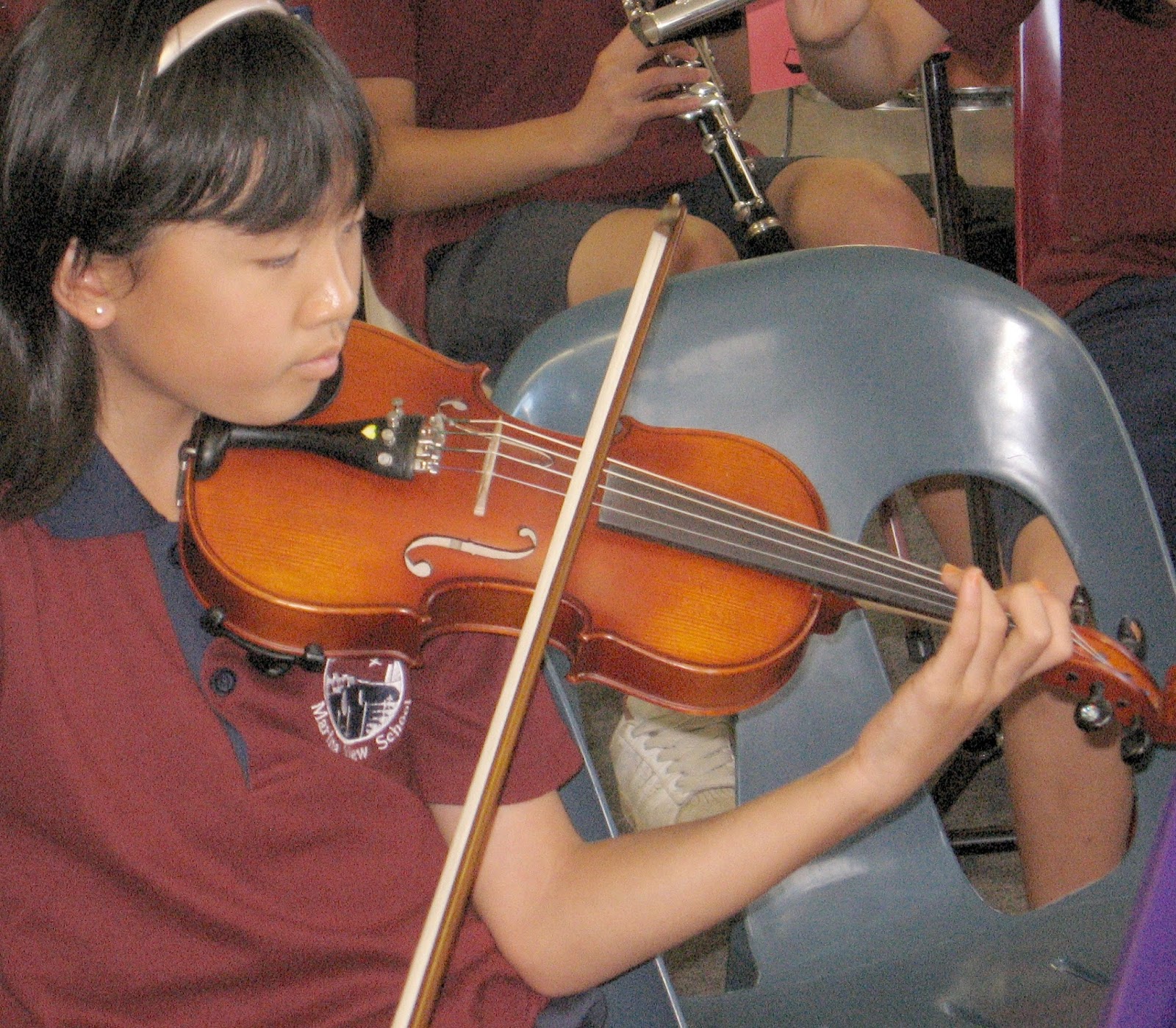
Students published their book “Reflections”
This article about an e-book published by students in Texas and Vietnam isn’t strictly an education reading but then again it’s a very worthy cause.
‘This book is their labor of love. We facilitators have left their ideas, expression, and discoveries their own. The stories, the joy and sadness, the humor, the wonder, and the learning are their voices–a true Teenage Manifesto of the 21st century. We have learned much from them and hope you will, as well.’

Contributed by Bruce Hammonds:

The 1 Lesson That Will Sharpen Your Emotional Intelligence
Emotional Intelligence – the difference between empathy and sympathy.
To walk in someones shoes
‘Although most of us consider empathy a valuable and basic human trait, it often goes missing in day-to-day life. Just think of the major disconnect between many managers and their teams. Or how it's so easy to hurt those whom we love, simply because we can't see things from their perspective.’

Ken Robinson: 'You don't want a caste system for creativity’
‘Schools’ drive for conformity is at odds with the rapidly changing world, where being flexible, curious and creative are more important qualities than ever. Engendering these qualities in future generations matters to adland and the wider creative industries because they rely on a steady stream of diverse thinkers who can creatively solve business problems. Robinson’s talk, delivered with his quiet wit and charm, made waves. A decade on, it is still the most popular TED talk of all time, last week surpassing 40 million views. Combined with his later talks, he has racked up almost 60 million views without any paid media spend.’
 
School leader  agree with Sir Ken but few put his ideas into action!!!


Schools ride new wave in writing
Teachers use games and new tech tools to produce powerful prose.
‘“If you want kids to write about something challenging, you really need to put them in a position to discuss it first in an active, open-ended sort of way, because then they have something to write about,” Roberts says. It introduces them to the language they might use and the ideas they need to be able to manipulate to write with sophistication, Roberts adds.When students understand that the purpose of writing is to share ideas, they perform better than do students who are asked to write just for the sake of writing.’

From Bruce’s ‘goldie oldies’ file:

A little bit of deja vu
Henry Pluckrose
‘It is all too easy to think what currently passes for new ideas are really new - just another version of ideas often lost when top down 'experts' ignore the reality of true learning.’

Does your classroom have the 'wow' factor?
‘The first sign of ‘wow’ is the overall first impression the room gives you. The feeling you get is that you are indeed in special place. There is a feeling of positive relationships between teacher and learners and often parents are to be seen quietly helping students. Other students seem to be working without supervision. A quick look around the walls, covered with students creativity gives an impression that this is a room dedicated to the students themselves.’

The killing of creativity by the technocrats.
The killing of creativity by technocrats like John Hattie
‘Be careful when using the latest jargon: 'learning intentions', 'success criteria', 'WALTS', 'modelling' and'guided practice' or you will be leading your students to conformist learning and, in the process, limiting their innate individuality and creativity. As an antidote, at least, ensure that students appreciate the need for individual creativity and value their 'voice' in what they present.’


Teachers should assist with a light hand!

Wednesday, August 03, 2016

Creativity in education depends on the focus being returned to implementing the New Zealand Curriculum


Creative education in New Zealand is at risk.

It seems to me,from what I hear from friends still involved in teaching that education in New Zealand is in a  sorry position.

The big revolution  in education was introduced with Tomorrows Schools in the 80s when New Zealand schools were made 'self managing' as part of the neo-liberal ideology of the  government of the day  - sadly a Labour government. The changes were premised on the mantra 'good people poor system' so, after several decades, what's changed?

 In 2007 the then Labour government, realizing the error of their ways, introduced the current New Zealand Curriculum. Unfortunately the current National government has returned to the neo liberal  path with a vengeance.

At the time I thought  Tomorrows Schools  was  a good move. The idea of neighborhood schools, freed from the constraints of central government, seemed like democracy in action. The neo- liberal,, or 'market forces' ideology, was supposed to be all about allowing schools ( and other public services) to be more enterprising. Instead we have ended up with an oppressive  competitive compliance culture

Wiser people like Kelvin Smythe warned about consequences of such actions  at the time but he was ignored.  Kelvin to this day fights the good fight and I am now with him - and, it seems, his voice is still ignored by school principals who  see no alternative but to comply with government directives..

The most trenchant criticism of the direction the current government is taking schools feature in the NZPPF Magazine last year - could not have been clearer.

National Standards - the 'default' curriculum.

Now it is National Standards that determine education in our schools not the more liberal New Zealand Curriculum.  The Standards are now in many schools  the default curriculum


Time to return to implementing the New Zealand Curriculum


We now see schools  obsessed with ensuring their National Standards data ( and in Secondary schools NCEA Level 2 targets) are comparable with other schools. Sadly schools are gaming the system and the data lacks integrity. Kelvin Smythe, and other, have written about this.

The promise of democracy and creativity that some of us thought would eventuate has been all but  lost. The so called 'nanny state' has been replaced by a technocratic  'big brother' surveillance culture - a culture where the 'voice' of teachers have been deliberately ignored.  Teacher unions and principal groups have all but given up  expressing  a viable alternatives.

Communities of Schools or Communities of Control


The compliance culture
Currently the Ministry of Education is trying to impose Communities of Schools. The trouble is communities they aren't. Such school groups have to achieve approved targets and only schools in such groupings will receive professional development and development from Ministry approved sources.  This, added to the formulaic  'best practice' teaching will  crush any creativity and diversity that remains in our system. Privatization  of schools seems the direction the government wants to achieve. 

Currently their is now the misguided focus on Maori/Pacifica achievement - misguided because of the focus on assessing achievement determined by National Standards/NCEA Level 2 achievement  which ignore equally  important attributes and talents such students might have.

'If you judge a fish by its ability to 

climb a tree it will live its whole life believing it is stupid'. Einstein

So  what does the NZC  say?
ERO visit - comply or else!

With all this in mind it is time schools refocused their attention on the vision of the New Zealand Curriculum and in particular the 'first half' of the document. The focus in the NZC is  for schools to insure all students leave 'connected, actively involved, and lifelong learners'. National Standards will not achieve this vision.

'Seekers, users and creators of knowledge'.

For me the key aspects of being a lifelong learners is for students to be 'active seekers ,users and creators of knowledge'. School programmes need to place this at the centre of their programmes, or as the NZC says,  'place students at the centre of teaching and learning' by experiencing 'a curriculum that engages and challenges them'. and  a curriculum that 'ensures that students' identity, languages, abilities are recognized and affirmed.'

There is a need to 're-frame' literacy and numeracy.

A quick look at how schools use time  will indicate if the NZC is central to learning. It is my observation that the great portion of time in primary schools is given over to literacy and numeracy - as one commentator has said 'it is as if the evil twins of literacy and numeracy have gobbled up the entire curriculum'. This not to say such areas are unimportant, quite the opposite, it is just that they need to be re-framed as vital skills in the realization of authentic learning challenges.

It would be asking too much to integrate literacy and numeracy but at the very least it should be re framed and seen as an opportunity to introduce skills and content that contribute to the inquiry programme..
Junior ideas about shadows


The importance of the Key Competencies.

These are to be seen 'both an means and an end and the means other ends are achieved' and they are' to be developed over time'. The thinking competency is all about helping students 'make sense of information' ( a vital aspect of critical literacy) helping them 'constructing knowledge' and 'developing intellectual curiosity' by  ensuring all students can actively seek, use, and create knowledge'. A quick read of student work will indicate if this is so. All too often shallow  'cut and paste' is the name of the 'inquiry  game'.

Managing self is another key competency.  This is about developing students develop  ' a "can do" attitude so they see themselves as capable learners.

The importance of the Learning Areas.

With the current emphasis on National Standards studying Learning Area  content in depth, as part of class studies, can be to easily neglected. Students 'researching' using Google is not enough and all too often leads to shallow or fragile learning.  Every year students should experience a full range of the Learning Areas because such a range of experiences 'lays  a foundation for later specialization' and, more importantly, provides opportunities to value, amplify and uncover students interests and talents.
Science - a vital area

The NZC suggests that 'all learning should make of natural connections that exist between learning areas and  link learning areas to values and key competencies'. Schools could develop a range of studies that combine any number of strands from the appropriate learning areas.  Students, as they progress through school, should develop a positive appreciation of the essence of each area.

Whatever is chosen should be studied in depth,  negotiated with the students, students' questions valued  and their  prior ideas appreciated.

The English Learning Area ( encompassing literacy)  is 'fundamental to success across the curriculum and is all about  requiring students to 'receive, process, and present ideas or information'. English is about 'making meaning of ideas or information' and
Value student voice
'creating meaning for themselves'


A school developing such a programme is Mount Eden Normal. Island Bay is another such school.

An inquiry model  to integrate all learning areas.

Although there is not a section defining inquiry learning is  mentioned and integral to all learning areas. The essence of science is about 'investigating,  understanding and explaining' it involves 'generating and testing ideas gathering evidence' 'making observations and carrying out investigations'.

This problem solving inquiry model is  integral to all learning.  In the Arts Learning Area  the NZC states: ' ideas are  generated and refined through cycles of action and reflection';  in the Maths Learning Area   maths is to be seen as  a way 'of thinking and solving problems', and 'investigating, interpreting, explaining and making sense'. Maths is an area where students 'learn to create models and predict outcomes, to conjecture to justify and verify'. The Social Science Learning Area  has a similar inquiry approach. Students in this area are required to 'ask questions, gather information...to explore and analyse.. to consider .. and to reflect and evaluate'.

I would expect classrooms to reflect a diverse range of depth studies integrating, as appropriate, literacy and numeracy skills.

Effective Pedagogy is a vital section of the NZC.

Effective pedagogy includes 'enhancing the relevance of new learning'; 'makes connection to prior learning; and, most importantly, 'provides sufficient opportunities to learn'.

Opportunities to learn is the key to providing all learners with success  not National Standards or NCEA targets.

The effective pedagogy statement  emphasizes the importance of developing  a positive learning culture , seeing the class as 'a learning community', the need for  respectful relationships and the importance of 'encouraging reflective thought and action' .

 Advice is given to ' cover less but cover it in greater depth'.

Teaching as Inquiry ( TAI)

An inquiry model is outlined for teachers  to 'inquire into the impact of their teaching'. I would suggest that teachers inquire into how well the NZC is being implemented and in particular the various learning areas.

The School Curriculum.
Valuing the creative arts

To implement the vision of the NZC  requires 'a clear understanding of the intentions of the New Zealand Curriculum. 'All New Zealand students regardless of of where they are situated, should experience a rich and balanced education that embraces the intent of the New Zealand Curriculum'; and that the schools curriculum should respond to the 'particular needs, interest, and talents' of their students.

The NZC is based on the 'premise  that all students can learn and succeed' and that each learners ultimate learning success is more important than the covering of particular achievement objectives, and, I would add the National Standards.

Assessment

The excellent assessment section has been distorted by the  current reactionary and narrow  demands of the National Standards.

An  audit and surveillance culture is now  part of our school system and  has all but destroyed creativity and diversity in our schools and, in the process, the full implementation of the New Zealand Curriculum.


'The primary purpose of assessment is to improve students' learning' and that
assessment  'is best understood as on ongoing process that arises out of the interaction between teaching and learning'.

'Much of this evidence is 'of the moment" and  'often takes place in the mind of the teacher, who then uses the insights gained to shape their actions as they continue to work with their students.'


The 2007 New Zealand Curriculum has yet to be fully implemented – at best schools are tinkering around the edges – at worst totally distracted by the reactionary demands of National Standards.Jane Gilbert, in her book ‘Catching the Knowledge Wave’ NZCER reprinted 2008, writes, ‘we can’t do more of what we are currently doing… we cannot add new ideas to an old framework’. And adds we need to ‘develop a new public understanding about what we think and hope our education can do for people’.
Time to hunt out, dust down, re-read and implement creative vision of   the New Zealand  Curriculum before it is too late.


The alternative looks good to me!


.