Saturday, November 04, 2006

Secondary School wins Enterprise Awards

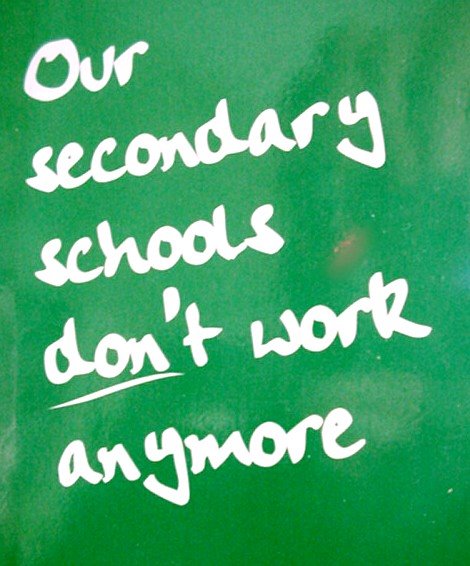
  Posted by Picasa Sometimes I feel a little guilty about criticizing secondary schools.

To be honest it is more the system than the individuals within it that concerns me. As Edward Deming, the revered Management ‘guru’ (who has been credited with the development of the Japanese Quality revolution after WW2) once said, ‘Good people poor system’.

People can also become trapped within the system, not able to see alternatives; it becomes all they know and, when threatened by new ideas, they rush to defend it. The trouble is the system; with its genesis in an Industrial Era can no longer caters for all the students that enter the school gate. And, as well, their students will leave school to enter an ‘Information Age’ workforce requiring ‘competencies (to use the new ‘buzz’ word) that current schools are not able to provide. That is, unless they change dramatically.

All is not lost.

Our local paper featured a photograph of students from one of our secondary schools who had won awards in the Young Enterprises Scheme. This is a scheme where students work together, combining their skills, developing a plan to market a worthwhile innovative product. Such activities provide a real clue about the future shape of education for secondary school students. As well, such an approach is in line with the new requirements of the draft New Zealand Curriculum.

There are a number of other similar real life projects that students get involved with in secondary schools that require collaborative action: smoke free challenges involving music and dance /drama; wearable arts projects; musical and artistic productions; and science and math fair exhibits. Other schools become equally involved in researching environmental or social issues. One school I know of designed, financed, built and decorated a house in co-operation with the local rotary group for a worthy cause

Even within individual subjects there are innovative teachers who ‘design’ the curriculums around student question and concerns and use inquiry or action based learning approaches. Such teachers appreciate the need for students to be active meaning makers constructing their own learning with the expert help of their teachers.

More creative schools arrange for teams of teachers to look after groups of students allowing for project work to naturally integrate knowledge from traditional disciplines while other schools, feeling their way encourage teachers to integrate one or two subjects even if they still keep to their own rooms. Some schools, in attempt to make learning relevant, have developed the idea of ‘academies’ where students, with particular talents, learn other curriculum areas as required to develop their passions. Such schools, using active learning approaches, find modern information technology works best when it is naturally integrated. There are even schools considering developing personalized education plans for every student.

These exciting and innovative ideas take schools a long way from their Industrial Age mass education heritage.

The shame is they are not as widespread as they could be even though there has been encouragement for schools to move in these directions. Secondary schools are essentially conservative organizations resistant to change – many still function as they were designed in the last century.

Most of the examples mentioned above are extra curricula activities but slowly the thinking behind such realistic challenges is entering the mainstream of school life. The ideas are not new but their development is constrained by subject boundaries.

To cater for the full range of students, and to equip them to thrive in an ever changing environment, requires learning to shift towards such integrated ‘contextual’ tasks rather than learning through compartmentalized and disconnected subjects.

Involvement in such activities as the Youth Enterprise Scheme indicates how appealing innovative approaches are to students who relish the opportunity to develop real life skills (‘key competencies’) in areas that attract them and that utilize their talents and skills. Rich , real, relevant and rigorous learning is required - doing fewer things really well, as some educators are encouraging.

This is the type of learning that will feature increasingly in the creative schools of tomorrow as school move towards becoming ' communities of inquiry'.

Every student has a range of talents to be developed and every student should have an opportunity to have that talent developed and to gain a positive learning identity as they strive for excellence.

There ought to be no failures – that is a concept that belongs to an Industrial Age. We now know enough that no student need fail but only if we change our collective minds first.

Friday, November 03, 2006

Time for creative leadership

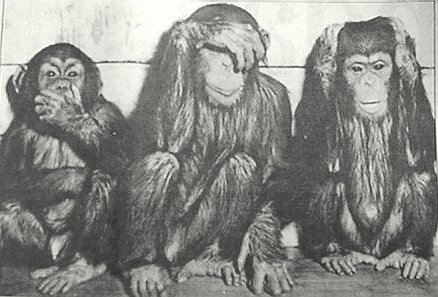
 No point in the blind following the blind! Posted by Picasa


Leadership –the ultimate creative task.

I found an article I cut out of the paper last year about leadership and its ideas are worth sharing.

Leadership, it says, is as much an overused term as it is vague.

What is more interesting the writings on leadership has changed over the decades.

Thirty years ago the thinkers were talking mainly about outcomes and management by objectives. This will still sound familiar in education today. Fifteen years there was a heavy emphasis ago on processes such as Total Quality Management (TQM) and such thing as re-engineering. Quality management collapsed into measuring everything and nothing. Again another familiar idea to schools with the current emphasis on 'targets' and 'evidence based teaching'.

Today the references are towards ‘imaginative capital’, 'dialogue', ‘realizing not yet enacted realities’ , ‘co-creation’ and ‘distributed, shared, or inverted leadership’.

The emphasis now is not doing what you do well (and spending endless time and energy proving it) but now leaders have to think forward rather than project the past. ‘The new requirement', the article states, 'is to be creative – in the sense of creating something not seen before’.

This leaves leaders with two problems. One is how to come up with ways of developing new ways of doing things and the other is to do this while still keeping the organization well managed and on course. Teachers in creative classrooms will know the feeling.

Leadership must now be ‘entrepreneurial’ and this may mean getting younger members to lead teams ('inverted' leadership) or projects because the more established managers are past it. Just think of who has the ICT knowledge in our schools.

Even though creativity and innovation are felt important few leaders have any idea of what it means in reality, or how to go about doing it. All too often incremental improvement is the result.

How to create the conditions to release creativity is the challenge; any organization that is heavy on checking up, or evaluation, will find it impossible. Creativity requires an environment that encourages 'risk taking and mistake making' and this requires considerable leadership courage.

It is far easier to fallback on ensuring efficiency; proving what you are doing is done well. This will really feel familiar to principals’ particularity with the possibility of an Education Review Visit on the horizon. This leads into a timid, 'blind following the blind', mentality.

Future leaders will have to become more skilled at developing creativity and living with the complexity and uncertainty that goes with it. Leadership will have to be a more exploratory than analytical process.

Final advice offered in the article:

Value creativity and trusting those with expertise but don’t throw away established structure until new ideas are worth the risk.

When new idea throw up complexity or confusion (which they will) keep an open mind and pursue operational simplicity. Don’t let things get to complex. Judge things on their potential to be of real advantage to future succes.

It would seem to me that future leaders will have to trust their intuition (something not valued in out technocratic era). If everyone in the organization has a stake in the success of the organization they will make the best decisions they can to ensure its success. This will require a strong culture of experimentation and trust, and an ability to learn from mistakes. People, one writer says,will make the right decision if the 'shadow of the future is strong enough'!

Advice given to me many years ago, by a friend of mine, was to remember the motto of the wing walkers (who rode the wings of bi planes after World War One), ‘Don’t let go of something until you have a firm grip of something else.’

Good advice when you are taking risks?

Thursday, November 02, 2006

We have the means but do we have the will?

  Posted by Picasa Another of my favourite books, written by David Hood

David Hood has had along career in education having been a secondary school principal, spent time in the Education Review Office, and was NZQA first chief executive.

He believes New Zealand’s secondary schools have been caught in time warp. Designed for an Industrial Age they are, he writes, becoming increasingly irrelevant.What is required, he believes, is a ‘paradigm shift’ because changes made so far have only been tinkering at the margins.

The past 50 or so years have witnessed great changes in every area of life and we would expect, he writes, for education to also be markedly different but, in reality, secondary schools have changed little. In fact they seem highly resistant to change!

Visit a school and the old industrial mindset is alive and well. Structurally the subjects are much the same, the students are still divided into aged grouped classes (all too often streamed by ‘ability’), the day is rigidly fixed within specific timetables, and teachers teach classes from the front changing classes on the bell every hour or so. This is exactly as it was 50 years ago!

The trouble is both teachers and parents tend to accept this as ‘natural’ or ‘given and yet there is nothing natural, Hood explains, about how schools are organized; they are organised for a world that no longer exists. Their original function was to sort students out but today (with all students expected to stay on until 16) over 30% of them fail, creating the problems of alienation and discipline we hear so much about today. However it is the schools that are failing their students and not the other way around. No business would survive with such a failure rate!

And it is not that there is a lack of research to show that schools are ineffective for a great number of their students. We know more than enough that no student need fail but only if we changed our collective minds first.
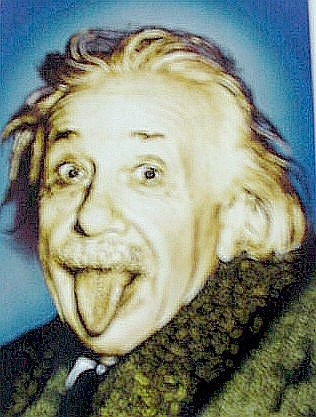
It begs the question, Hood writes, why schools haven’t changed dramatically when all around the change is the name of the game. The trouble is schools are so bound up by tradition that teachers themselves are very cautionary towards change. What does take place is tinkering around the edges without changing the schools structure in any way; and as result the gap between what could be done and current reality widens; schools become increasingly dysfunctional.

Even the reforms of the past decade have made little difference. None of the reforms have got to the heart of the matter, teaching and learning, although the recent draft NZ curriculum is a step in the right direction. Don’t bet however on secondary school changing much though – they are experts in resisting change. Hood’s own experience as a secondary principal is evidence of this – changing teachers’ minds he found is a real challenge. The teachers themselves are as locked into a system( and their subjects) as their students, and this has stifled their creativity. Teachers are unable to see the value of developing integrated ‘contextualized’ studies that would teach the very attitudes and skills businesses want.

As we enter the 21stC, Hood writes, school practices continue on without rhyme or reason, ‘In many respects the clock has stopped, time has stood still, and innovation has taken a back seat,’ while in the business world everything has, and continues, to change. The new concept of the 'intelligent worker', capable of problem solving and decision making, of taking responsibity for ones own work within agreed goals has little to do with traditional schooling based on obedience, control and conformity. Schools are just too conservative to be involved in ‘venturesome innovation’ the hallmark of a successful business.

Research clearly indicates that students learn best when teachers collaborate with students to plan studies based on real life experiences, negotiate course objectives and activities with students to achieve goals, integrate use of ICT, and assess results jointly with students against agreed criteria. When these are in place students ‘engage’ in learning with enthusiasm.

Hood believes all learners ought to have the right to:

be involved in making their own decision about what to learn

to have functional literacy and numeracy in place when they leave school

for their learning to be based around real life problems

to succeed at learning

to have their learning assessed.

All new entrants with their parents should be asked to identify their strengths and weaknesses, special interests, talents and aspirations, and agreed action plans put in place; learning to be ‘personalized’ to suit each students' needs.

Groups of teachers, Hood writes, should be collectively responsible for managing and facilitating the learning experiences for groups of students. The conventional timetable would need to go and learning to be focused on ensuring ‘foundation’ skills are in place with the remaining time ‘blocked’ for a wide range of contextual studies.

All this is possible, and even encouraged, in the National Curriculum. It is at the school leadership level where innovation must begin; already there are schools well on the way - but far too few.

Such schools demonstrate what is possible when schools evolve into 21st C ‘learning organizations’; schools willing to question traditional wisdom and embrace change as an opportunity to be innovative and creative.

We need , Hood writes, to be serious about changing our schools - the success of our young people and the viability of our country depend on it. Such schools will be important as we enter, what some are calling, the ‘Age of Creativity’.

It is time, as John Hood concludes his book, for ‘courageous decisions’

Tuesday, October 31, 2006

The teacher makes the difference!

  Posted by Picasa Bill Guild:perhaps the best teacher I ever had the opportunity to see in action!


In the last few years politicians have learnt from their 'expert' researchers that it is the teacher who is the greatest influence in the classroom and not the curriculums that have dominated everyones thinking the past decades.

It would seem both the researchers and their masters are slow learners because this has been obvious to most parents, teachers and students themselves for many a year. It may be not as obvious though to those teachers who still hold on to the 'myth' that they are all equally important. My experience has taught more that some are more equal than others and a few stand out for their expertise and creativity. Teachers who do 'stand out' have had learnt the trick of not making it too obvious which is a shame - over the years it has been the ideas of such teachers that I have been only to happy to share.

In particular I worked with a group of local teachers many years ago that will forever be part of my image of what teachers should be – and could be if given the right conditions. These teachers had but one abiding desire – it was to help their students develop all the creative talents they had within them. Curriculums were treated with the 'respect' they deserved and the saying of Jerome Bruner that, ‘teaching is the canny art of intellectual temptation’, could have been their philosophy. That is, along with 'networking' with 'like minds'.

All sorts of research now backs up the view of the importance of the teacher and the culture they need to work in. Sadly to many imposed constraints still get in the way of creative teachers, imposed by those who do not trust teachers to do the right the thing given the right support.

In ‘Leading and Making Hope Practical in Schools’ Australians Bob Lingard and Martin Mills identify the power of excellent teachers to see what truly makes the difference in attempt to redress the, so called, imposed ‘idiot proof' solutions. They are careful to state that the teacher variance at best is about 30% but this is more than enough to make a powerful difference, and it is one under every teachers control, unlike the home, peers and even the school and its principal.

Their research found that while teachers have power, a few do damage while others maintain a status quo; their research focused on those having the most powerful effect on achievement (a tricky concept in itself). They identified several dimensions of excellent teachers.

Excellent teachers are able to combine new subject matter with students’ prior knowledge and are able to relate the content to other areas of learning. They are able to 'think on their feet' spontaneously modifying their teaching according to student needs. Their teaching is very context bound and they find it hard to think outside of the specifics of their classroom.

Excellent teachers focus on solving problems with respect to each individuals needs and are opportunistic and flexible in their teaching.

Expert teachers are more adept at anticipating problems continually monitoring students’ responses and improvising accordingly; they are greater seekers and users of feedback.

Their ablility to improvisation makes them better decision makers. Interestingly none of the excellent teachers had written lesson plans but all could describe 'mental plans' for their lessons. They could describe possible sequences but details of timing and pacing were made in response to student questions and concerns. They were very skilful at keeping the lesson 'on track'.

Expert teachers build climates where error is welcomed and where student questioning is high. They are able to deal with the multi –dimensionality of the classrooms by being effective 'scanners' of classroom behaviour; part of their success was their knowledge of what they were teaching and their knowledge of the ability, experience and backgrounds of their students.

They skillfully anticipate disturbances and can detect when students lose interest, or are not understanding. As a result they are better able to seek out and provide feedback enabling them to provide their students with appropriate learning strategies or assistance. They have the skill to do this almost without effort because the skills have become automatic with extensive practice – this is in contrast with ‘novice’ or less expert teachers.

Expert teachers have high respect for all their learners and demonstrate their commitment to them. They can recognize and overcome barriers to learning in their students that others find difficult. Like experts in other domains they show more emotionality about the successes or failures in their work.

All their teaching is focused in developing their students’ responsibility for their own learning and do so by ensuring students are involved in challenging learning tasks that result in both 'mastery' and ‘deep’ learning.Expert teachers achieve ‘deep’ learning rather than superficially . ‘Deep learning’ is where students have created their own understandings, can use what they have learnt, and can relate and connect their knowledge to other areas or tasks.

Rather than ‘do your best’ students are challenged to really engage in their learning and achieve the ‘best they can do’. ‘Learning conversations’ are a feature of their classrooms, focused on sorting out challenging problems students are encountering.

Expert teachers have a positive effect on student outcomes no matter how they are defined – self efficacy, willingness to be challenged, self regulation as well as content.

Without understating the importance of teacher content knowledge (which must be present) the authors believe that is the pedagogical skills, or the ways knowledge is used in the classroom, that 'counts'.

The results, the authors believe, are clear. Expert teachers do differ from experienced teachers particularly in the way they organize their rooms, the degree of challenge and support they present to their students and, most importantly, the depth of processing their students attain. It is less 'how much' students learn but more 'how' they know.

As long as we work on the assumption that all teachers are born equal we will not be able to take advantage of the insights and skills of such teachers.

We still need to provide teachers with resources to assist with content but what will achieve the greatest breakthrough will be a deeper appreciation of the 'artistry' of the excellent teacher.

The task of a school leader is to create the conditions to ensure that the skills of such teachers are distributed throughout the school; creative schools for creative teachers and students.

Such a focus makes ‘hope more practical’ and teaching a more creative and attractive endeavor.

Monday, October 30, 2006

Schools to develop the creative talents of all students.

  Posted by Picasa 'Out of Our MindsLearning to be Creative’ By Sir Ken Robertson


Sir Ken Robertson is to be a keynote speaker at the combined NZPFF/ICP Conference to be held in Auckland in 2007.

It sounds like he will be well worth listening to. John Cleese writes about the book as ‘brilliantly written about the different ways in which creativity is undervalued and ignored in Western Culture and especially in our schools.’ Another commentator says the book, ‘calls for radical changes in the way we think about intelligence and education’; UK Educator Ted Wragg comments that Robertson reminds us that, ‘education, in particular, can squash the imagination and rock self confidence’.

It is not a hard book to read - but be warned, it could be mindchanging!

It answers the questions: Why is it essential to promote and develop creativity and what is involved promoting it? The concept of creativity the book argues for is that; everyone has creative capacities; these capacities are the greatest resource available to an organization, and the need to develop a culture of innovation.

Education, ‘doesn’t just follow the natural grain of young people’s abilities’. Education, Robinson believes, is vital to every individual’s success but all too often it, ‘stamps us with deep impressions of ourselves….that is hard to remove….Success or failure can affect our image of ourselves for life…. Some of the most brilliant and successful people in all walks of life…failed education’.

Education ignores too many people abilities leading to a waste of talent and resources. As a result many highly intelligent people have passed through education feeling they aren’t; even so called ‘successful students’ leave never having discovered other hidden talents.

Creating the conditions to release creativity of students, and their teachers, is the real issue. We simply do a disastrous job presently; and too many teachers find it impossible to utilize their own creative energy due to imposed pressures.

Education tells students the wrong story ignoring that, ‘real creativity comes from finding your medium from being in your element’. Worse still creativity is simply ignored – education kills rather than kindles creativity. Too many people are displaced from their own capabilities by schools designed for an industrialized society; we need new thinking for an information age premised on the creativity of all citizens. Ideas and creativity are the new commodities.

The fastest growing areas in the economy are the so called creative industries creating demands for new sorts of skills and aptitudes. Employers want people who can think intuitively, who are imaginative and innovative, who can communicate well, work in teams and are flexible, adaptable and self confident.

Achieving such people cannot be produced by our current education system in, fact schools, as they are currently structured, Robertson believes, are part of the problem. We need, he believes to confront, ‘deep seated assumptions that underpin our view of ourselves’ and our formal education system. ‘The dominant ideologies of education are now defeating their most urgent purpose to develop people who can cope and contribute to the breathless rate of change in the 21stC – people who are creative and flexible’ resulting in a ‘ tragic narrowing of intelligences…and a waste of creative ability.’ The sense of alienation of students trapped in the wrong system is compounded by structures of subject divisions, periods and bells. As a result many individuals leave school without ever discovering what their real intellectual capacities are; in a ‘crucial sense they never really know who they are or what they might become’.

Our current formal education system is still obsessed with an academic curriculum and achievement in literacy and numeracy to the exclusion of other forms of more creative intelligences. A paradigm shift is now required similar to the Renaissance sparked off by the invention of the printing press.

Robertson believes, ‘we are all born with extraordinary natural capacities’ and to develop our idiosyncratic creative abilities, ‘we need to recognize how rich they are and the conditions under which they will emerge’.

Creativity is a process of making sense by ‘trying on ideas’ – a process of ‘successive approximations’. New ideas can transform how we see things. Being creative, Robertson reminds us, involves doing things. ‘Real creativity comes from finding your medium, from being in your element. Discovering the right medium is often a tidal moment in the creative life of the individual’

Much of the assumed dichotomies between the arts and the science are false. Both are being creative, both are subjective. It is difficult pre-plan the final outcomes of both; a problem for our current education system based on reason determined to measure learning objectively. Too much of current education is still premised on transmission of traditional bodies of knowledge to individual students

We are at turning point when new liberating ideas are replacing accepted wisdom. New values, beliefs and attitudes are now gaining ground – but too slowly in our schools. New conditions are required to release the creativity of all students – we no longer live in a linear, logical planned world. Creativity draws on a network of ideas and knowledge too easily stifled in a traditional environment – we need to create new learning cultures open to ideas from all sources. Schools need to tap into ideas that excite their students’ passions and that have the potential to lead into many fields.

New ideas take root because they capture the imagination and the spirit of the times; societies and organisations that cannot adapt are doomed to fail.

Schools need to identify the students (and their teachers) creative abilities by putting them into situations that engage them in interdisciplinary tasks that test them to call upon ideas they may not be aware they have. It is critical to find the right medium to release students’ abilities and then to provide them with whatever assistance is required.

To do this means energizing and re-culturing the whole organization utilizing various disciplines or more radically removing such structures all together to give teachers and students the freedom to explore and be creative. There are no pre-planned ‘right answers’ in such dynamic organic environments – in creativity, ‘most of what you are going to do isn’t going out to turn out how you thought it would’.

Robertson believes, ‘education must change to meet the radically new circumstances in which they are now operating’. ‘At the heart of this argument’, he writes, ‘is that knowledge can be generated in many other ways than in words or numbers’. ‘New structures, and new ‘permeable’ curriculums, need to be developed – ‘we cannot meet the challenges of the 21stC with education ideologies of the 19th’.

Roberson’s challenge is for schools to seize the opportunities that now exist but to do so means, ‘we must be creative, we must cherish the individual and we must be courageous enough to meet ever greater challenges head on. We must routinely do what has never been done before and we must be obsessive about improving what we already do.’

The future is all about developing talents of all students and for this to happen there must be a new conception of human resources- we need all the talent we can get to ensure the very sustainability of the very world we live in – a world that our our past industrial thinking has all but destroyed.

We can no longer, Robertson concludes, ‘subject ourselves to a partial form of education. We have wasted or destroyed a great deal of what people had to offer because we couldn’t see the value of it.

Education, he believes, is the key to the future but only if it is changed to ‘give people back to themselves’; ‘we will need all our wits about us- literally. We must learn to be creative’.

A powerful read.

Will schools take up the challenge!

Last word to John Cleese ‘Brilliant

A 'must read' - particularly for secondary teachers!

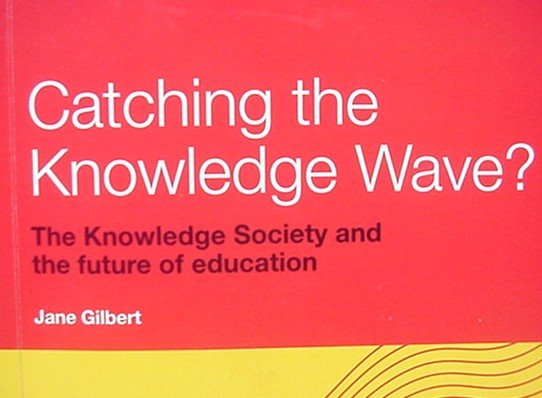
  Posted by Picasa ‘Catching the Knowledge Wave’ by Jane Gilbert Chief Researcher NZCER.

Available www.nzcer.org.nz


According to the book's back cover, ‘if this book were a film it would be rated M’ – with a ‘caution that some viewers might be disturbed’ by the ideas.

It ought to be compulsory reading for all teachers, particularly those in the secondary schools, as it challenges many unquestioned assumptions about traditional school structures and mindsets

The ideas underpinning the ‘knowledge society’ are explored leading inevitably to the need to completely transform the role of education for the 21stC.

The book argues that our current system is set up to serve 'industrial age' needs that are no longer relevant. Our 'industrial aged' schools work like a production line, using bells and timetables and academic subjects to sort people out. This, the book argues, is inappropriate as we move into 'knowledge age'. Society, Gilbert informs us, is going through major paradigm shift similar to the printing press led renaissance – today modern information technology is sparking the new creativity.

Future citizens, she believes, will need more than basic literacy and numeracy .Everyone will need 'higher order thinking skills' and the ability to go on learning all their lives. But, Gilbert argues, knowledge is still important criticizing those who suggest that the process of be able to learn is enough in itself.

No longer is their a need for students to memorize knowledge for its own sake; knowledge now has new meaning. The old idea of knowledge as ‘stuff’ to be learnt is being replaced by a new view of knowledge as being more like energy – something that does something; that makes things happen.

Knowledge though is still important. Students, as they create new meanings for themselves, will need to call on 'old knowledge' as 'raw material' to create new ideas.

Students, in the future, need to be judged by what they can do, perform, or demonstrate, not by what they can recall.

The ‘one size fits all’ industrial aged school educating individuals is no longer appropriate. Diversity is now the norm and students in the future will learn differently to create meaning - often in concert with others. Students will have to know who they are, where they come from, ther strengths, and how they can contribute . Identity, like knowledge, is a verb not a noun, Gilbert writes; always ‘in process’ never finished.

To educate all students we need more flexible, non linear learning systems.This will be a challenge to our current system and will not be achieved by 'tinkering' with the current system – a paradigm shift is needed.

Gilbert believes that the present system is not able to facilitate the transition to students as active meaning makers.

She offers a few guidelines about what teachers could do now (ideas that a few innovative secondary and many primary schools are already implementing):

Teachers could work together in interdisciplinary teams allowing them to combine their strengths (and compensate for their weaknesses) and plan integrated units of work based on real life situations.

They could think of ways to organize their timetables so that cross disciplinary teams of teachers could work together.

They could develop their (and their students) group working skills for sustained periods on specific projects.

They could develop projects designed to engage students in research or other real world activities.

They could integrate information technology as and when needed.

They could develop data bases of community contacts/partnerships that could help them in their work.

They could focus on helping students develop 'meta understanding' of the various curriculum areas – the ‘essences’ of each subject as a way of knowing. Students need to see themselves as: scientists , mathematicians , geographers, historians and artists, and they need to combine elements from the ‘old knowledge' in new ways to make new connections.

Together these would radically transform schools and create them as 'learning, or living', organizations that would permit them to continually evolve, experiment, evaluate and change.

For students these changes would provide them with the opportunities to develop the talents and competencies that they will need in their future lives.

The current industrial secondary school model is under considerable stress. Students no longer want the knowledge and skills that they were set up to provide. And as well society can no longer accept the number of school failures, disruptive or alienated students.

We need replace the ‘one size fits all’ model with new schools able to 'design' educational programmes 'personalized' to fit the individual needs of every student.

‘Only when developments in our education system are underpinned with new mental model, will we be moving our schools into the knowledge age.’ Jane Gilbert

Surely we have schools and teachers up to take up the challenge?

I couldn’t recommend the book more highly.

Sunday, October 29, 2006

It is the culture that counts!

  Fish, the last to discover water! Posted by Picasa


What cannot be seen often determines all the actions within an organization. As the saying goes fish are the last to discover water!

Schools spend a lot of time developing beautifully crafted strategy plans, involving endless consultations, which end up in a folder that no one really reads or refers to.

It would be more profitable for school leaders to focus on the culture of their schools (or teachers in their classes) because it is culture that drives behaviour for better or worse – determined by the underlying purpose, values and teaching beliefs.

How everyone behaves (or relates to each other) is the basis of a school culture – positive, neutral or toxic! So the alignment between the strategy plan and school culture is a vital one – the best strategy plan ought to develop actions to ensure everyone is focused on achieving the purpose of the school. And the best strategy is for all to be able to make the best decisions, 'on the spot', guided by broader strategic long term intentions.

Without the right culture staff members may even work in conflict with each other and the agreed purpose, or vision, of the school. Conversely when everyone works in ‘synergy’ great things happen almost by chance (things just ‘flow’). If the staff work autonomously within a ‘silo’ mentality a postive culture is impossible to achieve.

Culture, ‘the way we do things around here’, when positive, creates a 'force field of energy' that all involved can almost 'feel'. A positive culture is created as a bi-product of the relationships when staff members ( or students) collaborative with each other to achieve common goals.

This, rather than endless plans, is what creates a successful cohesive creative school or classroom.

Culture as the key driver of a creative school should never be an afterthought or left to chance. A positive culture infuses all work with meaning, passion and purpose; amplifying the energy of all involved.

If not shaped well it can conversely become a liability. Ask the staff what they all think is important, what the purpose of the school is, and what they think are the key teaching beliefs they all hold? If there is no alignment between their thoughts there is every chance the culture is working against the ‘written’ strategy of the school.

Sometimes the school culture is never even given thought – like fish who are to busy swimming to appreciate its importance!

Creating a dynamic culture is the ultimate leadership task, pumping passion, meaning and purpose into every action. A powerful culture creates a ‘behavioral blueprint’, an image held in the imagination of everyone involved, to align all actions and decisions.

What is the ‘water’ like in your school or classroom?

Most visitors can tell in a 'blink'.

Saturday, October 28, 2006

How our school system developed!

  Posted by Picasa
Start with a cage with five monkeys whose natural food is bananas.

Inside the cage hang a banana on a string and place a set of stairs under it. Before long a monkey will go to the stairs and climb towards the banana. As soon as he touches the stairs spray all the monkeys with cold water.

After a while another monkey will make another attempt with the same result – all the monkeys are sprayed with cold water. This continues until pretty soon whenever a monkey tries to climb the stairs all the other monkeys will try to prevent it.

Now put away the cold water and remove one of the monkeys in the cage and replace it with a new one. The new monkey will see the banana and will attempt to climb the stairs. To his surprise and horror all the other monkeys attack him. After another attempt, and attack, he knows if he climbs the stairs he will be assaulted.

Now remove another of the five original monkeys and replace it with another new one. The first newcomer takes part in the punishment with enthusiasm. Continue replacing the monkeys until none of the original monkeys remain. Every time a new monkey takes to the stairs to get the banana all the other monkeys attack him. The monkeys have no idea why they are not permitted to climb the stairs or why they are participating in the beating of the newest monkey.

None of the remaining monkeys have ever been sprayed with cold water. Nevertheless no monkey ever again approaches the stairs to try to get the banana.

Why not? Because it is, as far as they know, the way it has always been done around here!

And that is how school systems ( or cultures) develop.

Lessons:

It seems we have all allowed ourselves to be made monkeys out of.

What unexamined assumptions, behaviors and practices about out Industrial Aged system do we need to consider in our schools?

What current ‘mindsets’ currently limit or perception of what schools could be?

How can we change limiting assumptions, practices, behaviors and mindsets of teachers, students and the wider community?

What is the ‘cost’ if we can’t get rid limiting ideas?

Are you happy doing things that make no real sense to you except it is the way it has always been done?

Thursday, October 26, 2006

Draft NZCF: a giant yawn or creative potential?

  Posted by Picasa I have recently been involved with schools coming to terms with the ‘new’ Draft New Zealand Curriculum. I know Ministry ‘people’ like to refer to as ‘revised’ but it is a long way away from the ‘mindset’ behind the original NZCF and its Curriculum Statements with their almost incoherent strands, levels and endless learning objectives.

There is some pretence in the guide to the draft that it is natural progression from the Education Review of the late 80s. This of course is rubbish as the current curriculums they are now trying to distance themselves from is an artifact of accountability based ‘market forces’ ideology. It had little to do with true education – more about proving school were achieving whatever ‘targets’ were set. The full ‘market forces’ model can be seen in the UK with their ‘league tables’ – the NZ version is just a local ‘modification’.

No one of course will own up to this, nor accept the blame for wasting the valuable time and energy of New Zealand teachers on this now irrelevant curriculum; it is now ironic that the current model is now all some teachers know. It is even more ironic that teachers are now feeling grateful to the Ministry for the new draft but for those with longer memories it is ‘back to the future’.

Back to the draft.

I sense a collective sigh of relief from teachers to see the end of all the previous ‘crap’!

Who could argue with the drafts Vision, Principles and Values? This is all playing ‘catch up’ with innovative schools for the Ministry. Nothing original.

The Key Competencies would all seem rather obvious and worthwhile but I hear there are thoughts about requiring schools to assess their students against them! If so, the idea is dead in the water. When teachers develop ‘complex contexts’ to challenge their students their students ought to call on such competencies as and when needed. If they are expected to be assessed as ‘atomized’ items the Ministry technocrats have learnt little and would show a return to their true colours.

As I see it the ‘competencies’ (an uncomfortable ‘managerial’ word) are what creative teachers have always kept in their mind – it has been ‘part of their identity.’ Creative teachers have always wanted to ensure their students’ feel an ‘agency’ for their own learning as they help them to develop their own ‘voice’ and ‘learning identity’. Such teachers have always believed it was the total culture, or climate, of the room that was the vital issue; today this is called a ‘learning community’.

Reading the Key Competency page one wonders if they could have squeezed in any more educational ‘buzz words’.

The final key competency paragraph states that, ‘students should be active seekers, users, and creators of knowledge’. Knowledge ‘creators’ not knowledge ‘consumers’ of teacher preplanned ‘intentions’ as present teaching all too often is. This will be a real challenge for many teachers – particularly those who seem to think that students should ‘learn how to learn’, using ‘Higher Order Thinking’, with little regard to the depth of understanding of knowledge the students are ‘creating’. In my opinion to many classrooms are full of examples of ‘shallow thinking’ – ‘higher order thinking for thin learning.’ Creative teachers of the past would be appalled – I am.

What is missing in this draft is a real focus that education should develop the passions, dreams and talents of all students because it is these that will provide them with ‘clues’ for their future careers and, in the process, provide the motivation for using the ‘key competencies’. And it is creative talent that NZ will need to thrive in the future!

As for the ‘essence statements’ of the Learning Areas they could have been even more reduced to ‘essences’. They would seem a sop to the secondary mindsets that still hold the power in the educational echelon. But at least all those endless strands, level and objectives have gone – reduced to a kind of last minute appendix (and about as useful).

It is great to see that the ‘art of teaching’ (pedagogy) has been ‘resuscitated’ even if, once again, in a dense ‘buzz words’ approach. I would have liked to see ‘co-constructivist teaching model’ made more obvious but this might have clashed with secondary approaches whose pedagogy is as ‘slim’ as primary teachers’ knowledge is ‘fragile’.

It is great also that school now have the freedom to ‘design’ (not ‘deliver’) curriculums that reflect the particular needs of their students – and encourage teachers to in turn encourage their students to call on content from the various learning areas as they require. How this fits in with the ‘appendix’ is problematic – as true creative learning is ‘generative’ and ‘open-ended’.

The draft doesn’t even mention the phrase ‘personalized learning’. The Minister talks about it a lot – he just hasn’t got it through to his technocrats who are focusing on their ‘key competencies! It is all about relationships and mutual respect.

Personalized learning is what it should all be about – the 19th dream of mass education has all but destroyed the life force of too many students and teachers.

All in all about 6 out of 10 – but as the previous NZCF failed to even score this is a high mark.

What is missing (other than the phrase ‘love of learning’ which was included in the March Draft) is some honesty about: the state of school failure that we seem to accept in our current education system (failing up to 20% of all students – 50% of Maori boys). What is missing is the difficulty schools are having with a growing number of disruptive students who can’t recognize their ‘dream’ in our Eurocentric Industrial Aged ‘one size fits all system’. The draft fails to mention the ‘gap’ between primary and secondary ‘mindsets’ that creates too many ‘failing’ students. And it would be honest to admit that too many teachers still hold on to ‘deficit theories’ ( particularly in secondary schools) about their students who fail to see that they, and their antiquated schools, that are the problem.

We have along way to go yet to develop a school system that equips ‘all students for life long learning in a world where continual change is the norm’.

‘We know enough now that no students need fail if we were to change our minds (and our schools) first’. As Peter Drucker, the business philosopher has written, ‘no country as yet had developed a 21st Century Education System’. The first to do so, he says, will inherit the future.


It is about time we faced reality and started a real revolution?

Monday, October 23, 2006

Connecting with alienated students.

  Posted by Picasa I don’t know how long politicians and community leaders can ignore the breakdown in society that is painfully apparent in every community in New Zealand. That it occurs in areas of poverty and social dislocation ought to make the problem easier to face up to.

It seems, as a result of a ‘market forces’ ideology, we have developed a society where winners are celebrated while the ‘others’ are left to their own devices without adequate resources to catch up. The effects of this indifference cannot forever be ignored as alienated young people’s anti-social behaviour impinges on us all.

There is a price to be paid for our lack of a communal caring ethic.

In the educational area the Ministry of Education acts as if providing resources to close the ‘achievement tail’ in literacy and numeracy will solve the issue. This simplistic solution will do little to fix the wider issues of indifference that pervades such communities. This is a bigger issue than literacy and numeracy – what is required is to create conditions to involve all ‘players’ so as to develop a sense of ‘learnacy’ and purpose in the minds of the students; this means questioning the ‘success’ of school structured around antiquated industrial aged thinking.

‘Our education system’, says Anne Milne, an exceptional Otara educationalist, ‘succeeds spectacularly in doing badly for our kids’. Her own school proves that things need not be so. She says, ‘We have successfully alienated our kids by ignoring their voices and the reality of their lives’. Currently 40% - 5O% of Maori students leave school before 16 with little to show for their time except a bad attitude towards their experience.

It seems that as nation we are failing to face up to the truth that it is our Eurocentric schools that are failing such culturally different students. ‘If they were white kids, it would be a crisis to be solved immediately’, says Anne. One size definitely does not fit all!

Our education system, by not facing up students reality, are not providing students with the necessary ‘faith, hope and purpose’ that are the 'default mode' of middle class children. The ‘master script’ that determines our education system is just not able to recognize the ‘voice’ of different students and, as a result to succeed, such students feel they need to become ‘voiceless’, or to ‘act white’, to fit in. The resulting loss of cultural identity only creates new problems

By not realizing the potential of such students we are adding to the growing social alienation resulting in the violence and crime that worry us all.

There is simply a lack of connection of students with their schools.

The students who feel rejected by their schools, and who are increasingly divorced from their own cultures, are left in an ethical vacuum with no choice but to live in a fragmented superficial present. No wonder they are attracted to join anti social gangs to gain some sort of belonging.

It is as if they have lost the plot of their own lives and with no constructive sense of purpose or direction join gangs by default and in the process put their own , and others, lives, at stake by becoming involved with the mindless violence that results.

Survival and excitement become the name of the game for such students to combat the meaningless of their existence. It is all too easy to get into trouble, almost unwittingly, once the connection with the wider society is gone – and once in trouble they have no 'social capital' to fall back on.

Locked into the present their lives become pointless and endless and, with no positive group ethic to determine their choices, trouble inevitably mounts up. Often it is not that they know what they are against as that they do not know what they are for.

They see themselves as failures of a school system that has ironically failed them.

It needn’t’ be so.

It the right environment these students can be ‘recovered’ but it will need an educational transformation, and one that involves the wider community. And this will involve more than the current ‘rearranging of the deck chairs on the Titanic’!

No country can afford to neither lose the talents of such students, nor pay for the social dislocation they create.

The students we fail will make their ‘mark’ one way or another as we all well know.

We need to give these students a reason to care and feel valued as members of their communities. To do this means we will have to change our minds and our schools first.

Anne Milne has shown it can be done.

See for similar ideas the Big Picture Company.

Monday, October 16, 2006

Imagination before literacy and numeracy!

  Posted by Picasa Schools seem obsessed with literacy and to lesser degree numeracy. As important as they are they put the horse before the cart.

All invention and creation begins with an idea, problem, challenge or experience which in turn creates the need to know more, to define what has been discovered, or to express in some form their new ideas.

This is how it is with children before they come to school and it is the way scientists and artist work in real life.

But not so in school.

There reading and mathematics need to be taught for there own sakes or as ‘foundations’ for other learning. Sure teachers develop areas of interest to involve children but it areas they decide and children learn to do what is expected of them.

And this takes up the ‘prime time’ of the school day – the two areas combined taking up all the time and teachers energy until lunchtime.

Little is left to introduce experiences from all the other Learning Areas to inspire learning, personal expression, to integrate literacy and numeracy in realistic contexts, or opportunities to develop students’ talents and their imagination.

As one UK commentator has said, ‘The evil twins of literacy and numeracy have gobbled up the rest of the curriculum.’

All that remains is an updated version of a Victorian ‘Three Rs’ curriculum.

Students’ creativity and insight is developed through tackling real problems not finding solutions to problems or tasks others have given them. This is the beginning of the depersonalization of education that reaches its heights in the secondary system. No wonder Einstein wrote that it was almost impossible for a child's imagination and sense of wonder to remain intact in modern schools.

What are missing are the personal stirrings and strivings of self discovery – the innate drive to make sense that is every learner’s right is replaced by teacher planned activities that miss out on the personal investment and emotional learning that typifies pre-schoolers and scientists or artists.

Insight often comes direct from the imagination and Einstein himself said the, ‘words or the language, as they are written or spoken, do not seem to play any role in my mechanism of thought.’ He continues by saying, ‘Conventional words or other signs have to be sought for laboriously only in a secondary stage.’

Imagination, or inspiration, comes before literacy and numeracy in Einstein’s world – I would guess the same applies to all learners.

Perhaps we are all visual thinkers first, sorting out images, relationships and rehearsing in our minds, and falling back to literacy and numeracy to sort the ideas out later for publication?

‘Before the word is the experience’ – unpacking experiences and making sense of them is what learning is all about. And the experiences that count are the ones that make sense to the individual learner.

And if the means to express experiences are restricted to words and numbers students are receiving ‘thin’ learning indeed. And if numeracy and literacy are allowed to ‘gobble up’ too much of students time, time that ought to be dedicated to ‘rich’ personalized experiences, then students are the losers.

With the source of their personal investment in their own learning ignored it is no wonder that many students eventually 'disengage' from their schooling. It would seem a sensible thing to do!

To see multiple perspectives in any experience

  Posted by Picasa We all learn through experience but all too often we are not equipped to see all we can see. Many students have lost their natural openness to experience through all their senses and their natural sense of wonder that served them so well before they entered formal schooling.

At home they ask more questions about serious topics (to them) and are involved in far deeper conversation with adults than they will experience at school. At school their concerns are replaced by teacher planned activities and all too often reduced to literacy and numeracy understandings.

This is a shame for students, as well as teachers, as natural sources of motivation to tap are ignored as is the scope of means of expressing ideas. In the process the sensory nature of learning is diminished and real life concerns are all but ignored.

All ways of expression are equally valid – dance, drama, poetry, art, music, and mathematics but at school ‘success’ will be determined by scores on numeracy and literacy tests. It is as if all intelligence is to be limited to verbal and mathematical reasoning. Measurable achievement is valued over inquiry and love of learning! Today over half the school time is dedicated to literacy and numeracy. No wonder large segments of the school population fail to engage!

We need to go back to educating children’s senses and environmental awareness as this is the source of all art and science – and words and ideas. Each sense, and way of expressing what is seen, provides a greater variety of ‘nets to cast’ to capture meaning, and each net catches different fish! Each student needs to be helped to weave their own nets

If the only game in town is poker and there are some very good chess players then the chess players are culturaly handicapped! If all meaning could be adequately expressed with words and number there would be no need for music and art.

What we need is an education concerned with developing every individual’s ability to secure meaning through diverse means. All means of expression have their own literacys. We want students to grapple with questions related to their own personally felt experiences because this challenge will be part of their future success.

This means we need to value creative expression, particularly the creative arts, and to see them as valid ( or basic) as literacy and numeracy. This wolud value a wider conception of the mind and particularly value feelings and imagination in learning.

Just imagine visiting a bridge (or tree, or anything). It can be seen through the eyes of a scientist, an artist, a historian, an engineer or mathematician, a poet, a painter – each form of experiencing involves different ways of dealing with the task. Each will call on the appropriate subject disciplines nad require specific skills. Learning would not have to be integrated – it already is.

All sensory information and means of expression helps students uncover talents they might not be aware of. As well, while ideas are expressed using any expressive form, new question and challenges arise. And students learn not everything can be expressed through anything.

It is important that we help our students develop multiple perspectives as our definition of curriculum shapes the consciousness of our students. The gains we may currently be making in literacy and numeracy might not be worth the price our students have to pay.

All too often we limit our students’ perception and imagination by our limited views.

Teaching itself is an artistic and imaginative experience and not as simplistic as those who wish us to measure narrow achievement would have us believe

Saturday, October 14, 2006

Creativity and talent development.

  Posted by Picasa New Zealand is currently trying to escape the worst of a curriculum design that has all but destroyed creativity in our primary classrooms.

It has been depressing to have had to watch schools turning themselves inside out trying to implement (let alone assess) such techno –rational nonsense: Learning Areas, strands, levels and countless learning objectives. It has been depressing because many principals fell in line behind such demands – maybe they liked all the managerial power it gave them over their teachers? It has been depressing because many young teachers actually now know nothing better. And it has been depressing because teachers seem to want to thank the Ministry for lessening demands in the past or, as at present, redrafting it! Bit like thanking a prison guard for giving you a bigger cell!

Educators at any level in our school system seem to have been unable to present any real alternatives. There is a lack of creativity – the very creativity that our nation needs if we are to be a player in the 21stC!

I have to admit to feeling relieved after my first read of the new draft curriculum: out with all the confusing curriculum statements and those doubtful learning objectives; a new emphasis on school freedom to design programmes to suit their particular environment;and a renaming of essential skills to Key Competencies

All seemed well with the world.

But is it?

I have recently learned that there are ‘thoughts’ about school having to assess students achievment of individual key competencies. This would not only be a nightmare, and waste teachers time, but fragmenting competencies is simply old world industrialized thinking. Students should be assessed by what they can do, create, demonstrate and perform; on whole tasks not fragments.

And I also heard that the learning objectives, tacked uncomfortably at the end of the new draft, now that they have been reduced, it will be required for teachers to assess to ensure all students gain the ‘defined’ knowledge. This is the return of another industrialized concept – the future is about creating not memorizing.

Both the above create a greater nightmare than we just seemed to have escaped from. Assessing the key competencies will be like pinning down a shadow and ensuring all the defined objectives are covered is plain silly – understanding is different from knowing 'stuff', it is about being able to use knowledge in context.

I hope I am wrong.

What we really need is to ‘personalize’ education so as to develop the creativity and talents of all students, and this idea is hardly mentioned in the draft.

Our country, to thrive in an evolutionary future, will depend on the creativity and innovation of its citizens, and it is this 'creative power'that needs to be the focus of our education system. A strong talent based programme, with an emphasis on the creative arts and media, is the only way to: develop creative students able to work together, to be able to solve complex problems, to develop critical thinking, to be able ‘think outside the box’, and most of all to create new ideas and understandings.

It seems all this is beyond those who decide what we all ought to do (after cleverly gaining our approval without them telling us the true story).

I for one have withdrawn my support until the above issues are sorted out.

Creativity or ‘mind control’ – they can’t have both!

PS Anybody out there with information to share about assessing key competencies and objectives?

Friday, October 13, 2006

Creating conditions to 'invite' growth

 The climate 'we' create as teachers determines our students' growth. Posted by Picasa


If teachers really thought hard about the conditions that students, as living being, need to develop their learning potential then we wouldn’t have so many disenchanted or, worse still, alienated students.

We spent too much time wishing some students were different and not enough on making learning 'inviting'.

According to Carol Anne Tomlinson, an American Educator, expert in differentiating learning, students care about learning when their teachers ‘invite them to learn’ by meeting their students’ needs for: ‘affirmation, contribution, purpose, power and challenge in the classroom'. In such learning environments students see themselves as: contributors, creators of their own knowledge, able to bring their talents to a problem, and to see that their learning 'makes a difference'. The teacher’s role is one of: creating the conditions to invite students to learn; ensuring there are engaging learning experiences to challenge learners; to provide whatever assistance students need; and to hold high expectations of all learners.

Too much current learning is a form of 'educational compliance'. Tomlinson believes there are five needs teachers need to address that work in tandem to make learning invitational.

Young people she believes need affirmation that they are significant individuals needing to know that they are accepted and safe; that people care about them; listen to them; acknowledge their intests and talents; and care about them doing well.

Students need to believe school is about assisting them in their search for meaning and purpose. They need to see themselves as knowledge creators who need to understand what they do, see learning as significant to them by reflecting their world – and to be involved in 'work' that absorbs them; providing a sense of pride when new learning is achieved or expressed.

Learning, from birth, is about developing learning power, growing competence and independence. Teachers need to ensure their students see that what they learn is useful, allows them to make choices, and to develop a growing sense of quality based on improving on their 'personal best'. The teacher’s role is to support their students on their learning journeys by constantly building each students capacity to learn and develop a sense of personal agency.

All students need to be challenged to overcome any fears by work that stretches them, and helps them accomplish things that they didn’t believe were possible. Such students need to appreciate the importance of effort and hard work so as to associate success with their own efforts.

All these needs have to be tailored , or personalized, to suit each individual learner but, when in place, ‘invite’ all students to learn.

Teachers in such 'invitational classrooms' have a clear focus on believing in their students. They try to see things through their student’s eyes and give then all the time and help they require. They really care about their students learning and open up every possibility they can imagine to assist. They are true partners in their students’ learning.

What teacher do is as important as what they say – their very enthusiasm ‘invites’ their students to catch the 'learning bug'.

Saturday, October 07, 2006

An amoeba - a model for future change!

  Posted by Picasa The humble amoeba!

It seems strange to think of one of natures most simplistic animals as metaphor for an organizational model for the future but the amoeba is a good choice, as it has survived almost as long as life has been on the planet.

It is able to sense environmental threats through its semi permeable membrane and move away from threats – it is also able to equally sense the opportunity to move to a better environment or to seek out food which it simply engulfs. The intelligence of the organism is centred in its nucleus and a deeper look indicates it is not as simple as it first looks.

It is adaptable

Flexible.

Able to divide itself whenever it feels appropriate it is an excellent metaphor of a flexible future orientated organization.

Humans are made up of a diverse set of organs and system that have all evolved from simple cells which, at their first origins, had the potential to develop into whatever is required. As such humans are a complex set of interrelated and interconnected organs and 'parts' made up of a variety of cells – all of which work to keep us self-regulated, alive and well.

Given the right conditions we are as flexible as the simple amoeba and equally programmed for survival. We have the added advantage that we are able to think and learn from our experiences – but, equally, we can be limited by poor environments and, in the worse cases, we can give up the desire to thrive and learn altogether.

Better to be seen as an amoeba – able to adapt and change, than a 'cog' in a man made 'machine' destructive to the drive to grow. This is the metaphor that has been the basis of the Industrial Era.

If we want to thrive, in what is being called the 'Age of Creativity', we need to see our organisations as living complex organisms able to create all sorts of wonderous things as we work in concert with each other.

That’s more impressive than the simple amoeba.

Schools as living communities – now that is a powerful metaphor.

Tuesday, October 03, 2006

Time for a new story for the 21stC

  Posted by Picasa It is said that fish would be the last to discover water and the same could be applied to people who lead their lives unaware of the influences that effect all their actions. People who experience the higher atmosphere of our planet and experience weightlessness soon appreciate forces on earth they take for granted.

When we meet people from other cultures we soon become aware that there is a world of difference between what we both hold to be true – that cultures shape our minds more than we sometimes realize.

The more perceptive amongst us have been writing and talking about the idea that the world is currently going through major transformation about how we see ourselves which overrides all the different cultural points of view – that there is a new story beginning to determine the lives of everyone on the planet.

New understandings of how humans grow and evolve are emerging from a range of diverse sources – quantum physics, chaos theory, evolutionary biology, neuroscience, system theory and new ideas about how the universe is now seen as continually expanding. All together they create a ‘new organic living system story’ for the 21stC replacing the Industrial Age ‘story’ which is based on cause and effect, predictability ,and mans ability to control his environment.

Modern scientific thinking had its genesis in the printing press, the renaissance and the age of scientific discovery. The idea powered the expansion of Western Civilization and has provided the world (particularly the Western World) with technological advantages. More recently serious problems, including the very sustainability of our planet, have emerged and a ‘new story’ needs to be understood and acted upon.

The institutions of our current society, including our schools, that have their genesis in the ‘old story’, are now becoming dysfunctional and are creating more problems than they solve.

To prevail in the 21stC we need new organizational forms and new metaphors (stories) that are able to create a global sustainable world and, in turn, flexible and resilient organizations capable of tapping every individuals creativity.

What is required is a cultural transformation.

The 'past story' can no longer energize us for whatever is to evolve. The ‘new story’ needs to be based on a hopeful vision of a better world so we can evolve new ways to live and learn together.

Essentially we are shifting from a machine like, or mechanistic clockwork, model of seeing the world, to one of continual growth and adaptation. The mechanistic ‘mindset’, or ‘worldview’, has led to the Industrial Revolution and the current obsession with rationality, control, measurement and efficiency.

This ‘mindset’ is easily seen in our current fragmented 'one size fits all' secondary schools; students being classified, measured, sorted, processed, and in some cases rejected. This traditional mass education model is now becoming to be seen as dysfunctional. Students thoughts and creativity are being suppressed, their strengths go unrecognized and, as a result, their learning potential is diminished.

A new personalized ‘story’ of education will be needed to solve this crisis.

Humans crave meaning, connectedness, a sense of belonging and deep and meaningful relationships. People of all ages grow best by sharing, trusting others, and by being in environments where it is safe to do so.

We need visionary and courageous leaders to develop such learning communities to develop the talents and aspirations of all students.

For creative teachers, and learners, this ‘new story’ provides exciting challenges; and for the more traditional, the opposite! Schools need to evolve into playful learning environments driven by individual students desire to learn. Students ‘voice’, passions, interests, questions, and their growing identity as a self motivated learners, will provide the motivation. Assessment will based on what students can demonstrate or perform

A new covenant of sustainable personalized learning underpins this new ecological 'story'. Life long learning will be the norm, replacing the ‘one size fits all’ mentality of current earlier efficiency model.

The teachers role will be to focus on creating the conditions to tempt student to undertake area of learning that they might never have considered and to assist each individual on their personal learning journey. In the future students will learn their way into the future!

How long will it take for this ‘new story’ to seriously challenge what currently passes for education. If schools do not learn to escape from the constraints of the past and transform themseves into learning comminities they will find themselves bi passed.

Nothing is certain in this evolutionary world!

Monday, October 02, 2006

Why schools don't educate.

  One of my favourite graphics. From a 70's book about the lack of student 'voice'in schooling. Posted by Picasa

Notes taken from John Taylor Gatto’s acceptance speech as New York Teacher of the Year 1990.


Gatto was recognized in Tom Peter’s (the business ‘guru’) in his book ‘Re-Imagine’ published 2003 as an important future orientated educator.

‘We live in a time of great school crises, Gatto began his presentation, ‘and we need to define and redefine endlessly what the word education should mean. Something is wrong. Our school crisis is a reflection of a wider social crisis – a society that lives in the constant present, based on narcotic consumption’

In his 25 years of teaching Gatto has noticed that schools and schooling are increasingly irrelevant. The truth is, he believes, schools don’t teach anything but how to obey orders not withstanding the efforts of countless human caring teachers. In spite of the teachers hard work the institution of school is psychopathic – it has no conscience. Every thing revolves around the bell, timetable and fragmented learning.

Compulsory schooling is an invention of the state and in the early days in the US school attendance was resisted and children learnt to read at home – today home schooling is on the increase and these students are testing higher than their schoolmates.

Gatto doesn’t believe we will get rid of schools anytime soon but that if we’re going to change what is rapidly becoming a disaster of ignorance we need to realize what school do well even if it does not ‘educate’. He believes that it is impossible for education and schooling to be the same thing.

Schools in the US were designed to be ‘instruments of scientific management of a mass population’, to produce, ‘formulaic human beings whose behavior can be predicted and controlled.’ To a very great extent schools have succeeded in this. But, he says, ‘our society is disintegrating, and in such a society, the only successful people are self reliant, confident and individualistic and care little for the common good of the community’.

Schools Gatto says are ‘anti –life’. They compel students to sit in confinement with people the same age cutting them off from ‘the diversity of life and the synergy of variety’; cutting them off from their own past and setting them in a continuous present. It is, he says, absurd to move students around from cell to cell at the sound of a bell for every day of their natural youth in an institution that allows them no privacy.

Today students learn to read, write and do arithmetic cut off from the life that unfolds around them. ‘In centuries past’, he says, ‘young people would be occupied in real work, real charity, real adventures, and the realistic search for mentors who might teach you what you really wanted to learn. A great deal of the time was spent in community pursuits, practicing affection, meeting and studying every level of community…dozens of tasks to become a whole man or woman.’

Today little time is available for young people in a school week to be involved in such activities and what little there is is taken up by TV and electronic media. The effect of all this is to take away the time children need to grow up and, in the process, ‘creating cosmetic human beings’, who, all too easily get caught up in aimlessness and dependency - drugs, alcohol, violence, brainless competition and the ‘worst pornography of all - lives devoted to buying things; accumulation as a philosophy’ this, he says, ‘is what our brand of schooling must inevitably produce’

Gatto sees children who are indifferent to the adult world. Nobody, he says, wants to grow up these days; he sees children with almost no curiosity and what they do have is transitory; they cannot concentrate very long; he sees children with a poor sense of the future and the past, living as they do in continuous present; he sees children who are cruel to each other lacking in compassion and laughing at weaknesses; he sees children who are uneasy with intimacy and candor; children who are materialistic; and he sees children who are dependent, passive and timid in the face of new challenges, too often masked by surface bravado.

Either school has caused these pathologies, or media, or both, he believes. All the time children have is eaten away. This, he believes, has destroyed the American family.

What is to be done? First of all he believes we ‘need a ferocious national debate…about this school thing until it is fixed or broken beyond repair, one or the other’.

‘We need to rethink the fundamental premises of schooling.’ ‘For over 140 years this nation has tried impose objectives downwards from the lofty communication centre made up of “experts”’ ‘It hasn’t worked. It won’t work. And it is a gross betrayal of the democratic promise’. ‘It’s fundamental premise is mechanical, anti human, and hostile to family life. Lives can be controlled by machine education but they will always fight back with weapons of social pathology – drugs, violence, self destruction and indifference’.

He believes we need an educational philosophy that works. ‘Right now we are taking all the time from our children that they need to develop self knowledge. That has to stop. We have to invent schools that trust people to from an early age with independent study.’ ‘We need invent a curriculum where each kid has a chance to develop private uniqueness and self reliance.’

Gatto is confident that as students gain self knowledge they also become self teachers – and that only self teaching has any lasting value. He believes we ‘have to give kids independent time right away because that is the key to self knowledge, and we must involve them in the real world as fast as we possible.’ It is urgent to change our ‘warehoused’ schools, he believes, ‘because our students are dying like flies in schooling,’

‘Independent study, community service, adventures in experience, large doses of privacy and solitude, a thousand different apprenticeships’, are all, he says, ‘powerful cheap and effective’. But, ‘no large scale reform is ever going to work to repair our damaged children and our damaged society until we force the idea of “school” open to include family as the main engine of education’. ‘If we use education to break children away from parents…we are going to have the horror show we have now.’

Gatto concludes saying we have to bi pass the vested interests that support the status quo and get grass roots thinking to demand that ‘new voices and new ideas get a hearing’; that, ‘we have had a bellyful of authorized voices’. That, ‘we need a decade long free-for-all debate…not more “expert” solutions’; “experts” in education have never got it right’.

‘Enough’ he says, ‘time for a return to democracy, individuality, and family.

I bet he hasn’t been invited to be teacher of the year again but he were to be he would have my vote! It would seem to me that much of the poor behaviour that schools in New Zealand complain about, and violence in society generally, relates to the ideas that Gatto expresses?

Friday, September 29, 2006

Dysfunctional schools or dysfunctional students

  Posted by Picasa Last week at the Annual Meeting of the Post Primary Teachers Association it was reported that ‘classroom violence was rife’ and ‘student behaviour shows sharp increase.’

No doubt that the worst of these schools would be found in the low decile schools found the low socio economic areas of the country but all school are having their problems. Teachers, it was reported, were ‘fed up with classroom violence’ and outlined a range of ‘horror stories’ about ‘disruptive, dangerous and negative behaviors’; a survey evidently had found at least ‘10% of teachers had been physically assaulted or had witnessed an assault’. There is no doubt that these students are ‘time bombs who threatened other students and teachers’ and that something has to be done. The teachers ‘had had enough’ and were reported as saying that they were dealing with ‘behaviors we haven’t any answers for’

Our local paper continued the story teachers saying, 'violence in our classrooms is rife’ and reported that many principals were ‘turning a blind eye’ because ‘it reflected badly on their schools’. Students interviewed, some from the so called ‘better schools’, reflected that students also were sick of the poor behaviour of some fellow students and that there needed to be ‘more respect shown for each other’. Mutual respect seemed an important suggestion by the students.

An earlier article in our paper reported the number of students ‘stood down’ for assaulting doubled over the past year (to 31). Standowns are preferred by the Ministry because ‘it was a more active way of managing student behavioral issues and causes less disruption to the students learning’. Wonderful ‘Ministry speak’. 75% of standowns involved boys and I guess a good number of these are Maori students? Add to all this that approximately 20% of all students leave with minimal qualifications to show for the time at school and we have a problem that can't be ignored or solved by more of the same.

For such a serious problem possible solutions were less forthcoming, ‘more resources, training and funding for counseling services’,all akin to ‘rearranging the deck chairs on the Titanic’.

No where in all of this did the teachers' union, local principals, or students, suggest that they might be part of the problem. It seems that it is all the problem of the students themselves or a reflection of wider society problems. While not excusing the students, or downplaying society effects, there is a lot that schools could do rather than retreating into ‘deficit thinking’.

If any business showed such poor attitudes amongst their workers, or turned out faulty ‘products’, then they would go out of business. You have to wonder how bad it has to get before secondary schools take their heads out of the sand and face the reality that their own structures, teaching methods and attitudes might be as dysfunctional as the students they are quick to blame?

How many schools have taken the advice of research and good practice to actually listen to their students? How may have tried to personalize learning around the needs of their students rather than insisting students 'learn' what they obviously dislike. Bill Gates has written that American High Schools are obsolete, designed in and for a past industrial age, and need to focus on 'relationships, relevance and rigor’. How many schools have redesigned their structures to allow collaborative teaching and student teamwork? How may schools have had their teachers reflect on their teaching methods and introduce approaches that have proven, when tried, to re –engage students? How many schools give students real choices and value their ‘prior ideas’ before rushing in to teach? How many schools have integrated modern information technology so as to involve students in searching for the answers to their own questions? How many schools have reflected on the purpose of schooling in the 21stC; that it might be about ensuring all students have a need to achieve personal meaning, recognition, autonomy, a sense of belonging and appositive self image as a learner. How many have thought that by focusing on realizing the multiple talents students bring with them may be more preferable to imposing ideas passed down from on high? And how many schools have met, as equals, with their communities, particularly with the cultural groups that are currently finding schooling problematic? And wouldn’t it be great if the Ministry established some way of listening to our more creative and innovative citizen, many of whom had less than wonderful school experiences, to see how they might design a modern school to realize the talents of all students?

I know that all these ideas exist in some schools somewhre but the future is spread to thinly! It is ironic that schools are not in themselves ‘learning organizations'. Until they become ‘communities of inquiry then the problem of poorly behaved students will continue to escalate. Having visited a number of secondary classrooms I can’t say I blame students for at least being bored!

If you don’t believe me visit your local secondary school and go for a tour down the corridors and peer into classrooms – I would be surprised if it looked very different than when you were a students, or your grandparents.

What other institution is so dedicated to the past?

When there is so much we now know about people learn, and the conditions required to do so, it is all rather sad. If we listened to the pain of the very students the schools complain about we might find an answer! School need to be re-imagined so that teachers and their students can rediscover the joy of learning. At least we could establish a range of alternatives to test out some of the ideas but this would require local and national courage and leadership?

Whatever we will have to change our collective minds first before we focus on the students.

At least read David Hood’s book.

Or visit the Big Picture Website

Tuesday, September 26, 2006

Personal thoughts on literacy and numeracy

  Posted by Picasa It seems almost heretical to criticize the obsessive interest schools place on their literacy and numeracy programmes. Best advice might be to let schools get on with it and to ask for teachers to work equally hard on the remainder of the curriculum. But this is just not possible. Teachers have only so much time and energy

In maths it would be sensible to decide what students should know (basic computation) when they leave primary school and to achieve this by teachers presenting as many 'rich topics' about maths they can and, where possible, to integrate maths into other learning areas. I would want learners to know the basics and to enjoy maths before leaving primary. It seems we achieve neither.

Maths is simply overdone. I have even heard University maths teachers wonder why all children need to spend so much time on it – unless they were going to be mathematicians! ‘Do less well’ would solve the problem. Brain research indicates that our brains are hard wired to ‘do’ maths, along with everything else, and that we need to build on this inclination keeping them ‘turned on’ to maths by exposing students to interesting maths experiences. Maths ‘savants’ know maths without being taught by anybody!

As for literacy this is possibly a more sensitive area; literacy being seen by many primary teachers as their number one strength or even duty. Without teachers how would students ever learn to read!

It seems many students learn to read by osmosis. They see the power in reading to engage their imagination and to find about what they want to know.

Unfortunately all too often reading has been 'subverted' into a process to be measured by endless levels of achievement. The process seems to work for the ‘literacy rich’ students but for all the emphasis we are still left with long ‘achievement tail’- a kind of ‘Mathew effect’, 'the rich get richer and the poor get poorer'. We then identify ‘students at risk’ and give them more of the same (but more focused) and no doubt improvement is achieved but it seems that it cannot be maintained. This 'plateauing' of results is now occurring in the UK after initial improvement.

Rather than giving students more of the same (even if it is more intensive) we need to think about the intrinsic process of learning that all children are born with and the conditions required to sustain and deepen this search for meaning. All young people are on a life long learning journey to answer such basic questions as: 'where did we come from? who are we?what can we do? and what will we become'? Answering these questions could well be the basis of developing 'personalized curriculums' as all students are all looking for meaning, recognition, autonomy, power and the ability to live their lives to the full.

Personal engagement is vital to any learning and this develops from having a keen sense of wonder and curiosity about all that happens, magnified by being in the company of others who share what they know, or have the skills, to be able to help us in our search.

Imagine if these ideas were to be the basis of education, that education ought to be a continual search for meaning, created through involvement rather than being 'given' to us by those who already know.

As for the development of literacy it is important to appreciate that ‘before the word comes the experience’! Students are well on the way to literacy before they come to school. They have learned to talk simply by being exposed to the need to talk. Research shows that the quality of their conversation is far richer at home than at school; that they ask more questions and feel in more control of their own learning. And all this without targets and achievement graphs! Some of young people come to school with the advantage of a richer basis for continuing their literacy learning and it is this missing experience that ought to be the real concern of teachers.

To solve this 'gap' we need to build a bridge between their real world and the book experience. Creative teachers of past eras, notably Sylvia Ashton Warner and Elwyn Richardson, have shown the way by building on the inner world of their students.

By valuing students own concerns and thoughts about personally felt experiences and explorations, by listening and talking about such experiences with respect, and when appropriate ‘scribing’ their thoughts into writing that preserves and celebrates their ‘voice’. Using these thoughts as first books allows students to see the relationship between their world and the world of books.

The preservation of each individuals sense of voice is critical to ensure a positive sense of identity is developed by all. This is what is missing in so many classrooms. We need to help students see themselves as valuable people with ideas of their own not just readers. It is important to see talking, thinking, writing and, eventually, reading as integrated forms of expression, all contributing to each child's sense of identity.

Of course all this needs to be in association with lots of being read to and wondering about the magic of the translation of sounds into marks on paper!

And behind all such developments is the thought that before the word (or the thought) is the experience. All students, but particularly those whose lives are restricted by situations beyond their control, need lots of rich environmental experiences; another area of teaching that has been lost.

Children need to be exposed to a full range of sensory experiences and each sense needs to be ‘educated’ fully so to be able to ‘see more, hear more, feel more and wonder more’. The more children notice the more questions they will ask ( solving the problem of the curriculum), the more words they will develop, and the greater the need to express what they see; not only in words but using all available means of expressions (what was once called the ‘related arts’). And when students express their thoughts creative teachers will make every effort to preserve the ‘voice’ and poetic qualities of every student.

At this point the ‘curriculum’ of the classroom will be a more focused extension of the best of ideal early learning students would have experienced. Students exposed to such learning will develop deep preoccupations with the human themes and problems for them to expressed and be recognized in their reading.

If such learning were to be achieved teachers and students will develop their classrooms as 'communities of shared inquiry' leading to personal aesthetic satisfaction and excitement for both students and teachers. And I am betting that those students in the so called ‘achievement tail’, when they realize that learning is about meaning making, would be learning with more enthusiasm – they may even have better stories to tell, write and read about!

To tap into such a reservoir of creative energy and talent, and for both students and teachers to rediscover the joy of learning, we need to rethink the purpose of our schools! Maybe the 'poor learners' are a result of our faulty assumptions?