Wednesday, August 24, 2005

Missing: A Vision for our country!


Rod Orams - words of wisdom. Posted by Picasa

What is the vision for our country?

Although it is election time very few politicians seem to be concerned about the importance of having a shared vision for our country – they are of course focused on tax promises and winning elections. While one party blatantly appeals to individual selfishness and the other does at least focus more on the common good, what is missing is any consideration of the ‘bigger picture’ of where we are going. Nor are we being informed about the particular problems all countries have to face up to as we enter a post industrial era. Missing is a dialogue with all citizens about such issues, and possible future scenarios, that are the basis of a democracy.

What are the issues and opportunities New Zealand faces? There are, says business commentator Rod Orams, ‘big dynamics out there reshaping the world economy’, he asks, do the politicians ‘have any idea what we need to do to survive the threats and capitalize on the opportunities?’

The past has belonged to a certain kind of mind – the 'number crunchers' and linear thinkers – computer, or accountant like, qualities. The future, according to Daniel Pink in his book ‘A Whole New Mind’, belongs to a very different kind of people – creators, those with empathy, those who can recognize patterns and see connections between things, and, most of all, people who are their own meaning makers.

Orams, and others, point out that the ‘white collar’ knowledge workers are increasingly living in India and other low wage countries while technology is eliminating or automating certain kinds of work. China, in particular, is now able to produce in abundance manufacturing goods that make high wage Western countries like New Zealand vulnerable. As India and China ‘grow’ they will develop their own middle class who will become, in the very near future, their own inbuilt markets.

So, if some countries can do it cheaper, and computers can do it faster, what is it we need to do in New Zealand to stay ‘ahead of the wave’ and thrive in the future? More than lowering taxes I would think! And how will this relate to our education system? These are the questions we ought to be facing!

Orams warns of us, ‘that on our current trajectory we will trash our environment over the next couple of decades, making New Zealand a less desirable place to visit or grow things.’

He continues, ‘all we need to do is value what we have – our creativity, innovation, culture and environment – figure out how to turn these into unique services and products and learn how to sell them to the world.’

Only a few vanguard companies are doing this – the remainder, he says, if they don’t change, will drag the country down with them. What is required is imagination and ingenuity not simplistic tax cuts.

Innovative companies are doing just this, tapping into ‘kiwi’ creativity and risk taking and developing cultures that encourage workers to show initiative and to be continually inventive.

This certainly is not being reflected in our inflexible technocratic education system with its focus on preplanned measurable outcomes and set achievement targets.
We will need to create, or offer qualities, that are beyond just ‘high tech’. Information age skills will not be enough – we need to value empathy (nursing is a growing field), inventiveness, environmental sustainability, and to ensure our education system ‘produces’ students who have the future mindsets to take advantage of whatever opportunities come their way. It will be a ‘high tech high touch world’.

If the future depends on individual creativity and a sense of common destiny then schools will have to change dramatically. They will need to move away from the mass education vision of the last century and transform themselves into personalizing of learning by creating environments that develop the full potential and talents of all students.

To achieve a positive future scenario Orams believes we will need vision and leadership from our politicians. We need more than slogans and bribes and the bland ‘one dimensional’, managerialism and materialism that have infected us these past decades. To move beyond such a narrow self interest we need to create a national sense of purpose, or vision, that we all can see a role in; not just the wealthy few. And it is important that this sense of vision and empowerment should reach down to every one of us and not controlled by distant technocrats on our behalf. Elections ought not a time for selfish self interest but rather time for a national conversation about what kind of country we want to become, and what we all can do to contribute to realizing our shared destiny.

Education is an important means to achieve this.

If we were to 'revision' our country schools and teachers would have to change their mindsets as well. As in the business world, there are innovative schools and creative teachers we can learn from.

New minds are need to develop an innovative and inclusive country

It is, as Orams concludes, ‘a big ask’.

Thursday, August 18, 2005

From compliance to creativity!


'Top down' planning! Posted by Picasa


‘Things, they are a changing’, and fast!

The techno logical curriculums of the early 90s are now being seen for what they are, hallucinations of experts working away in their ivory towers. They are finally crumbling and coming to an end.

Anyway, all they ever were was a rehash of the earlier failed behavioral objectives of the last century, repackaged as part of an accountability movement, brought in on the back of the now equally struggling market forces ideology. Efficiency, testing and measurement were, it seemed, all that was to be needed to ensure all students achieved like good little educational consumers. And of course competition.

It was as if some updated Victorian white Anglo God had said, ‘I know, I have a good idea. In the beginning, before Tomorrows Schools, there was only woolly thinking, so let’s divide the world into seven Learning Areas, each with four Strands, nine Levels, and countless trivial Learning Objectives, and give them to the teachers. And then we’ll send down auditors (ERO) to see it will be done! And all will be well.’

And anyway, said the economists, the ‘experts’ and their 'castrati', there is no alternative (TINA). Those who warned schools of the dangers ahead were, as heretics, were sent into the wilderness. Some started e-zines to keep the lost ideas alive! And anyway, schools were too busy conforming, complying and competing, to even notice the dangers, and ‘delivered’ the curriculum and checked off all the objectives. But all was not well.

Of course, as it was an impossible task, all felt inadequate, but teachers kept this to them selves, preferring to pretend that the Emperor has a full set of curriculum clothes. Some schools, to save themselves, took on board tracking sheets ( a totally pointless task) for teachers to tick of objectives covered, and again, for a while, all was well.

As those in the Ivory Towers heard the cries of pain they quickly modified the curriculum ( following, as usual, a similar idea from overseas) and ‘revised’ the curriculum requirements, placing greater emphasis on Literacy and Numeracy and said, ‘have fun with the rest’. This too, seemed a good idea at the time, but lots of creative areas were ‘gobbled up by the evil twins of literacy and numeracy’. And anyway, there were now ‘targets’ to aim for; as usual another idea copied from overseas.

This, however, was only a temporary cure so the curriculums were taken away to be ‘stock- taked’. And then, all of a sudden, it was discovered by the ‘wise ones’ in their Research Towers that it was actually the teacher’s skill that was the real factor in student achievement, and not the curriculums. In the distance the heretics celebrated.

Such heretics voices had become more acceptable. They had amused teachers with tales, saying such things as: ‘the curriculums were stuffed, in both senses of the word’; that they were ‘obese and full of unhealthy fat’; some said, ‘it was death by strands’; while other called it ‘the KFC curriculum – can I have one strand, two level and some objectives to take away please!’

These tales began to spread and those in the Ivory Towers said, ‘forget the objectives just cover the big ideas’. And an idea, from the olden days, ‘learning how to learn’, was repackaged and delivered as ‘key competencies’ to show how wise they still were. There was even talk of ‘collapsing the curriculum’, which was a bit late, as it had virtually disappeared in creative schools anyway.

And, sadly, some teachers were heard to be thanking the 'wise ones' for saving them from the same 'wise ones' earlier advice; such is the power of a compliance mindset.

But a few realized that they had been fooled and began to appreciate the words of the heretics such as: ‘do fewer things well’; 'value students voices’; ‘forget achievement, go for love of learning’; ‘quality rather than quantity’; 'personalize learning'; ‘integrate learning’; ‘work along side the child to co-create knowledge’; ‘uncover and amplify student talents’; and ‘judge success of students by what they can do or demonstrate’. And, they remembered, they already knew of this wisdom, for it was once their own, and they began to caste out the endless clear folders they thought would save them, and began to focus on teaching and learning again. And they felt happy at last.

A new agenda began to develop, starting from individual creative teachers, and spreading contagiously as if a benign virus. Out went the, ‘top down’ linear thinking; the endless ticking that had bedeviled them; the obsession with evidence based and data driven teaching, so loved by the technocrats with time on their hands; slowly out went the low trust audit culture of dependency; and the ideas spread. For they were good.

New ideas are now in the air and, where they fall on fertile ground, they grow, change and spread. All they need are the right conditions – courage and leadership.

As now, as we now leave the cold ‘information age’ (all the knowledge workers live in India!), we enter a new exciting era. A new vision of creativity and imagination is ahead of us. There are new worlds to be explored by those happy to leave the tracks formed by old habits. There are new words to inspire future educators like: 'passion and love of learning'; about 'the need to help learners see patterns and connections, to integrate learning'; about 'the power of trust and relationships'; about 'deep learning and mindfulness'; about 'valuing aesthetics, design and artistry in all things'; about 'caring for the heart and spirit of people'; about 'compassion and empathy'; about 'learning through story and metaphor'; and most of all 'about joyfulness, play, and laughter'.

It is no longer to be all about measurable achievement; it is to be about what it is to be fully human. And it is good.

And when it happens all will be well in the world again.

Wednesday, August 17, 2005

Education for the student's future or for our past?


No nothing experts killing learning! Posted by Picasa

It never fails to depress me what ‘experts’ consider to be education.

The most encouraging national system of education I have read about lately was Finland ( see previous blog) but now it is back to reality!

Few countries, according to business guru Peter Drucker, have as yet designed an education system for the 21stC. Finland must be considered as one county that has. And few schools, according to educationalist Michael Fullan, ironically, can be called ‘Learning Organizations’. I do know, however, that there are many schools worldwide that are well on the way to becoming learning organizations based on shared values and beliefs, but that these are exceptions rather than the rule. Even in the most unlikely schools, creative teachers exist, struggling to develop the passions, talents and dreams of their students.

It is to these schools, and creative teachers, that we need to look to for future possibilities and not to the politicians with there vested interests, tame experts, and fear of losing power!

A small country like New Zealand has a a great chance to develop a creative education system if it had the wit, the imagination and the intelligence to do so at the top. But to do this it would need to get rid of the constraints that currently diminish such a possibility. By tapping into ideas from such countries as Finland, by listening to creative teachers and schools , by inviting real educationists to visit , and most of all by having a real conversation with all communities about what they want for all their children, it could be done. There is plenty of wisdom to be tapped and it sure is not limited to those who skulk around the corridors of power.

New Zealand has a well earned reputation for its primary education, even though at election time, conservative politicians can’t wait to blame every society fault on schools. Yet again we hear the failing ideas of, ‘back to basics’, national testing and teacher performance pay as solutions. The countries that we currently follow mindlessly have already tried such things and they can’t even get into the OECD tables themselves!

Pressure to succeed to achieve narrow achievement targets are destroying teacher initiative in the UK and have long destroyed whatever there was in the USA ( except for important non government exceptions). And such soul destroying innovations are slowly doing the same in New Zealand.

We have the best primary teachers in the world. We should celebrate this and tap into and share their wisdom. Once, when I was working in an International school (really an American school), I was struck by a comment by one of the US teachers (with a PhD in Curriculum Design) about a NZ teacher teaching in the class next door. He couldn’t get over how she could do such marvelous work with her students when she didn’t seem to follow the learning objectives of the curriculum guides. New Zealand primary teachers were regarded with genuine awe; they still retained their spontaneity and initiative, valued students 'voices' not the 'dead hand' of the curriculum experts.


Today I received the latest book from the ASCD. A quick glance (an example of ‘thin slicing’) saved me from bothering to read it all. It was an attempt by the writers to help classroom teachers (more 'technicians') to make best use of the standardized curriculums that they all follow in the 'land of the free'!

The American system is firmly locked into an industrial – efficiency model of teaching that relates to ideas introduced in the early years of the 20th C. The ASCD book was another attempt to make this standards system successful – a way to ensure that the ideas devised from afar are applied with efficiency. Talk about making a bad system better; kind of up-dating an inefficient factory model to a technocratic age. George Orwell would have been proud, as would've Ronald McDonald! No room for spontaneity, individuality (of students and teachers) creativity, imagination and alternative points of view. It all seemed a bit like Russia in the 50s. And all this, as we enter an age of speed, choice, unpredictability and creativity – where an individual’s talent and initiative will be a countries number one capital.

While in Finland the ghost of John Dewey would be thrilled.

Meanwhile in New Zealand at the edge of the world (some would say 'the edge of great possibility') we tinker along 'rearranging the deck chairs on the Titanic'. The conservative opposition party, in particular, is getting us ready to return to a Victorian Age!

Across the Tasman the agenda of the past is rolling out as an example to avoid (or for some vote hungry politicians to follow). Their Federal Minister, like some educational dinosaur pining for the past, wants all schools to be tested against national benchmarks in Literacy and Numeracy and for results to be published and even posted outside the schools on billboards. Whatever happened to the ‘clever country’ vision?

This follows the failed ideas introduced in the UK and is exactly what the those in Finland have deliberately avoided because they felt such moves, distort teaching, eats up teaching time, narrows the curriculum, destroys collegiality between schools and sharing of ideas, and fails to focus on the attributes and disposition students will need to thrive in the 21stC. Most of all such 'top down technocratic dogma' destroys the professional judgment and creativity of teachers and their communities to design education to suit their own students. All this ‘back to basics’ conformity pushed on schools in the name of the buzzword of ‘accountability’ – but for what - the uncreative country? Education has been turned into a form of competetive consumerism with students being tested on very narrow criteria – very little to do with entrepreneurship! Mind you most entrepreneurs didn’t do well at school.

We all know what happens to people under pressure to perform!

Finland sound better every day!

Tuesday, August 16, 2005

Top of the learning class!


Learning from the best Posted by Picasa

Politicians love reports that place their county at the top of the class and this is no more so than education. No matter how you look at it (depending on the political party concerned) New Zealand has always done well in international tests. If there is a problem in New Zealand it with what is called our long achievement tail – and the answer to this in New Zealand is to focus on basics, formal teaching and testing.

With this in mind it was interesting read that the country that comes top in the world (in reading and science) in the latest OECD testing is Finland. New Zealand came fifth and eighth respectively. The countries 'our' Ministry policy analysts seem to follow, the UK and the US (with their literacy and numeracy obsessions), were not in the top sixteen (which is as far the tables went).

So it would seem we would be well advised to study what it is the Finnish do

Teachers who believe in a creative way of teaching will be reassured.

Students from an early age set their own goals and determine the speed of their learning depending on their needs. Students learning styles are valued and, during the school day, they work in mixed ablity groups at a variety of tasks that they themselves have negotiated. Formal teaching is uncommon. Students at all ages, helped by their parents and teachers, establish individual learning plans and set their own goals. Those who need special help receive it and, if they want to progress faster, they can do so.

This is personalized learning in practice.

The OECD test results indicate the Finns do better at educating, not only their less gifted, but they also significantly reduce the differences between boys and girls. They do, it has to be admitted, have the advantage of having a reasonably homogenous society.

So what is it the the Finn’s do right? Interestingly their students do not start formal schooling until they are seven and, as well,they spend no more than thirty hours a week (including homework) on schoolwork. More importantly they do not rely on aggressive testing, nor an emphasis on 'back to basics', or tougher discipline; and problems that beleaguer other countries such as, bullying, drug use, disrespect and school failure, are rare.

Al this has occurred since the mid seventies when the Finns overhauled their, then more traditional, system so their students would thrive in a new knowledge–based society. At this point schools shifted to a more ‘student centred’ approach giving more power to teachers and more attention to students individual needs. National exams were abolished and finally, in 1994, school administration was radically decentralized and freedom given to schools to set their own educational priorities.

Something lke this almost happened in New Zealand but.....

Finnish teachers are well trained and respected and enjoy a high degree of autonomy. They are free to use whatever classroom methods they like, with curriculums they have devised. Once hired teachers are not subject to regular inspection, nor are they expected to waste time on excessive paper work!

Standardized testing is shunned, with the belief that they take up valuable learning time, and penalize students who want to figure things out their own way. Standardized teaching, they believe, results in teachers teaching to the tests, and narrowing the curriculum in the process.

Students are taught to evaluate themselves, right from preschool, to help them take greater responsibity for their own work. Students are encouraged to think about what didn’t go well and then to consider what they need to do to accomplish their tasks - comparing their progress to their previous personal best.

Students work both independently and cooperatively. They are encouraged to learn by seeking out their own information and to value their own thinking. Students of all abilities benefit from working together with the stronger students helping the weaker students, while teacher circulate around, listening for problems, helping and giving encouragement as appropriate. Students are also encouraged to learn from their mistakes in an environment that is careful not to embarrass learners. Slower learners are given intense support but, rather than remedial help being seen as failure, the Finns treat it as an opportunity for students to improve. Students, with special learning needs, receive individualized programmes that focus on self set achievable goals. Disruptive students are extremely rare. Teachers work on the premise that if students are not succeeding teachers need to look hard at their teaching.

The Finnish system offers its students the promise of patience, tolerance, trust in teachers and learners, and a self critical commitment to excellence. Finnish schools are flexible, easygoing and inclusive. Students reflect responsibity because they are not exposed to imposed arbitrary authority and value the freedom to learn.

This would be revolutionary to the traditionalists but would be confirmation for a lot of teachers in New Zealand.

If only we had the courage to transform our schools along similar lines rather than the current timid obsession with tinkering with our dysfunctional system.

Friday, August 12, 2005

Creating a passion for learning


Robert Fried -educator Posted by Picasa


There is a chapter in Robert Fried’s excellent book, ‘The Game of School’, which I really like. It is called ‘Being curious, feeling powerful, and telling the world what you know.’

I liked it because it draws a connection between human evolution and a curiosity, or passion, to learn.

Fried writes about the connection between the sorry state of education today that has resulted from our not learning the lessons of our evolutionary history.

Evolutionary learning depends on an intense curiosity of the natural world driven by the irrepressible urge of explorers, scientists and artists to shape and express what they have discovered.

And this curiosity is the birthright of all students.

The trouble is our schools are not well suited to nurture the complex drives of student curiosity, sensory awareness and talkativeness. The ways schools have been constructed inhibit, or confine, these hereditary instincts and instead we sit them down and tell them a lot of stuff we think is important.

We need to develop student’s capacity for curiosity and sensory awareness from the youngest age and tap into it throughout schooling. Rachel Carson, one of the earliest environmentalists (author of The Silent Spring’) writing for her nephew, called this the ‘learning spirit’. She asked that, ‘each child in the world be (given) a sense of wonder so indestructible that it would last throughout life, as an unfailing antidote against the boredom and disenchantments of later years, the sterile preoccupation with the things that are artificial, the alienation from the sources of our strength.’.

Schools need to re-imagine themselves so as to tap into is the power of children’s ideas. All students, at any age, are capable of generating powerful ideas, and worldwide it has been shown that these ideas are not luxuries gained at the expense of the 3 Rs but instead enhance them. So the answer to our problems is not more of what has not worked but a new conception of education – or rather a rediscovery of important educational ideals by those who have the power to change things at all levels. Teachers should be leaders in this transformation rather than complying with failing ideas.

Fried also quotes from Deborah Meier’s book ‘The Power of Their Ideas’. ‘ All students’, she says, ‘ should be seen as inventors of their own theories, critics of other people ideas, analyzers of evidence, and makers of their own personal marks on this most complex world.’

This is the image that should drive all education.

Instead of ‘delivering’ curriculums and imposing constraining assessment regime, and in the process making the role of the teacher more difficult, it would be great if we were instead to develop schools that built on and amplified the strengths the students bring with them. This is particularly relevant as we currently are having problems ‘engaging’ a growing number of students in the learning ‘we’ provide them.

The answer is obvious.

Let’s return to the real basics – allowing students, with our help, make sense of the questions and concerns they have and help them work cooperatively to solve problems and, in the process, develop whatever inborn talents they have.

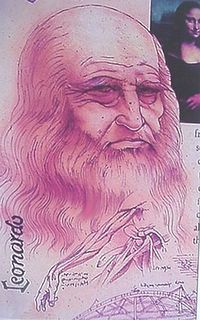
The Da Vinci Formula


Leonardo:The ideas man of all time? Posted by Picasa

There is a big gap between improvement and transformation – between making things more effective and creativity. Ever since the educational transformation that resulted from a toxic mix of market forces, accountability and choice of the late 1980s the Ministry have been forever patching up the model they imposed. They have ‘revised’ NAGS, ‘stock-taked’ their Learning Areas, placed more emphasis on teaching and learning, tried to sort out their NCEA , encouraged schools to work collegially, and now they are now ‘collapsing’ the curriculum. I am not sure what the latter means yet.

Talk about 'spin' – or shifting the deck chairs on the Titanic!

And schools and principals are welcoming all the changes. All a bit ironic since they are thanking the Ministry for saving them from Ministry imposed ideas – and all the ‘new ideas’ are not new at all. All a bit back to the future. Even Learning Competencies’ is only an ugly phrase for ‘learning how to learn’.

What we need are some better ideas. In a Fast Company e-zine a number of creative individuals were asked to say where they thought new ideas came from. I thought it worth sharing some of their ideas as businesses have given up on improvement; they appreciate we are living in a world that requires new thinking!

The Nike designer, Tinker Hatfield, said creativity was a two step process that starts with listening to the needs of a user, like Michael Jordan, and then everyone works together to create a road map to design the shoes.

So what, I wonder, are the needs as expressed by our students?

Dorothy Leonard, Professor of Business at the Harvard Business School, believes there are four ways to encourage creativity : creative organisations expose themselves to a wide range of perspectives and she recommends organizations hire opposites who won’t agree but will spark ideas; organizations need to create diverse teams with different ways of seeing; they need to invite people in from alien cultures; and they need to visit alien cultures themselves.

They certainly don’t wait to be told by last century’s experts! And if primary schools want to visit an alien culture they should visit the local high school and vice versa!

David Kelly, from Ideo Development Palo Alto, believes that ‘enlightened trial and error beats the planning of flawless intellect. 'In other words, we fail faster to succeed sooner.’ He says, ‘it is much easier to bog down in elaborate planning exercises…but this is a prescription for failure. Learn to let go…the more you experiment, the more you learn, and the more you create.’

Pretty hard in our risk averse compliance culture!


Bill Flannagan, an Editorial Director New York, contributed that ‘Hemmingway once said there are no failures of talent, only failures of character People who are consistently creative can face the blank sheet of paper even when they don’t feel like it.’

Laurie Dunnavant, from 3M, could be thinking of a 21stC school when he wrote, ‘You can’t force feed creativity. But you can create an environment that encourages it…..we (cant) urge people to think outside the box without giving them the tools to climb out.’

This is the model that the Ministry ought to creating – building a culture of trust, innovation and creativity. Helping ideas emerge and spread.

Steve McCallion, of ZIBA Design, says you just, ‘can’t be creative just by trying to be creative. You need a deep understanding of the problem you are trying to solve.’


We need to be creative about disengaged students. All we are doing now is tinkering while students fall through the cracks – currently about 15% leave with nothing to show for their time! Schools as they are currently structured cannot solve the problem! You can't get tomorrows students from yesterdays schools.

Suzanne Merritt Senior Creatologist of Insight Out says, ‘There is no creativity without authenticity – a core sense of purpose that drives your creative endeavors’. To make that sense of purpose explicit she suggests four questions: What am I here to create? ; What are my talents, abilities and resources? ; What might I have to let go to create what I want? ; What real need in the world will be met by what I create?

Good question for anyone. She recommends you start with the personal because without intrinsic motivation you will never survive the ups and downs of the creative process. Then, she says, to look at everything with fresh eyes. You will be amazed by what you see.

Just to look at the life a secondary student for a day might develop some amazing ideas!


Clar Evans, of Hallmark, mentioned ‘creativity is the art of bringing intangible ideas to productive life. It requires absolute persistence. It also requires a generosity of spirit to include others in the action’. She thinks of creativity as ‘civilized tenacity.’ ‘You have to defend your ideas, educate colleagues and recruit allies. You also have to be willing to rethink and revise.’

Mihaly Czikszentmihalyi ( Educator) said that Dr Ashley Montagu once wrote that, ‘Your goal in life should be to die young- as late as possible’ Mihayli said that the most creative people he knew live life by that maxim. They are curious, engaged, and innocent as children .They keep asking questions, wrestling with interesting problems, looking at the world with ever changing lens.

They refuse to do anything they don’t want to do. That doesn’t mean they never do unpleasant tasks but they manage to transform those tasks into something that comes closer to their interests.

Many teachers and principals know exactly what he is taking about!

Theresa Brelsford, of the US Patent Office, an unlikely place to find creativity, set about designing an environment where people were free to express their ideas and creativity is exactly what they got. Rather than imposing a top down change programme the Patent Office allowed a number of people to go off two days a week for several months. This allowed people to lose their inhibitions and resulted in a radical design of the patent process.

We need lots of local school trying out new ways to engage the students that concern us so much. Good ideas will emerge!

David Hardy, of the Institute for Learning ( Bank of Montreal), writes that the key to creativity is clarity and suggests that the problem should first be written as question to be posed to those involved, and reminds us that if we don’t knew where we are going any road will get you there.

What are the current problems that face education – the system (or lack it) must be the most important one. How can we create a 21stC education system that develops the creativity and talents of all students and teachers? That would be a questuion to start!

Monday, August 08, 2005

The importance of imagination


Early imagination Posted by Picasa

Imagination is a word that doesn’t feature strongly in official documents – they seem to prefer words like innovation and flexibility. But developing imagination at any level is vital if we are to develop creative individuals and a creative society.

A guest on National Radio said that while Descartes wrote ‘I think, therefore I am’, he should have said, 'I imagine, therefore I am’.

Imagination is a unique human ability that allows us to plan ahead, to create alternatives, to invent things and, in the process, imagine ourselves as seekers of new ideas.

Such an identity should be the right of all students but too often their learning is limited to what we already know rather than what together we can imagine.

Imagination works best in tandem with a passion because when a passion to know takes over imagination runs free. There is nothing objective about passion and imagination but, on later refection, new ideas can be developed and if necessary proved. Even Einstein worked in this way,imagining things and then later getting on with the proof. For artists it is the way they work.

All this is foreign of course to technocrats and planners!

Imagination allows us to reshape and transform our immediate experience and even to move into the realm of pure fantasy. Often it is not even possible to define outcomes – another worry for those locked in a planning mentality. But imagination is needed to interpret any experience, to read, and to communicate with those who are different from us. We need it in our conversations to imagine what others are thinking or to consider what other might do next.

Imagination was first recorded by our ancestors in their dark caves – as it is used by the very youngest children today who are finding ways to express their imagination. All too often in our classrooms students need to imagine is severely restricted by teachers whose own imagination is limited by imposed demands to plan and to prove what they are teaching.

It is imagination that allows us to develop a sense of others and how to interpret their feelings – it is this faculty that those who experience autism have most trouble with. Imagination develops in students a positive future vocabulary with students using such phrases as ‘it might be’, ‘it could be’, I wonder what will happen if?’; it allows students to imagine future scenarios by means of mental rehearsals.

Imagination is the key for our future evolution if we are to discover better possibilities for our existence. Schools are the ideal places to develop this imaginative mindset. Einstein, long ago, worried that modern education would kill the gift of curiosity and imagination. He would be more worried today with the recent current standardized curriculums.

We need to consider carefully how to develop the imagination of our students.

Saturday, August 06, 2005

'Blink'; The power of not thinking!


Malcolm Gladwell :'Don't think - blink' Posted by Picasa

There has been a lot written about the importance of higher order thinking (HOT); of solving problems by rationality. There are others that feel this ‘Western’ desire to solve problems rationally needs to balanced by a more ‘reflective’ style of thinking – more Zen and less zest!

Now we have a new concept ‘thin slicing’ or the power of ‘snap’ judgments. Malcolm Gladwell in his new book ‘Blink’ outlines this ‘power of thinking without thinking’.

Gladwell writes that in a ‘blink’ we can, by drawing on our stored memory of experience, make very accurate decisions. In some case we can’t say why we ‘feel’ it to be right but it is. For people, with hard earned expertise in any field, can make sophisticated judgments in a flash and be overwhelmingly right.

For example a quick look around a person’s home, library, music and personal belongings, will provide more accurate information about a candidate than a formal interview. For an expert a glance in classroom is enough to assess if the teacher is creative or whatever you are looking for. Patients 'thin slice' their doctors and vice versa and the same applies between teacher and student. Allowing more time rarely alters the first impression. Experts in any field just know and often can’t explain what they know. Firemen, wine tasters, tennis players and policemen all have to make decisions without thinking!

Out ability to ‘thin slice’ can get hijacked by unconscious prejudice. Policemen teachers and students can fall into this trap. Racism affects many of us even if we feel we are not biased and good looks, or surface features, can fool us as well – in situations like this Gladwell believes we should analyze our hidden assumptions to consider why we made the wrong decision and keep it mind for next time.

Experts in any field can take in an amazing amount of information without even being aware of it. If however teachers are asked to consider their intentions for every lesson, and record evidence about teaching acts, this 'slow planning' will destroy their intuitive skill. They will, in the process,lose valuable insights, becoming poorer teachers in the process.

Expertise and experience improves this ability and the insights gained will be more valuable than the suggestions of academic researchers with their considered ‘best practices’. Gladwell writes that you can focus so much on the processes and procedures that you can lose sight of the task. Collecting endless data or evidence can create the same problem. Such caution ad consideration can kill qualities of creativity and risk taking which always requires working with limited information. Less is more; too much information destroys creative thinking.

‘Snap ‘judgments can be made in ‘snap’ because they are frugal – and this frugality must be protected if we want to avoid being drowned in information.

Expertise in any field is a hard earned gift and must be protected from the imposed mindsets of the distant technocrats who are divorced from the messy immediacy of reality. Only experience and passion can develop the facility of making such informed judgments.

Pressing for too much detail, or planning, or the asking for evidence, can make teachers 'autistic', unable to pick up the fleeting clues that mean so much in a world based on relationships.

This ability to ‘thin slice’ and pick up insight in ‘blink’ is one of the most powerful we posses. Gladwell believes we can all hone this instinctive ability to bring out the best in us and in the process transform our relationships and organizations. School is the obvious place to protect and develop this ability. Unfortunately much of what teachers are currently asked to do run counter to developing such a vital survival skill.

Read his book.

You will never think about thinking the same way again.

Friday, August 05, 2005

The search for best practices - looking in the wrong places?


Authentic learning  Posted by Picasa


There is a lot of talking about pedagogy and ‘best practices’ these days. Alongside this there is world wide emphasis on literacy and numeracy.

In the UK, their much heralded Literacy and Numeacy hours and the pressure of associated ‘targets’ have become, as one commentator has said, ‘ the evil twins that have all but gobbled up the rest of the curriculum’. This imposed pedagogy has not, according to independent researchers, been as successful as the government reports. It seems that imposed solutions can only achieve so much – compliance is a poor way to develop teachers who increasingly feel their professionalism is at risk.

This obsessive focus on literacy and numeracy in New Zealand, if not as predetermined as in the UK, is narrowing the curriculum opportunities being offered to students. Following the UK’s lead a few years ago our Ministry backed away from the idea that all aspects of the curriculum were important and, in their revised National Administration Guidelines, placed emphasis on Literacy and Numeracy and freed school to do what they could with the rest. It seemed at the time a way around the ‘overcrowded curriculum’ but it in effect narrowed the curriculum. What should have happened was for the important aspects from all the Learning Areas to be defined so that important areas of human learning (and student’s talents) were not neglected.

We now have in effect two curriculums – the Victorian imperative of the ‘three Rs’ and the rest. We might, or might not, improve student’s skills in the basic areas, but in the process we may be creating less exiting learning experiences. So far this obsession with literacy and numeracy, targets and testing, and 'evidence based learning', has done little to improve the ‘achievement tail’!

This narrowing of the curriculum is in conflict with what several reports in the UK since the 1970s have shown. These reports have confirmed that it is in the classrooms where teachers provide the widest range of experiences that student’s levels of reading and mathematics occur. It seems that you can’t read or do maths without exciting content. Or it might be that where students are engaged in a wide range of ‘rich topics’ this learning attitude, or ‘learning power’ naturally carries over to literacy and numeracy.

It is this integrated or holistic learning that underpins the teaching of creative teachers in the past and in the present. And this is the area of teacher professionalism that we need to foster, tap into, and ‘spread’ their ideas to other schools.

This is where ‘authentic pedagogy’ and ‘best practices’ are to be found

The future of education depends on innovative principals creating true learning communities so that the creativity of the teachers and students can be realized.

One day the Ministry of Education will understand that creating conditions to allow creativity to flourish is what it is all about

Thursday, August 04, 2005

Talking to learn – the missing basic!


A rich experience to encourage dialogue. Posted by Picasa


In the current worldwide emphasis on literacy and numeracy, pedagogy, and ‘best practices’, the importance of learning through talk has been overlooked; I don’t hear of many schools setting oracy targets to report on?

I guess it seems too obvious but students learn by talking to each other but for this to be productive it needs sensitive encouragement. We are not talking about teacher talking to students – this 'telling' has long been discounted as an effective way of transmitting information even though it still remains possibly the most used teaching strategy. Students learn best through interactive dialogue, through ‘bouncing ideas of each other’ and collectively expanding their ideas. Teachers, who want to assist need to, learn how to listen, how to support student thinking, and where appropriate, how to challenge students to expand their ideas.

Such ‘dialogic teaching’ (as it is called) fits uncomfortably with an emphasis on preplanned learning objectives and the current dogma of ‘intentional’ teaching. How the new buzz phrase of ‘evidence based teaching’ fits in is hard to imagine. Such approaches suggest that the teachers know what students want to learn – this could only apply to the teaching of low level skills or knowledge?

Dialogue works best in open-ended situations and in classrooms where teachers hold a co-constructivist teaching philosophy (a fancy word for teachers and students creating meaning together). All too often the desire of teachers to teach takes over and the conversation becomes one sided and in the process many students get ‘lost’.

In fact a lot of what goes on in many classrooms is neither conversation nor dialogue but more, ‘guess what I am thinking’; and too often it only requires a closed response. In such an environment only the confident or competitive students are keen to contribute – the less confident students withdraw from making an effort. Possibly the best examples of ‘learning conversations’ are to be seen in the shared reading lessons – the 'shared learning' idea could be extended to all areas of the curriculum.

In a dialogue, or a learning conversation, power is equally shared; dialogue is talking to learn around an open question. It can be encouraged by: involving students (or adults) in groups learning together; teaching people to listen to each other, and encouraging students to support and build on each others ideas. Students need to become aware of these strategies. Some will find it very difficult!

Dialogic teaching is essentially about valuing student’s voices. When students feel their ideas are being recognized they develop a learning identity.

When the skills of dialogue are established people make eye contact with each other, they listen attentively, take turns, bounce ideas of each other, cope with dominant contributors and support reticent members. Most of all they engage with what others say rather than voicing their own opinions

At the end of such a session students, or the group, can sum up the main points they have learnt. And, of course, such learners are only to happy to learn off someone who can fill in the gaps

To develop such ‘learning talk’ environments would, in effect, transform the culture of many classrooms; and for that matter many staff meetings! It would certainly change the power relationships and would require a different stance towards students and each other as we learn to develop ideas collectively as well as individually
.
It would result in teachers learning alongside their students and would create true learning communities

As Elwyn Richardson, a pioneer New Zealand creative teacher said of his teaching, ‘They were my teachers as much as I was theirs and the basis of our relationship was sincerity, without which, I am convinced, there can be no creative education.’

Tuesday, August 02, 2005

Developing a creative community


At the park - oil crayon ( year 5) Posted by Picasa

Art doesn’t seem to rate very highly along side the 'high tech' glamour of all the promises of the ICT revolution. In my mind art remains one of the most important activities students become involved in, dealing, as it does, with personal expression.

A well it provides an ideal opportunity for the teachers to come alongside the students and enter into dialogue, perhaps offering feedback and advice which, if the relationship is honest, the student may wish to ignore. As Elwyn Richardson, author of ‘In The Early World’ once said, ‘the teacher has to be a judge but not too good a judge!’ Central to Elwyn's work was his profound respect for the emerging abilities of his students; he drew out the best in them and developed their natural talents. Students, he believed, taught him as much as he taught them – it was based on respectful relationships.

This simple, but difficult, art should be central to teaching at all ages but it too often gets subverted by those who want to teach people things that they all too often don’t want to know.Following this desire to teach comes testing, assessment and accountability, all destructive to creativity. Creativity is also subverted by imposing criteria and using exemplars – if creativity were only so easy.

Centuries ago the Florentine master Cimabue came across a young shepherd boy drawing sheep.He was attracted by the talent for drawing the boy exhibited and he asked the boy if he wanted to be his apprentice. The boy was Giotto. This little story has a lot to do with learning as Giotto in turn befriended other artists who were seminal in the artistic Renaissance. This is how ideas spread.

And why was Giotto drawing sheep? He was drawing sheep because it was part of his everyday experience just as a child today should draw aspects of his or her environment that attract them.

Children begin this need to express themselves (to make their 'marks') from an early age. Their drawings reflect not only what they see but also their ‘stage’ of drawing. They draw what they know rather than what they see, articulating their current knowledge and understanding. They can be helped to look closely and persevere but what they know is what they know and they can’t be rushed to the next stage.

When we rush children to get them to learn what we think they should (according to 'our' curriculums) the trouble begins. Teachers would be better advised not to rush students through any learning situation but rather assist them in getting as much out of any experience as they can; doing fewer things well. Producing art takes time and this time allows for genuine dialogue to happen and through dialogue relationships deepen.

These are the ways to develop creativity: recognize the beginning of talents; let students learn through being part of an artistic community as apprentices; provide plenty of dialogue about whatever interests the child; and help the learners achieve something that genuinely surprises them!

Creating a creative learning community, one which allows all the students talents to flourish, must be the aim of all teachers. Teachers who understand this focus their energy on creating the conditions to encourage students to follow their interests and express what they find out in art, words, or whatever. Creativity is hard to define but basically it is the capacity to make imaginative and original connections in order to provide original solutions.

All people are creative. Life is creative. Mankind has been capturing experiences since the art seen on cave walls. Art is every where and ought not to be hidden away as an isolated subject or art gallery. We need to think about how to make our schools creative environments, to utilize art in its many forms, as a way to give meaning to children’s experiences. People like Elwyn Richardson have shown us the way.

All citizens ought to value their own creativity and admire the talents of others but, for too many, their schooling has cut them off from their own creativity let alone the creativity of, the often isolated, artists.

Education has taken the child world apart. Artist expression and creativity is a way to put life back together again.

Like a child drawing, or Giotto in the field, it is about responding to ones experience. The more people involved in creativity in a community the better.

The arts are all about valuing your own ideas, having a go and to take the risks to express what you experience in your own way. Today we have a wide choice of media to be creative. Increasingly it is creativity and the arts that will mark out twenty-first century communities and countries.

Monday, August 01, 2005

Inspiration and challenges for today


Doctor of Literature (honoris causa) Posted by Picasa

In April of this year, at the age of 80, Elwyn Richardson was given an honorary doctorate by Massey University to recognize his work as ‘one of New Zealand’s most inspiring, innovative and influential teachers whose ideas were ahead of his times'.

His recently republished book ‘In The Early World’ outlines his philosophy of learning and teaching including his respect for the emerging abilities of the children he taught. ‘They are my teachers as I was theirs and the basis of our relationship was sincerity, without which, I am convinced, there can be no creative education’.
At the ceremony Professor Codd said that, ‘It is timely in the 21st century to recapture teaching as an art. In the early World inspires teachers to take risks, to contemplate values and philosophies as central to the teaching – learning process and to adapt prescribed curriculum to the children’s own desire to explore , inquire and create.’

At a more recent graduation ceremony of new teachers at Massey University College of Education, Emeritus Professor Ivan Snook, also made reference to Elwyn’s honorary degree and ideas .Massey University proposes Elwyn as a model of what it is to be a teacher.

'But there are problems,' he said, giving the students a lesson in educational history.

Nearly twenty years ago, a government transformed the whole structure of education in education in New Zealand as well as much else. What changed was the nature of teaching, the nature of learning and, arguably, the very nature of the students you teach. As a result:

Book keeping replaces pastoral care
Testing squeezes out teaching
Skill training replaces education
Competition derives out cooperation
And compliance pushes out creativity
Teachers face increased surveillance by means of standardized curricula, frequent appraisals, and supervision by the education Review Office
Teachers are less and less permitted to think for themselves. They are seen not as professionals but as skilled technicians.
Where they used to help design the curriculum, now they merely ‘deliver’ it.
And the school’s role in promoting social justice is minimized.’


‘The task of education is to develop the minds and hearts of young people by introducing them into the traditions of human thought and feeling painfully gained over the centuries and preserved in the sciences, humanities and arts. Yet under the new regime, you are asked simply to prepare young people to be workers; their future as informed and thoughtful citizens is neglected'


'Not only that, you face a new breed of students: students of the market…who exhibit a high level of materialism and consumption… they see education not as the gentle nurturing of the human spirit, but as a commodity to be bought, used and discarded. This makes your job difficult.’

‘This is in contrast to the idealism of Elwyn Richardson. You are caught between the personal and the political. Wanting to get on with the exciting task of educating your students you are subjected at every turn to political demands which distract you.

‘And this is never ending…as we approach a general election, you will see there is more to come… ‘At the level of the system I see staff engaged in ‘joyless compliance’ carrying out meaningless tasks in order to comply with some managerial dogma. The next step is cynicism. There is nothing sadder than a cynical teacher: cynicism dries up the energy needed to confront energetic young people every day. A better response is the nurturing of critical faculties. Critical thinking cuts through the nonsense which passes for educational wisdom and motivates to find better answers'.

Critical thinking is an attitude that will rub off on your student. To this end Snook suggests:

'Keep up with your professional reading so that you can recognize nonsense when it comes from the principals or ERO officers
• Continue to think. Take nothing for granted especially when it comes from those bent on subverting the educational ideals.
• Work collegially with those teachers who still retain their enthusiasm….
• Form coalitions with parents for they really care about their children. Parents and teachers are natural allies….
• Conform when you have to and resist when you can. In the long run the forces of light may be more powerful than the forces of darkness.’


The ability of people participate in society is dependent on the quality of the education they receive. And this depends not on large bureaucracies, glossy brochures, curriculum documents or flowery mission statements but on the personal qualities of teachers’.

Simple message:

Let Elwyn Richardson be your inspiration.

In The Early World’ published by NZCER

Good bye Henry hello John!


Innovators at the edge! Posted by Picasa

Creative teachers developing curriculum challenges with their students has been part of a long and ongoing ‘tradition’ in New Zealand primary schools since the mid 1950s.

And long before this there were educators writing about the importance of teacher’s and learners working together to create learning communities. John Dewey naturally comes to mind. He developed his ideas in the early nineteenth century but there were many others. Mass education, based as it as on an industrial model, has more to with Henry Ford than John Dewey, and is still the basis of the organization of our secondary schools.

In the late 1930 a New Education Fellowship brought a number of distinguished educators to New Zealand and their ideas influenced the educational policies of the first Labour Government. Perhaps there is time for another such conference of educators?

In the early 60s Elwyn Richardson’s book ‘In The Early World’ was published as were books by Sylvia Ashton Warner. Elwyn’s book, in particular, was an inspiration for many teachers throughout New Zealand.

In our province of Taranaki there were a number of teachers who were inspired by the work of Elwyn. In recent years two books have been printed which illustrate the ideas developed. Pictured above are book by Bill Guild and Robin Clegg – Robin’s book is available from Curriculum Concepts.

Such teachers believed in student creativity and the need for teachers to develop an ‘emergent’ curriculum based on students interests and environment.

School based curriculums have had a long history.

With the World Wide Web and communication media all schools can create their own curriculums to suit their students. The curriculum is now available 'any where anytime – the curriculum has left the building'!

As we enter an ‘Age of Creativity and Imagination’ schools will have no choice but to change dramatically so as to personalize learning to suit the needs of their diverse students.

Throughout New Zealand there are many such schools just doing this.

Move over Henry Ford – John Dewey has arrived at last.

Sunday, July 31, 2005

Schools to develop their own curriculums!


More back to the future! Posted by Picasa

This small book, written by Rachel Bolstad and published by the NZCER, was originally commissioned by the Ministry of education as part of their curriculum revision committee – what used to be euphemistically called a ‘stock take’; a process to ‘thin down’ the curriculum ‘to decide what is worth teaching’.

The book is worth a read for all those who feel it is important for the staff of schools to take a greater part on developing their own curriculums to suit their students needs as an alternative to the current ‘top down or centralized curriculum’.

The rationalizations for School Based Curriculum Development ( SBCD) includes that the school is best suited to plan or design the curriculum and to construct the teaching and learning’; and that such planning is an ‘integral part of teachers professional identity’; and that it 'allows the school to be responsive to students and community needs’.

All good stuff but hardly new. The book ‘searches’ of course the ‘literature’ but is a bit light on referring to the countless primary school who developed their own curriculums before Tomorrows Schools. They do not even refer to an inspirational book written in the 60s by Elwyn Richardson ‘In The Early World’ reprinted by their own organization. To be fair school based curriculum development in those early days was more led by creative individual teachers. They do say, however, that SBCD was at its zenith worldwide in the 70s and 80s before the educational reforms of 1989.

The challenge, the book says, will be for schools to develop curriculums that ‘are sufficiently flexible to respond to every student learning needs’. This ought to have been the vision of education from the beginning and perhaps the ‘authorities’ should realize, that in the ‘information age’, the ‘curriculum has left the building’ and education is now ‘available anywhere anytime’

The book argues for a move towards SBCD to fit the ‘current context and planned future directions for New Zealand schooling.’

Of course the writers, (working with Ministry), are quick to point out that SBCD, although not directly mentioned, is inclusive in the current NZ Curriculum Framework document in which it says it provides, ‘for flexibility, enabling schools and teachers to design programmes which are appropriate to the learning needs of their students’ – they however don’t mention the negative effect of Education Review Office on such developments or how to accommodate the intricacies of NCEA.

Several examples of SBCD from both primary and secondary are included in the booklet.

The book is well worth getting for schools who want to move into the area of ‘personalized learning’ to enable them to tailor education to the needs of their students. It signals a ‘first step’ in a shift from a ‘top down’ mentality which is welcomed, a shift that could well be the beginning of a real educational transformation.

As I said – well worth acquiring. And it is only $16 from NZCER!

Thursday, July 28, 2005

Ministry Strategy Plan for the next 5 years!


Most comprehensive change since 1998? Posted by Picasa

The most comprehensive development since the advent of Tomorrows Schools said the Ministry ‘spin’ as they presented their schooling strategy for the next five years.

I couldn’t wait to read it!

Well I must say I was disappointed. It is hardly a document with the potential to revolutionize our antiquated post primary school system. In fact the system escaped any need to be transformed. Everything it seems it depends on effective teaching, involving parents and the magic buzz words of ‘evidence based teaching.’

Nothing wrong with any of the above but the first two are hardy new, although the 'rediscovering' of the importance of them is welcomed. The third – well, I have my doubts. ‘Evidence based learning’ seems to reflect a limited perspective about learning and a lack of understanding of the importance of creativity and imagination.

‘Evidence based learning’ get endless mentions. Researchers, with time to think in their ‘ivory towers’, somehow believe that teachers have the time to do something , gather evidence and then modify their teaching. This of course will need to fitted in with current demands to plan ‘learning outcomes’ and record assessment details.

If only it were so easy. Where is the time (and energy) to do this to come from? Creative teachers make countless teaching decisions on the run drawing on their wealth of professional expertise. Sometimes this is all the ‘evidence’ such teachers need. They work on the premise of, try something, and if it works keep it, if not, do something different ‘next time’. Be nice if they always had time to negotiate goals and to write them down and to record ‘evidence’!

The idea that students learn best when they work in concert with teachers and their parents is hardly new. Michel Fullan calls it the ‘power of three’. Dewey wrote about last century. The report asks for great sharing of ideas between teachers and schools – ironically these are qualities that have ‘bred out’ of schools as a result of faulty past ministry ideology.

The strategy admits to the fact that far too many students, particularly Maori and Pacifica students, are underachieving; and that there is a real problem of lack of engagement in the early secondary years in particular. More effective teaching and greater parent support will obviously help remedy this but it will not be enough.

The strategy would be more dramatic if it had faced up to the fact that the industrial ‘efficiency’ structures of secondary school, and the isolated subject centred mindsets of the teachers within them, are the real problem. There is little recognition by the writers that, in the ‘wired’ 21stC, ‘the curriculum has left the building’!

There have just been too many structures and demands imposed on schools for teachers to have achieved what is now seen as the core purpose of education: to develop ‘ motivated and self directed learners’. It is pleasing to read words like ‘students need their identity and culture valued’ but to ensure this requires we move into ‘personalized learning’ with every learner negotiating, with their teachers and parents their own ‘individualized learning plan’. Constructivist philosophy underpins the strategy (helping students make sense of their own experiences) and this is welcomed, but it is in conflict with a transmission model which is still firmly in place in many schools. The strategy does not directly face up to the need to ‘re-culture’ as well as ‘restructure’ traditional secondary schools. At least ‘schools as learning communities’ gets a brief mention , a need for ‘ coherent school wide teaching approaches’ and a ‘school wide culture’ – so I guess this is a start? But schools are, as yet, not ‘learning communities’ where all students leave with a desire to continue learning intact.

At least the ‘technocratic’ curriculums imposed on schools in the 90s are away being clarified to decide ‘what is worthwhile to learn’ and ‘new’ Key Competencies are being developed. Back to the future! And at last the system, or lack of one, is facing up to the problem of transitions between schools which, for many students, must be akin to ‘visiting a foreign country’.

There is a lot of talk about everyone working collaboratively which is great except it was the Ministry that created a ‘non risk non sharing’ environment with its earlier ‘stand alone’ competitive school management model. Lack of coherence and comes from the top but at least the strategy will encourage greater collaboration – a bit like ‘putting humpty back together again!’ Board of Trustees are now being asked to be involved in setting the visions for ‘their’ schools; the original premise of Tomorrows Schools before the ‘experts’ imposed their endless compliance requirements onto schools.

If the core priority is now for ‘all students experience success’ we will need some braver thinking. It will need more than ‘effective teaching’, ‘support’, ‘higher expectations’, and the valuing of ‘relationships’, as important as these are. For creative teachers little in the strategy is new – it is a reinvention of progressive humanistic education as expressed years ago by people like John Dewey. For creative teachers teaching is an imaginative art form developed in action and considered in refection and not an ‘evidence based’ science.

There should have been less ‘drawing on best practice research’ and more listening to the ‘voices of creative teachers’. To revitalize the teaching profession researchers need to play a supporting role and the mantle of expertise needs to be placed where all good ideas have always come from - creative teachers.

Teachers and parents seem to have lot to learn according to the strategy but the school system escapes a direct need to transform itself. Yet the ‘evidence’ is that it is the way the schools are structured that is the real problem. Henry Ford rules supreme!

The document is, I guess, a strategy not a vision for the future.

And I am already sick of the phrase ‘evidence based teaching’!

Useful yes! Inspiring – no!

PS Read Noeline Alcorn's article in the latst NZCER SET.

Wednesday, July 27, 2005

Everyone a leader!


Hockeyroos Posted by Picasa

Everyone a leader. A model for schools?

The only team in the world without a captain is the side that doesn’t need one, the Australian woman hockey team, the Hockeyroos. After winning back to back Olympic Golds they have established themselves as the most successful sporting team in Australia.

Their Coach Ric Shuttleworth dispensed with the idea a few years ago. The innovative coach reckoned captaincy was an anachronism that belonged to a different age.

‘Ask yourself’, says Professor Frank Crowther recently in NZ to talk to beginning principals, ‘what the implications for a school might be’. Shuttleworth did away with the captaincy but to say his Hockeyroos were leaderless is far from the truth. They had leaders all over the field, they don’t have single captain but they might as well have eleven. Shuttleworth talks of having a ‘critical mass’ of six, seven or eight trailblazers.

The whole idea is to develop leadership qualities in every player. The very least that can be said is that the Hockeyroos were disciplined all over the field. They were also wholeheartedly committed, if there was any fighting it was over who should swoop on a loose ball.

Those who take orders are very good at giving them in a team of equals. It is all part of the Hockeyroo ethic, which encourages players to strive for greater goals commitment, thoroughness, team play, time management and personal development. Players must be able to fit two or three positions increasing their overall value to the squad and allowing scores of extra options.

Crowther had two of the girls as students at the University of Southern Queensland and he asked them about their preparation for the Olympics. The analogy of swooping on a loose ball is what educationalists have in mind when they talk about collective responsibity, or distributed leadership, in a professional community; everyone taking a collective responsibility for any issue that might come up, as opposed to it’s your responsibity because that kid is in your class. Swooping on loose balls does represent a different kind of paradigm, says Crowther.

If it works for the Hockeyroos why wouldn’t it work for schools, asks Crowther? It is Crowther's view that we have to look at a different concept when we look at school leadership. He calls this concept parallel leadership, introducing the importance of teacher leadership, which he says is of equal importance to principal leadership. You can’t compare them because they are two different things. When you get them both in place then you can sustain school improvement over a significant period of time.

I can only think of one school where this distributed leadership applied. And this school exhibited both alignment and consistency and individual creativity and innovation. I have however seen something similar in the relationship between teachers and their students in lots of creative classes. It all about trust and sharing power.

'The Unfinished Revolution'


By John Abbott and Terry Ryan. An ascd publication Posted by Picasa

The more I visit secondary schools the more I think of Edward Deming’s saying: ‘good people wrong system’. It seems impossible to really do anything too different because of the constraints of timetables, building and curriculum expectations.

The need for real changes are expressed in Abbott and Ryan’s book ‘The Unfinished Revolution’. If anyone is interested in their ideas you can visit a related site.

The point they make is that the way traditional schools are structured are more to suit an outdated 'industrial mass aged education' rather than for the 'information age'.

The nature of learning in today’s schools, the authors believe, needs to be aligned with the dispositions students will be needed to thrive in the future. Abbott and Ryan share a fundamental view that there should be a constructivist and apprenticeship-based approach to learning- one that takes account new ideas about how the brain works so that students an take control of their own learning. The future will require learners to continually learn and adapt and to do this schools will have to keep up with the times.

All humans are born predisposed to learn and are equipped with brains that adapt in response to challenges. Thinking skills can be taught if imbedded in challenges that attract their attention.

The trouble is that secondary schools , rather than responding to the needs of their students, are more concerned with delivering curriculum that are a ‘mile wide and an inch deep’; and with the associated assessment that is required.

Humans are also born with a disposition to work together to solve problems and this is in conflict with schools that value individualism and fragmented subject teaching. If collaborative skills are to be developed the students need to work together on shared tasks.

Feeling in control of ones learning is felt vital by Abbott and Ryan. People, they believe, are most creative when they are motivated through interest, enjoyment and satisfaction and the challenge of the work itself, not by external pressures. This is direct contrast with the current schools requirements to deliver curriculums largely through fragmented subjects and imposed tasks. The true test of learning can only be measured by a student’s appetite and capacity to continue learning. Too many students, Abbot and Ryan state, are currently disengaged with learning and too many leave ‘turned off’.

More of the same cannot be the answer – we need new thinking.

Abbot and Ryan believe strongly in an approach based on constructivism and apprenticeship based around real tasks. Constructivism is an approach aligned with how the brain works as a flexible self adjusting organism. This is in conflict they say with a behavioral approach that prescribes and defines ends products of learning and teaching to set targets. Such teaching, they believe, does not support entrepreneurial and creative thinking.

Constructivist teaching does not preclude the teaching of skills but these must taught in meaningful real world situations that connect the various subject areas. This is problematic for teachers working in traditional secondary schools.

The see apprenticeship as an ideal model with students learning skills by working alongside those who have the skills they require. Modern apprenticeship requires that teachers make thinking visible and believe students ought to be able to articulate what, why and how they are doing anything. Students need to aquire the skills of designing their own problems.

The ideas that Abbott and Ryan outline are in direct conflict with the current expectations of our secondary schools which are still largely premised on an individual transmission approach.

There are schools that are trying ‘out of the box thinking’ but it is not easy working in outdated structures with imposed curriculums but if we want to develop the talent and creativity of all students we have no choice.

The book is called ‘The Unfinished Revolution’ because the ideas they are talking about are already in place in many primary schools even if they are under treat by imposed requirements.

They believe, that as students grow older, they should become more independent as learners, able to handle open ended challenges that will relate to the challenges that will mark their adult lives. Adult support and ‘scaffolds’, necessary for younger or ‘novice’ learners, need to be withdrawn as students develop the 'learning power' to work with minimal help. This ‘weaning’ process, Abbott and Ryan believe, should have happened by early adolescence.

To do this will mean turning the education system inside out.

That would be fun!

Friday, July 22, 2005

Listening to silenced voices.


Ask me- I have a few ideas!. Posted by Picasa

Who should tell a schools story? Who knows best about what happens in the classrooms? Who is best to judge the quality and effectiveness of teaching?

These are the questions were part of a school evaluation project asked by a recent UK Department of Education and Science in one of their reports.

For the last decade or so the only voices that have been heard are those of the technocrats of the various Ministries of education as they have imposed their so called ‘efficient' measurable curriculums – this is certainly the case in New Zealand. Students in the process have been turned into consumers and teachers asked to ‘deliver’ the curriculum!

More recently the vital role of each individual teacher has been ‘rediscovered’ but, as yet, teacher’s voices have not really been listened to.

Teachers have important stories to tell and their valuable professional judgments need to be recognized but, too often, teachers remain isolated from each other, ‘privatized’ in their own classrooms. If teachers were to share their personal narratives valuable insights would be released into the system. This would require greater collaboration between teachers and the opening of their classrooms to the eyes of others. Interdisciplinary groups could ‘evolve’, through dialogue, shared teaching beliefs and in the process develop a common language to self reference their insights against and, as well, to contribute to school review.

Teacher aides and relievers can also provide valuable insights about the quality of teaching and learning as in their roles they act as ‘candid cameras’. Their ‘voices’ can be accessed by entering into dialogue with them to add their insights – their views are too valuable to ignore.

Parent’s voices are another source of knowledge but too often are restricted to surveys and questionnaires and in, too many situations, an uneasy distance between teachers and parents seem to be the norm. Many schools visit homes informally or set up focus groups – even a friendly ring from the class teachers has an amazing effect. When parents are involved their hopes and dream for their children match up with the view of teachers. Michael Fullan writes that when teachers, students and parents work in concert you have what he calls the ‘power of three – if one partner is ‘missing’ learning is difficult!

The BOT are a group who ought to have real input into the direction of the school and the quality of the teaching and learning but too often they are kept at a distance by the principal - and often BOT members are all to happy to leave the teaching and learning over to the principal. This ought not to the case and, if the school has developed a community vision for the school, they ought to have information given to then on the quality of teaching and learning. Teachers can be invited to attend BOT meeting to outline programmes and concerns and the BOT can met in different parts of the school All BOT members could also take turns to tour the school to see the school in action.

Possibly the people who know best about what happens in the classrooms are those who are closest to the action – the students themselves. Where teachers have a ‘bird’s eye view’ the students have a ‘worm’s eye view’. They see more of the hidden life of the classroom and are ‘unique experts in their own feelings, frustrations and triumphs.’

Too often they are the last to be consulted and remain an untapped source of knowledge. One writer calls them the ‘treasures in our own backyard’.’ A school that overlooks their intelligence is inevitably poorer as a consequence.’ Last to be consulted they are ‘closet to the heart beat of the school.’ They are the greatest source of potential energy and, when asked for their input, they give critical but honest and fair feedback. Teachers who appreciate student feedback have a greater confidence in involving students in planning curriculum tasks and in getting their suggestions for school improvements. It all depends on the quality of the relationship with the students the teacher has. Involving students is a risky business but one worth taking as students are in a position to challenge current assumptions about teaching and learning that teachers can easily overlook.

It is only when all involved in the school work together for the common good of all that all students can develop a real love of learning and leave with all the appropriate qualities in place to continue their life long journey as learners. Only when everyone involed energy is aligned towards reaching a shared vision and beliefs that a school can be called a true learning organization. Such a school is open to ideas from any source that might improve the quality of its teaching and learning.

The more 'voices' that are heard the better.

It is time for central technocrats to give their one-sided 'voices' a rest.

The future is here!


Great workshop at Ulearn05 Posted by Picasa

Professor Stephen Heppell looks nothing like a professor but once you start to listen to what he says, or more to the point watch all the practical things he can access from his computer, there is no doubt about the wisdom his wide ranging experience has given him.

And I only went to his workshop on a whim; serendipity is an underrated form of intelligence!

I loved his comments that teachers, like the troops in WW 1, are like ‘lions led by donkeys!’ Stephen’s illustrated interactive dialogue was all about liberating teachers, and in particular young people, from the confining institutions of traditional education.

Visit his site and find your way to visit schools he has designed, or worked with, in his role as an international designer. The examples he shared with us were enlightening and showed the use of technology in the service of student’s creativity. So much of what ICT ‘experts’ show you may be high in technology but all too often is lacking in aesthetics and design!

Stephen’s session illustrated with real insight the point that human creativity and imagination are the sources of innovation – a point I feel is sometimes forgotten by ‘techno freaks’. All too often computers are ‘over sold and underused’ – or as one writer (Clifford Stoll) wrote, ‘silicon valley snake oil!’

Stephen illustrated that the curriculum has ‘left the school building’ and now exists at point of intersections on the web. A ‘stand and deliver’ teaching approach is now obsolete even teachers and curriculum developers, in their splendid isolation, haven’t noticed. There is no role left for teachers at the centre controlling things; our role is to assist our learners learn for themselves. As Stephen said, ‘we now make and create our own worlds’ illustrating how students can make their own videos using their cell phones!

Curriculum is now an ‘emergent’ one and the task for students is to generate their own content and to do better than they did last year. Traditional curriculums present structures and ‘rules’ that slow teachers and kids down and, as a result, too many kids are disenchanted. To add to the confusion developers are always adding in new requirements! And the lack of continuity between levels of schooling ought to disappear. ‘Kids interest in learning doesn’t drop off – we kill it!’

What kids want are 'cool' topics. Curriculum developers need to ‘bin the lot’ or at least ‘thin the requirements’ radically. The 21stC is here student learning is now about 'detective work researching and swapping cool stuff'. 'Everyone is an action researcher!'

A model suggested by Stephen for students to use was:

1. What do you want to learn? What do you know already?
2. Now set your targets and how you intend to get there.
3. Put your work on a website.
4. When the above is done an outside examiner asks generic questions about tasks and milestones – and this can be done on mobile phone ( with voice recognition facilities)

This ‘constructivist’ process creates an instant portfolio or a learning journey.

A similar model for Professional Development was also illustrated. Teachers outline what they want to know and how they are to go about achieving it. They set their own targets and their final knowledge is then assessed.

A model for all teachers to work within their own schools to gain a Doctorate was outlined:

1. The school develops a shared hypothesis about an area(s) to improve.
2. Through collegial scholarship teachers explore the area chosen.
3. Teachers undertake action research. They do it, iterate it, and exhibit and share finding on the web
4. The school is examined and teachers graduate as a cohort.

This ‘learning organization model’ is already in place with UNESCO but schools to be part of the project have to work with a school in an underdeveloped country.

We can now share idea and practice without leaving our schools. ‘It could not be more exciting’ Stephen concluded.

An inspiring and practical session – and presented with humour!

Try the following sites:

Stephens website, with access to all sorts of wonderful ideas.
Teachers TV site
learn3k

Tuesday, July 19, 2005

Words of Wisdom


More from the Conference Posted by Picasa

In the words of the Ulearn05 Conference convener the organizers wanted to inspire members with ideas that were ‘both thrillingly futuristic and solidly grounded.’

This they achieved.

Michael Furdyk opened the conference. At 23 he has made full use of a love for computer technology to become a millionaire but one whose overriding goal is help other people realize their dreams. He was an ideal person to represent the ‘net generation’ and shared exciting ideas for members to motivate, inspire and engage students.

The ‘net generation’ are those born since 1982! They care about global issues but Michael worried that, due to traditional education, this idealism waned at 15 or 16. Michael argued that learning ought to be a partnership; a partnership that resects students goals. Michael sees ICT as a tool and not a course and believes that the environment we create affects how we learn; and that interdisciplinary learning should be linked to real life challenges through projects.

He challenged teachers to support ambitious students and that teachers ought to be concerned with what kids care about and help them become experts in their areas of interest. Teachers need to be seen as mentors, or learning coaches, who really care for their students.

The future will be the first revolution led by the young; digital kids are changing the world; they are the ‘yes generation’!

Michael concluded his keynote by outlining an exciting ‘co –created learning experience’ based on students researching, developing and producing their own film for a school film festival as a demonstration of ICT being used as an expressive powerful learning tool.

Check out more about Michael, and join him in his quest to improve our world through young people taking action, by visiting his site.

Ian Jukes continued the transformational theme. Ian believes that through the use of information technology children’s minds are fundamentally different from those born before the information revolution. Students today have grown up in a ‘global and digital networked landscape’- and as such they are ‘digital natives’.In contrast most of us are ‘digital immigrants’ who struggle with the pace of technological change that the younger students take for granted.

The development of communication technology has implications for education particularly as many students are locked into school structures with their genesis in an industrial age along with teachers with their industrial aged mindsets. Most teachers, according to Ian, have NFI ('no frigging idea') about the implications of the changes and suffer from TPP ('terminal paradigm paralysis').

Change is no longer predictable, or linear, but explodes exponentially and Ian illustrated this phenomenal growth by outlining the fantastic development of computer power and affordability over the last decade.

You can read Ian’s presentation on his site.

For all the ‘high tech’ developments Ian believes the real issue is one of ‘headwear’ or ‘software for the brain’. The real learning for teachers, he stated, was ‘between the ears’ as education can now be gained ‘anywhere anytime’. The future is about ‘high tech, high touch and high teach’.

Learning, he stated strongly should drive technology. Technology is a tool , a powerful tool but a tool none the less!

Ian’ workshop, expanding on ideas introduced earlier by Michael, emphasized the role of the teacher as a mentor or ‘learning coach’. For learning to occur tasks must ‘connect’ with the students interests, experiences and cultures; student’s prior ideas must be valued; and learning must be repeated until it is ‘fixed’. Ian compared learning with all the practice involved in learning to drive a car.

Students, he continued, need consistent feedback and focused specific suggestions and reinforcement to improve their work. Learning needs to be both relevant and rigorous; be ‘just in time rather than just in case’; must honour traditional literacy’s; and above all, everything a teacher does, must contribute to students becoming autonomous learners.

Ian believes that, if as teachers we want to make a difference, the single most important thing for schools to do is to ‘acknowledge what is currently not working and stop doing it!’

Inspirational stuff – ‘thrillingly futuristic and solidly grounded’.

Friday, July 15, 2005

Power , Passion and ICT


Power, passion,promise and practice of learning through ICT Posted by Picasa

It seems like a long time since I last wrote a blog that I have almost lost the habit!

My only excuse is that I have been busy working and have been away from my computer for two weeks. For the first week I was working with a secondary school trying to help them develop ideas to improve student learning and in the process make teaching more fun. I haven’t worked much in secondary schools so it was, and will continue to be, a real challenge; and one that will take time to realize. Changing the culture of a primary school is difficult enough but secondary schools are another thing. Secondary schools have structures and timetables that make developing shared ideas difficult – and, if there a number of students who seem to have lost the ‘learning habit’ which is the case where I have been working, more so!

It has been a learning curve for me! 'We' are working on a plan that provides short term non threatening changes while at the same time keeping a long term transformational vision in mind. Our latest newsletter on site explains this in greater detail.

That was the first week. The second week saw me presenting at the Ulearn05 Conference ‘Power, Passion, Promise and Practice of learning through ICT' held at Sky City Convention Centre in Auckland. Over 700 teachers attended!

This was an exciting learning experience for me and a great chance to catch up with exciting developments happening in education. Those of you who know me will wonder why on earth I was invited to present being a digital illiterate (so was I) but, as it turned out, the focus was on learning. ICT, it was pointed out, is just a learning tool; but powerful learning tool. In one of my sessions I talked about the need to develop a school vision based on shared learning beliefs and in another talked about such beliefs in greater depth. These ideas are on our site.

More importantly for me I had wonderful chance to attend keynotes and workshops to learn about what creative teachers were doing in their classrooms.

A couple of sites you might like to explore are Ian Juke’s site and Stephen Heppells. Stephen’s site takes you into some exciting UK schools. Both amazing individuals. See if you can find your way to the 'Committed Sardine' blog on Ian's site and join up!

I took the chance to attend two workshops on the exciting developments happening at Alfriston one of New Zealand’s brand new secondary schools. I thought it would give me some insight about secondary school education and I wasn’t wrong. Very exciting indeed.I will add their site when I find it!

With scores of workshops to choose from each day everyone will have their own highlights! There was plenty to be inspired about!

The strands that ran through the conference were:

1. The power to challenge existing beliefs, expectations and professional practices.
2. The passion to turn schools into inclusive learning communities.
3. The promise to use relevant learning data to make sound professional decisions.
4. The practice of integrating ICT into effective teaching.

Worked for me!