Wednesday, September 13, 2006

Winter day poem - and teaching beliefs

  Posted by Picasa I was interested to read in Reading Forum No 2 06 Murray Gadd's article on ‘What’s Essential in the Teaching of Reading and Writing’.

I was only concerned with the writing aspect although I agree with the author that reading and writing are a reciprocal processes. All too often writing is a poor cousin in many classrooms.

The article was centred on a piece of writing called ‘Winters Day’ by Billy, a year four student and the teachers skill in helping Billy write such a piece.

A Winters Day

‘Goosebumps went up my arm. The wind whistles a tune in my ear. Grey clouds look like beards surround me. Tired trees cling on to pinecones. All the birds flee. My hands as stiff as stone. The grass sends shiver up my spine. Blue streaks rush through the sky. Trees sway from side to side. Now that’s a winter’s day.’


I wouldn’t’ know if this was written from observation or compiled after intensive thought suggestions by the teacher. The author says Billy’s teacher was pleased because he could convey ‘a picture in words clearly and vividly’ and, ‘used some wonderful imagery’.

The author writes about how the piece of writing comes about. It arose from a year 4-6 syndicates cross curricular study of ‘The Seasons.’ I do wonder why all classes are studying the same topic but that is another issue. The best writing of this sort often arises after students have become aware of a dramatic sensory experience they have experienced.

The teacher had shared selected poems on the theme of winter and had taken the children outside to use their senses and to note all the signs of winter. In class phrases from their observations were discussed and shared writing was used to demonstrate the process. Students were then encouraged to craft and redraft their ideas to convey ‘word pictures’.

All good practice as long as it is not overdone. One would have to see the writing of all the children to see if this was the case. It does concern me that the over use of process in art and writing is losing the individual students personal voice and style.

What concerns me is the author’s insistence that the quality of the piece of writing was due to the teachers knowing the ‘relevant curriculum documents’ and what her students ‘might be able to achieve for each strand and achievement objectives.’ This teacher, he writes, has evidently ‘unpacked all levels 1-3 achievement objectives into instructional goals that can be shared with her students.’ And her classroom was filled with exemplars defining expectations.

Then we get around to intense observation and recording of what each child can do and learning goals defined for and with each learner.

Does it all have to be as complex as this?

I have known creative teachers, vitally concerned with each student expressing their own voice, achieve such quality writing without all this reference to learning objectives, strands, learning intentions, success criteria, feedback (‘dollops of’) exemplars and obsessive observation and recording. These are important but they have almost become an ideology of their own!

You get the impression little quality writing would occur if teachers weren’t up to speed with all the current Ministry of Education advice – my feeling is that many teachers are simply swamped by it all.

The advice about writing given is still worth taking. That writing, ‘should be important to them’, be about an issue that ‘students feel strongly about’, or about, ‘a topic that really interests them’, and by making use of the ‘teachable moment’. One wonders though about four classes being interested in Seasons?

There was lots of good advice in the article but much that was claimed to be part of Billy’s’ writing I would wonder about. I did agree with the need for ‘meaningful, interesting and challenging contexts’. To my mind real, rich and relevant study topics are the heart of a purposeful classroom not the literacy programme. An over concentration on literacy (and numeracy) are, according to one UK educationalist, ‘gobbling up the rest of the curriculum’.

Perceptive creative teachers have always assisted their students achieve quality learning but never at the expense of student individuality.If the ‘student’ art I see on display in many classrooms is any example then there are issues to worry about.

It is claimed that Billy’s writing was a ‘result of his enthusiasm for reading and writing’ but, would it not be better, if it were because of his sensitivity and curiosity towards his environment as a result of his teacher’s guidance.

I guess it all depends on your point of view?

Monday, September 11, 2006

The 'free' curriculum

  Posted by Picasa Creative teachers should always be on the lookout for ideas to introduce their students to.

This time of the year it almost impossible to ignore the kowhai which is now in full flower.

The kowhai is an ideal integrated study that can involve many areas of the curriculum.

So if there is a kowhai near you this is the time to take your class out to take a close look at a native tree that we often take for granted. And as well, if you are lucky, you might also see that other native icon the tui.

Introduce the tree by bringing in few flowers for students to observe closely. Using a pencil or biro and a small piece of paper encourage students to draw what they see carefully; when finished their drawing can be coloured in with coloured pencils. There is an important learning lesson to be gained in the process. Students need to take the time and regularly look at what they are drawing. This seems obvious advice but all too often children look once and then draw from what they thought they saw. Close observation is a learnt skill – ‘slowing the pace of work’ is important if students are to gain a quality result.

After drawings ask the students what questions came to mind. Drawings, questions, and later their researched answers, can be part of a growing kowhais display.

Visit the tree and sit quietly by. Get the students to think of a phrase that describes the flowers, another about the trunks and branches and a third about the fallen flowers on the ground. These can be drafted up into simple three line haiku poems to add to the display. Some children will need a little help to learn to value their own ‘voice.

When at the tree think about how you could measure the height, the ‘drip line’ ( the distance from the trunk to the outer branches) the circumference and, back in class, pull apart a flower and count the petals, the stigma and the stamens ( after you have sorted them out yourself!). Work out the function of the stamens and the stigma.

Collect up a 100 kowhai pods and in group remove the seeds noting how many seeds in each pod – leading to developing ideas about percentages.

Try germinating some seeds. Soak some for few days, burn a few pods and recover seeds, carefully chip a few seeds, and plant some just as they are. Plant 10 of each and work out percentages that germinate.

When flowers eventually lose all the petals and stamens tie a piece of cotton to the remaining stamens and measure growth over a week or so. Graph the results. You will be suprised.

If possible introduce children to other leguminous plant flowers (beans, peas, etc) and help them understand that plants are classified by their flowers and not their shape.

As the study processes students could research up information about the Maori and scientific names and whatever else they can research.

A concluding activity could be doing a larger drawing of a tui feeding on a kowhai (you will need some photos of tuis to refer to). Use pastels to colour in.

The ideas above are only suggestions but indicate all sorts of possibilities for students to use during other environmental studies.

In the process of such simple study you will have developed your children’s awareness and knowledge, used ‘real’ maths, and extended their vocabularies.

After such an experince keep your eyes open for other environmental or seasonal possibilities to introduce to your students.

Saturday, September 09, 2006

Teaching in the Third World.

  Posted by Picasa Teachers seem to spend a lot of time devising intricate systems to 'deliver the curriculum’ to their students to ensure that adequate 'coverage' can be shown.

The more detailed they pre-plan such curriculum simply means that whatever the students are interested in is ignored. Teachers, to combat this, sometimes ask their students for questions they want to explore and then ‘design’ a curriculum around such concerns.

More innovative teachers ( brave enough to ignore preplanned units) have the ability to pick up on areas of student interests and are then able to extend such concerns into in depth studies. They are also intuitive enough to be able to provide experiences that they know will tempt their curious students to explore.

Some ‘experts’ say, with the explosion of knowledge, that the process of finding out is now more important that what is being learnt.

All too often these considerations are irrelevant as today many teachers are so overwhelmed implementing imposed literacy and mathematic initiatives (and assessing and recording students’ growth) that they simply have no time and energy to worry too much about the remainder of the curriculum, which is now limited to whatever time is available in the afternoon.

This is shame.

Philosopher Karl Popper talked about three worlds.

The first is the world of things; the second is the world of the inner self; and the third is the world of things created.

Too much learning today is about the second world of processing ideas. At school students process ideas about reading and maths, and other experiences, but seem to produce little lasting meaning – the third world. The walls are full of bits and pieces representing the second world (often produced by the teachers) but in my experience it is hard to find significant expressions of what students have made or created using these processes. And, where you do find it, the students work is shallow and derivatory – all too often clone like lacking creativity, due to an obsessive use of imposed criteria and teacher ‘intentions’. All to often, 'higher order thinking for thin learning'.

Whenever teachers help students develop quality work, in any area, that can be seen or discussed is an opportunity for students to gain insight from others and, most importantly, pride of recognition and achievement.

Classrooms need to be seen as ‘communities of inquiry’ – following up, what one educationalist calls, ‘fertile questions’. Rooms ought to be full of 'rich, real and relevant' studies done rigorously. Exploring ideas is serious fun and should result in all sorts of ’artifacts of the third world’; anything worth doing is doing well.

We need to see our students as: potential scientists, artists, entrepreneurs, writers and dancers etc. Teachers are, in this respect, talent scouts’, appreciating that their students have multiple talents to be discovered and extended.

And such teachers know that not only do their students need to study their questions in depth but that they need to be helped to express their ideas well. This means that choices have to be made but with a whole class involved there are plenty of minds to do the exploring and expressing. The results of this collaborative study (the 'third world') ought to be celebrated on the classroom walls, available through information media, and in their book work.

What we need are creative teachers who, while happy to assist with skills and techniques, understand the power of created meaning.

If you can’t see quality students’ poetic writing, research findings (about the questions they have selected), and inspirational art, then it is just another classroom. We are not talking about brightly 'decorated' rooms – we are talking about work that students have gained continuing meaningful satisfaction and pride of achievement from.

This is the missing aesthetics in education. Aesthetics is the merging of students’ thoughts and feelings with what they have produced. The ‘third world’ creations are tangible evidence of students’ existence.

Many students will keep their achievements forever – even if only in their minds.

Imagine if our entire school system was dedicated to discovering the strengths and talents of all students rather than limiting themselves to literacy,numeracy or learning how to learn processes.

Let’s teach in the ‘third world’.

Thursday, September 07, 2006

A world to explore, study and express


When students are given the time and encouraged to notice the small scale events in their environment questions emerge to become the basis for intensive integrated studies and expression - this case art. But what is expressed must be done well - it represents the result of learning for the individual student -something to be proud of. Posted by Picasa

Wednesday, September 06, 2006

Before the word the experience

 Sensory awareness - the missing basicPosted by Picasa


Common threads run though my blogs about teaching and learning.

One is that teachers ought to be focusing on developing all their students as open curious learners with the attitudes and skills to follow up areas of personal interest to them.

This is in contrast to ‘delivering’ a curriculum to students because experts somewhere have decided it is good for them. I believe if teachers tapped into students’ interests and areas of concern ‘personalized’ curriculums could be ‘designed’ that would be more valuable to the learner. And when teachers ‘uncover’ areas of interest teachers and students can work together to ‘co-construct’ knowledge that is personally relevant to the students. In this way an in depth challenging curriculum ‘emerges’.

Such in depth studies would be a contrast to the superficial studies all to often seen. This superficiality is, all to often, the result of teacher time and energy ( and assessment requirements) being taken up by imposed literacy and numeracy requirements.

When ‘fertile’ questions are chosen to explore they should be studied in depth to allow students to internalize an inquiry approach and to see connections between other areas of learning.Students ought to be encouraged to express their ideas in variety of ways. Whatever is studied, or expressed, ought to push students to the limits of their understanding and perception.

Classrooms ought to reflect the results of students’ curiosity and expression; in my experience this is not the case; they all to often reflect the teachers curriculum.

Extending this idea teachers should tap into the personal life experiences of their students as the basis for oral language and personal writing and for this, in turn, to become the basis of literacy development.

Teachers need to appreciate that ‘before the word comes the experience’ and that the first books children experience ought to record and celebrate children’s own ideas and thoughts. If this were done they would come to see books an extension of the same process; work of other authors. The valuing of students life experiences develop in students minds that teachers really care for them as individuals. The valuing of students ‘voice’, or identity, is the means to develop positive learning relationships based on mutual trust and respect.

An area largely neglected in school these days, and closely related to their curiosity, is even more basic; helping students to retain their sensual curiosity about the natural world. From such sensory experiences questions for studies and ideas language and creative expression evolve.

Learning to appreciate the subtle changes and the small scale environmental changes provides the source for both scientific exploration and artistic expression. All the senses need ‘educating’ and this process will develop a powerful vocabulary and ideas for students to make use of. With the senses fully ‘educated’ a learning curriculum becomes available as students learn to notice and wonder about all they see. Motivation would not be a problem.

The challenges students face up to, in researching their own questions, developing their sense of ‘voice and identity, and developing a life long awareness of their environment through their senses and imagination, have been the basic challenges of humankind since the beginning of history.

The need to make personal meaning and to express thoughts goes back as far as cave drawings, dance, music and story telling. Learning and expressing ideas are what makes us human.

By imposing: our curriculums, ignoring their voice, cutting literacy off from student’s reality, allowing superficial thinking, and by assessing students how well they do on what others feel is relevant, may well be the reason why so many learners 'disengage' from the school learning process.

What teachers ‘deliver' simply makes little sense to many students.

Education ought to be about retaining that love of learning which the basis of a fulfilled life.

It is this passion to keep learning alive that is being lost in our industrial age school system.

The answers seem obvious. Change the schools to allow natural learning to thrive.

Monday, September 04, 2006

A process to develop a School Vision

  A vision is like a 'force field' of shared beliefs that 'atracts' people to work together particularly in times of crisis. Posted by Picasa


I was asked recently about some ideas about a process of helping schools develop a shared vision.

I think the important statement is helping the school to develop their own vision. It is all too easy to adapt one, or for the principal to impose one (after a shallow process of collaboration) but, unless all involved feel they have some stake in it, it will not really make much difference.

'Ownership' is the key thing in any learning.

The following is a simple but powerful process to 'tap the wisdom' of all involved but one that demands shared leadership, particularly by key people in the school – and of course total commitment by the principal. All involved must see the benefit of developing such a vision and be determined to see that it is reflected in the: values the school believes in (as seen by behaviors of students, teachers and parents); and the agreed teaching beliefs of the school.

The final shape of the vision, values and beliefs might not be finalized for a year or two and will only be seen to be imbedded through the actions of all concerned. As such it needs to be reviewed regularly and monitored to see how well it is being implemented.

If it is not seen as the most important aspect of the school by all it is not worth doing. Many visions, as impressive as they may look, count for little. The visions can only be seen in the actions of all involved. Developing this alignment is the role of leadership.

Vision provides direction
Values acts as a moral ‘compass’ to ensure behaviors are appropriate
Beliefs determine the action to realize the vision.

Before you start you might want to have a discussion in small groups about what future attributes will students need to thrive in an ever changing but potentially exciting future? Think back to what might have been expected when you, your parents, or your grandparents entered the workforce. After this discussion pass out the diagram on page 8 of the 2006 draft New Zealand Curriculum.

The question to ask in groups is: What ideal schools do you want to create? What is your dream school? The school you would want to teach in, attend or send your children to? Do not be limited by how schools look today. A vision should be challenging.

Appoint a group leader and a recorder and follow the process of brainstorming and 10:4 voting outlined below. This process ensures all individual have a say ( not just the outspoken ones) and that ideas are judged by their merit.

Go around the group, each person in turn to offer a statement or to say 'pass'. No discussion is to be allowed and all thoughts are written on a whiteboard. When ideas are exhausted similar thoughts can be combined but only if those who contributed them agree. Point of clarification may be asked about any points but can only be answered by the person who contributed the idea. These 'ground rules' need to be adhered to keep the focus.

At this point each group member has 10 votes they can put along side any of the suggestions. They can only use 4 votes at time (this means three rounds) and can spread their votes or place all four against the idea they like best.

After three rounds all their votes will have been used up.

This might be enough to do at one meeting. From what has been presented a group could be nominated (the group leaders?) draw the ideas together to draw up a Draft Vision. This could be later be shared with everyone who can then make suggestions as they see fit. Changes can be made but at some point the draft vision needs to be accepted and agreed actions taken to implement it. This could be part of the School Annual Development Plan or ongoing Strategic Plan. The process needs to be reviewed at a set date (before the beginning of a new year?).

The ideas suggested by the groups will provide phrases to develop a Vision Statement, ideas for School Values and also some basic Teaching and Learning Beliefs.

It is a useful idea to select out a key phase to represent the vision. This acts as a motto for the school. A Maori saying is one idea, or an idea related to the schools name, or a reference to a local geographical feature. Often a key phrase will be one of the suggestions. If not have small competition to think of one.

A group might be formed to develop a Values Statement and could review the values listed on page 10 of the Draft 2006 New Zealand Curriculum and, if felt necessary, changes made. Later on you might like to list the behaviors you want to encourage in your teachers (add to performance agreement), parents, and students (use for assessment) and to develop into charters for each

A similar group could develop a school Teaching and Learning Beliefs or Principles from idea suggested and could refer to the Principles on page 9 and the Key Competencies on page 11 and effective Pedagogy on pages 24 25.

Specific Teaching Beliefs would need to be drawn up by the teaching team to realize the vision, values and learning beliefs /principles. A brainstorming and 10: 4 voting process could be used by the teaching team as well. If possible teaching beliefs should be listed under five or so points for easy reference – one again this could be 'pulled together' by a small group to be presented back to the staff and, when agreed to, to the Board of Trustees. The beliefs then become the teacher’s performance agreement and the basis for continuing professional development.

An assessment statement could also be added by referring to page 30 of the Draft NZC

This brainstorming and voting process is an ideal means to tap into the 'shared wisdom' of all involved.

Whatever is developed ought to be seen as a 'work in action', continually being reflected on, used as a basis for decision making, and monitored as part of the normal School Review process.

When finally agreed to it ought to be professionally designed and communicated to everyone involved in the school.


There are ideas and examples of school visions to be seen on our website.

Friday, September 01, 2006

The teachers role in the creative process.

  My Cat - Student Age 6 Posted by Picasa

Authentic problems are not hard to find if you listen to your students and enter into dialogue with them. Perhaps some favourite dog or cat has died. An older brother or sister is getting married. A new baby has been born. A grandparent is very sick. Dad has bought a new car. A tree has burst into bloom. There has been a flood.

They mightn’t sound like a curriculum but they are things that really matter, they cause anxiety or delight, and need a resolution. This is the reality of the children in your classroom but how often do you see this world celebrated?

For creative teachers this is the essence of powerful language, art, science and ethical issues. They are personal and significant encounters with the real world. They are the ‘real’ curriculum and provide ready made inspiration for children to explore and express their ideas.

It is what follows that is important. To help the students identify their concerns, to expand and elaborate their ideas and to then help them express it in whatever form they choose. This process will involve dialogue between the learner and the teacher leading to student choices about which aspects to focus on and how to express the ideas generated.

For example if it involves the death of a pet then there are feeling to explore. Such a meaningful situation provides an ideal opportunity for a teacher to develop an empathic relationship with the student – and, since it is an event most children will have experienced, the whole class might also become involved.

At this expansion and idea generation stage students explore, read, and discuss the issue.

Following this comes the issue of finding the right form to express their thoughts: they might wish to write thoughts about it, or do some preliminary sketches, perhaps using a photo of their pet as reference. They might reflect on, and share, stories about their pet. All this makes public their concerns and helps then remember and develop the significance of the event.

To make the issue significant we need slow down the process of exploring and expressing so as to assist in the enrichment of whatever is being produced – a report,a piece of language, or art. Important choices will need to be made. The teacher might also introduce adult poems, or writing expressing ideas about a similar event – or show examples of art.

As part of this interaction, or dialogue, students may open up new lines of enquiry but will finally settle on what they are going to explore or create.

Once the best means to express the idea has been settled on all the ideas previously discussed, talked about, or sketched, can be focused on committing the idea chosen to realization.
The role of the teacher now shifts to helping the learner make the transition from idea to reality. Making personal statements in any art form is never easy and some children will need real support. Teachers will have to steer a fine line between eliciting but trying at all times to preserve the child’s natural imagery (or ‘voice’ if it is a poetic statement).

There is always a danger of a premature leap to execution and often the teacher needs to enter into dialogue when students seem to be stuck. Some students may need to be helped to develop the courage to ‘have a go’, to take risks, and to see their ‘mistakes’ as learning opportunities. If advice is given students still need to make the final choices. In the process of creating the teacher might help the child select and organize the imagery chosen or to help the child focus on the most powerful aspect. Teachers might also help students with using the medium chosen. In all cases the teacher needs to present an accepting non judgmental atmosphere if true creativity is to be allowed to flower.

It will possibly take several days to complete a big piece of work, particularly if it goes through a series of creative revisions. Teachers will need to become experts at reviving interest when students’ energies flag – an important lesson to be learned is that quality work is not always easy and often requires effort and persistence. Many children have learnt to quit too early and many teachers have become accomplices in developing this attitude. The reward of completion is yet to come. At some point the work will be seen as done – and at this point many ‘lessons’ will have been internalized for next time!

The hope is that all students will finally be able to present a piece of sustained creative work that will be recognized as in their style.

The culmination of the project may result in a display of a range of creative work in different media and might also include the research involved as well. The finished product has allowed the child to confront and express his or her feelings and to share them with others. This sharing is important and could involve students giving each other critical comment as fellow artists (or writers, or scientists). Evaluation has been implicit through the whole process and important values will have been quietly absorbed by the students. Teachers have also been able to note which children are risk takers, choice makers, sharers, carers, listeners, and those who are willing to discuss personal concerns.

Process and product are equally important. The children are learning important lessons at all stages from, how to focus on ideas, and then to how to present them. They will learn the importance of respecting other people different interpretations. They are also learning that if a thing is worth doing it is worth doing well. When the piece is completed they will have learnt to confront an experience, to reflect on its meaning, and report, or express, what they have learnt to their peers. The teachers’ interaction throughout will develop a model of learning (from idea generation to completion), and also builds up a positive relationship with each individual and, in turn, develop a class culture of mutual respect.

When such powerful work, from such a diverse group of talented students, is displayed on the classroom walls (and reflected in all areas of the learning) there is no doubt that there is real curriculum in action in the classroom.

And any visitor, or parent, will see a creative teacher in action who know how to help students achieve ‘their’ best work

The creative situation

  Posted by Picasa Thanks to teacher 'artist' Ray Stoddart who helped this student achieve this quality print.

Before you can be a teacher of anything you need to establish a certain kind of relationship with your students. A good relationship doesn’t result because you desire it; it grows out of what you do and especially the way you respond to what the children do.

Teachers can plan before they meet their students but if you want them to see their learning as relevant you need to involve them in this planning. Through this involvement the likelihood that you will develop positive relationships with them will emerge

Real planning with children involves real freedom for them to decide questions that are genuinely important to them. Consequently, planning with children calls for you to master a dialogic technique to uncover their needs and your professional concerns about the possible terrain that learning is to cover.

To teach anything you have to talk with children not at them. True dialogue is not random conversation; it grows out of a special kind of perception. Teachers have to listen, or look for, a spark that can be kindled. Out of the dialogue an intense awareness of something you and the learners want very much to know or do emerges.

Students, at first, might only have vague ideas, intuitions and interests but through dialogue real problems will emerge that will need resolution. Skilled teachers become experts at, what Jerome Bruner calls, ‘The canny art of intellectual temptation.’ They develop an understanding of what truly concerns their students, become aware of their students potential talents, and from such small beginnings a genuine negotiated curriculum evolves. Teachers need to think about what it is that might ‘connect’ with their students? What do their students care about now? How can their interests, concerns and questions connect with curriculum requirements?

It is easy to think you can provide a stimulating curriculum for your students but true learning can only be discovered in the process of doing thing that engage students attention. It is their learning not yours.

Whatever is chosen, teachers ought not to have in their minds what it is they want their students to achieve, except in the general sense. The current idea of teachers preplanning goals and 'learning intentions' runs counter to true creativity and individuality. Add to this an overuse of task criteria and creativity is almost certain to be lost. Powerful intentions can only be discovered in the process of creation.

If learning is developed through dialogue students discover that they have good reason to invest their creative energy. They see the problem as 'real' because it was not given to them but has grown from their concerns. This is 'ownership'.

Once a problem has been identified by an individual, or a group, or the class, there can be no cut and dried tidy sequence. Real learning is messy at best until solutions emerge and, even then, these solutions are only stepping stones for further discovery. If we worry too much about sequence, or whether we are covering the ‘right’ material, learning will suffer. The truth is that children, in the right environemt, cannot help but to be curious about the important human questions that comprise 'official' curriculums.

The key is to do what has been chosen in depth. When students are really involved teachers are fully engaged in helping their students confront and cope with the ideas they are struggling to give some shape to. True learning is a co-constructive activity – teachers and learners learning together, each challenging each other, providing feedback and advice as necessary.

The ‘artistry’ of the teacher is vital in such creative situations if all students are to produce work of personal excellence. Teachers encourage students to persevere and to learn from what might at first appearance look like ‘mistakes’. They encourage children to stop and reflect about what possibilities lie ahead and might suggest possible actions for then to consider. And they acknowledge and celebrate student creativity and insight.

How advice is given is crucial. Care must be taken to ensure students stay true to their own style. Teachers can, too easily, influence students so much that even students art become variations on a theme rather than a reflection of students creativity. When teachers over plan and over teach, true dialogue, which is a self correcting process, languishes.

Quality work (marked by student individuality in any learning area) is the product of genuine collaboration and respect for the ideas of the learner.

When students achieve work of personal excellence, powerful respectful relationships emerge. Even previously bored or disruptive students, children whose learning capacities have been damaged, will respond when they see what they can achieve.Involved students, busy trying to solve problem that they themselves have defined, are too busy to waste their time in destructive or attention seeking activities.

Developing such relationships, by tapping into the personal felt concerns and questions of students, and by providing challenges that are owned' are the key to personalized learning.

Learning must come from within, but it is only through dialogue, and by being in a respectful learning environment, that it can be realized.

Everybody only gets good at what they are good at. Expanding the range of areas to gain personal respect and pride of achievement is the challenge of creative teachers.

A 'love of learning' remains intact in such creative situations.

Wednesday, August 30, 2006

What did you learn at school today?

  Posted by Picasa Compulsory mass education has been in place in Western countries for over 130 years and is now accepted without question.

Education and schooling have in turn become synonymous seen as a common good and as a necessary ingredient for a person’s success.

It would seem uncharitable to criticize such an accepted part of our way of life. There is no doubt that for the great majority of students schooling and education seem a happy mix, many thrive in the traditional environment but there are up to 20% who school experience is definitely not positive nor educative.

So what they learn isn’t as simple as it sounds. And all students learn different things. If the schools role is to produce students with certificates to indicate their achievement based on what the school has decided as appropriate then it is successful. And if the students are predictable, fit in with the imposed authority, and easily controlled as well, all is for the best. These are students who will do well but will hardly change the world by developing new creative ideas. And if a few have to fail so what.

Traditional schools are a success if this is all that is required but things have changed in the real work of work. Students will no longer find future occupations jobs in an industrial world, nor even a knowledge based world; the future will require talented, independent, self reliant individuals able to thrive in what some are calling an 'Age of Creativity'.

SchoolS designed in an 'Industrial Era', with by fragmented subjects, run by bells and timetables, will simply not be able to produce the creative individuals we will need.

Future students will have to learn new things. Schools will have to change. Perhaps we will no longer need schools as we know them?

There were those who were writing about this in the 70s .Ivan Illich wrote a book called ‘De-Schooling Society’ which now makes more sense with the advent of the world wide web and modern information technology allowing learners to learn anywhere, anytime. These writers believe the 'agency' for learning should be in the hands of the students themselves. Today we are calling this movement ‘personalized learning’ basing it on the idea that the vision of ‘mass’ education can no longer educate all students to develop their individual potential.

Students, in out current system, learn to do what others expect and ‘not to do their own thing’ .And, as well, their success is determined on how well they achieve based on what the school determines as criteria for success. Although the current system is slowly changing education is still seen as students 'consuming' what school provides and being assessed on how well they do it. The ‘hidden curriculum’ of conformity, control and ‘do as we say’ remains. Those who want to ‘do their own thing’, or refuse to conform, find themselves in a difficult position. Worse still many accept their failure as their fault.

Little thought is given that it may be the school which is failing the student. Maybe we have ‘Underachieving Schools’, a title of a 70s book by John Holt?

Today there are those that see many teachers as having ‘deficit theory’ mindsets, to quick to place the blame for student failure on their culture, their backgrounds, or the weather! Anything but look at the school's culture, structure and their own lack of pedagogical expertise.

As result of such 'dysfunctional' schools (designed for a past era), and teachers who know no better, many students leave school, after twelve years of ‘Compulsory Miss –Education’, (another 70s book title by Goodman) with little to show for their time.

What did these students learn? Students always learn something!

Today we know enough about the conditions required for learning and teaching that no students need fail. And, as well, we now have the technology to transform teaching and to develop ‘personalized learning’.


'Personalized learning' is the style all students bring with them to school; young children learn what they need, when they need it (‘just in time learning’) depending on their interests, curiosity and desire to make meaning of life. And their reward is intrinsic rather than school approval.

At school they start to learn what the school wants of them;what is regarded as ‘good ‘or ‘bad’; how to get on in this new environment. The ‘hidden curriculum’ starts early. Most of all they learn that their interests, concerns, special talents are subservient to the curriculum the teacher sets for them. They learn that school is a place not to ‘do their own thing’.

‘Personalized learning’, which had done them so well in their first few years of life, is slowly replaced by ‘the curriculum’. There have been, and still are, creative teachers who have tried to keep this intrinsic ‘joy of learning’ alive. The best known creative teacher in NZ was Elwyn Richardson who was working in the 60s. His book, ‘in the Early World’, still available from the NZCER, is regarded by many as the most inspiration book on ‘personalized learning’.

Slowly student curiosity, as indicated by the asking of questions and self initiated learning, is substituted by teacher planned activities and associated assessment tasks. By secondary school the transformation is complete. Learning is subject centred, fragmented,taught in separate classrooms, and ‘delivered’ by teachers who know little about the inner thoughts and concerns of their students.

The majority of students learn these new lessons without any awareness and ‘succeed’ at what schools ask of them but at what cost to openness to new learning, seeing new connections, developing emotional sensitivity, aesthetic awareness, individual talent development and creativity?

All the things students need to learn to thrive in an 'Age of Ideas and Creativity'.

Some would say schools have ‘stolen’ the very essence of being a learner from their students - a desire to make sense of their world, spontaneous inquiry and a joy of learning.

If we want to ensure all students retain their desire to learn we will have to change our minds first to learn to see the process of learning and teaching in different light. We now know enough that no student need fail but only if we have the will, wit, and imagination to do so.

'Personalized learning' could be the biggest change of direction in schooling since the vision of compulsory mass education.

Our success in the future demands we transform our schools to make them 'learner friendly'.

Teachers have new lessons to learn.

Exciting times!

Tuesday, August 29, 2006

Bring back the Jesters!

  Posted by Picasa I was interested to read in an article that in 1995 British Airways had appointed an official ‘corporate jester’ (a qualified business consultant) on a temporary experimental basis

The idea was that the ‘official’ jester might actually play an important part in the company, just as mediaeval precursors had done in royal courts.

Modern boards of directors are a bit like mediaeval courts where no one questions the king or the senior courtiers because they have become far too important to challenge. And as long as they can’t possibly be wrong, they can continue doing the wrong things all the time and never know it.

The idea is worth spreading throughout all organizations to combat the blindness created by past success. It is one way to counteract the conformity which pervades top down management. Telling the truth is difficult in too many environments and as a result organizations fail to adapt to changing environments. As Oscar Wilde wrote, ‘Telling the truth makes you unpopular at the club’.

An official Jester is one way to counteract this conformist thinking which inhibits open creative thinking. I guess making use of de Bono’s seven hats is another way.

The jester at British Airways serves a serious role, as in medieval times, as a mouthpiece for unorthodox criticism couched as harmful jests. The corporate jester is not part of the reporting structure and can question management without fear of repercussion.

At the very least organizations need to have a ‘critical friend’ who is prepared to provide advice for organizations to think about and action only if it makes sense to them.

Hearing the truth might hurt temporarily but it is preferable to blindly heading down the wrong path towards oblivion.

Leadership and learning are both about listening.

Just chose your ‘critical friends’ carefully.

Each one will show you a different perspective

Saturday, August 26, 2006

Education for a Creative Age'

  An excellent illustrated book about the 'dream killing' side of schooling. Posted by Picasa


Sometimes you wonder if schools are really aware of the interests, diverse cultures and the environment of their students because is seems to feature so rarely in their programmes.

Teachers 'just keep on talking' too busy to notice the learning opportunities that lie under their noses;'the geraniums are dying on the window sills.'

Primary teachers , while keen to acknowledge that they are 'child-centred', in reality spend most of their time implementing literacy and numeracy programmes, all too often following ‘scripts’ prepared by those long distant from the reality of classrooms. Ironically recent national surveys indicate that students are less competent in mathematic than they ought to be! The recent emphasis on literacy and numeracy are a retreat to the Victorian basics and leave little time for the potential excitement encapsulated in the remainder of the Learning Areas.

Secondary schools are now being encouraged to get on board the literacy and numeracy ‘bandwagon’; secondary teachers, in the past, believed that these skills ought to have been in place by the time students reach their classrooms. Secondary teachers however remain locked in their Industrial Aged schools teaching their fragmented specialist subjects to the sound of the bell as if in some 'kafka like' educational factory.

In both cases teachers are too busy to capitalize on the interests and talents that each student brings to the learning situation; the 'geraniums are left to die on the window sills’.

At the very least schools talk about the ‘Information Age’ but, according to perceptive commentators, this ‘age’ has already passed its ‘use by’ date. According to Juan Enriquez, in his book, ‘As the Future Catches You, the ‘future belongs to countries who build empires of the mind’.

Richard Florida,author of ‘Rise of the Creative Class’, believes we are entering the ‘Creative Age’ – an age of ideas and innovation, and an age that will require a whole new class of workers: 'the creative class'.

To be successful a country like New Zealand can no longer rely on its natural resources to survive. Human creativity, Florida believes, is the ultimate economic resource. This takes us well beyond the current emphasis on literacy and numeracy and our antiquated traditional secondary schools.

Talent, technology and tolerance replace the old ‘three Rs’;the new 'capital' of the 21stC are creative, social and human.

This will requires ‘a brand new mind’, according to Dan Pink (author of a book of the same name), the future will be all about ‘high concept and high touch’. The dominance of the ‘left brained’ ‘Information Age’ needs to give way to ‘right brain’ qualities of: inventiveness, empathy and making new meanings

‘The keys of the kingdom’, Pink says, ‘are changing to suit people with a certain kinds of mind’ – creators and empathizers, pattern recognizers and meaning makers. These people – artists,designers,educators, musicians, story tellers,entertainers, inventors, scientists, architects,caregivers, consolers, big picture thinkers – will now reap societies richest rewards and share its greatest joys.’ The function of all is 'to create new ideas, new technology, and new content.’

Schooling will need to be transformed if we are to develop New Zealand as a 'creative country'.

Our current 'one size fits all' system will not adequately equip all our future citizens. ‘The main crisis in our schools’, according to Dan Pink, ‘is irrelevance’. Most schools, without being aware of it, are participating in the suppression of the creative genius of too many students.

Educator, John Taylor Gatto, says, ‘Schoolteachers aren’t allowed to do what they think best for each student...they forbid children their own discoveries, pretending to possess some vital secret to which students must surrender their active learning to acquire.’

Schools need to 'do stuff that matters'. 'Education at best is ecstatic'...'learning ought to be about delight'....'when joy is absent the effectiveness of the learning process fails and falls until the human being is operating hesitantly, grudgingly, fearfully’ ( George Leonard in ‘Education and Ecstasy’ 1968)

Frank Smith (in 'Insult to Intelligence’) writes, ‘Children learn what makes sense to them; they learn through the sense of things they want to understand’. 'Students', he believes, 'want to be allowed to think for themselves, to experiment, to engage in first hand observations’. He continues, ‘we are all capable of huge and unsuspected learning accomplishments’. In 1974, James Coleman wrote, that we need to ‘develop in youth the capabilities for engaging in intense concentrated involvement in an activity’.

Teachers need to stop talking and notice the ‘geraniums on the window sill’ – the interests and talents of their students so that they can acknowledge and build on them.

So it seems the ‘Creative Age’, according to Richard Florida, is a ‘wide open game’.

If the 'Industrial Age' needed factory workers equipped with the ‘three Rs’ and obedience, and the ‘Information Age’ required knowledge workers, the ‘Conceptual Age’ requires creators and empathizers.

Schools will need to transform themselves if New Zealand is to be a future world leader.

What we want is a ‘personalized’ education system that develops the interests and talents of all learners.

Friday, August 25, 2006

So what has changed -everything!


Just another 'tool' but a mind changing one.

The most important 'tool' of all is the 'space between the ears'!

The future is the 'age of inner space'. Posted by Picasa

New Literacies for a New Millenium

  Posted by Picasa It is hard to imagine that such an innocent act as reading could limit our thinking. After all what could be more innocuous than reading a book?

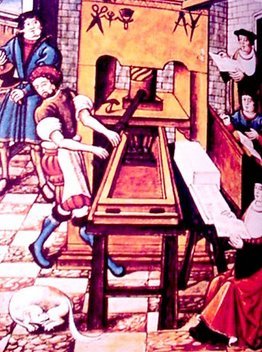
Certainly the thought that the centrality of literacy in our lives could be questioned is hardly considered. However literacy wasn't aways central to human life. Until the invention of the printing press by Gutenberg in the 1400s reading was only for the very elite, books having to be copied, one by one, by copyists in their monasteries. The Church kept reading to themselves – the rest of the community learned by oral language, art, music and song and dance.

After trying to hold back multiple printing the Church soon took control of book printing to suit their own political or religious ends. They appreciated the power of the written word but they were not able to stop its development. As a result the new technology created the impetus for the explosion of learning that was to be known as the Renaissance.

Literacy became the keystone of learning reducing oral history to the background and in the process, over the generations, important skills were lost. This was compounded by the industrial age when functional reading and arithmetic became the important skills for employment. One could also add obedience!

The emphasis on reading has, according to researchers, actually shaped our brains to think in linear ways and many students lives are now determined by how well they achieve in this one area of learning.

Today new technology is reshaping our consciousness. Modern information technology is having the same effect as the earlier invention of printing but on a amazingly compressed time scale. We are entering what some call the 'second Renaissance'.

This is not to underrate literacy as an important skill to access ideas and extend imagination but it has lost its primacy – except in schools. Young people today live in a post or multi- literate world. New technology offers no threat to them. As one writer has said they are ‘digital natives’ while the rest of us are often uncomfortable ‘digital immigrants’

Education now needs to think of the attributes that learners require in post literate and post industrial society. There are those that call the new era the ‘Age of Ideas and Creativity’, an era when talent and imagination of citizens will be the basis of future survival.

Reading will not be enough. Students need to be exposed to a full a range of creative arts, learn to see connections, and in the process, develop every talent they have. Aesthetic literacy will be vital as design and quality become economic imperatives. Oral language (story telling) and personal skills will return as vital future attributes.

This will require schools to look hard at how they educate their students.

Secondary schools, in particular, are structures more suited to an industrial era. A quick visit down the corridors will illustrate how little they have changed over the decades. Transformation is their only choice.

Primary schools, more child -centred, are still locked into past thinking. There the ‘evil twins of literacy and numeracy have all but gobbled up the rest of the curriculum’. Primary classrooms have almost made a complete return to an obsession with the ‘Three Rs’ of the Victorian Age. Little time is left for intensive exploration of 21st literacies. A necessary obsession with developing students’ talents and a passion for imaginative quality work is missing.

How students learn, and why they learn, are the keys to the future. A ‘personalized’ learning approach, based on rich real and relevant ‘challenges, allowing students to work in teams to utilize their individual strengths, and able to make use of the full range of information technology, is the way of the future. Students need to develop the literacies of the creative arts and the sensibilities of a sensual, emotional, and visual culture, not just a one dimensional literate one.

Traditional literacy needs to vacate its central place and become one of variety modes of communication and expression forms to be made available to students. As well older forms of communication, seen in pre literate cultures (‘suffocated’ by literacy) need greater focus allowing greater cultural appreciation and diversity.

The current technical approach to teaching (criteria, feedback, pre-planned intentions, narrow performance achievement targets) needs to be replaced by an appreciation of the 'artistry' of the teacher to develop ‘communities of inquiry’ so as to develop the idiosyncratic ‘learning power’ of all learners. Educationalist Guy Claxton calls this power ‘learnacy’. Such an approach would ensure no student need fail.

Such developments would transform what it is mean to be fully human. Students who understand how all actions are connected,who value their own creativity and talents, who appreciate the joy of learning, will be our best hope for a sustainable world.

We need 'new minds for a new millennium'.

We either need to change or be changed; the 'status quo'is not an option.

Schools ought to lead the way. If only they had the courage, wit and imagination.

Thursday, August 24, 2006

The dark side of Literacy and Numeracy

  Photo: Dean Fink Posted by Picasa


It would seem heretical to suggest the current obsession with Literacy and Numeracy is limiting the learning of our students. Every classroom you visit is full of the current approaches as introduced by ‘contracted’ advisers following their written scripts; all passing on the John Hattie message of intentional teaching, feedback and the dogma of ‘evidence based teaching’.

Not that it isn’t a good message but to restrict it to literacy and numeracy is to limit the potential power to develop students’ talents in equally, or more important, areas. Literacy and numeracy are 'foundation' skills. They do not 'drive' learning – learning is driven by students’ interests and talents and their deep desire to make sense of their lives.

As Dean Fink and Andy Hargreaves write in their latest book ‘Sustainable Leadership’, ‘our continuing obsession with reaching higher and higher standards in literacy and mathematics is exhausting our teachers and learners turning vast tracts of the surrounding learning environment in the humanities, health education and the arts, into barren wastelands as almost all peoples achievement and improvement are channeled elsewhere.’

They continue, ‘the political pesticide of teacher professional standardization’ is resulting in ‘collateral damage in creative and critical learning.’ ‘The coming of such a ‘Silent Spring’ in education’ is a ‘looming danger as the all consuming standardized education reform leaves plagues of exhausted teachers and joyless learning in its wake’.

Hopefully we will avoid the worst of this in New Zealand but I see the beginning of the educational monoculture of literacy and numeracy. One only has to look at the educational ‘targets’ schools are setting in their Annual Plans.

Fink and Hargreaves write, ‘ All teaching and learning are emotional practices – if learning isn’t personalized- that is, customized to the meaning, prior knowledge, and life circumstances, then many students, especially the most disadvantaged, will scarcely learn at all.’

If learning is to be sustained teachers must tap into area of learning students enjoy – the areas we most linger over? We need, they believe, endurance in learning not the efficiency of measurable performance. Still waters, they continue, run deep. Deep learning takes time. According to Guy Claxton, ‘Slow learning is essential for our lives – it draws on creativity and ingenuity needed to solve complex problems’ and ‘to learn their way out of trouble’.

It is 'learning to learn' that ought to be the focus of all teaching and not restricted to literacy and numeracy which seems to be the current trend.

We ought to be concerned with the ‘art of teaching’ so as to develop all the talents our students have, talents all too easily lost if we focus too much on literacy and numeracy.

As Fink and Hargreaves write, ‘When people have a passion and a purpose that is theirs, not someone else’s, and when their passion is pursued together and is sharpened by a sense of urgency...there are no limits to what they can achieve.’

What is wanted, they say, is learning that is self sustaining. Learning that really matters to the individual students. Learning that lasts a lifetime; learning that sticks.

Schools ought to ensure that such important ideals are not forgotten or overwhelmed by schools with their current, almost Victorian, obsession with literacy and numeracy.

Perhaps the 'new' New Zealand Curriculum will provide a challenge to schools to look beyond such limited horizons?

Wednesday, August 23, 2006

Slow food movement - and teaching as well!

  Posted by Picasa A significant movement in the culinary area is the ‘slow food movement’, a reaction against the ‘fast food’ industry.

The fast food industry is product of our fast moving industrial age providing reliable, efficient food, on demand, to consumers. Even those who work in such outlets cook everything to precise timing and heating instructions. Nothing is left to chance. Outcomes, inputs, and measurable targets, are all defined and the last thing they need are cooks!

And the food is bland, or at the very least reliably the same any where in the world – but it is quick and no doubt profitable; standardized food for standardized people. We are what we eat it is said.

We have become ‘fast food nations’. Everything is in hurry – even childhood according to David Elkind author of the Hurried Child. Everybody is rushing to prove success or achievement, none the least the education ‘industry.

The ‘slow food’ movement was reaction against this industrialized approach to living. Followers believe one should take time over food and enjoy the subtlety of the cooking;take the time to try out new dishes and to enjoy the conversation and the wine. Or at the very least enjoy a home cooked meal around the table interacting with members of the family or friends

We now need an educational equivalent of the ‘slow food movement’ so as to value the richness and relevance of any learning experience. Students need to appreciate that the act of learning is at the very heart of their identity and a high quality life and as such should not be rushed.

The standardized ‘fast education’, as exemplified by the curriculum statements of the past decades, has resulted in a loss of appetite for real learning. There is just no time. Gwen Gawith writes we have an ‘obese curriculum’. She has also called it the ‘KFC Curriculum’ – ‘I’ll have two strands, three levels and fifty plus objectives to go!’

As a result there are now many teachers who can no longer remember earlier times when learning was based on educational ideals and the development of student talents rather than achievement targets. The pace of change , the need to plan and assess every objective, has , according to educators Dean Fink and Andy Hargreaves in their latest book ‘Sustainable Leadership’, undermined teacher confidence and competence leaving no time to respond flexibly to students’ needs.

Even the much heralded literacy and numeracy initiatives are imposed on teachers leading to a bland uniformity of teaching – an improvement on the shallowness of standardized curriculums but resulting of a narrowing of the curriculum ‘menu’. This has resulted in other, equally important areas, being neglected; in particular, an appreciation of the power of tapping into students’ interests, concerns and talents as the basis of all learning.

What we need is learning that is sustainable and self renewing; experiences that provide students with a sense of challenge and mystery. We need to move away from having every intention and criteria decided before we even involve students. Learning is a ‘risky but potentially exciting personal journey that can’t be preplanned. If there is no risk or desire to continue learning there is only bland achievement.

The remedy is for teachers to learn to slow down and help their students live life to the fullest. To do this they will need to stop deterministic teaching and learn to listen to their students. What is it that captivates students' curiosity? How can they to tap into their students concerns? They then need to use all their professional skill and artistry to practice what Jerome Bruner calls, ‘the canny art of intellectual temptation’; creative teaching.

Teachers, by providing their students such a menu of rich, real and relevant experiences, will rediscover a sustainable joy in teaching.

This is real learning and learning. Chasing ideas. Trying to sort things out. Each adventure leading on new areas to explore.

All humans have a hunger to learn, to understand, from their own perspective, the meaning of life; and this hunger can only be satisfied by personally meaningful experiences. As Fink and Hargreaves say in their book, it about the quest for human transformation and sustainability – the desire to make ones mark and to leave the world a better place. A curriculum based on such ideas ‘emerges’ – calling on the content of the various learning areas as needed.

Whatever is chosen needs to be done well. There are important lessons to be learnt by students in taking the time to do the very best work they can – as compared to their previous 'best' experience.

As Mae West once said, ‘Anything worth doing is worth doing slowly!’ Deep learning is more like love than lust. Targets don’t improve it. Tests can’t measure it.You just know in your heart when you are achieving something beyond your current expectations – and as well the brain supplies dopamine to reward you.

Such deep slow learning is an experience to be remembered and to be savored in reflective moments. ‘Slow leaning’, according to educationalist Guy Claxton, ‘is essential for our lives – it draws on the creativity, ingenuity needed to address complex problems’.

So let’s move away from trying to prove fast measurable achievement in our hurried schools, based a narrow range of ‘paint by numbers’ tasks, and start to think of providing deep learning experiences.

Learning that is deep and slow, sticks; and once students get a taste for it they will equipped to seize learning opportunities throughout their lives. Less is definitely more! Quality rater than quantity.

Let’s all join in behind the ‘slow teaching’ movement!

Tuesday, August 22, 2006

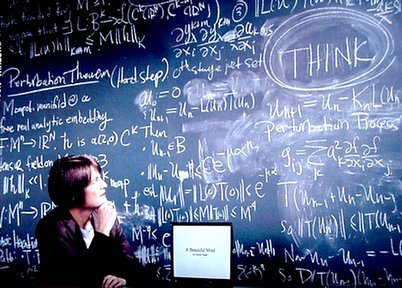
Beautiful minds - 'in a world of their own'.

  Photo: Sylvia Nasar. Economist and Author of ' A Beautiful Mind' Posted by Picasa


Last Sunday I watched the last of three programmes on savants – or as they are called the ‘knowing ones’.

Savants are very special individuals that have one amazing passion. Possibly the most well known savant was featured in the film ‘Rain man’ portrayed by Dustin Hoffman. Based on a particular individual who had an amazing mind for mathematics and, in common with other savants, was very limited in social and relationship areas.

The programme made viewers wonder about the amazing potential that lies within us all.


The question is that if they have never been taught their ‘wonderful knowledge’ how did they get to acquire such an amazing ability. Although most of the savants were born with their ability there have been cases of others gaining such amazing power after a knock on the head! One individual, after such an incident, became an expert on dates from the moment of the accident with a recall of everything that had happened on every day since but not before! Another changed from an admitted hardened criminal to a sensitive artist and poet.

The capacity of the brain is infinite. Lucky for most of us so called 'normal' people our brains suppress, or filter out, most of the information coming our way but for the savants their brains take in everything in their particular sphere of interest without interference. It is as if they have no ‘delete’ button; their mind, like a ‘google’ search, recalls everything! And as a result they miss out on capacities such as social and practical skills that we all take for granted.

It is lucky for us that we filter out all but what is essential for us to survive and what remains, pegged by our emotions, becomes the sum of our memories. Not so for the savants, many can’t dress themselves or find their way to a place that they visit regularly – they pay the price for their phenomenal and to many an incomprehensible ability.

Savants, as result, are in world of their own!

For ‘normal’ people 90% of our days are lived unconsciously but each of us has a hidden range of talents that can only be made accessible by being in appropriate environment. The concept of multiple intelligences or talents has been explored by Howard Gardner who has researched over eight ways of ‘being smart’ – each with a range of possibilities and degrees of depth.

The question is how many talents are hidden in our heads?

Those, whose misfortune it is to have one talent taken to such a depth that it limits other areas of humanness, find it hard to be ‘normal’. Others, it seems luckier, we calls prodigies or genuiuses, but even they find many areas of life problematic to various degrees. Along with savants many such 'gifted' individuals find themselves placed in special schools – or simply find school difficult for them. There seems a fluid line between savants and genius.

Our ‘one size fits all’ mass education system just can’t stretch to fits such talented individuals. And their talents beg the question, ‘How did they learn to do what they can do – without school?’

But back to the savants; many of then suffer degrees of autism and aspergers along with many of those we call the talented and geniuses. Teachers will be aware of such children in their classes and struggle to accommodate their needs.

There are savants who are incredible artists.

Others have phenomenal mathematical ability.

Others are incredible musicians.

Opening up the secrets of brains of such enigmatic individuals are areas of research for many scientists. Well over half have been found to be autistic. Many of the great intellectuals of the past may well have been savants to some degree: Da Vinci, Newton, Mozart and van Gogh come to mind and in recent times, Einstein. ‘Ordinary’ people find it hard to understand such people. It was said that Einstein saw things with a naivety as if through the eyes of a child.

It was fascinating to see one individual being studied to see how well he could remember and draw five blocks of Rome from memosry after a forty-five minute helicopter flight. Given four days, and a five metre piece of paper, he could draw every element of every building seen! He noticed everything.

Another individual could model horses, and animals, perfectly but struggled with people. This amazing individual began his talents after a knock on the head at 31. He is now 'compelled' to sculpt animals. When put him a special class to learn ‘normal ‘things he scraped putty from windows to make his models.

Compulsion is a mark of all savants and geniuses – and potentially of all students given the right environment. We are all born with an inbuilt desire to learn.

A young person, deeply autistic, discovered a hidden talent for jazz. He could compose original jazz pieces – ‘the music was in him’.

The original ‘Rain man’ was dismissed as a 'retard' at nine months still, and can't dress and brush his teeth, but can recall every book he has ever read and play every song he has ever heard!

The point being made by the programme was that we all come with ‘software’ in our brains for a range of abilities installed – all we all need is the opportunities to express them.

Brain research shows that when such individual (and all of us) achieve something their brain rewards them with a chemical, dophomine – which provides a ‘high’ or ’joy of learning’.

The savants show us that their genius is the result of purity of perception – they absorb everything in their particular area of interests or obsession. They see the world as it is, with no filtering, while we, the more ‘normal’, see things through ‘mindsets’ that interpret experience for us.

Could we help our students escape 'the tyranny of imposed mindsets' to see things with more clarity – by bi passing the brain 'mindsets'? By: making use of more first hand sensory or real experiences; by creating multi- dimensional environments more conducive to allowing talents to emerge; by exposing students to a range of rich mathematic, scientific and artistic experiences full of intellectual temptation; by building on the strengths of our students rather than trying to teach then what they are often not interested in; or by developing learning environments that reduce stress and distractions.

The savants work compulsively only in areas that interest them. One savant was interested in knowing all about roller coasters (but not in riding them). I taught a young boy once who was deeply interested in the sewers of London – and little else!

For most of us, as we get older, we lose brain circuits that are not used but savants keep all the neurons in their areas of interest at the expense of skills we take for granted.

The last programme looked at male female diffences. Half of those defined as savants are autistic and six out of seven are male. Researchers have defines two kinds of brains, an ‘e’ brain (for empathy and relationships, and an‘s’ brain (for ‘system’ or logical thinkers). Autism, caused by a chemical imbalance in the brain, is male logic at its extreme – an exaggeration of a male ‘systems’ brain operating without regard to people. Autistic people take everything literally at face value and find it difficult to interpret ambiguous situations or what others are thinking.


Today most of us see male and female brains as androgynous but research is indicating that male and female brains have different evolutionary pathways and provide different contributions. One savant, as mentioned earlier, after a stroke, changed from a career of crime to being a sensitive artist and poet.

It begs the question, ‘Who is he?’

So it seems women are the gentler sex, or perhaps it was suggested, woman use more subtle forms of violence by withdrawing of love! Male brains display a better sense of direction and parking of cars while women are more articulate and cry at movies! We all have elements of both but savants have pure ‘s’ brains. Female traits, many feel, may now have more survival advantages today and this possibly contributes to girls doing better at school!

There are a lots of implications arising from the study of savants and talented people, particularly for teachers who believe it their job to ‘delver’ curriculums to ensure students 'learn'. The programmes provided a positive message to those who believe the challenge of teaching is to create conditions and to provide experiences that uncover and build on the strengths of their students.

Schools ought to be a home for growing beautiful minds.

Saturday, August 19, 2006

Attributes of people who will make the future history books

  As provided by Tom Peters Author of Re-Imagine Posted by Picasa Tom’s list is as follows:

• Committed
• Determined to succeed
• Focused
• Passionate
• Irrational about life projects
• Ahead of their time/paradigm busters
• Impatient/action obsessed.
• Made lots of people mad
• Flouted the chain of command
• Creative/quirky/ peculiar/rebels/irreverent
• Masters of improvisation/thrive on chaos/exploit chaos
• Rather beg for forgiveness than ask for permission
• Bone honest
• In tune with their followers aspirations.

Elsewhere Tom talks about all progress depending on PPP – personally pissed off people. He calls this innovation source number 1.There is no number 2! It about people who always put into practice ‘plan B’ –whose only strategy is doing something and keeping what works; continual improvisers.

Other writers note that creatively talented individuals, innovators and entrepreneurs rarely did well at school. Looking at the above list it is not hard to work out why.

What are the attributes of future learners that underpin your school?

Traditional schools seem to value conformity, obedience and control and a ‘one size fits all’ mentality. But as Tom Peters says 'one size only fits one size'. In his book Tom writes that we could not have planned schools better to destroy students' talents if we had actually tried to do so!

'Personalized learning' would seem the answer but difficult to do in a 'mass education system with its genesis in factory industrialized age.

Be great if school ‘targets’ were the number of independent talented individuals they ‘produce’ rather than always focusing on literacy and numeracy? As important as these are they are no more than the ‘foundation skills’ for a future that will depend on talented, creative and adaptable individuals.

Maybe it is time to worry about the ‘talent gap’?

The future is Peters says, 'the age of ideas, creativity and imagination'.

As Dan Pink writes in Free Agent Nation, 'the main issue in school today is irrelevance.

Coudn't agree more!

Thursday, August 17, 2006

Ideas from 1995 - so what has changed?

 Article found while tidying up! It is always interesting to what ideas have changed. Posted by Picasa

Eduvac
October 24 1995


'Tomorrows Schools has created a new environment for schools.

In many ways the bureaucracy of the old Education Department has been replaced by a technocratic culture which has imposed new layers of accountability over teachers in the name of efficiency.

As well there has been a profusion of curriculum changes to cope with.

This has resulted in many schools and teachers feeling somewhat ‘shell-shocked’.

It is not possible or desirable to return to the past.

We need to accept the new reality and make the best of the situation we find ourselves in. It is important to reflect on the changes, be critical, and then add positive alternative to the debate.

What are missing in this new environment are the humane and holistic values that have always underpinned primary teaching. The technocratic business audit culture sits uncomfortably with child-centred teaching. We know the important things in education can’t be simply measured and that education is more a lifetime process than measurable outcome.

To retain a sense of control, important in times of continual change, we need a model that we feel comfortable with. This is why the ‘School as a Community’ is an excellent alternative.

It is interesting to note that innovative businesses are also moving towards a similar concept, that of the ‘learning organization’ which is based on trusting people to feel accountable to the bonds of shared values for their competitive advantage. Trusting ‘empowered’ employees in self managing teams is the only way a modern business can thrive in these times of continual change.

What we need to do (within the current compliance constraints) is to develop the ‘School as a Community’ model. To work it will mean that each staff member of the school making a real commitment to its success. This may mean giving changing some of our views on teaching and giving away some of our individuality as teachers (or isolation) and really valuing the advantages of collegiality.

The community model is so soft option and depends on each person being willing to be accountable and appraised against agreed school values. Any diffences will have to be made open and handled constructively for the common good.

The teaching approach will have to be compatible with the agreed belief system.

We need to move away from the more permissive ideas developed in the 60/70s, build on the best of past practices and include new ideas about how students learn.

We need to place greater emphasis on teachers interacting to make sure students really think about what they are doing. In the past we may have placed too much faith in ‘learning by doing’. We now know that talking with others, and recording what we know, is also vital.

In the past we also may have been so concerned with providing activities and managing them that we never had time to teach. To counter this we need to introduce more predictability into our classrooms and only provide students choices when they can work independently. We need to organize ourselves to gain time to teach those in need.

We also need to negotiate with the students the values that underpin all class interactions so they are able to control themselves though moral obligations. The classroom communities will need to reflect the values of the total school community.

To empower students we need to negotiate with them class activities and organizations, the achievement criteria they need to assess how successful they have been, and to help them set new goals to develop the habit of continual quality improvement.

As well students need to become aware of thinking strategies involved in any learning activity. To do this we will need to deliberately teach thinking strategies in realistic contexts.

It will be important to help them see connections between Learning Areas so that they learn to instigate their learning. This will require teachers to work in teams to plan collaboratively. Secondary schools will need to develop new multi skilled teams rather to replace their outdated subject departments.

Most important of all students will need to value person effort and perseverance if they are to gain the satisfaction of quality achievement. In the past we may not have expected enough from our students. Too many students are caught up in wanting instant gratification, thinking that first finished is best. We need to instill a sense of quality rather than quantity in our students.

All these ideas combine to help students take a greater responsibity for their own learning and contribute to them becoming life long learners. Little however will be of use to our children ‘at risk’ if we don’t work in full partnership with parents and the wider community.

Such a transformation will require leadership and hard work but it will promise raising teacher morale, make teaching more fun, and will ensure all students gain a sense of responsibity for their own learning.

If school combine the ‘School as a Community’ model with new ideas about teaching and learning they could be transformed. It would be hard work and require a total school effort to realize. However if the ideas were to be considered realistic they would be worth the effort'.

Bruce Hammonds


Still makes sense to me. Now almost common practice?

For ideas about how to develop your school as a learning community based on the power of shared Vision, Values and Teaching Beliefs, visit the Leading and Learning for the 21stC website.

Monday, August 14, 2006

The Curriculum - 'just keeps rolling along'!

  Scene on the bank of the Mississippi. Posted by Picasa


Curriculum seems an innocuous word but, as it is conventionally understood, it is full of deadness and quiet oppression. It is what teachers and students must fit into - often to be 'judged' by those outside the classroom.

Curriculums are fragmented, divisible and assigned to different levels. Students who don’t 'light up' when exposed to it are seen as deficient. To be sure creative teachers do their best to subvert it and tailor it ( or these day ‘personalize’ it) to the needs of their students but curriculum as a central entity just goes rolling on, like Old Man River, but less alive.

Whatever happened to the idea of the curriculum intrinsically related to children’s lives? How can set of requirements planned centrally be relevant to the diverse students that populate our schools?

There must be a real connections with students to inspire learning; ‘Men must…learn to know and investigate the things themselves’ (John Amos Comenius 1630). The curriculum ought to ‘emerge’ from students intrinsic curiosity and their questions and this can only happen when teachers create their classrooms as 'communities of inquiry'.

The teachers’ challenge is to ensure student curiosity is not dulled. As Rousseau (1773) wrote, ‘Keep that curiosity alive...put questions to him…he should not learn but invent science.’

True ‘personalized’ learning must take into account the learners culture and environment and his or her personal concerns and interests. By exploring such things develop a child develops a positive sense of self as a learner. To achive this requires respectful mutual trusting relationships between the ‘teacher’ and the learners. Learning content must ‘be connected with their own personal observations and experience’. ( Pestalozzi 1895)

The idea of curriculum suggests a 'royal road' to learning of generalizations defined by those with the ‘expertise’ to insist other follow it. The truth is students can only discover such understandings for themselves – the must learn 'to see the woods by studying the trees'.

As John Dewey wrote (1897), ‘There is no succession of studies in the ideal school curriculum. If education is life, all life has, from the outset, a scientific aspect, and aspect of art and culture, and aspect of communication….The progress is not in the succession of studies, but in the development of new attitudes towards , and new interests in, experience’.Much of present education fails because it neglects this fundamental principle of the school as a form of community life.Education must be conceived as continuing reconstruction of experience; the process and the goal of education are one and the same thing’.

Curriculum then is both content and process. Broadly speaking it is everything that happens to a child at school. In a more focused way it is the utilizing of children’s’ concerns, both deep and transient, by the teachers to develop students who understand the natural world;technology; themselves; creative expression; all forms of communication; to gain proficiency in the skills of learning; to develop judgments; to develop one’s senses and sensitivity to feeling; to integrate learning and doing; and in the process to learn to experience life fully.

‘The only way to fit all this into school is to plan around children’s life concerns, feelings, interests ,fears, concerns questions and activities. The curious mind is not divorced from the questing spirit, the passionate heart or the vigorous body. It is nourished by and grows out of these'. (Dorothy Gross 1974).

There is no need to ‘cover’ all the subjects. Bring life into your classrooms, and take children out into the outside community. Select experiences according to the interests of both children and teachers (Bruner said, ‘teaching is the art of intellectual temptation’) and shape these experiences according to the age and abilities of the children.

In short such an ‘organic’ curriculum increasingly dealing with realtionships will be difficult in schools obsessed with literacy and numeracy and 'covering' teacher selected curriculum topics. Literacy and numeracy ought to evolve out of experience. The more powerful the experience and the ‘deeper’ the students look into it the more students will want to read, research,communicate and express their findings.

We need a curriculum that is based on students’ unique interests and points of view. This is impossible if at the same time teachers have to ‘prove’ that they have ‘cover’ what others expect of them. The proof of learning can be seen by how children relate to each other and by what they can do, demonstrate, or perform.

Such teachers need to be ‘artists’ able to pick up on what to extend, what to ignore, what challenges to introduce, and how far to go. This will take thoughtful observations of each child individual needs to decide what experiences are relevant.

This will be no easy task, even if it were to be ‘approved’. It would require a deep understanding by teachers of child development, learning theory and content knowledge. Such teacher will need the support of others to be able to ignore selectively imposed curriculums.

But if this were to be done then we might be able to talk about ‘personalized’ learning with some intellectual honesty– and we could throw the curriculum documents into the rubbish tin- or use them as guides only.

In the meantime the curriculum ‘just keeps rolling on, like Old Man River’ distorting true educational ideals.