Sunday, March 05, 2006

The Big Count : Census 2006

  Posted by Picasa No doubt teachers throughout New Zealand will be focusing on the census this week? The big count!

The five- yearly Census of Population is the largest official survey taken in New Zealand to see who where are as a country. It will go out to 4.2 million people and 1.6 million dwellings and will cost 70 million dollars

Every person and household will be involved and so it will affect all our students.

What a great chance to involve students in authentic research and to involve them in important social issues.

Students could research why we need to have a census.

Where does the word census come from?

Who might use the data?

Why does the census have to be compulsory?

As well it is great opportunity to consider how New Zealand, their local community or their school, has changed over the years. Students could draw up a set of their own question to ask of their parents?

Then they will need to decide how they are going to present their findings.

Our local paper provides information about how the population has grown since the 1901 census. The changing figures make an interesting graph and the basis for all sorts of discussions. The 1901 census asked how many servants households had! In 1926 they asked how many chickens people owned! The number of people living in the country and the town has changed dramatically over the years. Now people are asked about numbers of cars and their ethnic nationality groups. A new question this year is about the number of people who smoke!

Schools will have been sent information packs for teachers to use and, if not, the official NZ Census site might be worth a look? Also look up Statistics New Zealand.

Be great if citizens were to be asked to comment on what kind of country we want New Zealand to become – it doesn’t seem right to let the direction of our country to be left in the hands of politicians and technocrats.

May be we need a new survey – a national conversation about what kind of country we want to be seen as?

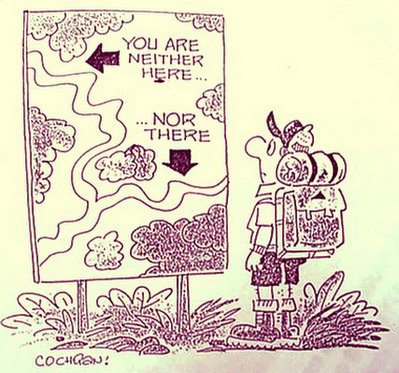
Where are we going is just as important as where we are now and where we have come from.

Wednesday, March 01, 2006

Walking through your classrooms

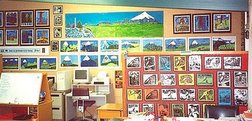
  Posted by Picasa It is early days yet in our classrooms but not too early to get a picture of what has been achieved so far by individual teachers.

Perceptive teachers will by now have developed environments that clearly indicate the important messages they want their students to gain while in their classroom. Equally perceptive principals – that is if they are educational leaders – will have indicated agreed school expectations to all teachers.

Take a quick walk around the classrooms at your school to see what impressions they give to you – a good idea is to pretend you are taking around a group of new parents or visitors.

This is not as superficial as you would think. Malcolm Gladwell in his book ‘Blink’ talks about ‘thin slicing’ – the ability to gather a lot of information in a glance. Of course the quality of the information depends on the expertise of the individual. Wine connoisseurs can tell at a sip the quality of a wine while others of us are none the wiser after a bottle!

So what does your room environments tell about what the school values?

Before you say it is to early – think if you were opening a new shop in the local mall – would you leave first impressions to chance?

Are the room’s colourful, exhibiting student’s art and examples of work from their projects? By now the first class unit of the year ought to be coming to fruition. Does the room reflect the key questions for the unit and outline expected tasks?

Do the class whiteboards / blackboards illustrate teacher planning and management?

And do the student books that are in view show an effort to inculcate appropriate design and presentation standards – by Easter the student’s book work should be showing qualitative improvement in design and content but only if that is the teacher and school expectation.

Is their evidence of negotiated class rules and behavior expectations to be seen?

All this can be taken in by an expert 'blink' – the power of 'thin slicing'. Equally for those without the expertise the room could be patchy, flat, and dull, and not even be noticed.

If I were a parent I would avoid such rooms – but luckily most parents are not so aware - or are they?

For a teacher who understands the power of design and emotions it is a great point of differentiation. It I were a teacher today I know what you would see if you came into my room – I wouldn’t leave it to chance! And I would have to tell you – you would see it at a glance.

Ideas to halp:

Classroom criteria
Presentation of student work
Developing a sense of quality
Classroom display for unit of work

Monday, February 27, 2006

Wanted: the courage to explore new ideas.

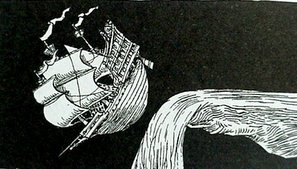
  Posted by Picasa We all know that Christopher Columbus had the courage to sail in to the unknown and ‘discover’ the Americas. What is not so well known is his discovery allowed European cultures to ‘gather’ the resources to enable them to revive their failing economies.

What we need now – now that the world natural resources have all but been despoiled, is to leave the well known tracks and have the courage to develop some new ideas of how to develop a sustainable world as there are few natural resources left to discover that will save us.

Wouldn’t it be great if New Zealand were to lead the way? The problem is since 1984 the world wide epidemic of monetarist 'market forces' has captured the minds of our politicians and the chance of new ideas emerging is going to be difficult. Today short term greedy self interest infects us all as we turn a blind eye to the disastrous effects we are collectively are having on our environment. The greedy lack of ethics of the business world rule almost unchallenged and politicians are to busy softening the effects of ‘right wing’ thinking to think of real alternatives.

And this is all the more difficult in New Zealand because, since 1984, our country has been seen a ‘leader’ in implementing the ‘market forces’ mentality, dismantling everything in its way to create efficiency and wealth for the few.

As a result we now have a society of a few winners and lots of losers and the gap widens everyday, and this is ‘echoed’ throughout the world – where a few people own more than some countries and there are more people in the world starving than ever before!

Add to this the inevitable end of ‘big oil’, the effects of man-made climatic changes, and world overpopulation, which currently stands at 6 billion – the last 200 million arriving the past 3 years, and we are all in big trouble.

In the meantime we wait vainly in hope for the myth of progress to solve the problems for us.

Some courageous thinking is required not collective blindness!

New Zealand, a country with the least spoiled natural environment (which says something for the other countries) could take the lead to develop a new vision; a new sense of direction; a vision one that could inspire other countries to put a sustainability ethic above national or financial interests.

I guess you would have to be a supreme optimist to believe our current politicians could rise to the occasion but if they did what a great opportunity.

At the very least the government could start the debate about the kind of country ‘we’ want to be; what is the collective identity we want to develop for ourselves; how do we want to be seen? Maybe this could be introduced as part of republican debate or even a new flag?

Democracy, as we currently experience it, is a ‘thin’ experience. We need to debate how we can develop a more expansive form of democracy by pushing responsibility down to community levels leaving the ‘big picture’ for the national government? And we need to debate the need to value our cultural diversity – we are no longer a British Colony in the South Pacific!

We also need to debate as to what values should underpin our society to replace the individualism, the corrosive hedonism and greed, that seems to be the current ethic? There must be more to life than market forces and materialism? Certainly we need something to replace the powerlessness and alienation that too many current citizens currently feel.

How can we redesign education, welfare and local government so that they provide personalized services, placing responsibity in the hands of the people concerned – and in this process develop new helping roles for those who provide the services?

For our economic survival what do we need to produce as a country? In a world of low cost mass produced goods we need to tap into every person’s innate creativity to develop well designed imaginative products. How can we lead in the area of developing sustainable industries?

How can we transform education to play a central role in developing all students’ talents and love of learning so as to develop inventive, caring and creative citizens?

The answers to such ideas provide an opportunity to shape our own destiny – rather than being passively shaped by globalization, ‘market forces’ and other outside influences.

It would seem to me that by having such conversation, and by spreading such ideas, New Zealand could become a world leader?

Monday, February 20, 2006

The Big Picture

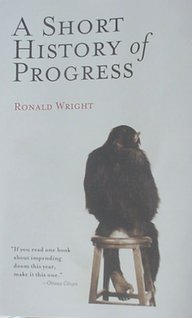
 The myth of progress. Posted by Picasa This book by Ronald Wright is one everyone should read.

After hearing the author discuss his ideas on National Radio (Canadian Massey Lectures) I was tempted to buy the book from Amazon; it was well worth it!

If you want the big picture about the history of human civilization, and a pessimist but realistic criticism of the myth that technological progress will solve our current problems, this is the book for you.

It is a mind changing read. Wright is a respected historical philosopher with an easy writing style with ‘a profound understanding of other cultures’.

His book is written around the three questions artist Paul Gauguin expressed in one his last major paintings: ‘Where do we come from? What are we? And where do we go from here?’ Gauguin, after fleeing from a depressing European industrial society, was in the end disenchanted himself with the ideal society he believed existed in the South Pacific.

But the questions he asked, Wright believes, are even more valid today. Where are we going is the key question and Wright believes the answers lies in the history of previous, now crumbled, civilizations. And he believes we will suffer the same fate unless we learn lessons from the past; he not hopeful.

History, as the cliché goes, repeats itself and each time with greater destructive impact. With our blind faith in progress ‘we’ believe thus will not happen to us. In earlier days a civilization could collapse without impacting greatly on other cultures. Today if Western civilization were to collapses the fate of humankind would be at risk. The planet will continue to evolve with us!

The problem is what Wright calls the ‘progress trap’ which, as a result of technological advances, cultures eventually consume all their resource and literally fall apart – victims of their own success.

Advanced technology, from the earliest days, is a double edged sword enabling man to grow and consume more than can be supported; that growth creates its own problems. Today resources are being consumed in a way, and technology so powerful, that there is a very real possibility that the 10000 year experiment of civilization could come to and end. ‘We are clever devils’, Wright quotes, ‘but seldom wise’.

Technological advances has seen the world population expand from 200 million at the height of the Roman Empire ( 200AD); 400 by 1500; 1 billion by 1825; 2 billion by 1925; 6 billion by 2000 .The last 200 million took only three years, and, although the rate is slowing, it will reach 9 million by 2080. And as well there is more poverty in the word today than at any earlier time.

Sustaining the world’s resources is the vital issue of the future. Wright believes we now have the means to share world resources wisely, to clean up pollution, to provide better health for all, and most importantly to set economic limits in line with natural ones.

This is he believes, ‘our last chance to get it right.’ But he is not altogether optimistic as we seem to have learnt little from the lessons of the past. He quotes that Hitler once gleefully exclaimed, ‘What luck for rulers that people do not think’ and Wright adds, ‘What can we do when rulers will not think’?

The current materialistic ‘Market Forces’ mentality is destroying the resources of the world and, as Wright explains in his book, every empire finally fails because it despoiled its environment. The simplest and clearest example of this, he writes about, is Easter Island where, in the process of erecting monumental carvings, they felled all their trees. Easter Island is an isolated metaphor for the price cultures pay for ‘progress’. With our advanced technology and greed , and our false hope that progress will solve all our current problems, all the worlds civilizations are now at risk.

There is hope, Wright says, but only if: we change our minds about the myth of progress; learn from the failures of earlier civilizations; and learn to protect the environment that sustains us. He writes that it is up to us develop a sustainability consciousnesses about our world so as ‘to shape it and look after it’.

Developing this consciousness ought to be the vital role of our education system?

A powerful read.

Saturday, February 18, 2006

Learning through confusion.

  Posted by Picasa The challenge of being a new principal.

Starting a new job as a school principal is an important event but it can also be a confusing time for all. All too often the new principal rides into town, like the Lone Ranger, to solve all problems.

The simple truth is that is all too easy to start off on the wrong foot due to a lack of appreciation of the reality of the situation added to by the often confusing agenda of those involved in the school.

New beginnings are difficult in any organization because of inflated expectations of the new leader and conflicting demands of those who made the appointment. A number of mixed messages can easily occur as new leaders are expected to act quickly while at the same time they are not quite sure who to trust; what to continue with and what to change. All too often new appointees pretend to look as of they know what they are doing while at the same time drowning on events.

This can easily lead to exhaustion, stress and a ‘fighting fires’ approach.

On good idea to avoid this situation and to use this confusion to your advantage is to create an Entry Plan so that rather than hitting the school running you can hit it learning. A well thought out Entry Plan gives the new leader time to build relationships with all the key people involved and signals the type of leadership you want to develop.

An Entry Plan is premised on utilizing the confusion of the transition period by using it as creative starting point for learning. It is a plan structured to enable joint inquiry prior to making any changes and allows the new leader to use the process to uncover current strengths and possible new directions.

The plan is designed to slow things down so the appointee can learn about the deeper culture of the school and to develop collective approach to developing new directions.

The first step is to draft ideas about an Entry Plan to share with the BOT and the staff; this draft plan outlines who the new leader will meet, about what, when, where, and why. The most important things is to define the most important questions and issues as you see them you want to explore with them and to indicate that no major changes will be made until all the information form the Entry Plan has been processed. This will let all involved know that they will all have a chance to have their say.

It would be a good idea to share the draft with key people before you make it public. They may have ideas that would be useful before you make your final plan.

The final Entry Plan should include a statement outlining the point and purpose of the plan – the process, and what it is hoped it will deliver.

Following the discussion with key people and meetings with the BOT and staff, which will possibly uncover new questions for you to consider, the leader draws up the findings and challenges ahead for the school.

The key issues and findings are then presented back to the BOT and staff to gain further input. At this stage there ought to be no expectation to gain consensus.

At the end of the process the principal draws up a future School Development Plan that lists the actions that will need to be taken or researched. A useful idea would be to set up a School Development Team to share responsibity for implementing the plan.

As a result of this process the BOT and staff make decisions to put into practices areas of agreement and to instigate ‘action research’ to explore other issues.

At this point, by taking ones time to work through the confusion, all involved will begin to appreciate the empowering leadership style implied in the approach and that the responsibly for action involves everyone.

The whole point of the Entry Plan is to develop a common understanding of the reality and challenges ahead but most of all to develop a ‘we are all in this together’ attitude.

The process begins with the acknowledgment of confusion of a new beginnings; it challenges current assumptions, and ends up with agreed action plans to ensure new ways of thinking are translated into new behaviors.

Such an Entry Plan has the potential to position new leaders for success right from the start by establishing a culture of self examination and it develops a leadership approach which is both ‘top down’ and ‘bottom up’.

And through this process a new vision for the school can be forged.

Worth a try?

At the very least a good idea is to develop a ‘Position Paper’ outlining the new principal’s views on all issues because this at least will let the staff no where you are coming from!

Friday, February 17, 2006

Power of Vision, Mission and alignment

  Posted by Picasa There seems to be a lot of confusion around about what exactly are vision and missions, how are they different, and even if they are worth the effort?

I think this has occurred because missions were imposed on many organizations and were done as form of compliance. As a result they may have lost whatever prestige they may have had. Often they not even able to be articulated, let alone actioned, by staff members!

If schools are in this situation perhaps it is time for them to reflect about what their schools stands for and to ‘revision’ it’s purpose. To do this properly all in the school need to be involved if it to be actioned. If it doesn’t’ attract the ‘hearts and minds’ of all as worthwhile why would they bother?

There are too many examples of highly successful organizations that have tapped the power of a shared vision to dismiss the idea. Toyota is but one example that exemplifies what it means to pull together under a single vision and mission. Such organizations are not only focused on the future they are equally focused on creating the conditions for future growth within – they are, to use another maligned idea, a ‘learning organization’.

Visions are often reduced to a memorable phrase, or metaphor but without action they are only dreams. And the dream must connect emotionally with all those who are involved in the organization and not be the product of a few selected thinkers. Often the vision will ‘emerge’ as part of the process of ‘visioning’.

Visions are often followed by a statement outlining agreed Core Values and Beliefs

Vision by itself is not enough, you also have to know how to get there and this is the mission – and from the mission flow actions, goals, strategies and professional development.

The Mission Statement outlines what the organization does to realize its vision.

All the above need not be more than a page or so – there is no advantage it seems in wordy documents

Alignment is vital. Alignment is where vision meets reality. Alignment is the secret ingredient that holds any enterprise together as in a good football team. In any game the vision is to win, and the mission is to win with the mix of talents and skills that the players possess. And when things ‘click’ you have alignment.

But at the same time, paradoxically, an organization has to listen to those with contrary views and be open to new ideas if it is to grow. And new ideas often come from the edge!

The leader’s role in a modern organization is to keep the vision, the picture of the ideal future, clear in everyone’s mind, and to create the conditions to make use of all the talents of staff members. This involves negotiating core beliefs and expectations with everyone to define the boundaries within which staff members can exercise their individual creativity.

In the school setting this equally applies to every individual teacher and their students.

Leadership at all levels is vital to ensure to the integrity of the organization, as determined by the vision, is kept to the forefront. Without leadership organizations too easily lose their sense of direction and purpose and become wound up in processes and procedures. When the focus of vision is lost organisations become controlled by regulations and compliance. This can also happen when imposed targets are set, as worthy as they are, that replace the vision as the priority. The targets may well be achieved but often at the sacrifice of the philosophy and beliefs of those involved.

Vision can also be lost when accountability measures inadvertently make people focus on easily achieved results at the expense of the visionary aspirations. Too few measures focus on the important aspects of life and learning – on the core beliefs, philosophy and relationships that are so important in any organizations.

When vision is lost the status quo reigns and a conformist compliance non risk culture is established – and this leads to the death of any organization. In a frenetic world of fast unpredictable changes and imposed expectations it is all too easy to lose track of the big picture.

When organizations are clear about the direction they want to go in, are aware of the challenges, and are clear about what they have to do, open to new ideas, a learning culture is established.

Culture is what holds a ‘learning organization’ together, not rules and regulations. The stronger the culture the more the people will get behind the vision. Culture counts. It defines ‘what is important around here’; what behaviors are, or are not, accepted. It is the sum of the norms, behaviors, guidelines and values held by any organization. It is about how we treat people.

As the vision defines where we want to go, the mission what we do, the culture defines who we are.

Like vision culture cannot be imposed from the top – both are ongoing interrelated processes. Lasting commitment evolves when everybody has been involved in setting the direction and mission of the school. Ownership is vital – people generally support what they have had a hand in developing. Compliance comes from being told what to do; commitment comes from a shared vision.

And the measure of all alignment should be against the vision. If people get behind the vision there is a good chance of success. There will always be resistance and challenges but if the vision is inspirational they will be reduced to experiences to learn from

It is the power of alignment behind the shared vision, mision, values and beliefs that drive the learning process forwards.

Tuesday, February 14, 2006

Inspired by Albert Einstein

 
 Posted by Picasa Einstein is an individual whose thinking changed the world putting paid to the fixed measured world of Newton with his theory of relativity.

It is interesting that he is another who had a shaky start in formal education. He wrote that it was a miracle that modern education had not altogether killed the magic power of a childs sense of wonder. His concern continues to this day with our system's obsessive focus on fragmented student’s achievement rather than developing a learner's curiosity, talents and, most of all, a passion for learning; all to hard to measure I guess.

'Imagination is more important than knowledge' Einstein

Learners are curious. To be the best you have to be curious about everything and take nothing for granted. Einstein described himself as ‘neither especially clever nor especially gifted, I am only very, very curious.’

It is this curiosity, this sense of wonder, that our education system should protect above all other objectives otherwise it is only ‘schooling’ or training. Most education ends up as schooling; jumping through prescribed hoops and measuring how far you can jump.

Education has lost the big picture that so impressed Einstein. Rather than the exciting pursuit of the strange, the challenging, the interesting, it is now all about ‘evidence based teaching’ and an obsession with detail, measurement and data collection. And to make it worse data collection which excludes the very curiosity and imagination that drives true learning.

'It would be possible to descibe everything scientifically, but it would make no sense, it would be without meaning, as if you described a Beethoven symphony as a variation of wave pressure' Einstein

Education has been taken over by a ‘metric mania’ – measuring and graphing, and graphing that is made worse by the misuse of the power of the computer. ‘Data, data, everywhere and not thought to think’! Learning is about working at the edge of ones competence no matter the age of the learner.

Looking at numbers and data is not what education is all about no matter what the technocrats think. It is more a about a relationship between the learner, the teacher and some exciting content that has captured the learners imagination. Without this relationship knowledge is trivial, or inert, useful only to prove you have achieved some prescribed level or other. Learning isn’t above incremental change, achieved in isolated subjects, it is about individual leaps of the imaginations new ideas are comprehended.

And what count the cost of all the time wasted in compiling these irrelevant reports of bland achievement? How many students leave our system with their learning per intact is more to the point?

'As far as the laws of mathematics refer to reality, they are not certain, as far as they certain they do not refer to reality.' Einstein

Learning is a search to make meaning – about seeing connections and being curious about the mysteries that life throws in our way. It is not about consuming little bits and pieces without being aware of the big picture.

Learning is about finding about things that we don’t know; about things that are meaningful to us. Once we are aware of a problem then we need to do the thinking and the research and to express what it is we have found in whatever way is appropriate.

How this can be planned and assessed by distant experts without losing the spirit of learning is beyond me.

We should instead focus on what inspired Einstein.

Sunday, February 12, 2006

Evolutionary thoughts!

 
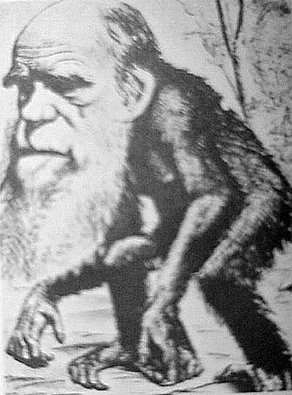
 Posted by Picasa Charles Darwin born Feb 13 1809

Charles Darwin is one individual that changed how we think about ourselves forever.

He hardly had an auspicious start in life which is reassuring for those who have yet to discover their destiny. Darwin however might not agree with the idea of destiny!

Having achieved little of note he joined the crew of the 'H M S 'Beagle' in his late twenties. During this journey he put together his thoughts that were later to be published as the ‘Origins of the Species.’ While other scientists were busy collecting and classifying things Darwin was more concerned with relationship between animals he observed and earlier forms.

What he worked out, based on his observation, has forever changed how we see human life. Up until this point the world was believed to have unfolded according to God’s plan but Darwin reduced mankind to just another successful species evolving from earlier ape like forms – and even more worrying that mankind was just another species that would continue to evolve by chance and mutation.

The thought of an accidental evolution, separate from all an guiding and powerful god, worried Darwin as well and he was reluctant to publish his findings for fear of ridicule. He finally published his seminal book before another naturalist (Wallace) published similar thoughts.

If you believed in Darwin’s theory then you had to believe that mankind (particularly Europeans) had no superior God given rights. To this day there are those who refuse to accept such ideas. Many American Schools have been forced to include in their 'science' teaching a pre –Darwinian alternative theory called ‘Intelligent Design’.

And as well, if you believe in Darwin, mankind does not have a guaranteed future having only been around a mere 10000 years – a mere blink in the history of our planet. Dinosaurs lasted longer!

Mankind is currently doing a great job of despoiling the resources of the planet we live on. Part of the myth of western civilization is a belief that progress will solve all problems. Today some believe in what is often called ‘social Darwinism, the rule of ‘tooth an claw’, based on survival of the fittest. Darwin’s theory favoured survival of the adaptable and the flexible, not the biggest and greediest. Successful species often arise from odd but successful mutants; strange, small, hairy manuals eventfully replaced the dinosaurs and some evolved into early humans.

Mankind has no guarantee of survival but the world will continue to evolve with or without them.This is Darwin's legacy.

We have the power to destroy the resources of the world and today this is a real possibility. As Thomas Huxley wrote many years ago ‘Where is the man that has so much that he is out of danger?’

A belief in progress may be our final undoing unless we develop new ecological mindsets to match Darwin’s insights. We have a lot to learn from the indigenous cultures that have learnt, through experience, to live in harmony with their environments.

New sustainability orientated mindsets will be needed; transformed schools based on developing such future focused students could be the solution.

So far it has been too much hoping for the best and not enough facing up to the worst.

We are running out of time.

A great site to study Darwin

Wednesday, February 08, 2006

Observation - a basic learning skill

 
 Posted by Picasa Observation as a skill is hardly taken seriously in our print orientated schools.

Too many teachers forget that the language facility schools value so much develops naturally before school as a bi- product of conversations with others and through a curiosity open to exploring the environment through the senses.

School need to tap into student's curiosity and need to express ideas. It is this sensory resource of impressions that is called upon by learners when they come to read. Better still such experiences inspire students to talk, draw, write and then to read their own ideas. Before the word the experience is a simple enough idea - the more you notice the more words and ideas you will develop.

So looking and noticing, and wanting to find out about things, and express what is found out, are the real basics of learning.

Creative teachers who focus on uncovering and expanding student’s natural talents value observation. Such teachers take students into the environment to help them further develop their sensory awareness. They help their students take their time to see things, to notice patterns, movements, colours, and to observe small moments of drama that nature provides.

Both in the field, and back in class, students can record their impressions through words, drawing and these days with digital cameras. Learners will need assistance to be able to do this but most of all they need to be with teachers who exemplify this kind of awareness and who model the kind of imaginative responses their students will come to reflect.

It is such experiences that keep studnets ‘learning spirit’ and ‘sense of wonder’ alive.

Observation of and expression about the natural world is the basis of literacy and imagination.

Learning to observe through drawing is a great way to start. All that is needed is to get students to ‘slow the pace of their work’, to take the time to look, and to draw what they see, continually looking back to the item being drawn to keep the image alive. The simple strategy is to ‘look, draw, look’. To start choose simple items or get students to focus on interesting aspects and use small pieces of paper; later ideas can be enlarged and coloured.

Observational drawings (every child’s interpretation will be different - or ought to be) can be later extended into the imagination and, through use of metaphor, interesting language ideas can be encouraged. And, as well, questions will emerge for students to research and read about.

When displayed students work will celebrate their ideas, observation and imagination.

All too often, in our mad rush to get students to read, we bi-pass this natural basis for learning and we demean our students in the process

For practical ideas:

Developing environmental awareness
The environment as a learning resource
The drawing process
Slowing the pace

Tuesday, February 07, 2006

What was the best thing you did in the holidays?

 
 Posted by Picasa Reclaiming the power of writing.

It is a cliché about school that the first task teachers give their students is to write an essay about ‘What you did in the holidays’!

Few teachers today would think of doing such a thing. This is a shame because their students have just returned from having a range of experiences that they were fully involved in and that will remain with them for their lives.

We are the stories we tell about ourselves. Stories contribute to our identity and sense of self. What did you do in your holidays we ask others and most of us are happy to tell our stories to those who ask.

The trouble comes when we are asked to write out such stories.

With clever teaching this needn’t be the case.

A simple process that many teachers have found useful is to ask their students to share orally in small groups what they got up to and /or to make list or ‘mind map’ of all the sorts of adventures they had. This works best if the teachers model one or two incidents from their own holiday experiences to illustrate that all that is required is a small memorable incident. Model your story: what happened, what you saw, how you felt and talk as if you were there. Make sure they understand what you want is a quality story – a lot about a little not a little about a lot.

After the students have the opportunity to share a few ideas get the students to choose one that would make great idea to share. Get them to imagine that they were back in the experience and then to write what they were thinking at the time, what they saw and felt and what other said. The best writing is if what they write is much as if they talk. Encourage them to start with a powerful first sentence that attracts the reader and also to invent a heading for their story that doesn’t give the game away! After writing a draft they could share in small groups.

Over the next few days students could write out finished copies. Some may be able to use the word processor. Reluctant students, or very young children, might need their thoughts scribed by the teacher; the teacher asking questions and writing responses.

If an illustration is to be added the children need to understand the need to give such a drawing a real focus on the important aspect of their story. They might be able to import a digital photograph of the incident.

The work needs to be valued by the teachers and every week students chosen to share with the class. Perhaps a display of writing could be arranged with a suitable heading ‘Our holiday adventures.’

This writing for its own sake – to tell a personal story but as well such writing could well be the basis of real literacy – reading their own stories; being their own authors but most of all valuing their own sense of voice and identity.

This uis all about helping students see the power of writing!

For ideas about the process.

For themes to help begin the process.

For helping very young children

Monday, February 06, 2006

The Treaty of Waitangi

 
 Posted by Picasa Today in New Zealand we celebrate the Treaty of Waitangi by having a National holiday.

Tomorrow most students return to school to start a new year. I wonder what their ideas are about the Treaty and its significance for our country? Most probably many will have at best ‘thin’ knowledge of what it all means and many may even have unthinking prejudices passed down to them by adults.

To celebrate the Treaty, or even at least to inform the students so they are better able to comprehend its significance for themselves, it is worth exploring student’s views. The more information ‘we’ can give our students the more likely they will be in a position to begin to make up their own minds.

Even a glance at the Treaty in the illustration above indicates that for many years it played little place in our history.

So what do the students think the Treaty is all about?

What questions do the students have about the Treaty?

After exploring their views ( the answers to their own questions) provide the students will some information about the situation as it existed in New Zealand in 1840 and what the Treaty promised those who signed it.

Schools have plenty of resources to explore to answer their queries.

Discuss how much of the land once owned by Maori has now been lost over the years and in particular how much was confiscated as part of the New Zealand Wars of the 1860s. Many students will have little knowledge of the ‘rich’ history of their own country. Older students could undertake research based on questions that they might think of.

In their study book students could copy out basic information about the Treaty

A study of the Treaty can also inspire the need for the students in the class to negotiate a Class Treaty of the behaviors that they agree to live within during the year. This will possibly give them a better understanding of what a Treaty is all about?

When it all agreed they can draw up a Treaty and all sign it with their names.

This would be an excellent way to start the school year?

Sunday, February 05, 2006

Colour of Summer

 
 Posted by Picasa

Colourful immigrants

Most schools have access to a piece of waste land or long grass. If they do most possibly there will be plants with bright orange flowers to be found – montbretias. If not teachers could collect several clumps to bring to school.

These introduced flowers represent to many New Zealanders the colour of summer and would make an ideal ‘mini unit’ to begin the school year.

If possible take the class outside to see the plants. Lie down near them and observe them. Get the students just to enjoy the experience through their senses. Encourage them to observe the shapes they can see, the patterns, the colours, the movements, the sounds and how they feel. Encourage them also to use phrases rather than single words. Either collect their ideas from them or they can write them out for themselves.

Back in class get the children to draw the flowers. Encourage them to take their time and look carefully. Give then a narrow piece of paper to draw in the shape of the flower. When they have finished their outline get them to use colored pencils to add colour.

As they draw get them to think of ‘key’ questions that come to mind. Later select out three or four question to research. Some will be answered by the act of observation while others will need resources to find out. Local gardeners may be able to help you.

Montbretias have an interesting history having been introduced into early gardens and then ‘escaping’ to become successful summer weeds.

Display the drawings, the thought poems and research with a heading ‘Colour Of Summer’ on the wall and get the students to copy information into their study books – but only after you have given them some help with design and presentation skills.

Other ideas to start the school year.

Sounds of Summer

 
 Posted by Picasa Cicadas lined up in my garden.

Tomorrow most New Zealand students return to school to begin the school year.

As they enter their school they will hear the sounds of the cicadas ‘singing’ in the trees.

I wonder what they really know about the insects making the repetitive chorus of song?

It would be fun to take the class outside and to sit under trees to listen to the cicadas. After a while ask the students for thoughts about what they can hear – encourage them to use phrases and record interesting ideas to take back to class. Older students could write out thoughts for themselves. They could also collect whatever questions they might have.

Before returning to class see if the class can find some of the empty ‘shells’ of the cicadas attached to the trunks of trees.

Back in the class the students could draw carefully cicadas from photographs or use the collected shells. This is an opportunity to develop an important message about quality to the class. Ask the students not to rush their drawings, to take their time, to look carefully. All too often students have learnt to rush their work somehow thinking that first finished is best! This ‘slowing the pace’ allows them to be more reflective and for the teacher to have the time to help those children who are struggling.

Using the collected thoughts write a three line poem about the cicadas. One thought about the sounds they can hear; one thought about what is making them; and one thought about how they feel about the sounds- what it makes them think of or feel. It might be best for the teacher to model the process to start the year.

Select out two or three ‘key’ questions and get the students to research them. Before they research any question get them to give you their ‘prior’ understandings so they can later compare how their ideas have changed. In this way you are introducing them to the idea that you value both their questions and ideas. And possibly you will have to learn about cicadas yourself! This is co- constructivism.

As work as completed make a wall display with a heading ‘Sounds of summer’ and add their 'key' questions, the three line poems (simple haiku) and the student’s research.

In the students new study books the students could copy a picture of the cicada and a few facts about them. This is a chance to introduce design and presentation ideas. This could be modelled on the blackboards.

If you don’t already know you will find out with your students that the cicadas have a very interesting life cycle.

Other ideas to begin the school year.

Saturday, January 28, 2006

New year messages

 
 Posted by Picasa Next Monday I visit a school to run a Teachers Only Day and another on the Friday.

I’ve been thinking about the messages I want to leave with the teachers, appreciating that whatever they think I will have said will be determined as much as by what they bring to the day as what I say.

This dilemma of communication will be faced by them when they face their own students the next week.

All we can do as teachers is to provide experiences and opportunities for the students to think about and, if the students feel the ideas are important, they will change their own minds. No one can make another person learn.

If we think education is about transmission, no matter how well we plan, and record the results, we are fooling ourselves. What students remember when they have moved on are the feelings and attitudes they get from being in your class and the experiences that add to whatever ‘they’ feel are important.

The teacher’s role, in many respects, is one of an artist or a creative coach
who, as Jerome Bruner wrote, ‘practices the canny art of intellectual temptation.’

So what are the ideas I want to ‘temp’ the teachers with next week?

I want them to forget all the cumbersome curriculum statements and focus on ‘personalizing’ learning to suit the needs of every learner in their class– I want them to see themselves as curriculum ‘designers’; designing tasks with their students, and not curriculum ‘deliverers’ as is the case now

I want them to do everything they can to see that every child develops an image or metaphor of themselves as a creative explorer, are able to take a growing responsibility for their own learning. It is all so easy to turn students from active learners to dependent ones.

I want them to appreciate that the students have only three main concerns: Who am I? What can I do now? And what might I be able to do in the future? We must do everything that keeps their positive sense of possibility and hopefulness alive and well.

If we narrow our teaching by focusing on ‘achieving’ set ‘targets’ in literacy and numeacy it will matter little in the long run if ‘learning power’ or ‘learnacy’ is neglected

I want the teachers to focus on developing in every learner a strong sense of identity or self
based on what they can archive through applying effort to what they do – to value ‘stick- ability’, perseverance and resiliency. Learning can only occur if students are prepared to ‘give things a go’, and more so, when they do not know what to do.

This means we must value the personal world of the learners above any planned curriculum. It means we must value their questions and concerns and use these as the basis for developing an ‘emergent curriculum’. I would expect the walls and bookwork to reflect the ‘voice’ of the students. Creative teachers can easily align such a curriculum with ‘official’ requirements.

I would hope that all teachers understand the process of how students learn by having their current understandings valued and then challenged and for them to ‘construct’ new ideas only if they make sense to them. Students must be their own ‘meaning makers’.

To develop understanding whatever is studied needs to be done in depth. I would want teachers to appreciate the need to do ‘fewer things well’ and not to rush in a futile attempt to cover the curriculum. There is no rush – too many students produce inferior work in a rush to finish first.

I would want students to appreciate that what they will need in the future is a willingness to learn from ‘enlightened trial and error’ and that the ‘force’ that will drives them throughout ther lives will be their own particular ‘grab bag’ of talents, passions and interests. To personalize learning teachers need to have an appreciation of the individual learning preferences of every learner and an understanding of the ideas of multiple intelligences to uncover all their talents. The result of a meaningful education is for every student to leave with their talents, passions and dreams expanded and intact.

Most of all I want teachers to appreciate that it is their role to ensure every students develops the qualities of being both a good team player and an interesting individual able to make the best choices they can and are able to live with whatever the consequences. Students need to appreciate the important of reflection so they can improve whatever they have done next time. To a learner life is always next time!

And I would like the teachers to understand that doing something to the best of ones ability is the best motivation of all; true pride comes from achieving beyond what is expected. They also need to know learning requires courage because new learning is not always easy, often messy and usually confusing until it falls into place. Doing something new well – the ‘artistry’ of learning – is the fuel for further learning; helping every student achieve such ‘learning highs’ depends on the ‘artistry’ of the teacher.

These are some of the ideas I want to share with teachers next week .Nothing will be new for many of them – there is nothing wring with affirmation. The trouble is that too many of these great ideas have been lost in the desire for teachers to comply with curriculum written by those who know little about the real students in ther class.

Perhaps this is main message: learn to trust your intuition and value the expertise of your more creative colleagues. Model with your students the attributes of learners you want them to acquire. Teaching and learning is all about respectful, relationships. Learn by doing as you go along and don’t be frightened to ask questions. Most of all respect each student as an important individual.

Personalization of teaching is not new but up until now it hasn’t been the reality for many students.

It offers an exciting challenge for creative teachers.

Beginning teaching or another year another class

 
A new class of very different individuals

I was talking to a young person the other day who said she was beginning her first year of teaching next month. I think she was worying about how it would go and I didn't help by saying, 'In teaching there is no shallow end, you get thrown into your class and just have to do your best!'

It is great when schools provide beginning teachers with information well before school starts but all too often all most beginning teachers get is a day with the staff before school starts.

Beginning teachers might like to download the following three articles about the first few days.

Beginning teaching (1)
Beginning teaching (2)
Great Expectations.

For more help:

Henry Wongs ideas
More from Henry Wong

If anybody has any other ideas let's know. Posted by Picasa

Wednesday, January 25, 2006

Creating a learning epidemic

 
 Posted by Picasa
There are times when something beyond our comprehension emerges with the power to spread and change the world; whether we like it or not.

Central planners can plan away happily only to find all their best work undone by new ideas that simply emerge as part of stress on the environment or even in response stifling conditions imposed by the ‘central experts’ themselves.

This is happening at the present as we ‘morph’ into a post modern world of ideas and creativity leaving behind the conformity of an industrial age. Few though seem to have noticed the ‘winds of change’ – too busy complying with the current top down directives!

In education the language is changing from ‘top down’ educational reform to total educational transformation affecting and arising from all levels. When this is eventfully realized it will result in dramatic changes of direction.

For the innovative in any area it will a time of real excitement – for most a period of stress, confusion or the fighting of rear guard battles to preserve the past

In education antiquated educational cultures and structures are increasingly being found wanting and becoming part of the problem. And any new change can no longer rely on central educational architects with some master ideology or plan to provide roadmap into the future. The belief in top down change has reached its limit – even the much vaunted imposed UK literacy and numeracy projects, after initial success, have now plateaued and are trending down.

The new ‘educational epidemic’ (M Hargreaves’ term) invites all practitioners and schools to engage in trying out new ideas and then sharing ones that work; a form of enlightened trial and error.

But to achieve these schools will need ‘permission to innovate’ – and this provides a clue for new a role for central bureaucrats. Schools will need to be helped to develop the ‘capacity’ to develop and share ideas and to be aware of others ‘best practices’

When this is realized it will result in the development of a transformed total learning system and as part of this a new relationship for schools with central government and with other schools – even within schools. No longer will centrally imposed ‘directives be of any use.

Schools will need to develop, and value, the ‘intellectual capital’ within the school – teacher’s knowledge will be the new ‘invisible assets’. ‘Social capital’ will also be important – the amount of trust between staff members and between schools and with central government. Schools will need to develop new flexible collaborative structures open to ‘boosting’ their ‘intellectual capital’ from any source. For schools currently based on hierarchical power structures, competition, specialization of subjects and isolation of teachers, this will be a real challenge.

Every school and teacher will need to develop the ‘capacity’ to innovate and share; teachers will need to ‘work smarter not harder’ by sharing ‘best practices’.

The key to all this depends on the transforming of central bureaucracy. They have an important role to set an example of trust and empowerment for all – and provide the resources necessary. There will be no role for bureaucrats with fixed positions – or for anybody involved in education; the ‘new millennium will require new minds’.

The future requires everyone to continue learning – and to be a part of an organic learning community. Schools will be vital part of this transformation.

When realized it will be as if there had been a ‘learning epidemic’ – ideas will spread and mutate as if a benign virus.

Saturday, January 21, 2006

It is about time we valued student's voices!

 
 Posted by Picasa I read awhile a go of researchers who followed successful, average and problematic students around their school day to observe and later question them as to their impressions.

The findings illustrated a lot of dead time and bored students and this was the case even for the students who were identified as ‘good learners’!

This suggests that it is time we started to listen to students voices as a strategy to reform our schools and in particular to gain the ideas about how to improve both teaching and learning. After all who knows better than the students! And if their views and opinions were valued their view could actually address some of the pressing problems schools face.

It is no coincidence that at the same time as we ignore the voice of students a growing number of students are becoming alienated.

Those who have bothered to ask students about their views report that students say their schools rarely listen to their views nor do they involve students in important decisions affecting their own learning. Many students describe their school experience as on of anonymity and powerlessness;these are the very aspects that lead to disengagement.

We need to make student’s voices an important aspects of school change.

Learning research indicates clearly that student learn more effectively if they are involved in planning their own learning – and that they learn best of all if both the teacher and student are involved in 'co-creating' learning. Relationships between teachers, learners and students are vital.

We need to personalize learning and to take into account the individuality of each learner. This is not easy in a traditional school system predicated on ‘delivering’ knowledge to the students.

Schools that begin to listen to student’s voices will find it a real catalyst for change. Students possess unique perspectives about their school that adults cannot provide and we ignore it at our peril. Student's voices can raise issues that tend to get swept away by teachers and principals who would rather do any thing to avoid controversy in this ‘market driven’ educational environment.

Far easier for the school to place the blame on the students themselves than face up to issues of a poor school culture, teaching, or organization.

When students ‘voice’ is valued students involve themselves more positively and as a result develop a greater sense of self agency. This is particularly so when they are involved in planning their own learning around what they see as relevant issues. And as a result they learn to attribute their own success to their own efforts and, as well, they gain a greater appreciation of how they learn. These are important future attributes for all learners.

Enlightened teachers are beginning to appreciate the importance of relationship and that learning is as much a social experience as an individual one. A growing sense of ownership and a positive collective identity are also bi- products of this relationship centred teaching and, as well, students learn by helping each other.

When students are actively involved in their learning they develop closer and more intimate relationships with their teachers.

Learning is enhanced when the three ‘A’s of ‘agency’, belonging’ and ‘competence’ are in place. Students who realize these factors succeed in school and in their lives overall.

All school ought to start listening carefully.

Such listening has the power to make both teaching and learning more fun.

Friday, January 20, 2006

Personalizing learning for the 21stC

 
 Posted by Picasa I have been asked how personalized learning would be different from traditional teaching.

This is more an essay than a blog!!!

Personalizing learning would change totally how students experience school and would require rethinking at all levels. The most dramatic changes would occur at the senior levels of learning where basic power structures and buildings have changed little the last century.

Personalization is about fitting the curriculum to the needs of each individual learner and in the process empowering students to take a responsibity for their own learning. This in turn requires a changed role for teachers and asks them to focus on ensuring students identity, culture and concerns are paramount rather than ‘delivering’ a one size fits all’ curriculum. The underlying philosophy is a ‘constructivist’ one where each person is helped to ‘construct’ his or her own learning. This does not preclude a positive input by specialist multi skilled teachers whose role is to challenge student’s understandings and expose them to a range of possibilities to explore; in effect teacher and learners ‘co-construct’ learning.

In the early educational years this would not be such a difficult concept to implements as elements of personalized learning, introduced in the late 60 and early 70s are already present in most classrooms. For creative teachers it has always been the way they have worked. For many others it would be a welcome return to earlier learner-centred principles that have been all but lost in the implementation of the current confusing demands of a standardized curriculum with the associated assessment pressures.

At a ‘junior’ level student’s learning could easily be based around an ‘emergent’, or ‘negotiated’, curriculum. Such a curriculum could be built around student’s questions, interests and concerns and it will be over to the skills of the teachers to ‘temp’ students to explore areas they might at first not be interested in. It would also be easy to ensure the ‘big ideas’ of current curriculums are experienced in this process. Whatever is chosen, whether an individual or a collaborative task, needs to be an in-depth experience and students need to be encouraged to study fewer thing well so as to produce quality results. ‘Foundation skills’ of numeracy and literacy would be still important but would be integrated in realistic settings.

Students with identified learning problems would be given one to one tuition by teachers with diagnostic expertise to catch up. All students would be the appropriate ‘learning how to learn’ attributes in context and assessment will be based on what students can do, demonstrate or perform. All teachers would be trained in diagnostic coaching to provide appropriate help and feedback.

Teachers would see themselves as learning coaches able to use of a wide range of teaching strategies to ensure all students achieve success and gain in ‘learning power’.

With secondary students where teaching becomes more formal it would become more difficult to implement personalized learning. At this level and subject specialization and associated timetabling is the norm and specific curriculum requirements are ‘delivered’ by teachers in isolation from each other.

Although there have been superficial changes at the secondary level most adults would find that what their children experience differs little from their own time at school. The basic hierarchal power structure has changed little and students experience a school day based on control and conformity.

The possibility of personalizing learning to students needs is in conflict with secondary school culture, structures and timetables and the need for standardized assessment procedures. Such schools reflect the industrial era they were designed for and would require dramatic changes in mindsets of teachers, students and parents to be able to provide personalized learning.

This will not be easy but with 20% of our student failing we have no choice to begin the journey by establishing a network of small school resourced to develop new ideas to share with others.

Alternative approaches exist based on extending the student centred philosophy of earlier years but the demands of older students needs considerable thought. And in a ‘post modern’ era there can be no ‘one size fits all’ model. But this does not preclude some minimum national requirement to be implemented.

Each school will need to continually evolve or ‘construct’ their own education journey but by networking with other schools they can share expertise and ideas worldwide

I imagine a student in such a new school entering an environment totally different from the imposing structures of current secondary schools. Students would be ‘family’ or ‘whanau’ grouped years 7 to 10 and years 11 to13. Each ‘whanau’ would be staffed to plan learning experiences by a team of multi skilled teachers who would work together to plan integrated learning experiences. Within this groups of 15 or so students would meet daily with one teacher for the time that they are in the ‘family’. As well each student would have a individual learning tutor who will act as a ‘learning coach’ for the entire time and would plan out with each students their learning programme for the day, week, term or year, and how it is to be assessed. Positive relationships are vital.

As with the earlier years the vision of the school is to assist each learner develop their own particular mix of strengths and talents giving them as much choice and responsibity as they can manage. The student’s individual tutor will assist in all aspects, and arrange courses, activities and any remedial work the student might need.

Students will work either in groups or as an individual on self chosen tasks. The tasks will be negotiated with the tutor who will negotiate specialist courses or activities that will help the student achieve goals they have established.

Specialist teachers (preferably multi-skilled) will provide the learners with in depth content and work in coordination with the learning tutors. Specialist teachers would also work collaboratively with other to provide students with a ‘menu’ of options to select from, possibly different for various year groups. These options/ courses would integrate a range of content areas.

The learning tutor would help the student’s record their achievements (from wherever source) on their individual portfolio files on the school website. The various units from the current National Certificate of Achievement will be integrated. Many of the students studies will be based on real life tasks that they feel deeply about and their tutors will have to negotiate with people with expertise in the wider community to assist students.

Accredited community experts will be used to assess student work if required or student can be assessed using information technology if local expertise is not available.

Personalizing learning requires respectful relationship between all involved and will require a democratic collaborative school culture. Such relation ship based teaching will be more challenging to introduce in amore content based secondary school but it would make teaching more fun for the teacher and the learners.
Personalized teaching changes the roles for both teachers and learners. Teacher’s role would be to design open ended learning experiences for students to explore rather than deliver pre-planned units while students would take a growing responsibity for their own learning.

Learning tutors would not only negotiate with each student to plan their studies, ensure students are exposed to a full range of experiences, how their work is to be assessed, arrange for help to from specialist teachers, and negotiate studios or worship spaces. They would also need to ensure students have appropriate learning how to learn strategies and assist with presentation of their work to assessors and parents.

I their final year every student focuses on a personal inquiry project as a major task to be assessed by independent assessors. This, along with earlier project work (kept on electronic portfolios) demonstrates what learning has been completed.

In a personalized environment our students will have experienced a very different experience from that received in a traditional setting. In such an environment every students will have achieved their full potential. No students should leave disengaged as is currently the situation.

The world has moved from a hierarchical industrial era to one valuing community, connections, individuality and creativity. Personalized learning aligns schools with this shift and, if implemented, would transform education and the lives of both teachers and students and would ensure all students are able to contribute to a more dynamic society.

A government would be wise to establish such schools in all centres – even if only to look after the students that have little affection for what is being currently being provided.

There are no shortages of resources to assist – all that is needed is the wit an imagination to encourage such innovative but hardly new ideas.

Refernces:

International Baccalaureate
U K Departmnt of Education and Science
Big Picture Schools
Coalition of Essential Schools

Monday, January 16, 2006

Fancy this - Mr Fancy!

 
'Our Secondary Schools Don't Work Anymore' by David Hood.

Let's stop pretending they do! Posted by Picasa

Howard Fancy Secretary of Education – New Zealand’s top Education technocrat ( ex Treasury!)

As part of a PRO 'spin' on how well we are doing in education Howard Fancy referred to the pride we all feel when New Zealanders do well – such people as Peter Jackson and Michael Campbell.

Somehow that links with how well we are doing in education but I wonder how such people attributed their success to their time at school? The link between entrepreneurial success and school is at best tenuous except, for academic type careers. It would be great to ask such entrepreurial people how they would 're-shape' the system to develop the talents of all students.

Fancy, in his article, is at pains to point out recent successes we have had in education but fails to mention that we still fail about 20% of all students. For such students school continues to be compulsory miss-education!

There is mention of the ‘achievement gap’ which relates in the main to the children whose backgrounds do not match the traditional school structures – Maori and Pacifika students. Fancy suggests ‘we’ need to develop and support new ways of teaching to help students into learning and that we need a shift away from the ‘one size fits all’ approach.

Well he is in the best position to ensure that this happens but he needs to get rid of all the bureaucratic nonsense that gets in the way of creative schools, and he needs to look closely at this technocratic desire to ensure standardization across schools of results. This is an idea more suited to the factory mentality of the past century and one that eats up too much energy in trying to comply too. We need and environment of minimum standardization and maximum diversity and creativity.

The philosophy of the International Baccalaureate is worth considering. I am sure with Ministry approval to modify the NCEA it could be a means to personalize learning

Although Fancy says, ‘we cannot imagine what is in store for the next generation’ we can be pretty certain the antiquated specialized structures of our secondary school do not help. The Ministry could lead the way by encouraging a variety of innovative approaches.

If, as he says, 'we want a more flexible school curriculum that can be adapted to the different abilities and learning needs of students' he needs to reframe the National Certificate of Achievement ( NCEA) so that it focuses on developing each students personal mix of talents, interests and abilities. Every student needs a personal learning tutor to help negotiate an individual pathway and access to whatever specialties teachers may have he or she needs.

He is right to say that secondary school are giving students a more diversified learning options but it is too little too late and difficult to achieve in structures still orientated to traditional transmission of learning. It is not possible to tinker our way into the future, not when we are failing 20% of all our students.

He does want students to leave with a ‘love of learning and the confidence to manage themselves’, equipped with, ‘high level thinking skills’, in particular, ‘problem solving and creative and information skills and the practical skills to apply them’. And, he says, 'secondary schools need to transform themselves and quickly'. If he really believes this than it is urgent for the Ministry to research what exactly is holding schools back – and maybe he will find that the Ministry compliance requirements and NCEA confusion are the blocks to change!

Fancy has some fine words to say about recent innovations but it is all too easy to ‘cherry pick’ a few ‘add on’ ideas and ignore the real issues of transformation.

Commendable ideas he mentions in his article are the ‘Extending High Standards Across School Initiative’. This however has a ideological fault in that it requires ‘winner’ schools to help the less fortunate. It would have been more enlightened, educational, and democratic to simply encourage clusters of school to develop their own means of improving by calling upon expertise within their groups.

He mentions also the ‘Young Enterprise Scheme’ as a move in the right direction, a scheme where students are taught business enterprise skills, and also the ‘Gateway’ and ‘Star’ Projects which aim at helping students move into employment and, of course, the various ICT ventures.

As good as they might be they are they are just trying to prop up a failing system. A system with it’s genesis in a 19thCentury mass education mentality. The underlying cultures of our secondary schools are archaic in organizational terms and are essentially cultures of accountability and control. They resemble classical bureaucracies with their lack of flexibility and adaptability – vital future qualities for all organizations and citizens. Such schools will become increasingly dysfunctional unless there is a fundamental reorientation.

What we need, as we enter the first decades of an age on imagination and creativity, is a system able to personalize education so as to release the talents, passions and dreams of all students. We now have the technology to be able to do this.

Personalization of education is something worth fighting for!

Too much of what we have seen so far is akin to rearranging the deck chairs on the Titanic.

Thursday, January 12, 2006

Learning is easy - schooling is hard!


How children learn. Posted by Picasa

John Holt Was our favourite writer in the 70s.

If you can find any of his books (‘How Children Learn’ 1967 and ‘How Children Fail) they are well worth a read. They are even more relevant in our standardized ‘education’ environment.

Holt wrote his ideas after observing how children are born to learn and how this natural desire to make sense can either be encouraged or ‘turned off’ by interactions with the adults in their lives. Learning, he believes, depends on trusting and respectful relationships.

In ‘How Children Learn’ Holt talks about a natural way of learning based on each childs innate sense of curiosity and desire to make senses out of their experiences. The emphasis is on ‘their’ experiences.

Natural learners, writes Holt, want to gain personal competence and are open to new experience, observe carefully, learn through all their senses taking everything in, unconcerned about making mistakes. When involved they are patient, happy to tolerate uncertainty and confusion until sensible patterns (for them) emerge. They decide for themselves what they want to learn, how they want to learn it, how well it has been done and what to do next. Young children soon become experts in their fields of interests.

School he says does not give much time for this kind of exploratory learning but it could. Too often, quoting Jimmy Durante, Holt says at school 'everybody wants to get into the act' and in the process the child’s voice and point of view is overwhelmed. Children still continue to learn but, as Holt has written elsewhere, they learn to be stupid and many fail.

When children want to know they will learn and what they learn they will remember. And what they love doing they will do well with total concentration and in the process developing a sense of craftsmanship and pride in their work.

Trying to record what it is each learner knows, Holt believes, is futile particularly if the teacher is assessing material of little interest to the learner. The human mind, he says, is a mystery and we must give up this delusion that we can know, measure, and control what goes on in children’s minds. Knowing what is in your own mind, he says, is difficult enough!

In reply to the query about how can we tell what the children are learning Holt believes the answer is simple. We can’t tell. We can’t be sure.

Learning at heart rests on belief. Holt concludes his book:

'Call it faith. This faith is man is by nature a learning animal. Birds fly, fish swim; man thinks and learns. Therefore we do not need to motivate children into learning…..What we need to do, is bring as much of the world as we can into the school and the classroom; give children as much help and guidance as they need and ask for; listen respectfully when they feel like talking; and get out of the way. We can trust them to do the rest.’

Perhaps the current 20% failing ‘achievement tail’ (focused narrowly on literacy and numeracy rather than ‘learnacy’) is more a reflection of failing schools and policies than failing students?

Learning to read - easy when you want to.

 
 Posted by Picasa

Reading has been made one of the most complicated and contested areas of teaching.

When the experts get hold of something a natural process becomes a war between apposing methods with traditional phonic approaches lined up against 'whole language' when of course both ‘methods’ are used by a reader.

In China, as reported by the UNESCO Education Today magazine (Jan 2006), a programme designed to help rural middle aged woman with minimal education to learn to read is based on a simple premise: if readers see the purpose and power of reading they will learn.

A range of purpose designed booklets with captivating drawings and easy to read text provide the woman with effective learning material. The topics of the booklets are about what they want to learn about to improve their lives Stories, produced by local authors and artists, are based about people like themselves who have used reading to help their families improve economically.

The programme is based on the ‘Educate to Empower Model’ and has been used with success by UNESCO across the world. The success of the programme causes a ripple effect that changes the lives of the woman and gives them a louder voice in their own destiny. Reading is a political act.

None of this would be new for creative teachers who base their reading programmes on the lives and concerns of their students. In the 1950s Sylvia Ashton Warner ‘invented’ a reading approach with her rural Maori children based on each child’s ‘key words’ and later the Education Department developed a set of New Zealand readers focused on the real lives and interests of students to replace the stilted imported series.

Children reading their own writing about their own felt concerns were a vital part of this process and their writing was seen as a precursor to real books. Today students’ writing about their own lives is often neglected and reading in such situations loses its connection with reality for some children. This is not helped by an obsession to improve literacy scores which all too often results in teachers making use of approaches such as phonics which divorces the process from the learners own reality.

When education loses touch with the learners own reality failure sets in for children whose life experiences are not ‘middle class’. Rather than an obsession with phonics ‘failing’ students (of all ages) need to be helped see the point and power of reading and writing so as to reclaim their own sense voice and identity.

All of this was said by Brazilian teacher Paulo Freire who wrote in the 60s that any adult can read when the words read are charged with personal and political meaning. Freire trained his teachers to move into villages and discover what words designate current important political meaning. In the evening villagers discussed the meaning of these ‘key’ words which were written on blackboards. The villagers saw the connection between words and their own reality and became empowered to take action through this realization

Such ideas are the key to reconnecting with failing readers in our schools but those who are enlightened enough to use such an approach would have to appreciate that with such empowerment things would have to change in our schools.

This dilemma captures the conflict between true education and schooling; between the current ‘standardization’ (expertly designed ‘one size fits all approach’) and the need to personalize learning to suit the needs of every learner.

Wednesday, January 11, 2006

We need a change of view point.

 
 Posted by Picasa

I have just read a publicity blurb from Howard Fancy the New Zealand Secretary for Education about our education system and it seems all is well. No mention made of the 20% of students who leave with little to show for their time at school. And for such students it must seem like serving time!

I guess it all depends on you perspective as to whether the system is one of a spectrum of creative diversity or a 'one colour fits all'. Fancy ‘cherry picks’ from his elite position some exciting developments to indicate all is well but closer to the ground it is apparent that this is not the case.

From my perspective there is a lot that those on high could do to create the conditions to encourage the creativity and diversity that we need. The NCEA (National Certificate of Educational Achievement) does, as Fancy suggests, provide opportunity to tailor learning to individual students needs but few school have so far done this. It would mean breaking down the fragmented teaching to allow teachers to design personalized courses for students with their parents. And this is made more impossible by the desire to ensure all schools are standardized resulting in problems of moderation beween school and years.

You can’t have creativity and conformity at the same time but that is not to say there ought not to be some common expectations. Minimal requirements and maximum flexibility – this seems the recipe for the more successful country of Finland. The International Baccalaureate might have been a better option for us but it is not too late to develop personalized programmes using the NCEA – but only if certain changes are made.

The key is to develop ‘rich, real and relevant ‘projects that inspire learning – these were what Fancy was talking about in his article. Such projects might make use of several learning areas and call upon the assistance of a range of subject teachers. This is not easy to do in building ( and some teacher's minds) designed more in line with Henry Ford’s mass production factories. Students (and their teachers) are too often distracted achieving set criteria in achievement tasks than on focusing on real holistic integrated tasks – the examples quoted by Fancy.

The standards based education is both being heralded as a success or a problem depending on ones point of view in the USA.

According to Ronald Wolk, chairman of the board that produces Education Week, the USA has placed its bet on an all-or-nothing strategy of standards based reforms. And this pressure for conformity has been raised by the ‘No Child Left Behind’ Act which requires schools to focus on improving the literacy and numeracy gap. In the UK there are targets to achieve (and for schools to be compared) and we are moving in a similar direction in NZ.

Wolk believes betting everything on standards based reform was neither wise nor necessary. If the strategy doesn’t succeed it will be a waste of resources and teacher energy leaving the system riddled with failure.

Wolk wants policy makers to hedge their bets and open a second front by promoting a policy to create new schools to accommodate growth and replace low performing middle and high schools. New schools should be innovative and different from traditional schools and open to all students.

This he says is not a radical policy and I presume Fancy would say that is already the NZ policy? Wolk believes the US needs a range of alternative schools, as in the 60 s and 70s, the current ‘magnet schools’ (increasing every year in range of states) and schools sponsored by the Bill and Melinda Gates Foundation ( over a1000 school so far) and others.

Schools have to be encouraged and supported to be different. Such schools need to be relatively autonomous and able to make use of the freedom offered. They are likely to be student centred and committed to personalized learning using approaches that creative teachers and educationalists have discovered the past thirty years about how students learn.

Critics, says Wolk, might be alarmed at such a gamble on diversity but as the current system is failing so many students the current standardized strategy is already gambling…. and losing.

Wolk himself was an early advocate of standard based reform but now believes that they have failed in a number of ways. More money ought to have been spent on providing opportunities to learn for those in difficult areas. Standards ought to have focused on relatively few ideas and concepts and allow considerable latitude for local school to develop appropriate curricula, and students ought to be assessed using multiple measures based on their work, performance, and habits of mind and behavior. And schools needed to be redesigned to allow students to be responsible for their own learning using teachers as advisers – shifting the emphasis from content coverage to thinking and solving problems and capitalizing on new technology.

Perhaps Fancy would say this is where we are heading in New Zealand – if we are then it is just too slow. For a quarter of a century we (the US) have been trying to ‘reverse the tide of mediocrity’ by making schools better without really changing them or the traditional organizational arrangements. The same applies in NZ.

Wolk believes we owe it to future generations of kids, and to the larger society, to seriously consider a second strategy of designing new schools for a new century.

This is an ideal task for the Third Labour Government and Howard Fancy! The best thing they could do is to simplify things, define a few important requirements, and then to get out of creative schools way.

But one thing is certain standardization is out in an age of ideas, imagination and creativity.